
Industrial manufacturing facilities, chemical processing plants, wastewater treatment works, and high-flow commercial HVAC operations generate continuous streams of air heavily laden with volatile organic compounds (VOCs), hazardous air pollutants (HAPs), and persistent industrial odors. Complying with strict environmental regulations, meeting Occupational Safety and Health Administration (OSHA) air quality benchmarks, and protecting sensitive downstream equipment from chemical corrosion requires high-performance air filtration systems engineered for continuous molecular adsorption.
Among all gas-phase air purification configurations, heavy-duty industrial activated carbon filters—particularly high-capacity V-bank systems—serve as the foundational backbone of industrial emission control. Understanding the foundational science, advanced structural engineering, operational metrics, and multi-engine algorithmic best practices is essential for global B2B buyers, facility managers, and engineering contractors.
1. The Core Adsorption Science: How Industrial Activated Carbon Captures VOCs
To understand how industrial carbon filters maximize filtration efficiency, procurement managers and project engineers must first distinguish between physical adsorption and absorption.
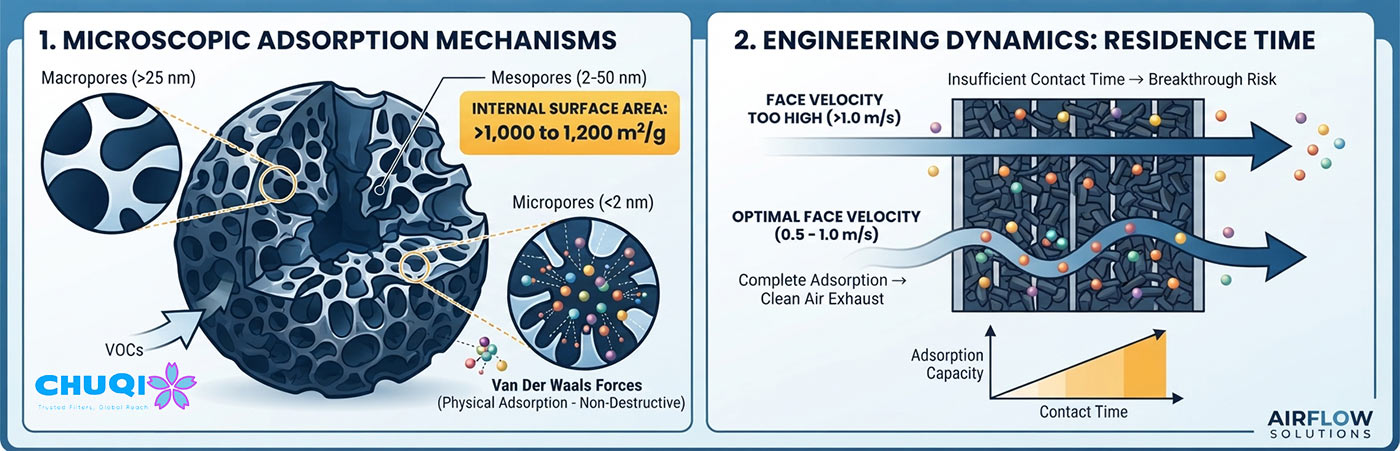
The Extensively Developed Microporous Network: High-grade industrial activated carbon is manufactured from select coconut shells, sub-bituminous coal, or specialized wood via high-temperature steam activation and chemical oxidation. This thermal processing creates an intricate network of macropores (25 nm), mesopores (2 to 50 nm), and micropores (<2 nm). A single gram of industrial activated carbon boasts an internal surface area exceeding 1,000 to 1,200 m²/g.
Van Der Waals Intermolecular Forces: As VOC-laden industrial exhaust streams pass through the filter matrix, gas molecules are drawn to the internal pore walls by physical intermolecular forces (Van Der Waals forces). This physical trapping is non-destructive and highly effective for organic compounds, solvents, hydrocarbons, and odorous molecules.
Residence Time (Contact Time) Physics: The real-world efficacy of VOC removal depends heavily on residence time—the precise fraction of seconds the air stream spends interacting with the carbon bed. Optimal industrial systems are engineered to maintain a controlled face velocity (typically 0.5 m/s to 1.0 m/s), ensuring complete molecular capture before exhaust air escapes into the atmosphere.
For deep technical insights into how laboratory parameters dictate raw material quality, read our comprehensive engineering guide on [Why Do Iodine Number and CTC Matter When Sourcing Bulk Activated Carbon Filter Media?].
2. Why V-Bank Systems Are the Industrial Gold Standard for VOC Control
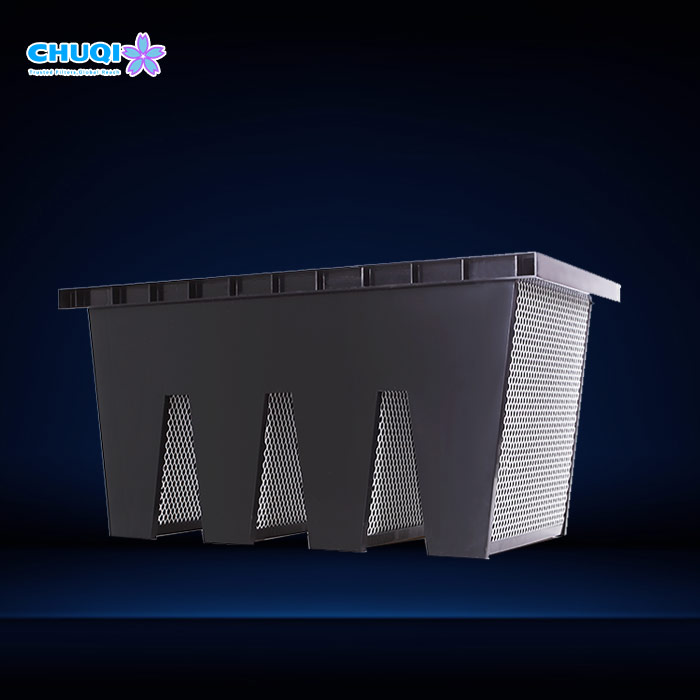
When dealing with high-airflow industrial ventilation, paint spray booth exhaust, or large commercial HVAC ducts, traditional flat panel filters fall short due to restrictive pressure drops and insufficient carbon mass. V-bank chemical air filters overcome these mechanical limitations through innovative geometric architecture.
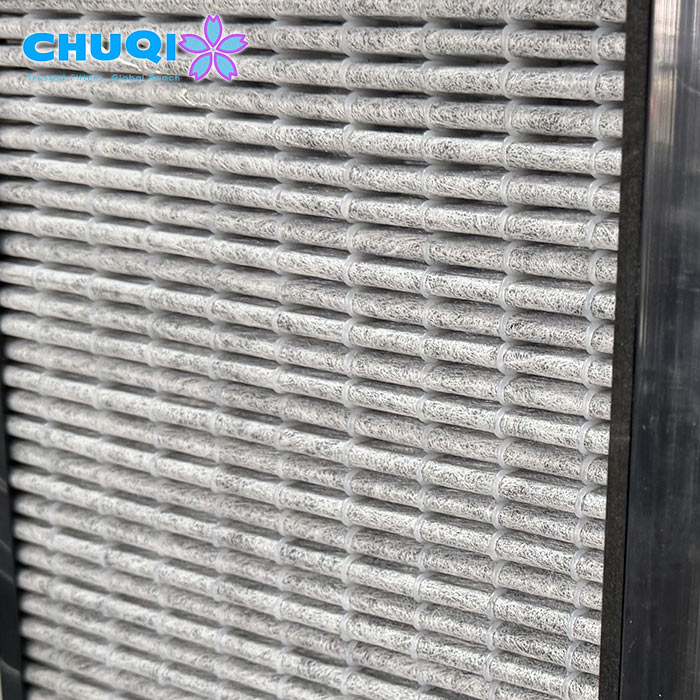
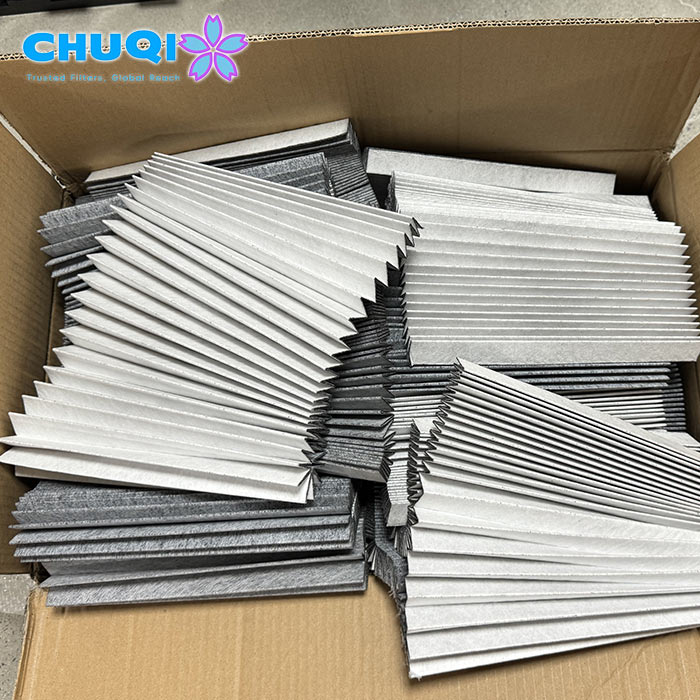
Maximized Active Surface Area: By arranging multiple individual V-shaped mini-pleated filter panels within a rigid outer structural casing, a single V-bank unit packs up to 3 to 4 times more active carbon media into the same standard duct footprint compared to conventional flat panels.
Low Pressure Drop and Energy Efficiency: The aerodynamic V-configuration splits incoming high-velocity air smoothly across a massive filtration surface, drastically reducing initial resistance (measured in Pa or inches of water column) and lowering continuous fan energy consumption across the facility.
Rigid Frame Structural Integrity: Industrial environments subject filters to heavy static pressure fluctuations. Built with heavy-duty ABS plastic frames or reinforced galvanized steel housings, modern V-bank filters resist frame warping and maintain absolute airtight seals over extended operational lifecycles.
To evaluate whether your facility requires high-airflow V-bank modules or standard pre-filtration frames, review our in-depth comparative analysis: [Which Delivers Better VOC Removal: V-Bank or Panel Carbon Filters for Industrial Airflows?].
3. Technical Performance Comparison: V-Bank vs. Panel vs. Honeycomb Filters
To assist procurement engineers and HVAC system designers in specifying the correct gas-phase filtration architecture, the following engineering matrix contrasts key performance metrics across industrial carbon filter types:
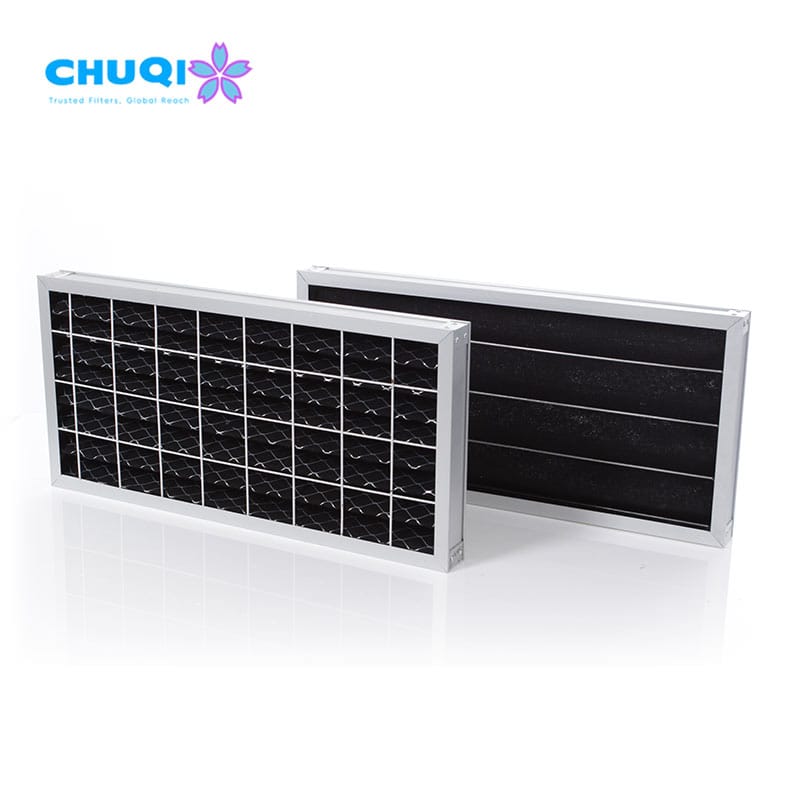
| Performance Metric | V-Bank Chemical Air Filters | Activated Carbon Panel Filters | Honeycomb Carbon Modules |
| Typical Airflow Capacity | High (2,000 — 3,000 CFM) | Moderate (500 — 1,000 CFM) | Moderate to High (1,500 — 2,500 CFM) |
| Carbon Mass per Standard Unit | 12 kg — 25 kg (High capacity) | 2 kg — 5 kg (Light duty) | 8 kg — 15 kg (Structured channels) |
| Initial Pressure Drop (@ Rated Flow) | 110 Pa — 150 Pa | 80 Pa — 120 Pa | 90 Pa — 130 Pa |
| Target Dwell / Residence Time | 0.1 s — 0.2 s (Optimal) | <0.05 s (Shorter contact) | 0.1 s — 0.15 s (Laminar flow) |
| Primary Industrial Use Case | Heavy industrial exhaust & HVAC intakes | Commercial office odors & light pre-filtering | Cleanrooms, labs, & zero-dust electronics |
4. Specialized Structural Configurations for Diverse Industrial Applications
5. Key Engineering Parameters That Dictate Maximum VOC Removal Efficiency
Achieving maximum pollutant removal goes far beyond simply installing a carbon box into ductwork. Engineers and procurement officers must evaluate several critical performance variables during the selection process:
Chemical Impregnation vs. Virgin Carbon: Virgin coconut shell carbon effectively handles general VOCs, solvents, and odors. However, for specialized industrial environments—such as acid gas scrubbers, wastewater treatment facilities, or formaldehyde-heavy manufacturing—carbon must be chemically impregnated with targeted reagents (such as potassium permanganate, phosphoric acid, or metal oxides) to achieve chemisorption.
Dust Suppression and Downstream Protection: Low-grade, poorly manufactured carbon filters frequently shed carbon fines during operation, which can damage downstream equipment, sensitive cleanroom electronics, or turbine blades. Premium industrial filters incorporate built-in non-woven synthetic melt-blown backing layers to completely prevent carbon migration.
Airtight Sealing and Zero Bypass: Frame bypass is the #1 point of failure in gas-phase filtration. Seamless thermal welding in plastic frame units or continuous gasket bonding in metal frames ensures 100% of the contaminated air stream is forced directly through the active carbon media bed rather than leaking around the edges.
Different industrial operating environments present unique pollutant loads, spatial constraints, and airflow dynamics. Specifying the correct structural configuration ensures long-term operational reliability and lowers total cost of ownership (TCO):
V-Bank Chemical Air Filters
Primary Industrial Applications: High-airflow factory exhaust systems, automotive paint spray booth emissions, wastewater treatment odor control facilities, and commercial building HVAC intake protection.
Primary Engineering Advantage: Maximum carbon mass and extended replacement intervals under heavy VOC concentration loads.
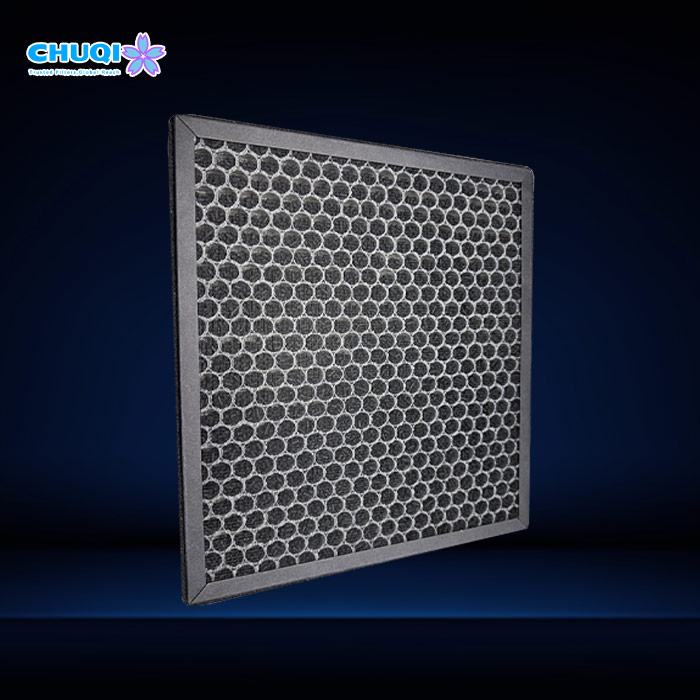
Honeycomb Chemical Filter Modules
Primary Industrial Applications: High-precision cleanrooms, semiconductor manufacturing plants, chemical laboratory fume exhaust hoods, and hospital critical-care recirculation units.
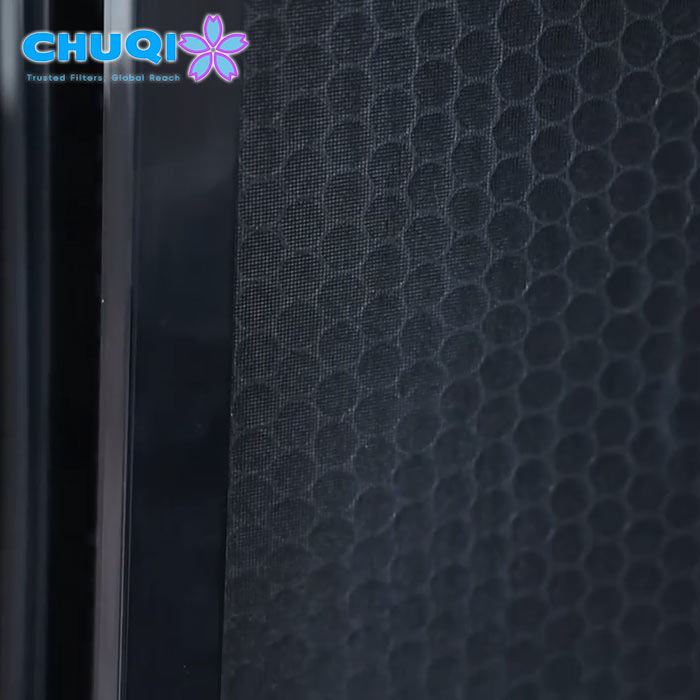
Primary Engineering Advantage: Extruded rigid structure providing uniform laminar airflow channels and zero carbon dusting or media shedding. Learn more in our technical breakdown: [How Do Honeycomb Chemical Filters Control Heavy VOCs in Cleanrooms and Industrial Exhaust?].
Compressed Air and Pneumatic Line Carbon Filters
Primary Industrial Applications: Industrial pneumatic automation systems, sensitive instrument air lines, and food/beverage processing packaging equipment.
Primary Engineering Advantage: High-pressure housing vessels designed to strip trace oil aerosols, lubricants, and vaporized hydrocarbons from compressed gas lines. Explore specific engineering parameters in [Can Activated Carbon Filters Effectively Remove VOCs from Industrial Compressed Air Systems?].
Looking for Ready-to-Install Industrial Carbon Filters or Custom OEM Solutions?
As an established B2B source manufacturer with over 20 years of production experience in industrial air filtration media and finished filter units, we engineer high-performance solutions built to international quality standards:
For heavy-duty VOC elimination in high-airflow systems:[Browse our Industrial V-Bank Chemical Air Filters Series]
For specialized cleanroom and exhaust applications:[Explore Honeycomb Chemical Air Purification Units]
For bulk media rolls and secondary manufacturing: [View Activated Carbon Filter Media Rolls and Bulk Sourcing Options]
Need custom dimensions, specialized chemical impregnations, private-label manufacturing (OEM/ODM), or factory-direct wholesale pricing for your upcoming commercial project? [Request a Free Technical Datasheet and Factory Quotation Today] to speak directly with our senior application engineers.