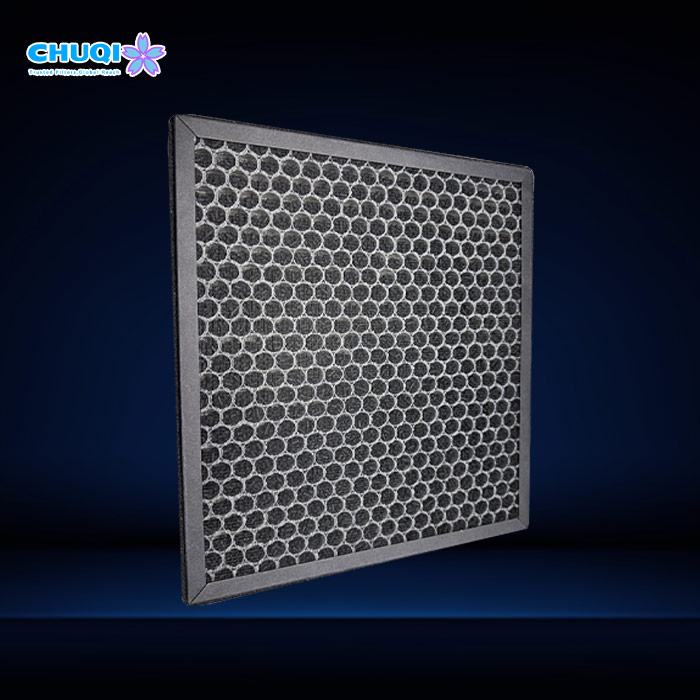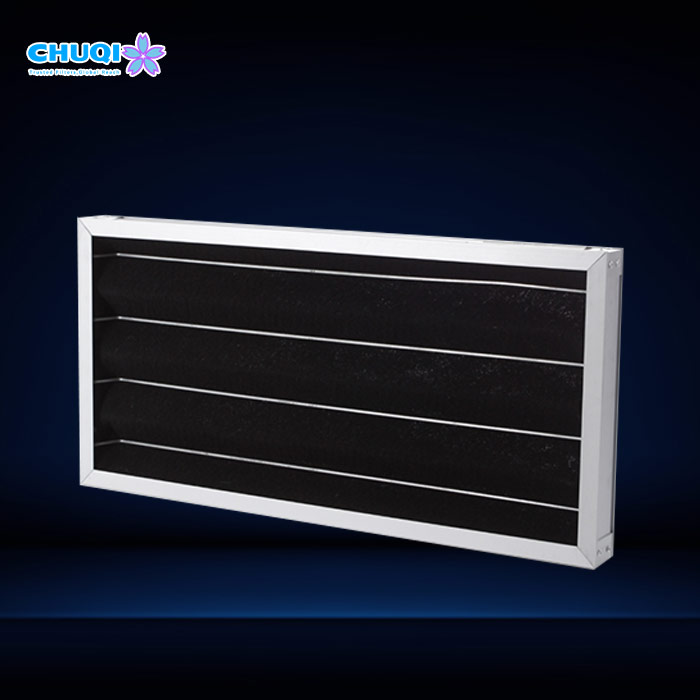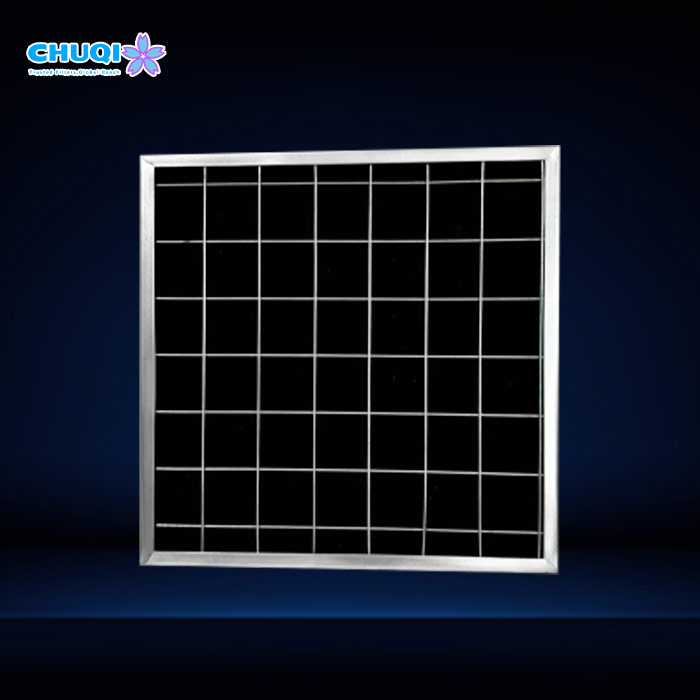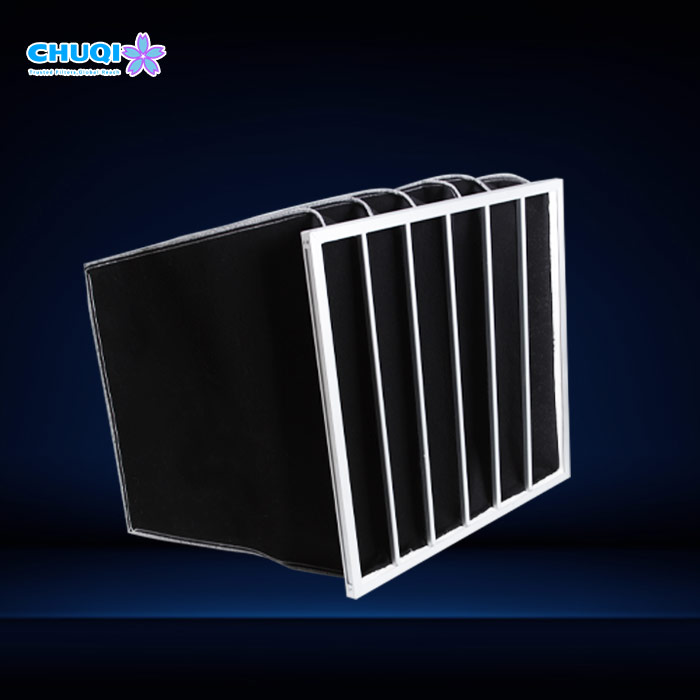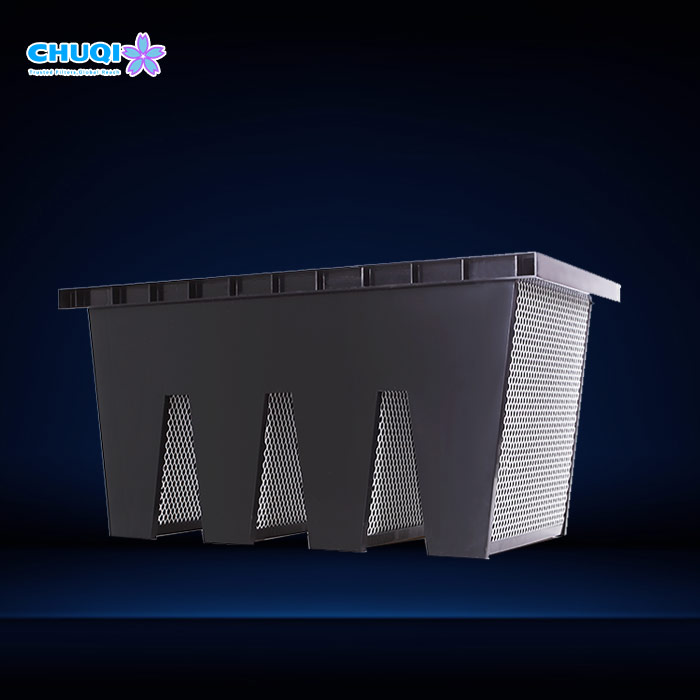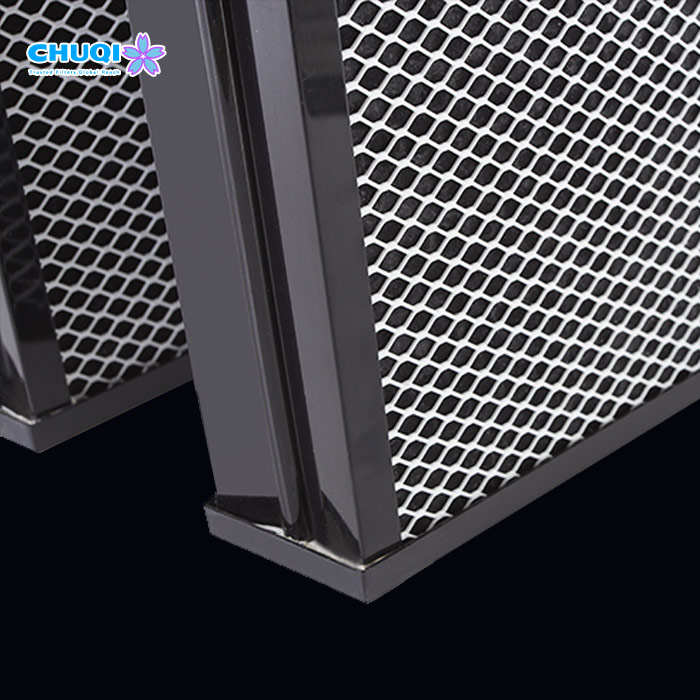
Standard flat panel and pocket filters lack sufficient carbon capacity for continuous heavy exhaust. High airflow leads to rapid carbon saturation, severe pressure drop, and early toxic vapor leakage.
To solve these heavy-duty V-Bank Gas Phase Filter applications and industrial VOC & Odor Control challenges, our high-performance V-Bank Activated Carbon Filter is engineered with key structural advantages:
Enhanced Gas-Phase Adsorption: Built with heavy granular activated carbon media, this V-cell carbon filter provides maximum dwell time to efficiently trap VOCs, acid vapors, and chemical fumes without restricting system velocity.
High Airflow V-Bank Geometry: The multi-V mini-pleated architecture doubles the available filtration area, delivering ultra-high air handling capacity while preventing motor strain on commercial HVAC and cleanroom AHU systems.
Heavy Chemical Loading Capacity: Engineered specifically for aggressive industrial exhaust setups, the rugged frame holds a massive carbon charge to prevent premature breakthrough and significantly extend service life.
Low Resistance & Energy Efficiency: Optimizes internal airflow dynamics to maintain lower static pressure drop, protecting exhaust fans from overload and lowering operating energy consumption.
Need This Specification in Bulk?
We offer flexible OEM/ODM manufacturing to match your exact dimension and efficiency requirements. Contact our team for a fast quote or to verify compatibility with a free test sample.
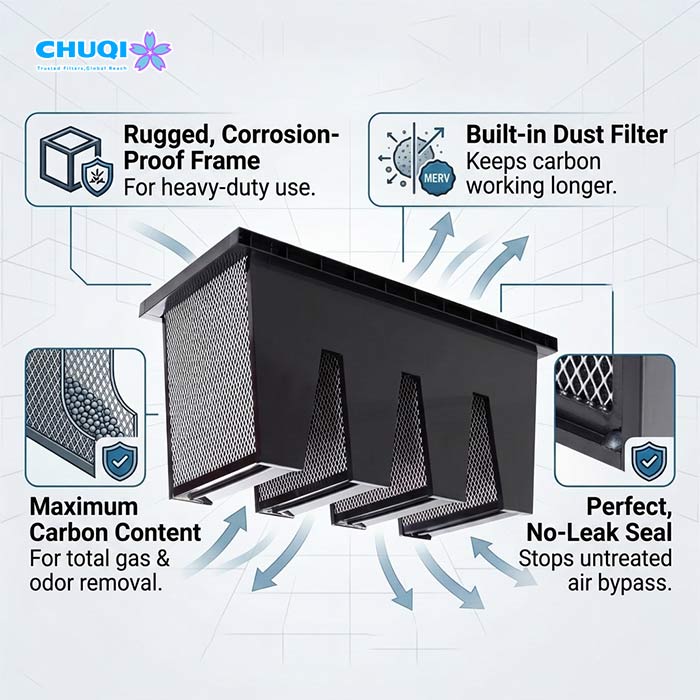
High-Capacity V-Bank Carbon Filter Architecture & Customization
Engineered for challenging industrial environments, each module of this V-Cell carbon filter combines heavy-duty material selection with flexible OEM manufacturing:
Corrosion-Proof Frame Options: Constructed with heavy-duty ABS plastic housing or high-grade galvanized steel/stainless steel frames, ensuring maximum structural stability without warping or rusting in high-humidity and acidic gas environments.
High-Purity Granular Carbon Media: Filled with high-activity virgin granular activated carbon pellets or specialized chemical-impregnated media, optimized for targeted acid gas, ammonia, or VOC filter applications with maximum carbon loading.
Integrated Dust Pre-Filtration Layer: Incorporates a built-in particulate synthetic media layer to trap fine dust before reaching the carbon bed, preventing pore blinding and maintaining continuous gas phase adsorption.
Zero-Bypass Polyurethane Potting: Carbon packs are fully potted into the rigid frame with seamless polyurethane sealant, ensuring zero untreated air bypass along perimeter edges.
Tailored Sizes & Configurable V-Bank Designs: Fully custom size V-bank carbon air filter configurations are available in 2V, 3V, or 4V cell setups, matching standard 24x24x12 retrofits as well as specialized air handling units.
V-Bank Carbon Filter Specifications & Parameters
| Parameter | Specification | Value |
| Standard Dimensions | 595 × 595 × 292 mm / 24″ × 24″ × 12″ (Standard V-Bank) | 12-Inch Heavy-Duty Cell |
| Frame Material | Heavy Duty ABS Plastic Frame / Galvanized Steel | Corrosion-Proof Body |
| Active Carbon Media | High-Purity Granular Pellet Carbon Media / Impregnated Pellets | Dense Carbon Bed |
| Air Processing Capacity | Large Airflow 4000 m³/h (2400 CFM) @ Standard Velocity | High CFM Air Processing |
| Carbon Content Ratio | High Carbon Fill Ratio (Up to 10-15 kg active carbon per cell) | Heavy Gas Load Mass |
| Adsorption Efficiency | 85% – 95%+ Initial VOCs & Odor Removal | High-Efficiency Gas Phase Scrub |
| Operating Conditions | Temperature ≤ 80°C / Relative Humidity ≤ 85% RH | Corrosive Gas Tolerant |
Fully customizable specifications available. For detailed technical data, please【Request Custom Specifications & Datasheet】directly.
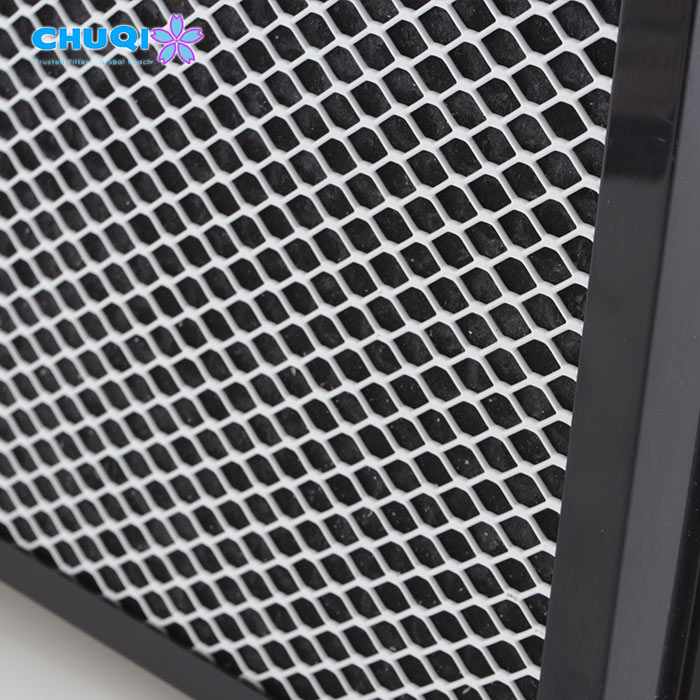
V-Bank Activated Carbon Filter vs. Standard Panel Carbon Filter: Advanced Engineering Comparison
| Performance Metrics | Industrial V-Bank Carbon Filter (CHUQI) | Standard Flat Panel Carbon Filter |
|---|---|---|
| Structural Geometry | Multi-V cell extended surface architecture (12-inch rigid frame) | Single-layer flat panel design (Cardboard or thin metal frame) |
| Active Carbon Load | 10 – 15 kg high-density active media per cell | 1 – 3 kg thin carbon mesh or impregnated foam |
| Airflow Processing Capacity | Up to 4,000 m³/h (2,400 CFM) at nominal velocity | Severely restricted (Typically < 1,500 m³/h) |
| Gas Residence (Dwell) Time | Extended contact time; prevents chemical breakthrough | Minimal contact time; frequent VOC/odor bypass |
| Initial Resistance (Static Drag) | 95 – 120 Pa @ 4,000 m³/h (Optimized aerodynamic drag) | High relative resistance; accelerates motor wear |
| Gas Phase Adsorption Efficiency | 85% – 95%+ initial single-pass VOC removal | Low efficiency; rapid saturation under load |
| Customization Flexibility | Fully Configurable (Custom dimensions, 2V/3V/4V cells, plastic/metal frames, specialty impregnated carbon) | Standard fixed sizes only with rigid material options |
| Operational Service Life | 12 to 18 Months under continuous industrial exhaust | 3 to 6 Months requiring frequent plant shutdowns |
| Primary Industrial Applications | Chemical processing, semiconductor cleanrooms, wastewater treatment | Light commercial office HVAC, domestic kitchen exhaust |
V-Cell Carbon Filter Applications & Industrial Equipment Compatibility
Municipal & Industrial Wastewater Treatment Facilities: Engineered with high-capacity impregnated media to neutralize hydrogen sulfide, organic mercaptans, and aggressive biogenic sewer gases along primary sludge dewatering, thickening, and biological trickling filter wastewater plant odor control V-Bank filter lines.
Chemical & Petrochemical Processing Plants: Deployed within heavy-duty process exhaust and refinery venting networks to capture fugitive organic compound emissions, acid gases, and hazardous toxic vapors via specialized chemical plant exhaust air purification V-Bank filters.
Semiconductor & Microelectronics Cleanrooms: Integrated into specialized air handling units to protect ultra-sensitive silicon wafer microfabrication environments and photochemical processing equipment from molecular contamination during high-purity cleanroom exhaust VOC abatement V-Bank carbon modules deployment.
Pharmaceutical Manufacturing & Research Laboratories: Designed to manage complex volatile organic solvents, acid vapors, and corrosive chemical fumes generated during active pharmaceutical ingredient synthesis, chemical extraction, and containment laboratory chemical fume V-Bank gas scrubbers operations.
Commercial Complexes & Public Infrastructure: Built for large-scale air handling units and municipal transit ventilation systems to ensure continuous high-flow odor elimination and gaseous pollutant removal through commercial building HVAC odor control V-Bank filters deployment.
V-Bank Activated Carbon Filter Lifecycle & Maintenance
Establishing precise monitoring protocols ensures full compliance with local environmental discharge limits, protects downstream equipment, and maximizes operational performance:
Photoionization Detection (PID) Monitoring: Measure downstream VOC concentrations continuously using inline PID sensors; replace the industrial V-Bank gas filter modules immediately upon chemical breakthrough or when exhaust discharge exceeds permitted ppm limits.
Differential Pressure Limits: Track static pressure drop across the carbon matrix using differential pressure gauges; schedule routine maintenance or cell replacement when resistance reaches the maximum recommended limit of 300 Pa.
24/7 Heavy Industrial Lifecycle: Designed for continuous high-concentration VOC or hydrogen sulfide (H2S) loading, our heavy-duty V-Cell carbon filter delivers a dependable operating lifespan of 12 to 18 months under standard industrial exhaust conditions.
Procurement Logistics & Replacement Scheduling: Partnering with a reliable factory-direct V-Bank Activated Carbon Filter supplier enables facility managers and EPC contractors to secure bulk containerized supply contracts and pre-scheduled replacement inventories for routine plant turnaround shutdowns.
Frequently Asked Questions: V-Bank Activated Carbon Filter
Q: What differentiates a V-Bank Activated Carbon Filter from a flat panel filter?
A: Conventional flat panel filters rely on a restrictive, single-layer mesh or impregnated foam containing a minimal media mass of 1 to 3 kg, which frequently causes rapid VOC breakthrough and high static resistance. In contrast, a high-performance V-Bank Activated Carbon Filter features an extended multi-V cell surface geometry engineered to house 10 to 15 kg of high-density granular activated media per cell, maximizing molecular dwell time and achieving an initial single-pass adsorption efficiency of 85% to 95%+.
Q: What is the operational service life of a V-Cell carbon filter under continuous industrial use?
A: Under rigorous 24/7 industrial exhaust operations involving sustained high-concentration volatile organic compounds (VOCs) or biogenic hydrogen sulfide (H2S) loading, a commercial-grade V-Cell carbon filter provides a dependable service lifespan of 12 to 18 months. Exhaustive lifecycle management should combine continuous downstream photoionization detection (PID) monitoring with differential pressure tracking up to a maximum recommended terminal resistance of 300 Pa.
Q: Are heavy duty V-Bank gas filters customizable for specialized chemical contaminant abatement?
A: Yes, as an experienced source manufacturer, we engineer heavy duty V-Bank gas filters with highly configurable parameters—including bespoke 2V/3V/4V cell configurations, heavy-gauge plastic or galvanized metal frames, and specialized chemical impregnation (such as potassium permanganate for acid gas and ammonia neutralization) tailored to exact EPC project specifications.
Q: What is the typical carbon replacement cost and ROI for industrial V-Bank Activated Carbon Filters?
A: Facility managers frequently evaluate the total cost of ownership, noting that while premium V-Bank Activated Carbon Filters require periodic module replacement every 12 to 18 months, their massive 10 to 15 kg media capacity prevents unscheduled plant shutdowns, reduces regulatory non-compliance risks, and significantly lowers long-term operational expenditures compared to frequent changeouts of low-capacity alternatives.
Q: How do engineers prevent air bypass during V-Bank Activated Carbon Filter installation?
A: To ensure absolute regulatory compliance and prevent gaseous contaminant bypass in critical HVAC air handling units (AHUs) or wastewater treatment scrubbers, technicians must secure the filter modules into standard 12-inch deep side-access housings or bank holding frames equipped with high-integrity compression gaskets and rigid locking mechanisms.