
For senior facility engineers, cleanroom project managers, and industrial air filtration distributors, specifying the correct terminal HEPA filter goes far beyond matching nominal dimensions. Choosing between modern mini-pleat filters (hot-melt bead configuration) and traditional deep-pleat filters (corrugated aluminum separator configuration) dictates long-term HVAC energy consumption, structural stability under pressure, and total cost of ownership (TCO).
Both configurations achieve high-efficiency particle retention per EN 1822 / ISO 29463 (such as H13 and H14 grades). However, their internal fluid dynamics, thermal parameters, manufacturing tolerances, and logistical profiles differ fundamentally. This engineering and sourcing guide provides an objective, granular analysis of both designs to assist professional specifiers and wholesale buyers.
Note: This technical comparison is part of our comprehensive engineering series on high-efficiency particulate air filtration. Return to our central Ultimate Engineering Guide to Mini-Pleat HEPA Filters or explore related insights on Pressure Drop & TCO Optimization.
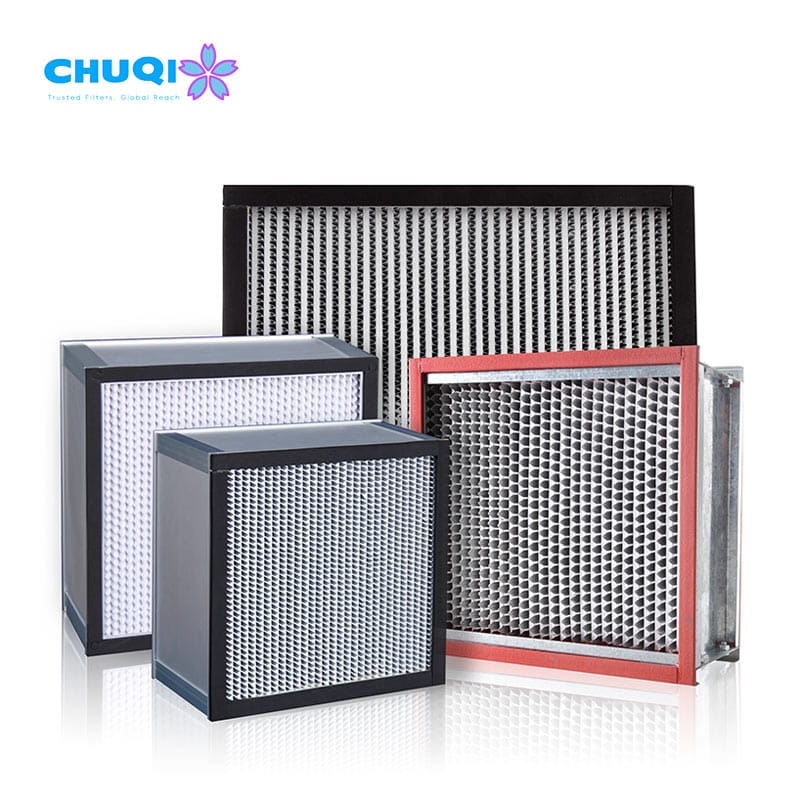
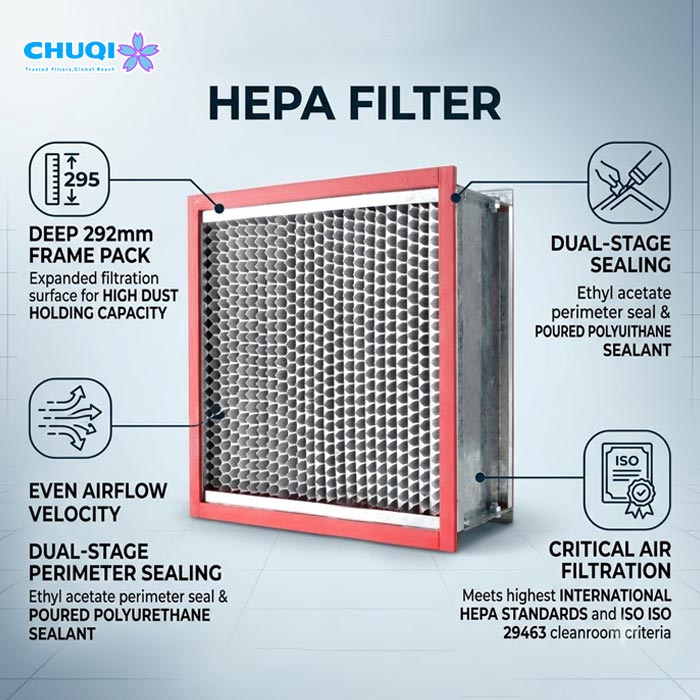
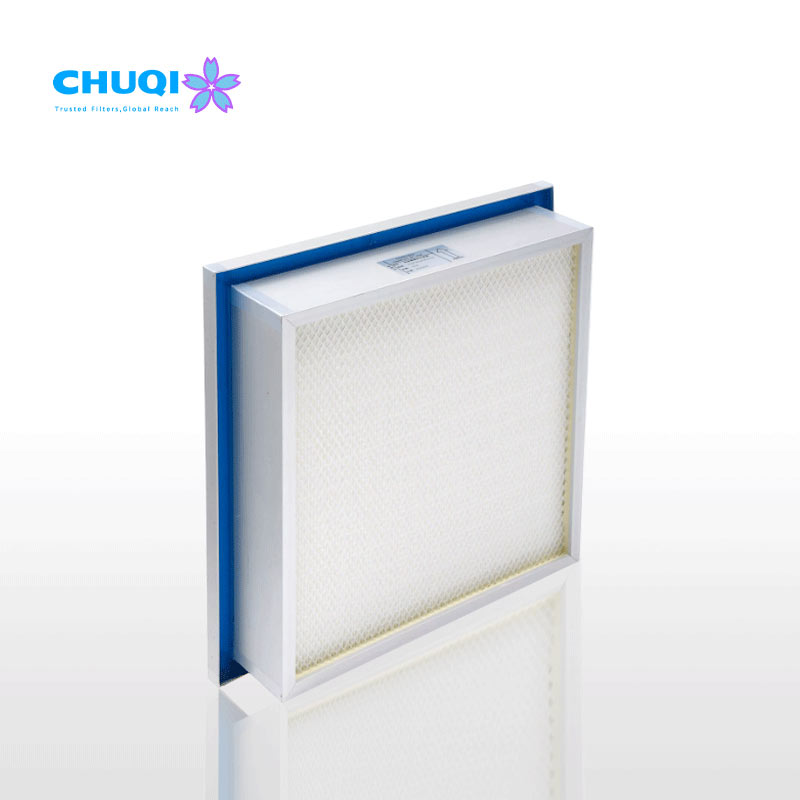
Deep-pleat filters utilize corrugated aluminum foil sheets folded into V-shaped channels to support the ultra-fine glass fiber media pack. Typical frame depths range from 150mm to 290mm.
Advanced Engineering Analysis:
Thermal Endurance & High-Heat Performance: The defining advantage of aluminum-separated filters is their thermal threshold. Because they eliminate organic polymer adhesives within the core media pack, specialty high-temperature variants can withstand continuous operating temperatures ranging from 250°C to 350°C+. This makes them mandatory for pharmaceutical pyrogen/sterilization tunnels and industrial baking/curing lines.
Mechanical Rigidity under Heavy Pulsing: The dense aluminum foil skeleton provides exceptional structural stiffness, resisting severe pressure fluctuations and heavy particulate loading in heavy industrial exhaust streams without media deformation.
Potential Aerodynamic & Operational Limitations:
Form Drag & Turbulence: The leading edges of the corrugated metallic foil create local flow constriction and micro-turbulences, driving clean-state pressure drops higher (typically 120 Pa to 180 Pa at 0.45 m/s face velocity).
Media Stress Factors: In environments subject to extreme humidity cycles or vibration, rigid metal edges can impose mechanical shear stress on glass fiber paper if pleat alignment tolerances are not stringently controlled during automated manufacturing.
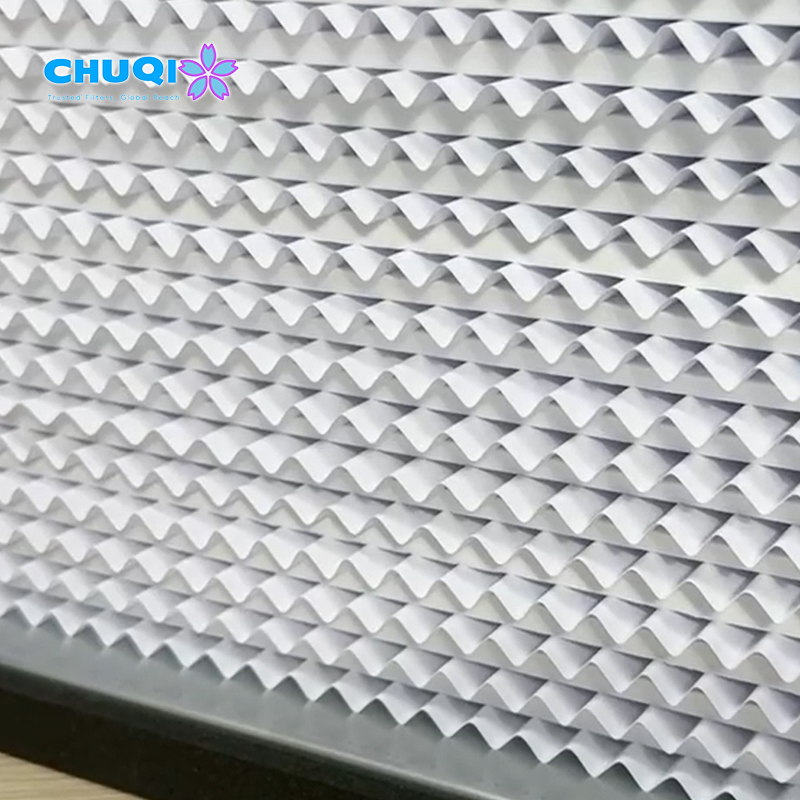
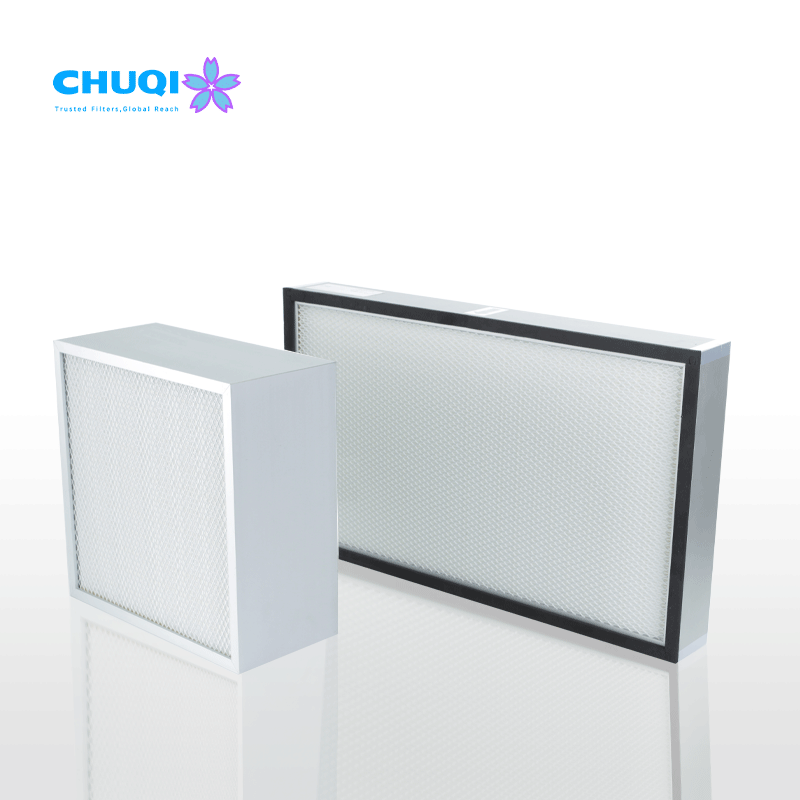
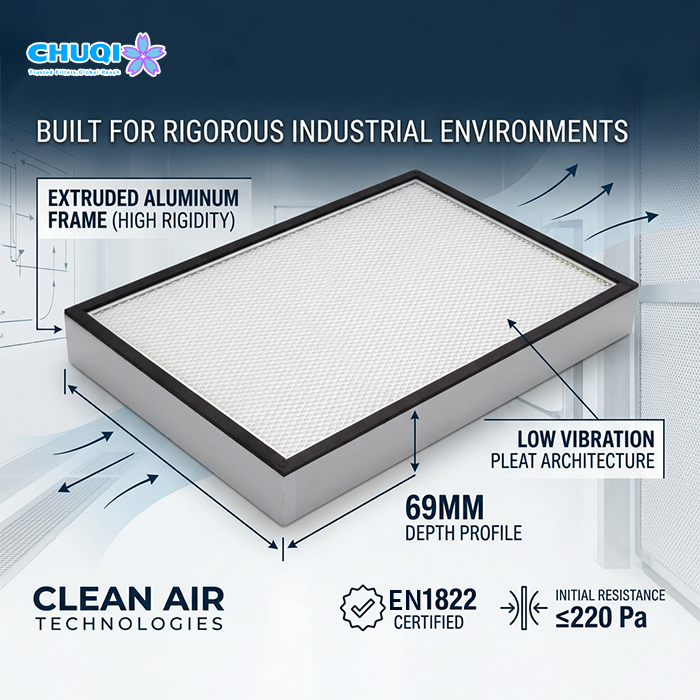
Mini-pleat filters replace metallic separators with ultra-thin, computer-extruded hot-melt thermoplastic polymer beads applied at uniform horizontal intervals. Pleat depths are tightly controlled between 50mm and 96mm.
Advanced Engineering Analysis:
Optimized Fluid Dynamics & Low Resistance: Continuous polymer bead ropes maintain exact, parallel air channels. Air glides through the media pack with minimal flow distortion, lowering initial clean-state resistance to 80 Pa to 120 Pa. Over a 1-to-2-year operational cycle, this lower initial drop translates directly into substantial kilowatt-hour (kWh) savings on AHU blowers.
Spatial Efficiency & Media Utilization: Eliminating bulky aluminum sheets doubles the active media exposure surface area within a shallow frame footprint. This allows OEM equipment manufacturers and modular cleanroom designers to house high filtration capacity in tight spatial envelopes (such as Fan Filter Units and laminar flow hoods).
Thermal & Material Constraints:
Temperature Limitations: Standard mini-pleat designs rely on hot-melt adhesive formulations, capping operational environments at 70°C to 80°C. They cannot be deployed in high-heat industrial processing ovens.
Adhesive Integrity: Precision in bead viscosity and cooling calibration during extrusion is critical to prevent pleat blinding or channel collapse under elevated moisture levels.
Comprehensive Technical Comparison Matrix
| Engineering Parameter | Deep-Pleat Separator HEPA | Mini-Pleat Hot-Melt HEPA |
| Media Separation Medium | Corrugated Aluminum Foil (0.03mm–0.05mm) | Extruded Thermoplastic Hot-Melt Beads |
| Standard Frame Depths | 150mm, 220mm, 290mm | 50mm, 69mm, 90mm, 96mm |
| Clean-State Pressure Drop | Moderate to High (120 Pa – 180 Pa) | Low (80 Pa – 120 Pa) |
| Max Operating Temperature | Up to 250°C – 350°C+ (Specialty High-Temp) | Standard: 70°C – 80°C |
| Frame Material Options | Galvanized Steel, Anodized Aluminum, Wood | Extruded Aluminum, Anodized Profile, MDF, SS304 |
| Aerosol Testing Compliance | Individual scan test per EN 1822 / ISO 29463 | Individual scan test per EN 1822 / ISO 29463 |
| Logistics & Volume Footprint | Heavy, bulky, low container packing density | Lightweight, high stack density, lower freight cost |
Procurement & Sourcing Considerations for B2B Buyers
For secondary wholesalers, distributors, and engineering contractors, evaluating filter construction also involves supply chain logistics, quality assurance protocols, and strict supplier vetting:
Freight Economics & Container Optimization: Due to their lightweight, shallow frames and high volumetric stacking density, mini-pleat filters significantly optimize international ISO container shipping costs and warehouse storage overheads. To explore how these logistics advantages translate to your bottom line, read our detailed analysis on Why Space-Saving Mini HEPA Filters Benefit Global Distributors. While traditional deep-pleat separator filters remain mechanically robust, their bulky frames demand significantly larger shipping volume footprints.
Quality Assurance Verification: Regardless of the pleat design chosen, professional buyers must verify that every terminal HEPA filter undergoes 100% individual aerosol scan testing (PAO/DOP testing) in accordance with EN 1822 standards, complete with serialized efficiency and pressure drop test reports.
Sourcing from a Direct Source Factory: Partnering with an established manufacturing partner that operates dedicated production lines for both mini-pleat and deep-pleat architectures ensures consistent quality control, flexible customization (non-standard dimensions, gasketing, and knife-edge profiles), and transparent wholesale pricing without middleman markups.
Evaluating Supplier Reliability & Core Competency: When vetting global air filtration suppliers, professional procurement teams should look beyond surface pricing. A trustworthy source factory must possess in-house laboratory testing capabilities, provide complete traceability of raw glass fiber papers and sealants, and offer transparent lead times (learn more about vetting criteria in our dedicated guide on How to Find a Reliable Mini-Pleat HEPA Filter Manufacturer).
Conclusion & Engineering Consultation
Selecting the right filtration technology comes down to aligning operating parameters—such as continuous temperature thresholds, static pressure budgets, and housing footprints—with the demands of your project.
Need to verify compliance data or secure competitive source-factory pricing for an upcoming tender?
Explore our complete factory specifications in the Product Catalog.
Connect with our engineering and sales team to request certified technical data sheets, customized CAD drawings, or a wholesale quotation within 12 hours.