
Summary: In large-scale ISO Class 1 through 8 cleanroom construction and HVAC retrofits, total installed cost (TIC) is heavily dictated by terminal filter handling time, mechanical mating complexity, and commissioning rework rates. Traditional deep-pleat filters—relying on heavy corrugated aluminum separators, rigid perimeter gaskets, and multi-bolt clamping frames—create severe labor bottlenecks and high damage risks. Upgrading to advanced thermoplastic hot-melt mini-pleat HEPA filters introduces measurable on-site labor efficiencies. Through a 40% to 50% dead-weight reduction, zero-tool gel-seal drop-in architectures, and robust structural media protection, mechanical contractors can accelerate project handover, slash man-hours per square meter, and guarantee first-pass PAO compliance.
Note: This technical brief is part of our authoritative engineering series on terminal cleanroom filtration. For overarching architectural frameworks, return to our central Ultimate Engineering Guide to Mini-Pleat HEPA Filters, or review our FFU integration protocols in The Ultimate Guide to Matching Mini HEPA Filters with FFU.
The Hidden Labor and Overhead Trap in Cleanroom Installation Schedules
When mechanical contractors, cleanroom general builders, and HVAC engineering firms bid on high-tech electronic, pharmaceutical, or hospital surgical suite projects, cost projections frequently underestimate the labor drain occurring during the ceiling grid deployment phase.
The Man-Hour Drain of Heavy Terminal Units: Installing hundreds—or thousands—of terminal filtration modules into modular T-bar systems or Fan Filter Unit (FFU) plenums is physically demanding. Traditional deep-pleat units, characterized by heavy wooden or thick aluminum casings and dense aluminum separator foils, weigh upwards of 12kg to 18kg per unit. Maneuvering these heavy components into overhead grids requires multi-person staging, extended scaffolding utilization, and constant trade coordination.
The Compounding Cost of Commissioning Rework: Traditional mechanical clamping mechanisms rely on precise torque wrench specifications to compress dry gaskets (such as EPDM or neoprene). Uneven torque application, frame twisting, or minor grid squareness discrepancies routinely cause perimeter bypass gaps. When in-situ PAO aerosol challenge testing (per ISO 14644-3) detects downstream leaks, the financial penalty is severe: mandatory teardowns, re-sealing man-hours, cleanroom downtime, and delayed client sign-offs that erode contractor margins.
Mass Reduction & Ergonomics: Achieving Single-Operator Maneuverability
The structural evolution from corrugated aluminum-separated filters to advanced hot-melt mini-pleat technology alters the physical logistics of cleanroom construction.
Quantifiable Dead-Weight Savings: By eliminating heavy metal separator foils and optimizing the internal micro-glass fiber pleat matrix with continuous thermoplastic hot-melt beads, premium mini-pleat HEPA filters achieve a dramatic reduction in physical mass. While a traditional deep-pleat H14 filter of standard dimensions (e.g., 610×610×150mm) imposes a heavy physical load, a comparable mini-pleat unit reduces dead weight to 5kg–8kg—a 40% to 50% reduction.
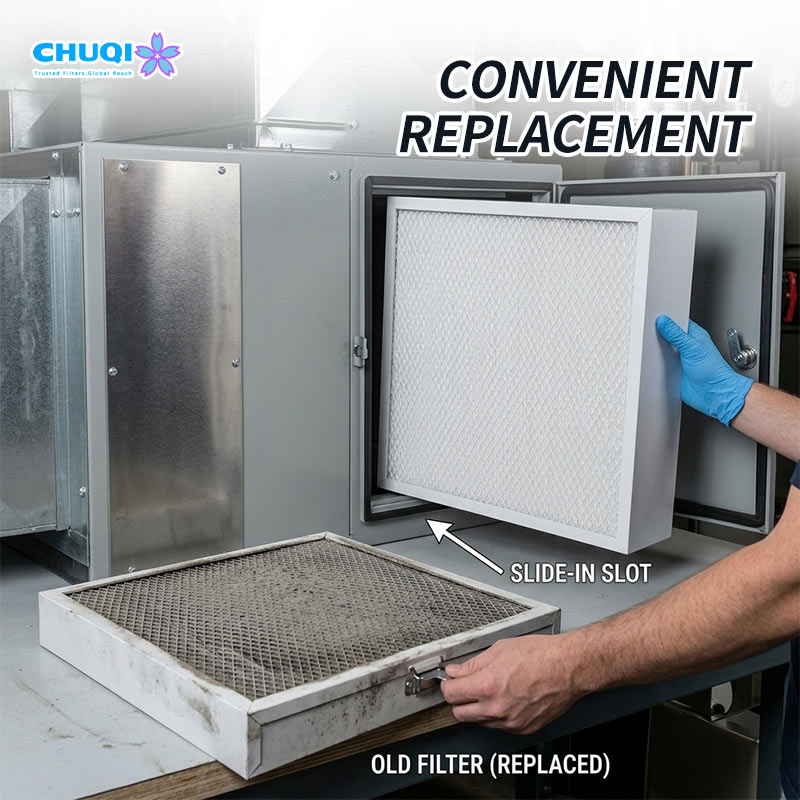
Single-Technician Deployment: This lighter structural profile enables a single installation technician to safely hoist, align, and seat the filter into the ceiling grid or FFU discharge collar without mechanical lifting rigs or dual-operator scaffolding. On large-scale projects involving 500+ terminal units, this ergonomic shift cuts direct installation man-hours by up to 45%, directly compressing the labor budget.
Zero-Tool & Foolproof Sealing: Gel-Seal vs. Mechanical Clamping Mechanics
Eliminates human error during the mechanical mating phase through advanced fluid-barrier engineering.
Immersion-Type U-Channel Gel-Seal Architecture: Modern mini-pleat cleanroom filters utilize an extruded aluminum or anodized frame integrated with a factory-poured, U-shaped polyurethane or silicone gel channel. During installation, the ceiling grid’s stainless steel or aluminum knife-edge (typically 1.2mm to 2.0mm thick) drops directly into the viscous, non-Newtonian gel matrix.
Elimination of Torque Guesswork and Compression Fatigue: Unlike dry gaskets that suffer from permanent deformation (compression set) and require tedious multi-bolt torque patterns, the gel-seal interface accommodates minor grid squareness tolerances and thermal expansion shifts (±1.5mm) effortlessly. It creates an instantaneous, 100% hermetic seal on contact without specialized torque technicians, entirely eliminating installation-induced frame warping.
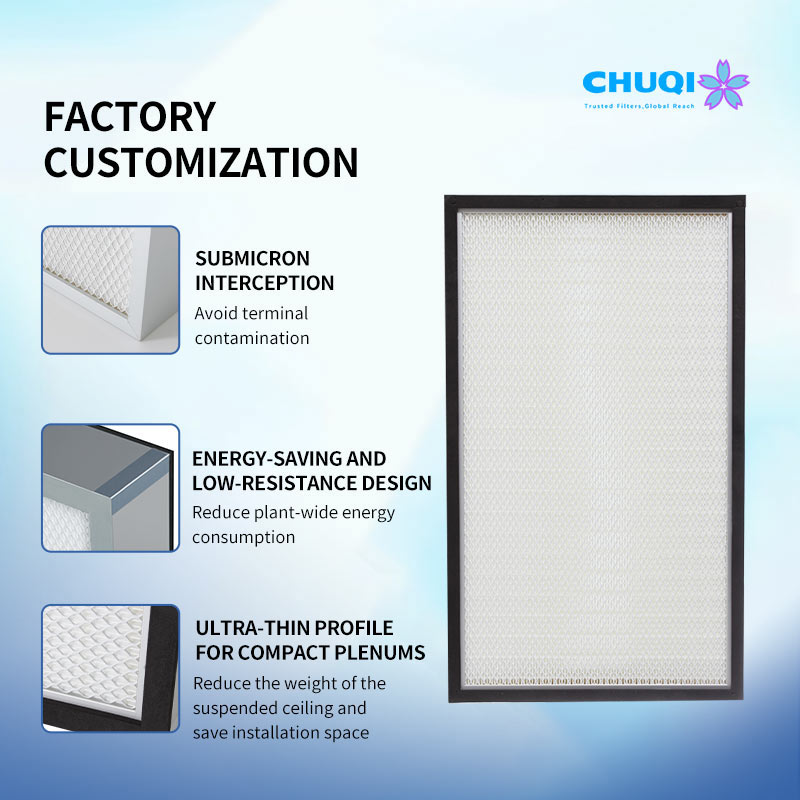
Optimized Aerodynamics & Pressure Drop: The absence of bulky internal mechanical clamping or thick separator plates yields a clean internal airflow profile. Operating at standard face velocities (0.45 m/s), high-grade mini-pleat units maintain a low initial pressure drop (90 Pa to 110 Pa for H14 grades), lowering downstream fan energy consumption during initial startup and balancing.
Structural Resilience & On-Site Damage Mitigation
In active, multi-trade cleanroom construction sites, material handling vulnerability represents a constant, unbudgeted financial drain.
The Vulnerability of Traditional Media Packs: Wet-laid micro-glass fiber media in conventional deep-pleat filters is exceptionally delicate. Exposed, unsupported pleat faces or brittle aluminum corrugated foils are easily compromised by accidental tool strikes, ladder bumps, or careless technician handling during overhead grid placement—leading to immediate inventory write-offs and replacement freight delays.
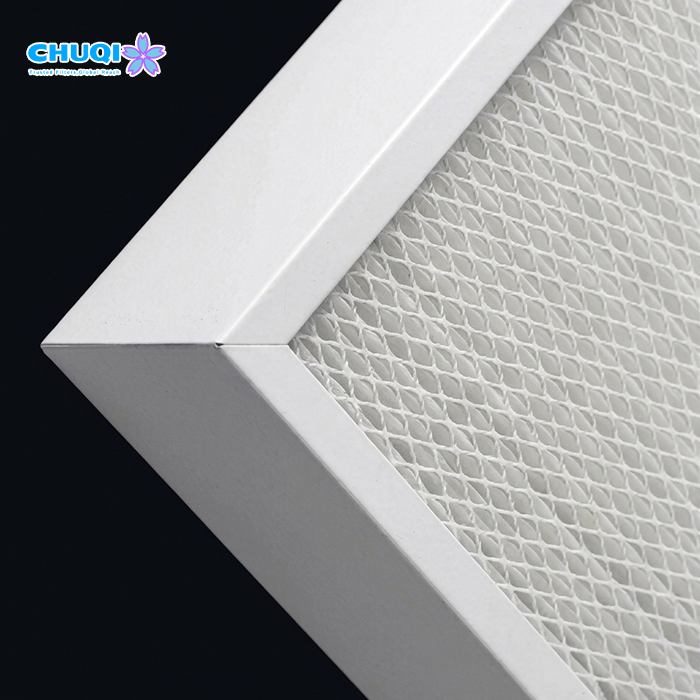
Rigid Dual-Side Architectural Cage Protection: Professional-grade mini-pleat HEPA filters are engineered with high-rigidity, extruded anodized aluminum or powder-coated steel outer frames, complemented by expanded metal protective face guards on both upstream and downstream sides. This structural armor absorbs inadvertent impact energy from tools or installation hardware, isolating the fragile micro-glass pleat matrix from mechanical stress.
Dimensional Stability Under Thermal and Mechanical Load: Unlike wooden or thin sheet-metal frames that warp under high ambient humidity or uneven ceiling grid tension, heavy-duty aluminum extrusions maintain absolute diagonal squareness. This structural rigidity prevents frame bowing during transit, staging, and installation, safeguarding the internal pleat geometry and ensuring uniform airflow resistance across the entire filter face.
Streamlined Commissioning and First-Pass PAO Validation
Project handover velocity and contractor profitability are ultimately dictated by how rapidly a controlled environment passes independent certification.
Eliminating the Post-Installation Rework Loop: Traditional mechanical clamping systems frequently suffer from torque-induced frame distortion or gasket relaxation, leading to perimeter bypass leaks during initial testing. When in-situ aerosol challenge testing (per ISO 14644-3) flags a downstream leak, contractors face an expensive rework loop: depressurizing the system, dismantling grid clamps, replacing or re-sealing the unit, and rescheduling third-party certifiers.
First-Pass Integrity via Immersive Gel Interfaces: The self-healing, viscous nature of U-channel gel seals completely eliminates perimeter bypass risks from the moment of placement. The knife-edge immersion creates an absolute hermetic barrier that withstands standard pressure differentials without edge leakage, allowing validation teams to achieve 100% first-pass compliance on initial photometric scans.
Accelerated Project Handover: By combining single-operator ergonomics, zero-tool drop-in placement, and guaranteed first-pass PAO integrity, mechanical contractors compress the critical path schedule. This eliminates costly schedule overruns, avoids liquidated damages, and enables facility managers to transition smoothly from construction to revenue-generating operations ahead of contractual deadlines.
Technical Summary & Engineering Resources
采用 易于安装的迷你褶皱式 HEPA 过滤器, 可以将洁净室建设从劳动密集型、高风险的瓶颈转变为精简、可预测的机械组装过程。
为了进一步优化您项目的技术规格,请查阅我们完整的工程案例集:
基础材料科学:请查看《迷你褶皱 HEPA 过滤器终极工程指南》中的综合规格 。
气流和外壳兼容性:探索匹配迷你 HEPA 过滤器与 FFU 的终极指南,以对齐面风速、静压和静压箱尺寸。
商业承包支持:如需定制框架尺寸、项目特定的 CAD 图纸、批量承包商定价或优先现场交付计划, 请联系我们的技术工程团队。