
For cleanroom mechanical contractors, HVAC project managers, and regional distributors, specifying and sourcing mini-pleat HEPA filters requires navigating complex trade-offs between initial unit cost, ongoing energy consumption, and structural integrity. Multi-tier distribution channels frequently obscure critical manufacturing variances—such as micro-glass fiber paper grammage, hot-melt bead aspect ratios, and frame deflection tolerances under static pressure. This guide establishes a rigorous, engineering-level framework for evaluating genuine source factories, validating automated manufacturing assets, and securing dependable testing data. By transitioning to direct-factory procurement, technical buyers can safeguard project profitability, eliminate submittal rejection risks, and anchor their supply chains in verified industrial performance.
Note: This global procurement and supply chain guide is part of our authoritative engineering series on terminal cleanroom filtration. For commercial financial strategies and logistics cost optimization, read our companion brief, How Space-Saving Mini-Pleat HEPA Filters Boost Contractor Margins & Distributor ROI. To evaluate installation labor efficiencies and technical FFU mating, explore our Site Labor Cost Reduction Guide and The Ultimate Guide to Matching Mini HEPA Filters with FFU.
The Micro-Economics of Multi-Tier Supply Chains in Cleanroom Filtration
When project engineers and procurement managers evaluate Bills of Materials (BOM) for ISO Class 1 through Class 8 cleanroom builds, the cost of terminal filtration represents a significant capital expenditure. However, traditional multi-tier supply chains introduce structural inefficiencies that extend far beyond simple price markups.
The Cumulative Margin Dilution: Each intermediary layer between the production line and the final installation site adds administrative overhead while decoupling the buyer from the actual manufacturing parameters. In high-volume commercial projects, this multi-tier insulation creates artificial price inflation without providing corresponding value in quality assurance, thermal resistance engineering, or custom submittal documentation.
The Communication Degradation on Custom Tolerances: Cleanroom specifications rarely fit off-the-shelf templates. Whether dealing with non-standard flange widths, specialized fluid-seal (gel-seal) depth requirements, or customized anodized aluminum extrusion profiles, routing design parameters through trading brokers inevitably leads to specification drift. Direct factory engagement enables real-time engineering dialogue regarding thermal coefficients, structural load limits, and positive pressure boundary sealing.
Engineering Audit Criterion 1: Verifying True Factory Assets and Raw Material Traceability
A fundamental risk in international procurement is the prevalence of entities presenting polished digital storefronts while operating entirely as asset-light trading operations. True source factories are defined by capital-intensive infrastructure and strict raw material provenance.
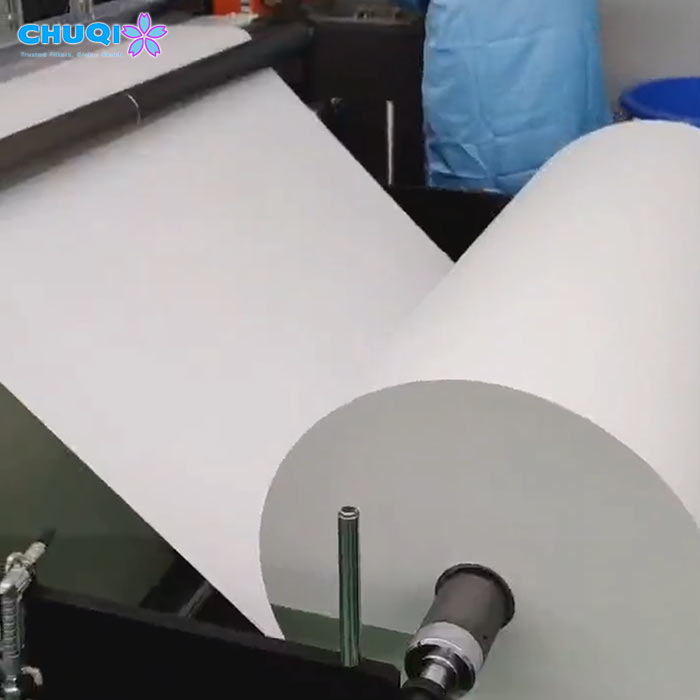
Substrate Provenance (In-House Manufactured Micro-Glass Fiber Paper): Unlike assembly operations reliant on external converters, a genuine manufacturing partner maintains dedicated wet-laid production lines for micro-glass fiber filter paper (complying with ASHRAE and EN 1822 standards). In-house manufacturing ensures complete oversight of fiber diameter distribution, binder saturation percentages, initial resistance profiles at rated face velocity, and mechanical burst strength, providing verifiable raw material traceability from pulp to finished media.
Extrusion and Frame Metallurgy: Inspect whether the supplier operates in-house aluminum profile extrusion dies or relies on regional job shops. High-performance mini-pleat frames require architectural-grade aluminum alloys (such as 6063-T5) with precise wall thicknesses and anodized surface treatments to prevent oxidation and structural warping under continuous negative or positive static pressure differentials.
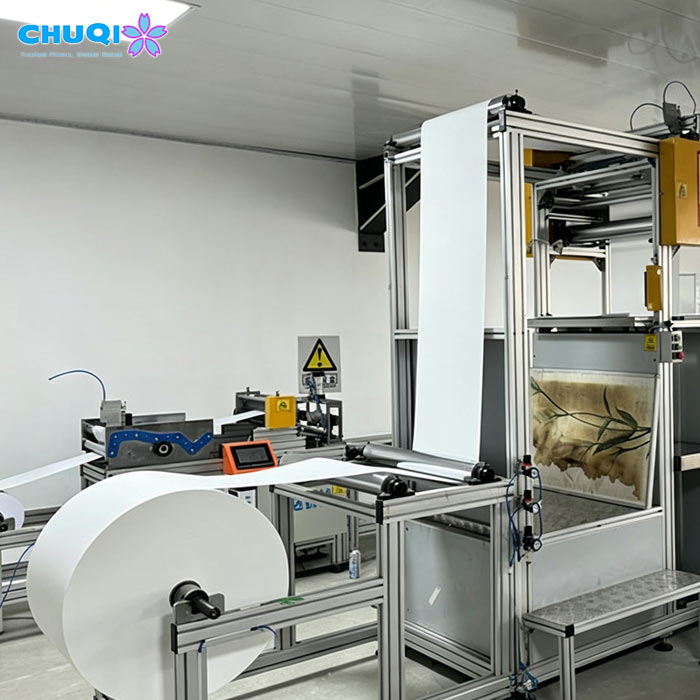


Engineering Audit Criterion 2: Shop-Floor Automation and Pleat Geometry Control
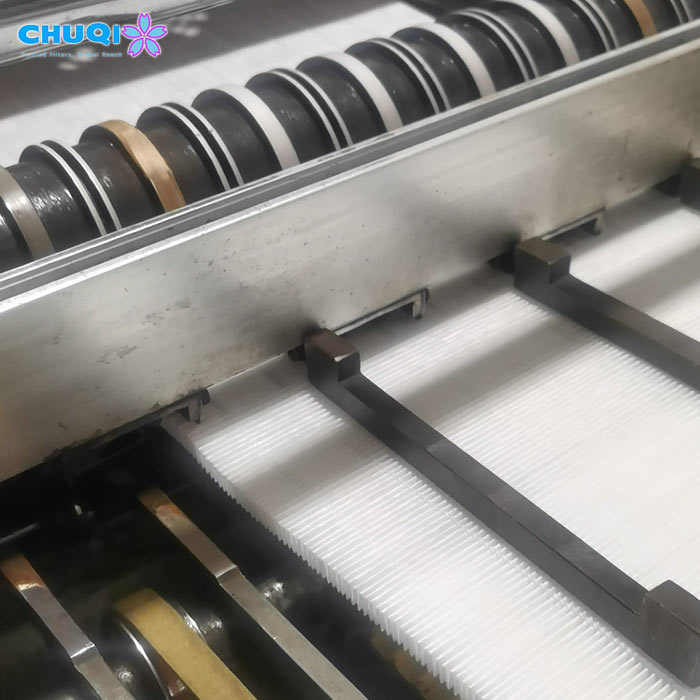
The aerodynamic performance, pressure drop, and dust-holding capacity of a mini-pleat HEPA filter are dictated by precision mechanics on the production floor. Manual or semi-automated assembly introduces geometric variances that directly compromise laminar airflow.
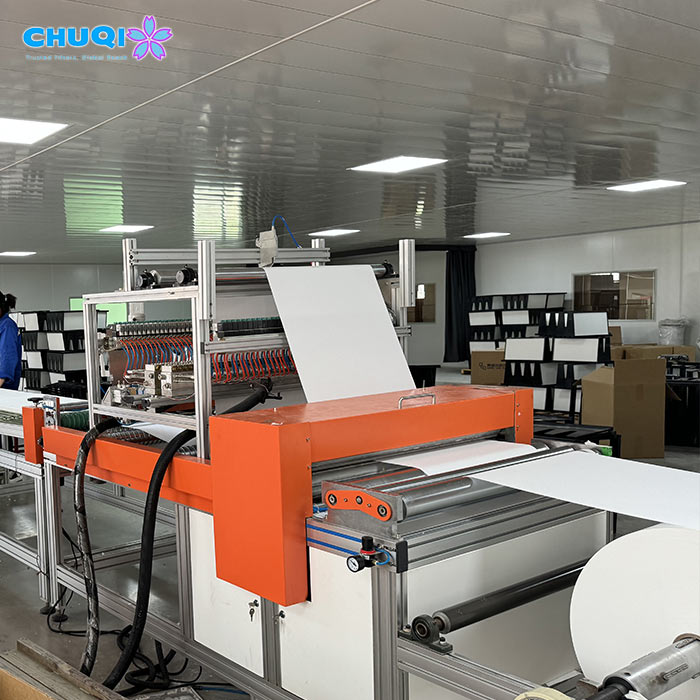
High-Speed Rotary Pleating Dynamics: Advanced source factories utilize computer-controlled rotary pleating machinery equipped with synchronized thermoplastic hot-melt bead application systems. The aspect ratio and height of the glue separators must be engineered to prevent media blinding (masking) while maintaining rigid pleat-to-pleat spacing. Uniform pleat geometry ensures that airflow encounters predictable resistance across the entire face area, eliminating localized turbulence and premature media degradation.
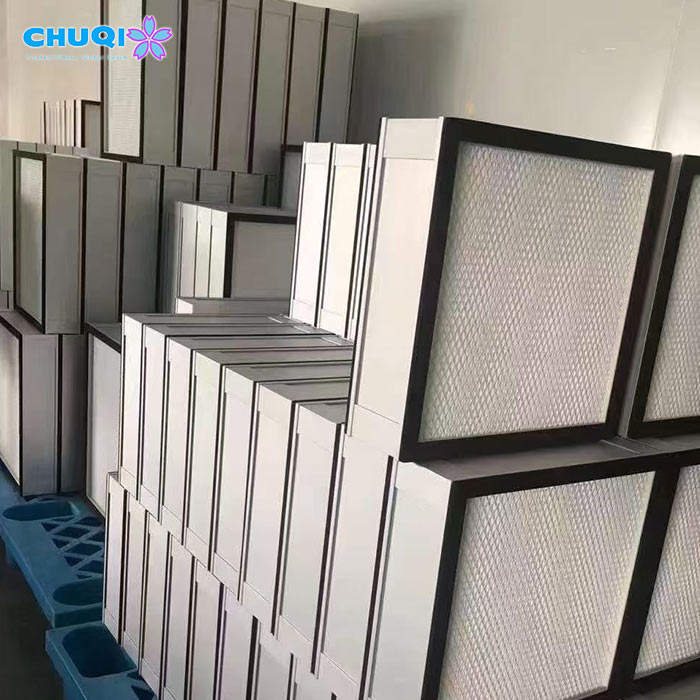
Frame Squareness and Seal Integrity: Automated miter-cutting and pneumatic corner-key locking systems guarantee absolute diagonal squareness (with tolerances kept within sub-millimeter thresholds). For gel-seal configurations, automated dispensing robots apply polyurethane or silicone gel with consistent shore hardness and depth, ensuring seamless, knife-edge engagement when seated into gel-grid framing systems. (For a detailed analysis of how structural squareness minimizes on-site installation labor, see our Site Labor Cost Reduction Guide).
Engineering Audit Criterion 3: Unmatched Customization Flexibility for Complex Engineering Projects
One of the most compelling strategic advantages of partnering directly with a source factory is the ability to execute precise, non-standard engineering customizations that asset-light trading companies cannot accommodate. Cleanroom retrofits and specialized industrial applications frequently demand bespoke configurations.
Bespoke Dimensional & Frame Depth Engineering: Whether a project requires non-standard face dimensions, custom flange profiles, or specific depth constraints to fit tight ceiling plenums, a true source factory can rapidly adjust extrusion setups and production parameters without re-routing through third-party intermediaries.
Tailored Sealing & Efficiency Configurations: Direct factory partnerships enable seamless adaptation of terminal filtration components—including customized gel-seal channel depths, polyurethane gasket placement, specialized protective face screens, and customized efficiency tiers (from H13 to U15) tailored precisely to local HVAC compliance and static pressure requirements.

Engineering Audit Criterion 4: Rigorous Quality Control and Standard Testing Protocols
The differentiator between a dependable manufacturing partner and a generic assembly house lies in their structured quality control infrastructure. While stringent 100% individual aerosol scanning (such as EN 1822 / ISO 14644 scan tests) is applied to critical pharmaceutical or semiconductor-grade cleanroom applications, reliable source factories maintain rigorous batch testing and structural integrity protocols for standard commercial requirements.
Structured Batch Testing & Quality Assurance: A credible source factory implements rigorous standard operating procedures (SOPs), including burst pressure tests, media efficiency verification, and dimension inspections across every production batch to ensure consistent baseline performance.
Batch Traceability and Submittal Documentation: Every production run is linked to corresponding material lots and internal quality logs, providing project contractors and procurement teams with transparent inspection data and reliable factory compliance documentation prior to site delivery.
Logistics Engineering: Protecting Structural Integrity and Optimizing Freight Density
International distribution introduces mechanical stresses—vibration, shock, and humidity fluctuations—that can compromise delicate micro-glass media or warp aluminum frames before installation.
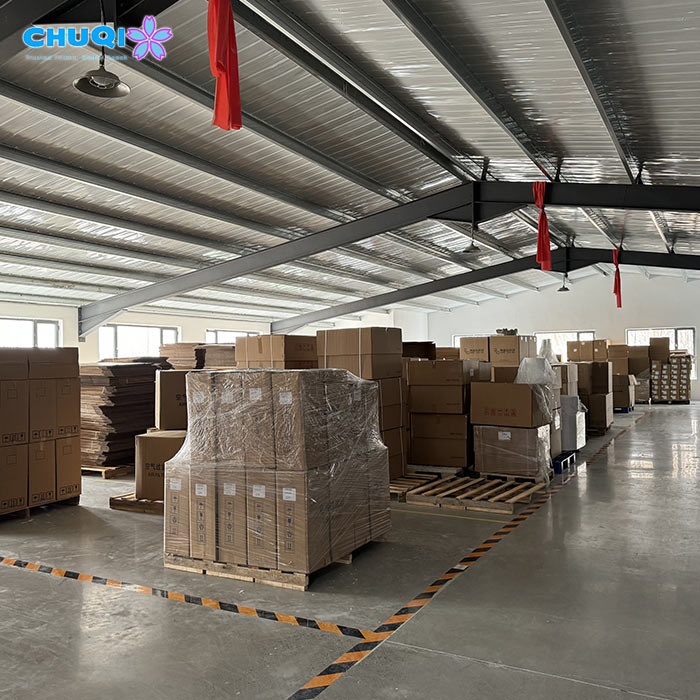
Multi-Layer Export Packaging Protocols: Premium source factories implement rigorous packaging engineering, including anti-static moisture-barrier shrink-wrapping, high-density polyethylene edge protectors, and heavy-duty corrugated or custom fumigated wooden crating designed to withstand multi-modal maritime transport.
Volumetric Cube Optimization: As explored in our commercial margin guide, true manufacturing partners engineer frame profiles and packaging dimensions to maximize 40-foot high-cube (40HQ) container utilization. Optimizing volumetric density directly reduces per-unit ocean freight overhead, protecting regional distributors and contractors against volatile logistics inflation.
Direct Factory Procurement & Engineering Resources
To ensure your procurement strategy eliminates unnecessary supply chain friction and secures top-tier industrial standards, explore our comprehensive technical and commercial library:
Commercial & Logistics Strategy: Review how direct sourcing intersects with Total Cost of Ownership (TCO) in How Space-Saving Mini-Pleat HEPA Filters Boost Contractor Margins & Distributor ROI.
On-Site Installation Labor Dynamics: Analyze job-site handling and drop-in efficiencies in Reducing Labor Costs on Site: The Easy-to-Install Advantages of Mini HEPA Filters.
System Airflow & Plenum Compatibility: Check static pressure mating protocols in The Ultimate Guide to Matching Mini HEPA Filters with FFU.
Direct Factory Inquiries & Audits: To review our manufacturing capabilities, request factory audit documentation, or schedule a direct technical consultation with our engineering team, connect with our factory direct team.