
Note: To explore how custom configurations fit into broader industrial cleanroom standards, check out our comprehensive Ultimate Mini-Pleat HEPA Filter Selection Guide.
In high-tech industrial manufacturing, cleanroom environments, and specialized equipment design, achieving absolute air purity without compromising internal airflow dynamics or tight spatial footprints is a constant engineering challenge. Original Equipment Manufacturers (OEMs) and facility managers frequently require filtration solutions tailored precisely to non-standard dimensions, specific frame depths, and rigorous multi-tier efficiency standards.
Whether you are designing advanced Fan Filter Units (FFUs), semiconductor isolation enclosures, or sterile pharmaceutical suites, understanding the technical boundaries of custom filtration is vital. Below is a comprehensive engineering guide examining why custom mini-pleat filters—spanning efficiency tiers from H10 to U16—have become the industry benchmark, how they perform across critical applications, their core technical specifications, and key B2B procurement considerations.
What Makes Mini-Pleat Technology Superior? (Benefits & Advantages)
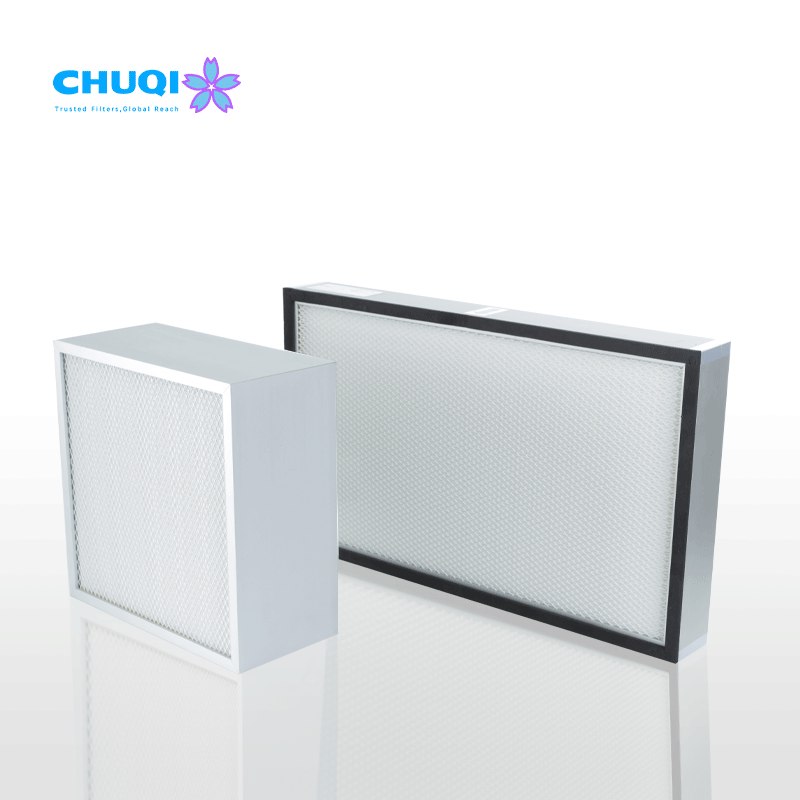
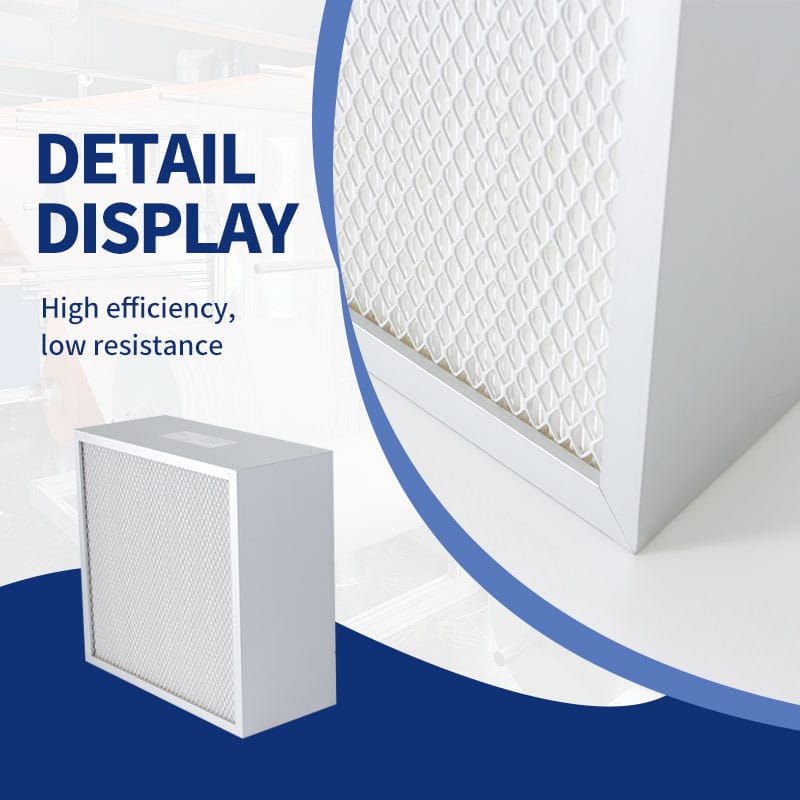
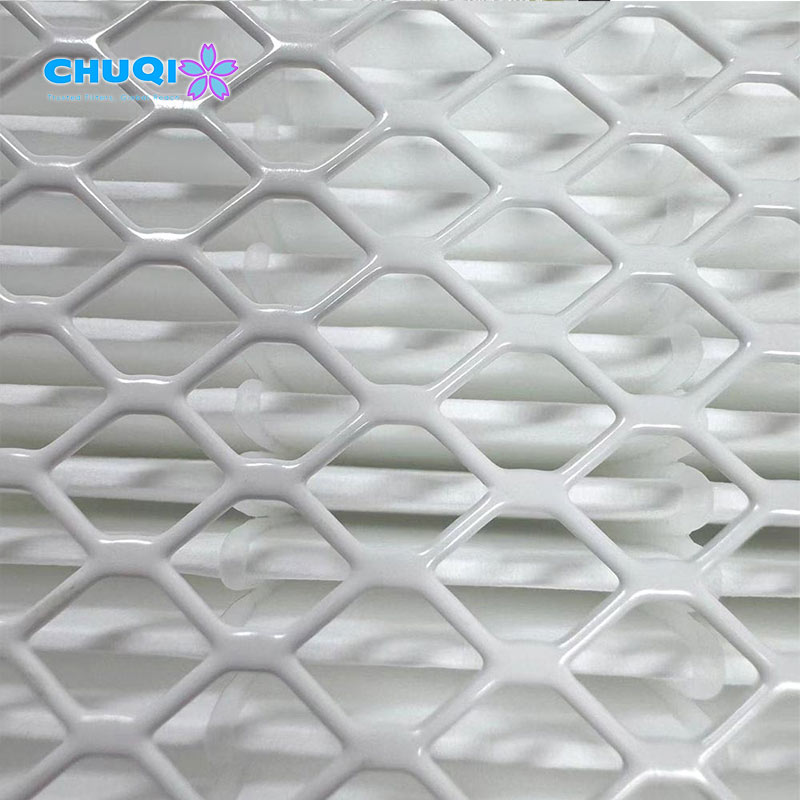
Traditional high-efficiency filters often rely on bulky corrugated aluminum separators to space out filter pleats. In contrast, modern mini-pleat technology uses ultra-thin, precise hot-melt adhesive beads to create close, uniform pleat spacing.
Lower Pressure Drop & Energy Savings: Aerodynamic pleat spacing ensures smooth airflow, significantly reducing initial resistance and overall HVAC or equipment energy consumption.
Compact, Space-Saving Footprint: Mini-pleat designs deliver double the filtration surface area in a shallow depth (e.g., 50mm–90mm depth), making them ideal for space-constrained OEM equipment.
Superior Dust Holding Capacity: Uniform air velocity across our in-house manufactured media prevents localized clogging, delivering a longer operational lifespan and reducing maintenance cycles.
Leak-Free Structural Integrity: Automated frame sealing combined with continuous polyurethane (PU) or liquid gel seals guarantees 100% airtight operation under critical operating pressure.
Primary Application Scenarios & How Mini-Pleat Filters Deliver Value
For OEMs and critical facility managers, air filtration is far more than a consumable line item—it is a core operational safeguard. Here is how our custom mini-pleat filters play a pivotal role across demanding industrial applications:
1. OEM Equipment Integration (FFUs, Biosafety Cabinets & Clean Benches)
Application: Integrated directly into equipment like Fan Filter Units (FFUs), biosafety cabinets, laminar flow hoods, and mobile air scrubbers.
Key Value:
Optimizes Airflow Dynamics: Uniform pleat spacing ensures laminar (non-turbulent) airflow across the working surface, preventing cross-contamination in sensitive manual or robotic operations.
Protects Equipment & Operators: High-efficiency particle capture prevents airborne pathogens, fine hazardous powders, or toxic aerosols from reaching operators or escaping into the facility.
Extends Equipment Motor Life: Low internal airflow resistance reduces electrical stress on internal blower fans, lowering operational noise and energy consumption for OEM equipment.
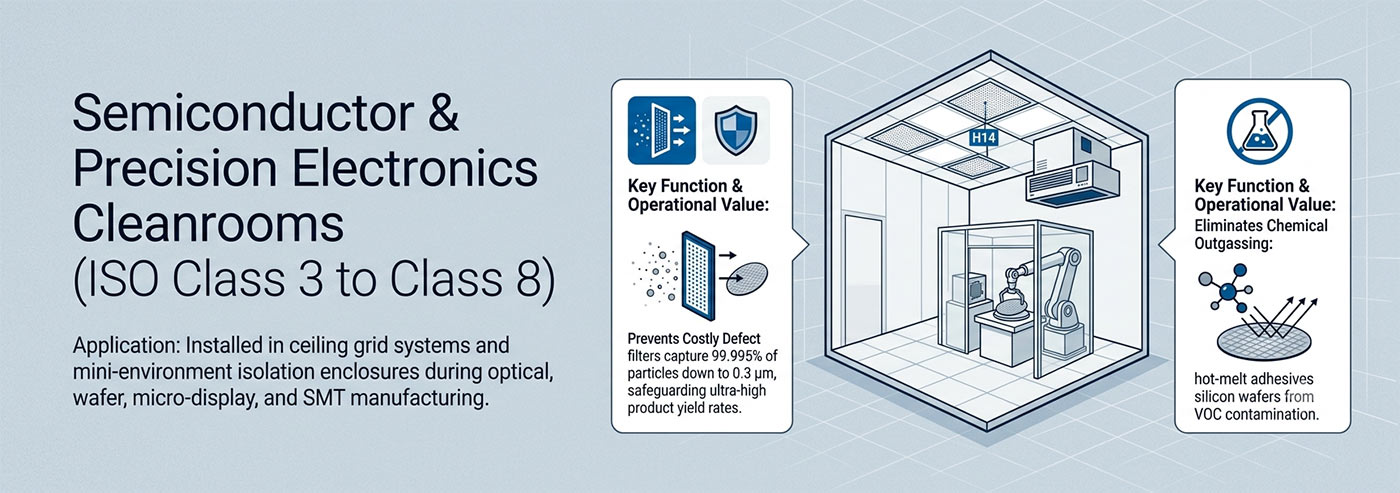
2. Semiconductor & Precision Electronics Cleanrooms (ISO Class 1 to Class 8)
Application: Installed in ceiling grid systems and mini-environment isolation enclosures during optical, wafer, micro-display, and SMT (Surface Mount Technology) manufacturing.
Key Value:
Prevents Costly Defect Rates: In microelectronics, a single sub-micron dust particle can short-circuit a wafer or obscure an optical lens. Depending on your cleanroom requirements, our units deliver customized capture rates from H13/H14 up to U15/U16 (capturing 99.97% to 99.99995%+ of particles down to MPPS sizes), directly safeguarding ultra-high product yield rates.
Eliminates Chemical Outgassing: Manufactured using proprietary, non-outgassing filter media and hot-melt adhesives to protect sensitive silicon wafers from volatile organic compound (VOC) contamination.
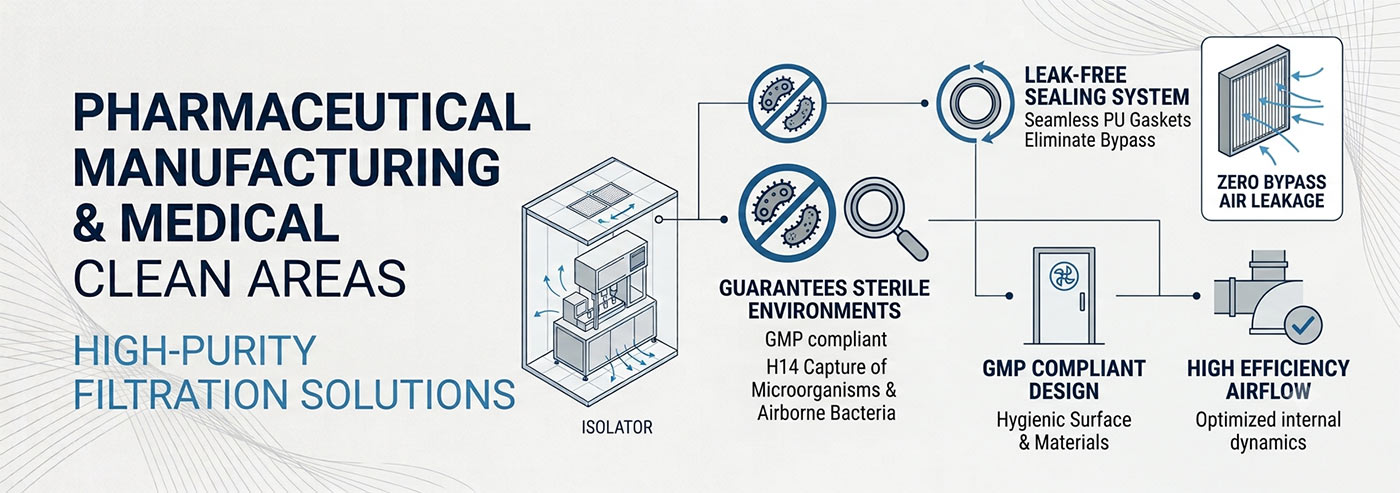
3. Pharmaceutical Manufacturing & Medical Clean Areas
Application: Deployed in sterile drug filling lines, processing suites, surgical operating rooms, isolators, and packaging zones.
Key Value:
Guarantees Sterile Environments: Effectively captures microorganisms, airborne bacteria, fungal spores, and virus-carrying droplets, ensuring compliance with strict GMP (Good Manufacturing Practice) standards.
Ensures Leak-Free Sealing: Precise gel-seal or continuous PU gaskets eliminate edge-bypass air leakage, which is critical during high-risk sterile pharmaceutical batching and filling operations.
4. Precision Industrial Machinery & Industrial Exhaust Systems
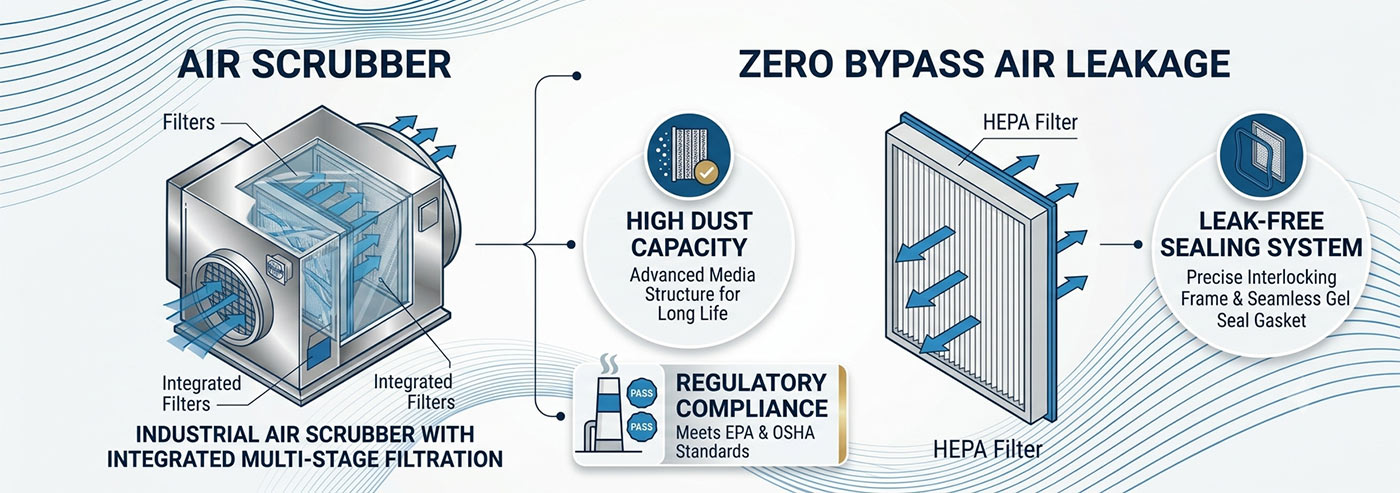
Application: Terminal high-efficiency filtration stage for industrial air scrubbers, heavy laser-cutting exhaust systems, and high-end automotive paint spray lines.
Key Value:
High Dust Capacity in Shallow Frames: Industrial machinery often lacks physical space for bulky traditional filters. Mini-pleat technology provides maximum media surface area within a compact frame, managing heavy dust loads without requiring frequent replacements.
Regulatory Compliance: Ensures exhaust air meets local environmental and workplace safety regulations before air is recirculated into the plant or exhausted outdoors.
Technical Specifications & Performance Metrics
As a certified mini-pleat filters manufacturer with full upstream control over media production, our products adhere strictly to international testing standards (EN1822 / ISO 29463):
| Feature / Parameter | Standard Specification |
| Filter Efficiency Tier | Full Spectrum Customization: H10 to U16 (85% to 99.99995%+ @ MPPS) |
| Media Material | Self-Produced Premium Micro-Glass Fiber (PTFE optional for high-impact environments) |
| Frame Material | Extruded Anodized Aluminum / Galvanized Steel / Stainless Steel |
| Pleat Separators | Precision Hot-Melt Adhesive Beads |
| Gasket Options | Seamless Continuous PU Gasket / EVA / Liquid Gel Seal |
| Operating Temp / Humidity | Max 80°C / up to 100% RH |
| Initial Resistance | ≈ 80 Pa – 120 Pa (varies by rated airflow velocity and efficiency class) |
Service Life & Maintenance Schedule
Understanding the replacement timeline is vital for optimizing facility maintenance budgets and avoiding operational downtime.
Average Replacement Cycle: Typically 8 to 12 months under continuous standard industrial operating conditions (or up to 24 months in pristine cleanrooms supported by multi-stage pre-filtration).
Key Replacement Triggers:
Final Pressure Drop Reached: Differential pressure gauge reaches twice the initial resistance level (typically ≈ 250 Pa – 300 Pa).
Failed Integrity Test: On-site aerosol leak testing (PAO / DOP scan test) detects micro-bypass leaks across the media or seal.
The In-House Supply Chain Advantage & Quality Assurance
Beyond product specs, procurement directors and OEM design engineers prioritize supplier reliability, supply chain security, and strict quality control.
Eliminating Lead Time Bottlenecks: Unlike assemblers who rely on outsourced paper vendors, our complete vertical integration allows us to manufacture our own filter media in-house. This eliminates raw material delays and supports expedited manufacturing runs.
100% Individual Scan Testing: In high-tech industries, zero-defect quality is mandatory. Quality control begins at the fiber level before pleating even starts. Every single terminal filtration unit undergoes 100% individual aerosol leak testing (PAO/DOP scan) and is shipped with an individual test report before final packaging.
Whether you are looking for a reliable custom filter manufacturing partner for OEM equipment or high-volume standard units for an upcoming facility expansion, our engineering team is fully equipped to support your project requirements.
 Ready to discuss your custom OEM requirements? Request Factory-Direct Pricing & Engineering Support Within 12 Hours or explore our complete Product Catalog to find standard dimensions and frame options.