
An industrial HEPA filter can operate for months or even years without visible signs of damage. But as operating conditions change, its resistance to airflow may increase, its components may deteriorate, or its ability to maintain the required filtration performance may be compromised.
So, when should an industrial HEPA filter be replaced?
There is no universal replacement interval. A filter may need replacement because it has reached its applicable final resistance limit, can no longer maintain the required airflow, has damaged media or seals, or fails an appropriate integrity test.
The important point is that pressure drop, airflow and filtration integrity describe different aspects of filter performance. Looking at only one of them can lead to unnecessary replacement or continued operation with a filter that no longer performs as intended.
This guide explains the main signs of HEPA filter deterioration, why service life varies between industrial applications, and how to make a more reliable replacement decision.
1. What Determines the End of an Industrial HEPA Filter's Service Life?
A HEPA filter is designed to capture fine airborne particles while allowing air to pass through its fibrous media. Particles are captured through several mechanisms, including interception, inertial impaction and diffusion.
During operation, captured particles accumulate within and on the filter media. This changes the resistance to airflow and can gradually increase the pressure required to move air through the filter.
However, particle loading is not the only reason an industrial HEPA filter reaches the end of its service life.
Its condition can also be affected by:
Physical damage to the filter media or pleat structure
Deterioration of gaskets, adhesives or supporting components
Moisture exposure or condensation
Incompatible chemical exposure
Frame deformation or installation problems
Failure to maintain the required filtration performance
These conditions lead to two different types of problems.
A loaded HEPA filter generally develops higher airflow resistance as particles accumulate. Its filtration media may still be intact, but increasing resistance can eventually prevent the system from maintaining the required airflow.
A damaged or leaking HEPA filter may lose filtration integrity even when its pressure drop is not unusually high. Air can pass through damaged media or bypass the filter through a compromised seal.
Understanding this distinction is essential. A filter’s replacement decision should consider both its operating resistance and its ability to provide the required filtration performance.
2. How Does Increasing HEPA Filter Pressure Drop Affect Performance?
Pressure drop is one of the most useful indicators of HEPA filter loading.
When a new filter operates at a specified airflow, air passes through its media with a characteristic initial resistance. As particles accumulate, the available pathways for airflow become more restricted, and pressure drop generally increases.
But a rising pressure drop does not automatically mean the filter must be replaced immediately.
The effect depends on the fan system and the operating conditions.
Why does higher filter resistance reduce airflow?
In a typical constant-speed fan system, airflow is determined by the interaction between the fan’s performance curve and the resistance of the complete air-handling system.
As the HEPA filter becomes more resistant, the system requires a greater pressure difference to maintain the same airflow.
The fan’s operating point shifts. In many installations, this results in reduced airflow.
For example, a cleanroom air-handling unit may initially deliver the required supply airflow with a new HEPA filter. After extended operation, particle accumulation increases filter resistance. If the fan cannot overcome the additional resistance, the volume of air delivered to the cleanroom begins to decrease.
The filter may still retain particles effectively, but the room may no longer receive the airflow required by its ventilation design.
This is when filter loading becomes an operational problem rather than simply a change in pressure reading.
Why can a variable-speed fan maintain airflow longer?
Systems equipped with variable-speed fans or airflow control may respond differently.
As filter resistance increases, the control system can increase fan speed to maintain the target airflow. This allows the installation to continue operating at the required air volume for longer.
However, compensation has limits.
Higher fan speed can increase energy consumption and move the fan closer to its operating limit. Eventually, the system may no longer be able to maintain the required airflow.
This explains why two facilities using identical HEPA filters can experience different replacement intervals. Their fan capacity, control strategy and overall system resistance may be very different.
Is there a universal final pressure drop for HEPA filter replacement?
No. There is no single final pressure-drop value that applies to every industrial HEPA filter.
The appropriate final resistance limit depends on the filter design, rated airflow, equipment capacity and operating requirements. The filter manufacturer’s specifications and the system designer’s operating limits should guide the decision.
It is also important to compare pressure-drop readings at similar airflow conditions. A reading taken at a lower airflow cannot be directly compared with one taken at a higher airflow.
For this reason, a pressure-drop trend is more useful when airflow, measurement locations and operating conditions remain consistent.
For a deeper explanation of initial resistance, operating resistance and final resistance, see our guide to HEPA Filter Pressure Drop: What Affects It and How to Specify It.
3. When Should a HEPA Filter Be Replaced Even If Pressure Drop Is Normal?
A HEPA filter does not always need replacement because its pressure drop has become too high.
In some cases, the more serious problem is a loss of filtration integrity.
Pressure drop describes resistance to airflow. It does not directly establish whether the filter media is intact or whether the installed filter assembly is properly sealed.
Damaged filter media
A tear, puncture or distorted pleat can create a path through which air passes without receiving the intended filtration.
The damage may be difficult to identify while the filter remains installed. A filter can look relatively clean from the front while its internal media or pleat structure has already been compromised.
This matters particularly in high-efficiency filtration applications, where even a relatively small damaged area may affect the performance of the complete filter.
If the filter media itself is damaged and the required filtration performance cannot be maintained, replacement is generally necessary.
Deteriorated gaskets and frame deformation
The filter media is only one part of the filtration assembly.
Gaskets, frames and mounting interfaces help ensure that air passes through the media rather than around it.
If a gasket loses its sealing ability, air may bypass the filter. A distorted frame can create a similar problem by preventing the filter from seating correctly in its housing.
Because a bypass path may offer less resistance than the filter media, a pressure-drop reading alone may not reveal the problem.
This is why a stable or unexpectedly low pressure drop should not automatically be interpreted as proof that a HEPA filter is in good condition.
Moisture and chemical exposure
Conventional HEPA filter media and supporting components are designed for particular operating environments.
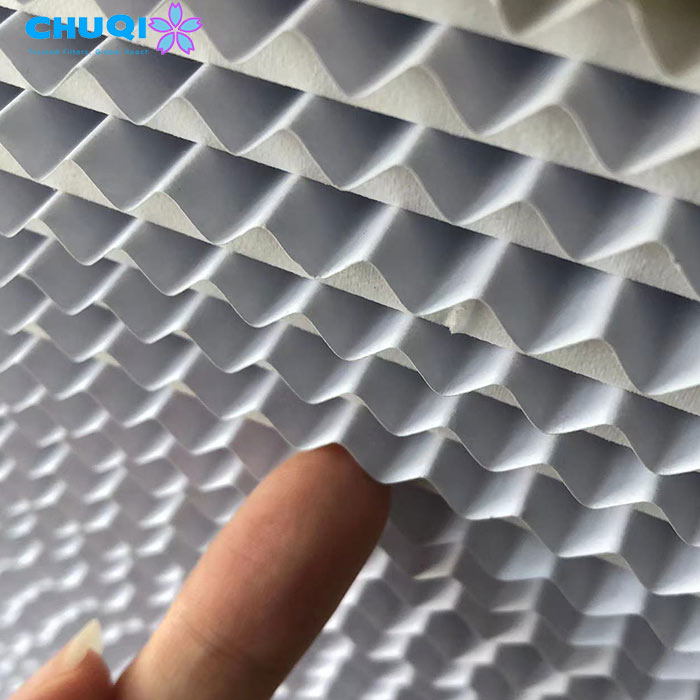
Condensation, water droplets or incompatible chemicals may affect the media, adhesives, separators or sealing materials.
For example, moisture can cause certain components to weaken or deform. Chemical exposure may also affect materials that were not selected for the application.
If exposure has compromised the filter’s structural integrity or filtration performance, waiting for pressure drop to increase is not an appropriate replacement strategy.
Why installed filter leakage testing matters
A factory-tested HEPA filter and an installed HEPA filtration system are not the same thing.
Under EN 1822, HEPA filter classification is based on filtration performance at the most penetrating particle size (MPPS). For example, H13 and H14 filters have different integral and local efficiency requirements.
Factory classification testing evaluates a filter under specified test conditions. Once installed, leakage may occur through damaged media, the filter perimeter, a gasket or the mounting interface.
An appropriate installed filter leakage test can help identify these problems. It evaluates the integrity of the installed filtration arrangement rather than simply repeating the factory classification test.
For critical applications, installed leakage testing is particularly important because a filter that meets its factory classification does not automatically guarantee a leak-free installation.
If a leak is caused by an installation or sealing issue, correcting that issue may be possible without replacing an otherwise sound filter. If the media itself is damaged or the filter cannot meet the required integrity criteria, replacement is generally necessary.
For a clearer explanation of efficiency classes and their differences, see HEPA Filter Grades Explained: EPA, HEPA and ULPA.
4. Why Does Airflow Sometimes Decrease Even When the HEPA Filter Is Not Clogged?
Imagine a factory where the ventilation system begins delivering less air than usual. The maintenance team suspects that the HEPA filter is blocked and prepares to replace it.
But after installing a new filter, the airflow problem remains.
This happens because reduced airflow does not always originate from the HEPA filter.
A HEPA filter operates as part of a larger air-handling system. The fan, upstream filters, cooling coils, dampers, ducts and control components all influence the volume of air delivered.
Fan performance is one possible cause. A dirty fan impeller, worn drive belt, motor problem or incorrect fan speed can reduce airflow even when the HEPA filter remains serviceable.
Upstream restrictions can produce similar symptoms. A heavily loaded pre-filter, dirty cooling coil, partially closed damper or blocked duct may restrict airflow before it reaches the HEPA stage.
Air leakage can also affect system performance. Damaged duct connections or poorly sealed filter housings may prevent the system from delivering the intended volume of air to the required location.
The relationship between pressure drop, airflow and downstream particle concentration can help narrow down the cause:
| HEPA Filter Pressure Drop | Airflow | Downstream Particle Level | Possible Explanation |
|---|---|---|---|
| Increasing | Decreasing | Stable or acceptable | Filter loading may be restricting airflow |
| Stable | Decreasing | Stable | Fan performance, upstream restrictions or control problems may be involved |
| Stable | Stable | Increasing | Filter leakage, installation bypass or another contamination source may be involved |
| Unusually low | Normal or high | Increasing | Possible media damage or bypass leakage; further testing is needed |
These patterns are diagnostic clues, not definitive conclusions. Actual results depend on system design, measurement conditions and the source of contamination.
In particular, increased particle counts downstream do not automatically prove that the HEPA filter is damaged. An appropriate leakage test and investigation of other contamination sources may be needed.
The key lesson is that replacing a HEPA filter will not solve a fan, duct or control-system problem.
For more information about airflow calculations and the relationship between airflow and filter performance, see HEPA Filter Airflow.

5. How Long Does an Industrial HEPA Filter Actually Last?
One of the most common questions from industrial users is how often HEPA filters should be replaced.
The difficulty is that two filters with identical dimensions and filtration grades may have very different service lives.
A useful way to understand HEPA filter service life is to consider the cumulative particle load reaching the filter, rather than operating hours alone.
A filter processing relatively clean air for long periods may experience slower loading than one exposed to high particle concentrations for shorter periods. This is why operating hours alone cannot reliably predict when an industrial HEPA filter needs replacement.
Consider two industrial facilities using the same type of HEPA filter.
The first facility has effective upstream filtration and handles relatively clean air. The second processes air containing a much higher concentration of airborne particles.
Even if both filters operate for the same number of hours, the second filter may accumulate particles faster and experience a more rapid increase in pressure drop.
Several operating conditions explain these differences.
Dust concentration and upstream filtration
The amount of particulate matter entering the HEPA stage has a direct influence on filter loading.
Pre-filtration captures larger particles and a portion of the incoming dust before air reaches the final HEPA filter.
When upstream filters are ineffective, incorrectly selected or heavily loaded, the HEPA stage may receive a greater particle burden.
This is why an effective pre-filtration arrangement can extend HEPA filter service life. It reduces the amount of dust reaching the final filter rather than asking the HEPA filter to handle the entire incoming particle load.
Airflow and operating hours
A filter running continuously experiences a different cumulative operating load from one used intermittently.
Airflow also affects how particles move through the filter media and how much resistance the system experiences.
Higher airflow does not automatically mean shorter filter life in every application. The actual effect depends on particle characteristics, media design, filter area and operating conditions.
Humidity and process environment
Humidity becomes important when it leads to condensation, direct moisture exposure or changes in filter materials.
Industrial environments may also contain chemical vapors or aerosols that are not present in ordinary ventilation applications.
A HEPA filter designed for general particulate filtration should not automatically be assumed suitable for every process environment.
Maintenance and installation conditions
Filter handling can affect service life before the equipment even starts operating.
A filter exposed to impact, compression or careless installation may develop damaged media or sealing problems. Unsuitable storage conditions can also affect components before the filter is put into service.
There is no fixed number of years that applies to every industrial HEPA filter. Its actual service life depends on particle load, operating hours, airflow, upstream protection, environment and physical condition.
A replacement interval used in another factory may have little relevance to your own system.
6. Can a HEPA Filter Be Cleaned Instead of Replaced?
Cleaning may sound like an attractive way to reduce maintenance costs, particularly when a large industrial system contains multiple HEPA filters.
However, conventional disposable HEPA filters should not be treated like washable coarse pre-filters.
HEPA media captures particles within a complex network of fine fibers. The captured material is not necessarily sitting loosely on the surface where it can be removed without affecting the filter.
Compressed air, brushing or washing can disturb this structure.
High-pressure air may damage delicate fibers, distort pleats or weaken the bonding between filter components. Water washing may affect media, adhesives, separators and gaskets that were not designed for wet cleaning.
Even if the filter looks cleaner afterward, that does not prove its original filtration efficiency has been restored.
The same applies to pressure drop. A lower pressure reading after cleaning does not necessarily mean the filter has returned to its original performance. Damage or leakage can also reduce airflow resistance.
Some specialized filters may be designed for cleaning and reuse, but this must be an established feature of the filter design and supported by appropriate manufacturer instructions and performance assessment.
For ordinary disposable industrial HEPA filters, replacement is generally the more reliable way to restore the intended filtration performance.
7. How Can You Extend the Service Life of an Industrial HEPA Filter?
The best way to extend HEPA filter service life is not to clean the filter more aggressively or wait longer before replacing it. It is to reduce unnecessary particle loading and protect the filter from conditions that can damage its structure.
Use effective upstream filtration
Pre-filtration plays a major role in determining how much dust reaches the final HEPA stage.
A properly designed filtration arrangement removes a portion of the incoming particle load before it reaches the high-efficiency filter.
For example, an industrial air-handling system exposed to outdoor dust may use primary and secondary filtration upstream of the HEPA stage.
The objective is to reduce unnecessary loading while keeping the total system resistance within the fan’s operating capability.
Keep the system within its intended airflow range
Airflow changes can affect filter resistance and particle loading.
Operating a system at unnecessarily high airflow may increase resistance and alter the way particles are distributed through the filter media.
Maintaining the designed airflow helps keep system performance predictable and avoids placing unnecessary demands on the fan and filter.
Follow the pressure-drop trend
A single pressure reading tells you what is happening at one moment. A series of readings shows how the filter is changing over time.
For example, a gradual increase in pressure drop may indicate normal particle accumulation. A sudden change may point to an unusual loading event, a change in airflow or a measurement problem.
Recording pressure drop alongside operating airflow makes these trends more useful.
Measurements should be taken at consistent locations and under comparable operating conditions. Otherwise, changes in fan speed or airflow can make the readings difficult to interpret.
Protect the filter from moisture and mechanical damage
Avoid exposing conventional HEPA filters to condensation, water spray, impact or unnecessary handling.
During installation, the filter media should not be pressed, bent or used as a support surface.
Protecting the pleat pack, frame and gasket helps preserve the physical integrity that the filter needs throughout its service life.
8. What Should You Consider When Choosing a Replacement HEPA Filter?
When an industrial HEPA filter reaches the end of its service life, finding a replacement is not simply a matter of buying another filter with the same external dimensions.
Two filters may fit the same opening but behave differently once installed.
The difference may come from filtration efficiency, media construction, effective media area, initial resistance, frame design or sealing arrangement.
Filtration efficiency must remain suitable
The replacement filter should maintain the filtration class required by the application.
For EN 1822-classified HEPA filters, efficiency is evaluated at the most penetrating particle size (MPPS). Filters should not be considered equivalent based on a general efficiency percentage alone. Their classification and test basis also matter.
For example, replacing an H14 filter with a lower-efficiency product simply because the dimensions match may compromise the intended filtration performance.
Airflow resistance affects the existing fan system
A replacement filter with a significantly different pressure-drop characteristic may change the operating point of the fan.
This is especially important when replacing filters in existing equipment with limited fan capacity.
A suitable replacement should provide the required airflow without introducing unnecessary resistance.
Media area and filter construction matter
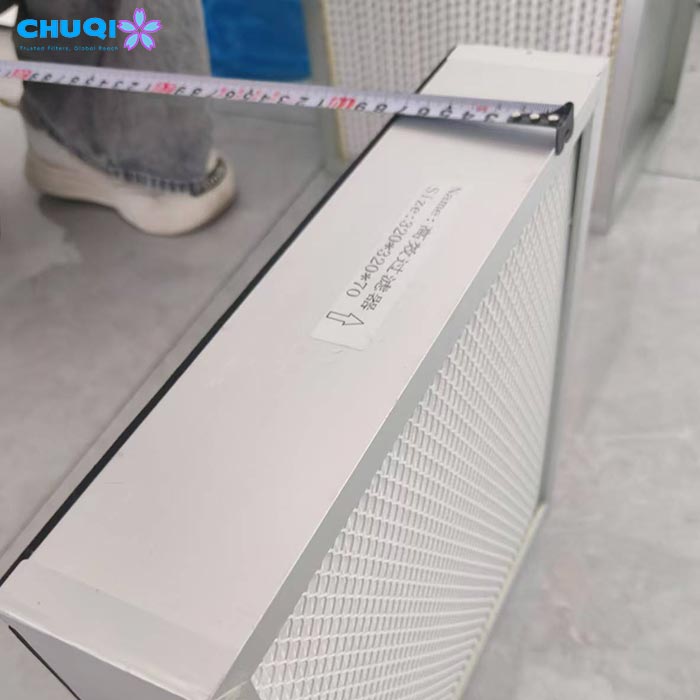
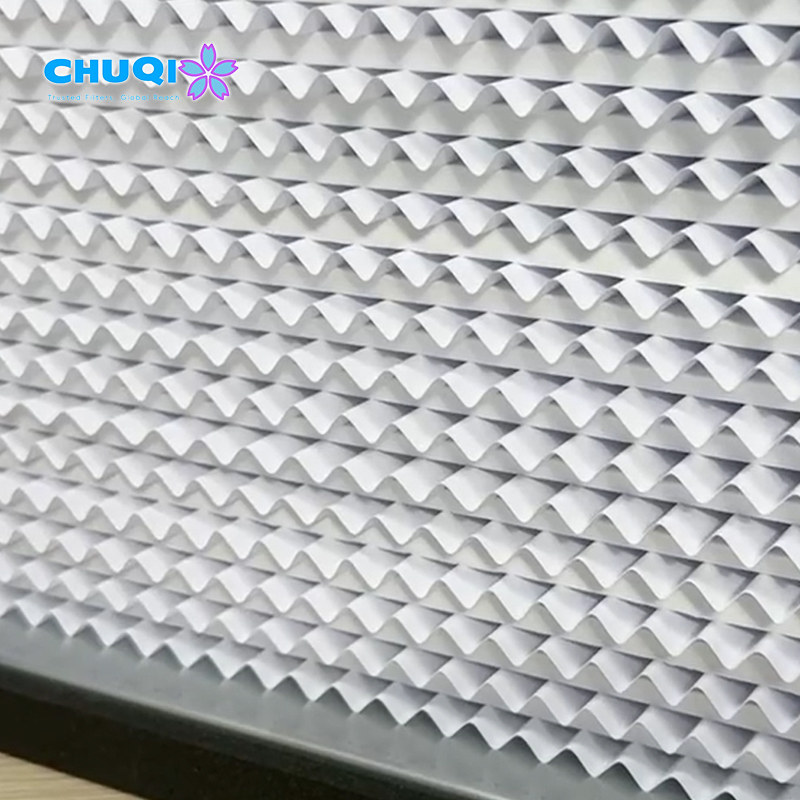
Two HEPA filters with the same external dimensions may have different effective media areas because of differences in pleat depth, pleat spacing and filter construction.
These differences can influence airflow resistance and the distribution of particles across the media.
The filter’s overall construction therefore matters just as much as its external size.
Frame and sealing design affect installation performance
Filter depth, frame material, gasket position and mounting interface all influence whether a replacement can be installed correctly.
For example, an aluminum-frame filter and a galvanized-steel-frame filter may have the same external dimensions but different structural or installation characteristics.
The frame and sealing arrangement should work with the existing housing rather than simply fit into the opening.
You can learn more about these differences in our guide to HEPA Filter Frame Materials: How to Choose the Right Frame.
Custom HEPA filters for non-standard industrial equipment
Some industrial systems use older equipment, special filter depths or non-standard installation interfaces.
In these cases, a customized HEPA filter may be more practical than modifying the existing housing or adapting an unsuitable standard product.
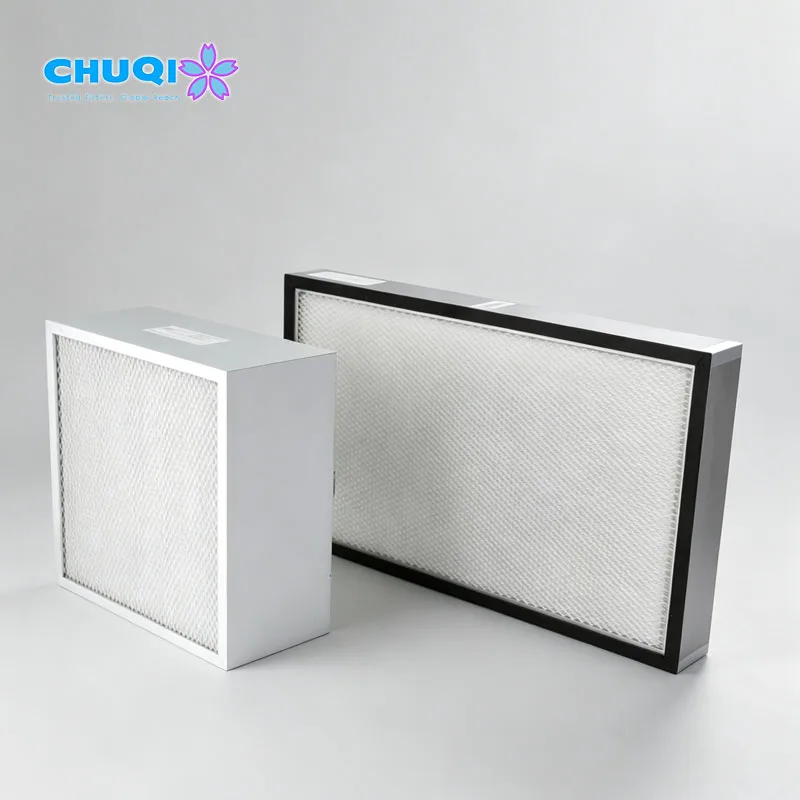
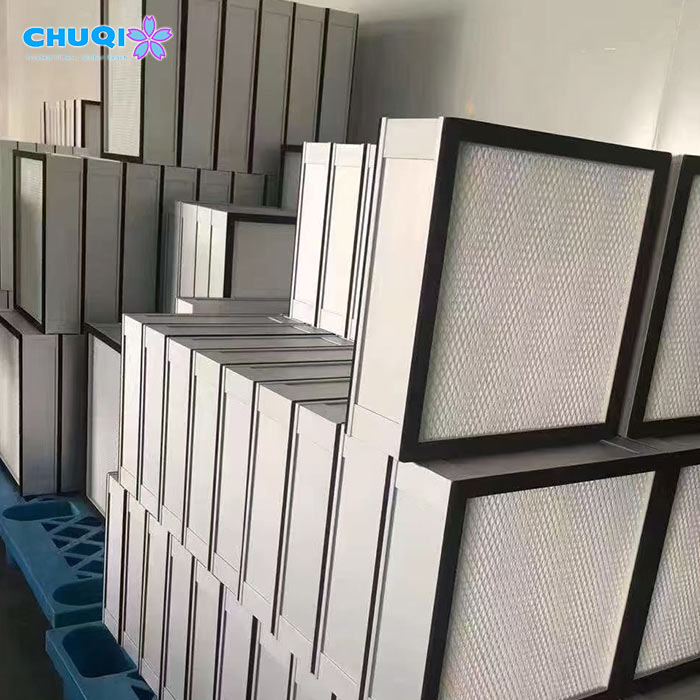
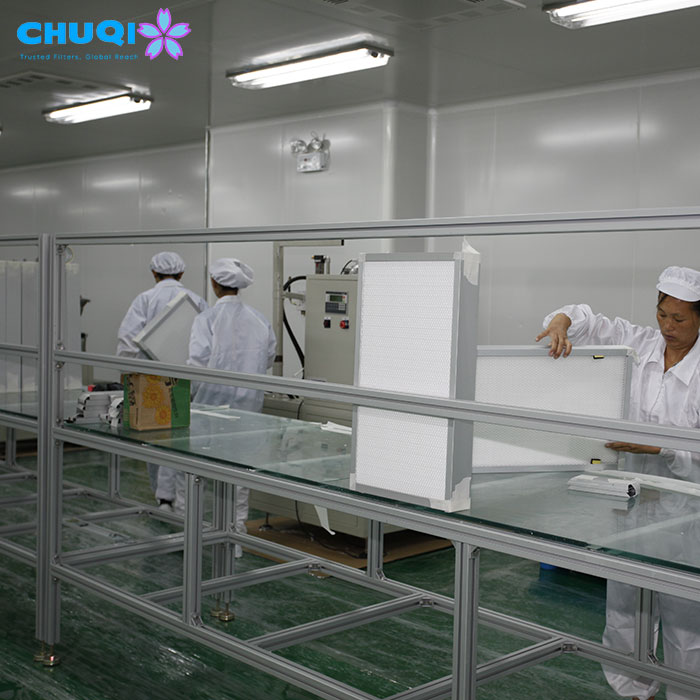
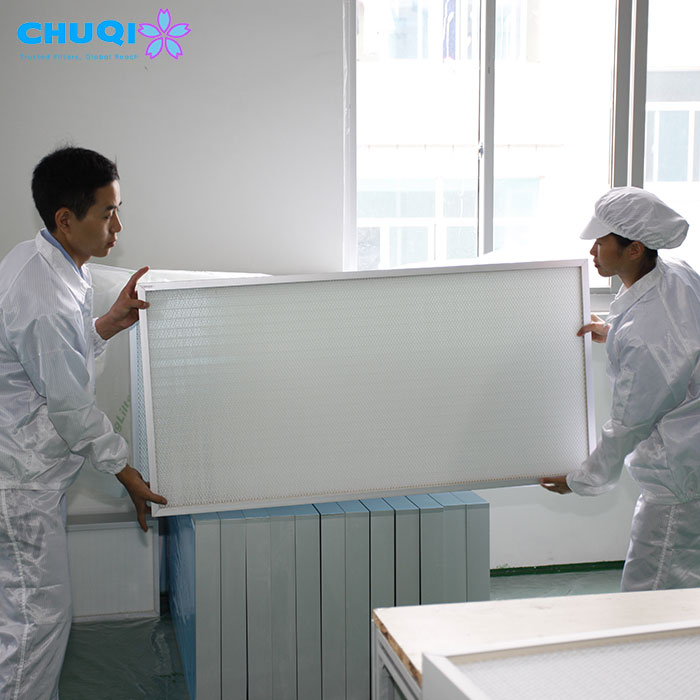
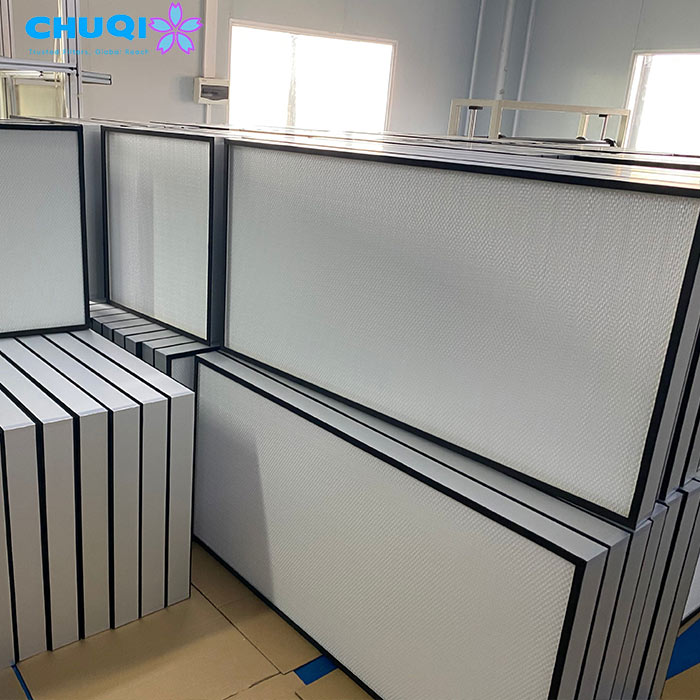
At Chuqi New Materials, we manufacture HEPA filters for industrial and cleanroom applications, with standard and customized solutions for different equipment designs.
Depending on the application, customization can cover filter dimensions, frame materials, filter construction and sealing arrangements.
Explore our HEPA Air Filter Products to learn more about our filter range, or visit our OEM HEPA Filter Development page to learn about customized filter development.
Choosing the Right HEPA Filter for Continued Performance
An industrial HEPA filter reaches the end of its service life when it can no longer provide the filtration performance or operating conditions required by the system.
Dust accumulation, rising pressure drop and reduced airflow are important parts of this process, but filter integrity and installation conditions matter just as much.
Understanding these relationships helps maintenance teams avoid unnecessary replacements while reducing the risk of operating with a damaged or ineffective filter.
At Chuqi New Materials, we manufacture HEPA filters for industrial and cleanroom applications, including customized solutions for different equipment designs and operating conditions.
Whether you need a replacement HEPA filter for existing industrial equipment or a customized solution for a non-standard installation, Chuqi New Materials can support different filter dimensions, frame designs and construction requirements.
Explore our HEPA Air Filter Product Catalog or contact our team to discuss a suitable solution for your application.
Frequently Asked Questions
How do I know when an industrial HEPA filter needs replacement?
An industrial HEPA filter generally needs replacement when it reaches its applicable final resistance limit, cannot maintain the required airflow, has damaged filter media or seals, or fails the required integrity test. Pressure drop alone cannot determine every replacement condition.
What is the recommended final pressure drop for a HEPA filter?
There is no universal final pressure-drop value for all HEPA filters. The appropriate limit depends on filter construction, rated airflow, fan capacity and system operating requirements. The filter manufacturer’s specifications and equipment design should guide the replacement limit.
Can a HEPA filter still work if its pressure drop increases?
Yes. A gradual increase in pressure drop is a normal consequence of particle accumulation. The filter may continue operating as long as its resistance remains within the applicable limit and it maintains the required airflow and filtration integrity.
How many years does an industrial HEPA filter last?
Industrial HEPA filter service life varies with dust concentration, upstream filtration, airflow, operating hours, humidity and maintenance conditions. There is no fixed lifespan that applies to every industrial application.
Can HEPA filters be cleaned and reused?
Conventional disposable HEPA filters should not be cleaned with compressed air or water unless they are specifically designed and approved for cleaning and reuse. Improper cleaning can damage the media, pleats and sealing components.
Does a HEPA filter need replacement if airflow decreases?
Not necessarily. Reduced airflow may result from filter loading, but fan problems, blocked ducts, closed dampers and system leakage can produce similar symptoms. The cause should be identified before replacing the filter.
Can I replace an industrial HEPA filter with a different brand?
Yes, provided the replacement meets the required filtration efficiency, airflow performance, pressure-drop characteristics, dimensions and sealing requirements. Matching external dimensions alone does not guarantee equivalent performance.