
OEM HEPA filter development is the process of translating equipment requirements into a defined filter configuration that can be manufactured, evaluated and approved for production.
For OEM equipment manufacturers, industrial filtration buyers and engineering teams, the process typically involves drawing review, configuration confirmation, sample manufacturing, performance evaluation and approval of the final production reference.
A successful sample must do more than fit the equipment. It should be evaluated against the agreed installation requirements, filtration performance, operating conditions and applicable acceptance criteria.
For a custom industrial HEPA filter project, the objective is to resolve technical uncertainties before bulk production begins.
You do not need every parameter finalized before contacting a manufacturer. An existing filter reference, equipment drawing, installation dimensions or preliminary performance specification can provide a starting point. The first step is to identify what is confirmed, what remains open and what the sample needs to demonstrate.
OEM HEPA Filter Development Process at a Glance
The exact development sequence depends on the application, the completeness of the initial specifications and the required validation scope.
| Development Stage | Main Activities | Expected Output |
|---|---|---|
| Drawing review | Check dimensions, interfaces, seals and drawing revisions | Reviewed drawing and list of open technical items |
| Configuration confirmation | Review filter construction, performance requirements and operating conditions | Agreed proposed configuration for sampling |
| Sample manufacturing | Build the sample against the identified configuration | Identifiable sample with applicable reference documents |
| Sample evaluation | Assess fit, performance and other agreed requirements | Evaluation results and documented deviations |
| Revision, if needed | Investigate failures or gaps and update the configuration | Revised sample or updated technical documents |
| Sample approval | Review the evidence and confirm the accepted configuration | Documented approval and production reference |
| Production release | Confirm manufacturing documents and agreed quality requirements | Authorized production basis |
These stages are related but not interchangeable. Completing a sample build does not establish that the filter has passed its required tests, and sample approval does not automatically verify every future production unit.
The following sections explain what to review at each stage.
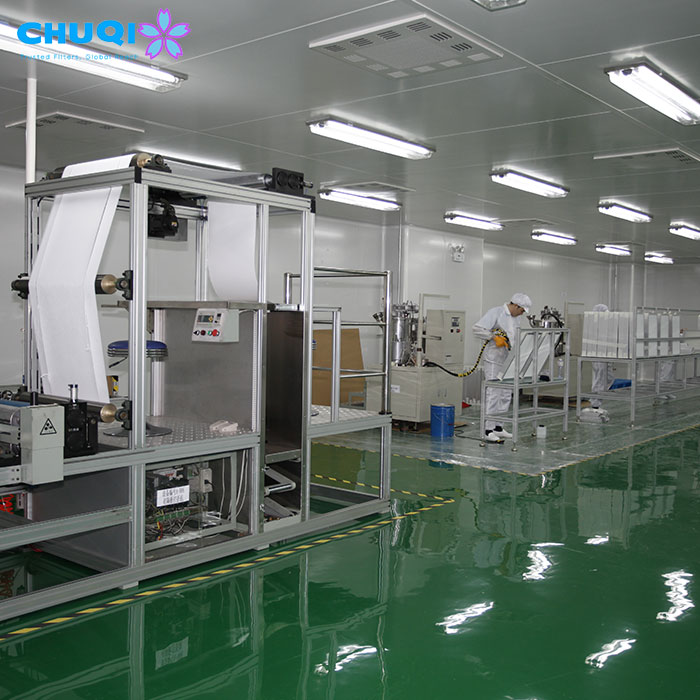
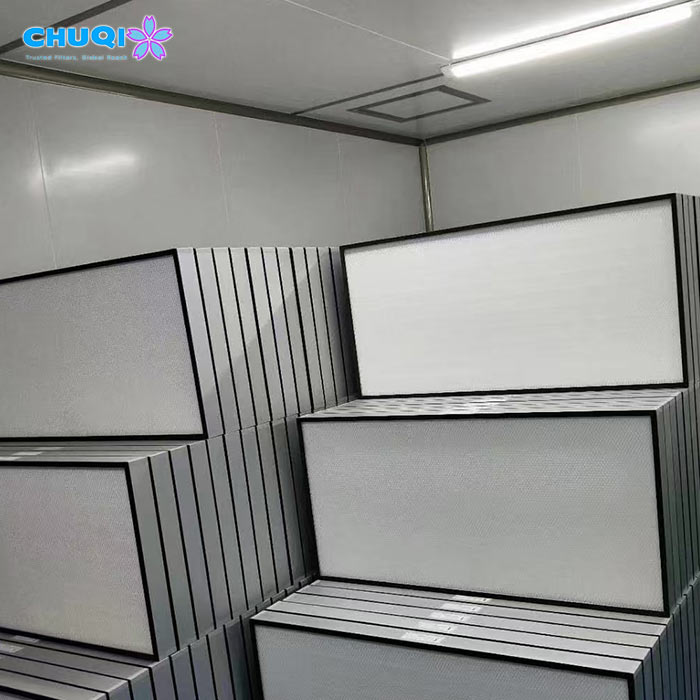
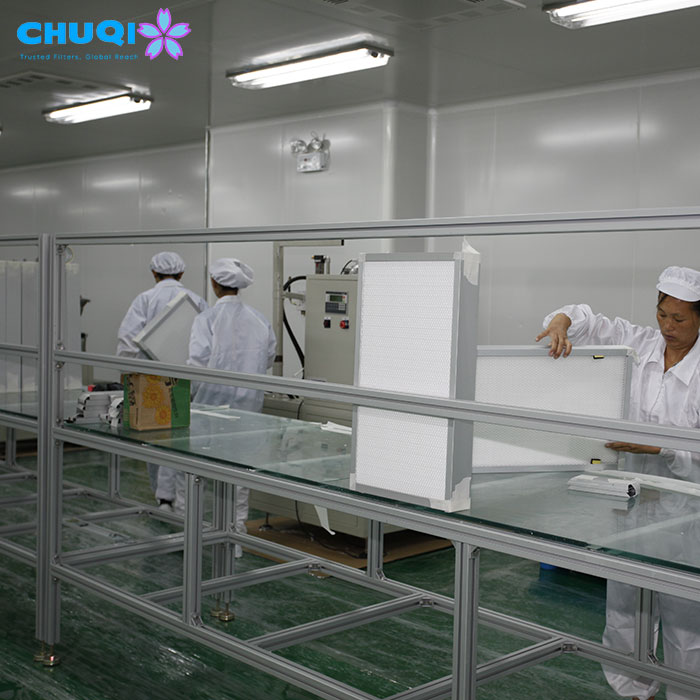
1. Drawing Review: Establish a Reliable Starting Point
A drawing review determines how the proposed HEPA filter must fit the equipment and which requirements govern its construction.
Receiving a drawing is not the same as confirming that the drawing is complete or ready for manufacturing.
Check the Installation Interface
Overall width, height and depth are important, but they do not fully define the connection between a filter and its housing.
Depending on the design, the review may need to cover:
Gasket location and sealing surfaces
Mounting and retaining features
Support points and installation clearances
Airflow direction and filter orientation
Dimensional tolerances
Whether the stated dimensions include the gasket or other projecting components
For an existing installation, the question is not simply whether the filter fits inside the opening. It is whether the filter can be installed, sealed and secured according to the equipment requirements.
Where the interface is critical, use a dimensioned drawing or a clearly defined installation reference rather than relying on a front-facing photograph alone.
Separate Fixed Requirements from Adjustable Features
Not every design condition has the same degree of flexibility.
The equipment opening may be fixed, while the filter depth remains adjustable. Required airflow may already be established, while the allowable initial pressure drop still requires technical review.
Identify which requirements are mandatory and which can be considered for modification.
This allows the manufacturer to evaluate possible alternatives without silently changing the original specification. Any proposed deviation should be identified and reviewed before it is incorporated into the sample.
Confirm the Drawing Number and Revision
An RFQ drawing, sample-build drawing and production-approved drawing may have different revisions.
The project should identify the document used at each stage and record any unresolved dimensions or interfaces.
If the customer revises the drawing after sampling, the team should assess whether the changes affect the existing sample, its evaluation results or the proposed production configuration.
The output of drawing review should be a clearly identified reference, an understood installation interface and a list of technical items requiring confirmation.
For help preparing the initial inquiry, see Custom HEPA Filters: What to Include in Your RFQ. This guide focuses on preparing the information a manufacturer needs to review a quotation request.
2. Configuration Confirmation: Connect Construction with Operating Requirements
Once the initial requirements have been reviewed, the proposed filter configuration should be assessed against the intended application.
A filter may fit physically and still be unsuitable for the equipment’s operating conditions.
Review Airflow, Pressure Drop and Filtration Requirements
The proposed configuration should be evaluated against the required airflow, allowable pressure drop, specified filtration class and relevant operating conditions.
If the available airflow figure applies to an entire machine, the airflow through each filter may need to be established separately.
Airflow and pressure drop should be reviewed under compatible conditions. A pressure-drop value without its associated airflow is insufficient for a meaningful comparison, and a lower resistance measured at a reduced airflow does not demonstrate compliance with the original operating requirement.
For a more detailed technical explanation, see HEPA Filter Pressure Drop: What Affects It and How to Specify It.
Where airflow distribution or face velocity is relevant to the application, consult the dedicated HEPA airflow guide as well.
Review the Complete Filter Construction
Material selection should address the finished assembly rather than a single component.
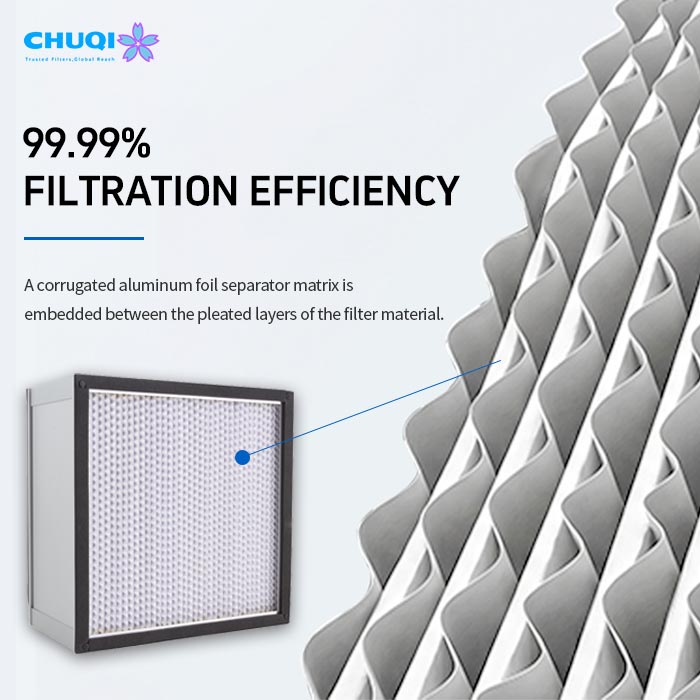
Depending on the design, the review may include filter media, frame materials, separators or support structures, adhesives, sealants and gaskets.
The suitability of these components depends on the intended operating conditions. A temperature limit associated with one material should not automatically be treated as the operating limit of the complete filter.
Relevant exposure conditions, including temperature, humidity, condensation and chemical exposure where applicable, should be considered before sampling.
The proposed configuration should document the construction and operating assumptions that matter to the project. Any material or design alternative should remain subject to the required technical review.
Define What the Sample Must Demonstrate
Before sample manufacturing begins, agree on the purpose of the evaluation.
A sample may be intended to confirm:
Dimensional compatibility and installation fit
Compliance with specified filtration performance
Pressure drop at the required airflow
Suitability of the agreed materials and construction
Compatibility with the equipment integration process
These activities do not necessarily establish the same result.
A sample intended only for mechanical evaluation should not be treated as evidence of filtration performance. Similarly, a satisfactory performance test does not automatically establish that the filter fits or seals correctly in the customer’s equipment.
For performance testing, define the applicable requirements, test conditions, required records and acceptance criteria before the evaluation begins.
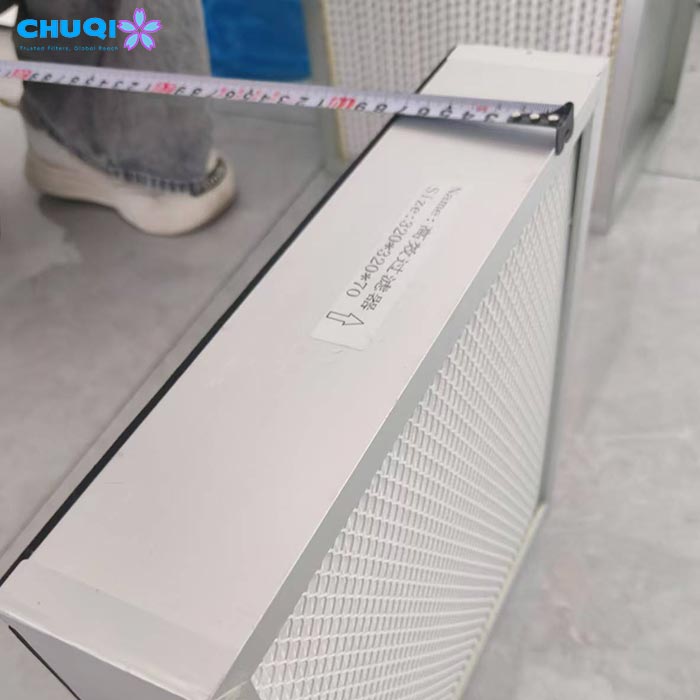

3. Sample Manufacturing and Evaluation: Verify the Agreed Requirements
Sample manufacturing should follow an identifiable configuration and a defined evaluation plan.
The purpose is to establish whether the sample meets the requirements agreed for the project, not simply whether it looks similar to an existing filter.
Evaluate Fit and Performance Separately
A useful sample evaluation distinguishes physical compatibility from filtration performance.
| Evaluation Activity | What It Can Establish | What It Does Not Automatically Establish |
|---|---|---|
| Dimensional and fit review | Compliance with agreed dimensions and installation requirements | Filtration efficiency or operating performance |
| Finished-filter performance testing | Results for the identified filter under stated test conditions | Performance of the complete installed system |
| Installed verification | Relevant performance characteristics of the evaluated installation | Conformity of every future production unit |
| Construction review | Whether the observed construction matches the agreed reference | Compliance with every performance criterion |
The required checks depend on the project specification. Not every application requires every evaluation activity, and the scope should be agreed before testing.
Confirm That the Sample and Records Match
The physical sample, drawing revision and associated test records should identify the same configuration.
Without this connection, it becomes difficult to establish which product the evaluation actually supports.
If a sample is modified after testing, determine whether the change affects the relevance of the previous results. An earlier report should not automatically be assigned to a revised configuration without review.
Where multiple samples are used, give each sample or configuration a clear reference so the results can be traced to the correct item.
Distinguish Factory Testing from Installed Verification
Factory testing evaluates the filter under specified test conditions. Installed verification addresses the filter within the relevant equipment or filtration assembly.
A satisfactory factory result does not automatically rule out installation issues. Conversely, an equipment-level problem should not automatically be attributed to the filter without reviewing the operating conditions and installation interface.
The required evidence should match the acceptance question being asked.
Record the Evaluation Outcome
Sample feedback should identify what passed, what did not pass and what remains unresolved.
For example, installation fit may be accepted while a performance result remains under review. Alternatively, the performance result may be satisfactory while the gasket arrangement requires adjustment.
Documenting these outcomes helps engineering, purchasing and manufacturing work from the same technical reference.
4. Sample Revision: Resolve Deviations Before Approval
A sample revision should address an identified issue rather than simply repeat the manufacturing process.
The issue, proposed change and necessary rechecks should be connected.
If the Sample Does Not Fit
Compare the sample with the agreed drawing and the actual equipment interface.
The cause may involve a manufacturing deviation, an incorrect reference dimension, an unresolved tolerance relationship or a difference between the drawing and the installation.
Reducing a dimension may remove interference, but it could also affect sealing contact or mounting engagement. The modification should address the identified cause without introducing another installation problem.
Record the agreed change in the appropriate drawing or specification and determine whether another sample or additional checks are required.
If Pressure Drop Exceeds the Target
First confirm that the result was obtained at the required airflow and under the agreed measurement conditions.
A lower pressure-drop reading obtained by reducing airflow does not demonstrate compliance with the original operating requirement.
If the configuration needs modification, review the effect on other requirements, including dimensions, filtration performance, construction and installation constraints.
Any proposed change should be evaluated against the complete set of applicable requirements rather than a single result.
If the Seal or Construction Changes
A change to the gasket, frame, media or other construction detail should be reflected in the relevant drawing, specification or configuration reference.
Then determine which checks need to be repeated.
Not every change requires a complete restart. However, previous approval should not automatically carry forward when the change could affect the evidence supporting that approval.
5. Sample Approval: Establish the Production Reference
Sample approval should identify the accepted configuration, the evidence reviewed and any remaining conditions.
It should not depend solely on an informal statement that the sample is satisfactory.
Approve an Identifiable Configuration
The approval record should connect the evaluated sample with the applicable drawing revision, technical specification and relevant test or inspection records.
A retained reference sample may support future comparison, but it should not replace written dimensions, performance requirements and acceptance criteria.
Where changes have been made during development, confirm which revision represents the approved configuration.
For the broader technical parameter framework, see HEPA Filter Specifications: A Checklist for Engineers and Buyers.
Make Conditional or Partial Approval Explicit
Approval for one purpose does not necessarily constitute approval for every requirement.
If installation fit is accepted while performance verification remains open, record that distinction.
Whether production can begin while a condition remains unresolved depends on the expressly agreed release process. It should not be inferred from a general approval message.
Any remaining actions, responsible parties and required evidence should be documented before the next stage is authorized.
Define What Carries into Bulk Production
Bulk production should follow the approved configuration and agreed quality requirements, not simply an instruction to reproduce the latest sample.
The production reference should identify the applicable drawing, construction, acceptance criteria and required inspection or testing records.
A successful sample does not independently demonstrate that every future unit will conform. Production controls and verification activities need their own agreed basis.
For repeat orders, configuration identification remains important. A familiar part number should not conceal an unapproved change to materials, construction, dimensions or the installation interface.
6. What Affects OEM HEPA Filter Development Timing and Scope?
Development timing depends on the work still required, not only on the physical sample build.
An incomplete interface, a revised performance target, a special material requirement or an additional customer validation step may affect the project sequence.
Separate the Development Milestones
Drawing review, sample completion, sample shipment, customer evaluation and final approval are different milestones.
An expected sample completion date is not the same as the date on which the sample has arrived, been evaluated and approved.
A useful development plan identifies which stages depend on customer information, technical confirmation, external testing or approval of revised documents.
Identify Additional Work Before It Is Assumed Included
Where applicable, clarify whether special fixtures, additional samples, custom materials, external testing or other development activities create a separate scope or charge.
These requirements do not apply to every project and should not be assumed either way.
A preliminary technical discussion can identify the work that needs to be reviewed before the development schedule and commercial scope are confirmed.
Common Questions About OEM HEPA Filter Development
Q: Can OEM HEPA filter development start without a complete drawing?
A: Yes. An equipment interface, existing filter reference, available dimensions or application description can provide a starting point. Missing dimensions and operating conditions still need to be resolved before the relevant design or production stage is approved.
Q: Does every OEM HEPA filter project need multiple sample rounds?
A: No fixed number of sample rounds applies to every project. A well-defined requirement may need fewer revisions, while an evolving equipment design may require additional evaluation. The number of rounds depends on the requirements, evaluation results and any changes introduced during development.
Q: What should a HEPA filter sample test verify?
A: The test or evaluation should address the requirements agreed for the sample. Depending on the project, this may include dimensional fit, installation compatibility, filtration performance and pressure drop at a specified airflow. A mechanical fit check alone does not establish filtration performance.
Q: What happens if requirements change after sample approval?
A: Review the proposed change against the approved configuration. Depending on its effect, the project may require updated documents, additional checks or renewed sample approval. Neither a complete restart nor automatic acceptance should be assumed.
Q: Does sample approval guarantee that bulk production will meet the same requirements?
A: Sample approval establishes acceptance of the identified configuration based on the agreed evidence. Production conformity also depends on the applicable manufacturing controls, inspection or testing requirements and management of subsequent changes.
Planning an OEM HEPA Filter Development Project?
Chuqi New Materials works with customers on custom industrial HEPA filter requirements for OEM and bulk purchasing projects.
Whether you are developing a new filtration assembly or reviewing an existing filter, you can start with the information already available, such as an equipment drawing, an existing filter reference, installation dimensions or required operating airflow.
Our team can discuss the proposed configuration and identify the technical and purchasing details that need further confirmation before sample evaluation and production approval.
You do not need to finalize every parameter before starting the conversation.
Review the relevant product information for your application and discuss the available configuration options.
Discuss Your OEM HEPA Filter Project
Share your drawing, existing filter reference or preliminary requirements to begin a technical review.
The proposed configuration, evaluation criteria and production requirements should be confirmed for the specific project before manufacturing is released.