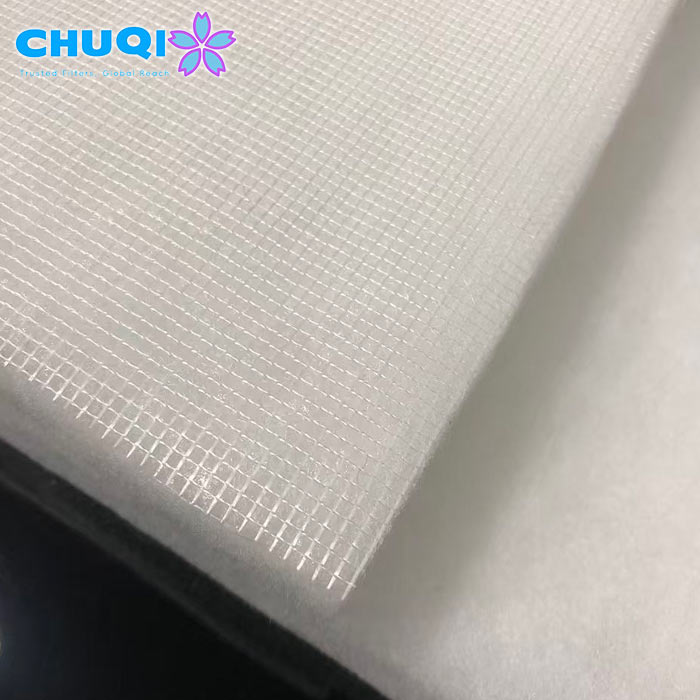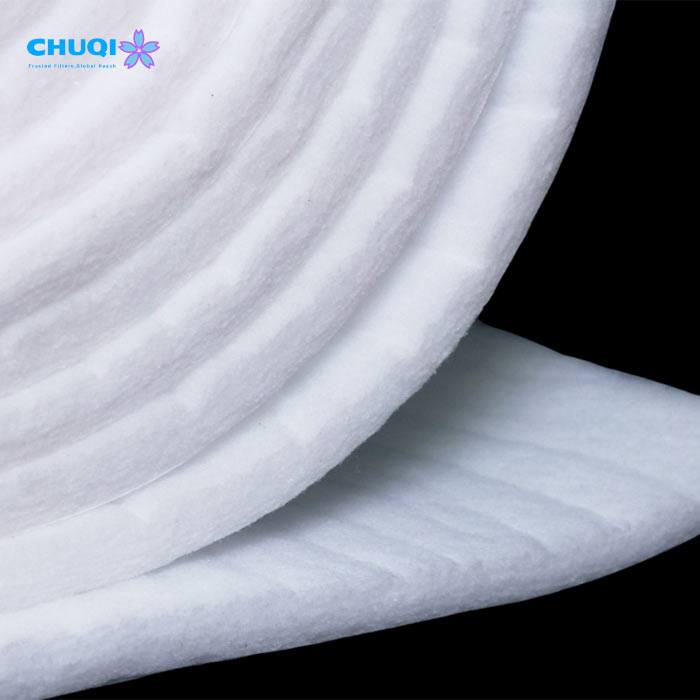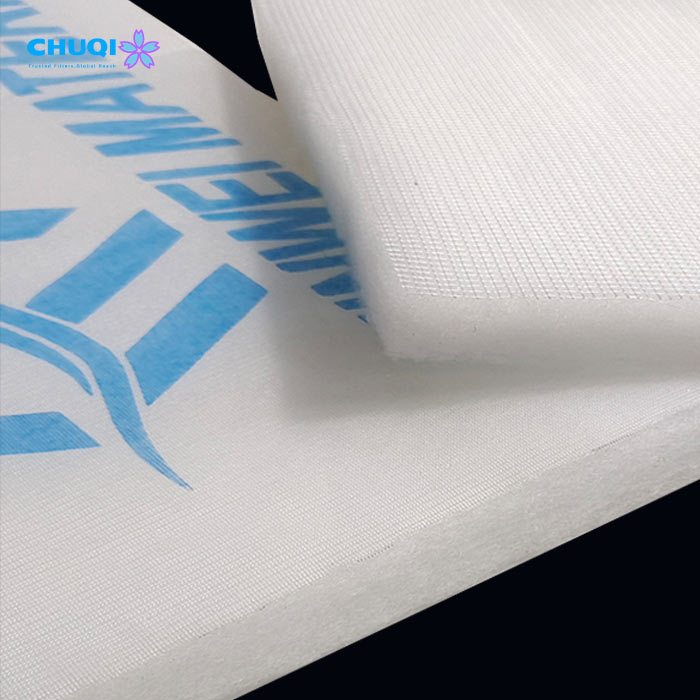
In industrial coating facilities, automotive paint shops, and precision cleanrooms, the choice of filtration class dictates the threshold between flawless production and costly surface rework. Among industry standards, F5 classification ceiling diffusion media (as defined by EN 779 / ISO 16890 standards) serves as the frontline defense against sub-micron contamination.
However, simply installing an F5-rated filter does not guarantee optimal performance. Without proper face velocity management, correct seal integrity, and structured maintenance schedules, even the highest-grade media can suffer from premature blinding, airflow channeling, and particle shedding.
This technical guide outlines the engineering methodologies required to maximize the efficiency, service lifespan, and airflow performance of F5 ceiling diffusion filters in demanding industrial paint spray booths.
1. Operating Parameters & Velocity Optimization
To unleash the full filtration potential of an F5 ceiling medium, facility engineers must tightly control the aerodynamic environment across the ceiling plenum.
Face Velocity Control: Maintain a consistent downward vertical velocity of 0.3 m/s to 0.4 m/s across the entire working envelope. Exceeding this range can shear micro-fibers and cause media degradation, while lower velocities fail to maintain proper piston-like laminar sweeping.
Initial vs. Terminal Pressure Drop: An optimal F5 media typically starts with an initial clean pressure drop of around 25 Pa to 35 Pa (at nominal flow). Systems should be engineered to trigger filter replacement when the terminal pressure drop reaches 200 Pa to 250 Pa, preventing blower motor overload and airflow starvation.
2. Preventing Edge Leakage and Bypassing
Even minor installation flaws can compromise an entire filtration bank, allowing unfiltered ambient air to bypass the media matrix.
Grid Compression & Frame Sealing: F5 ceiling media relies on uniform lateral compression within the ceiling grid system. Ensure that toggle clamps or gasket compression bars apply even pressure across all frame borders to eliminate air bypass gaps.
Tackifier Integrity Management: High-performance F5 filters utilize full-depth thermal or chemical tackifier impregnation. Ensure handling protocols prevent excessive dust accumulation during installation, which can prematurely saturate the adhesive surface before the paint line goes live.
3. Maintenance Protocols: Maximizing Dust Holding Capacity (DHC)
To extend changeout intervals and lower the Total Cost of Ownership (TCO), maintenance teams must implement proactive pre-filtration strategies:
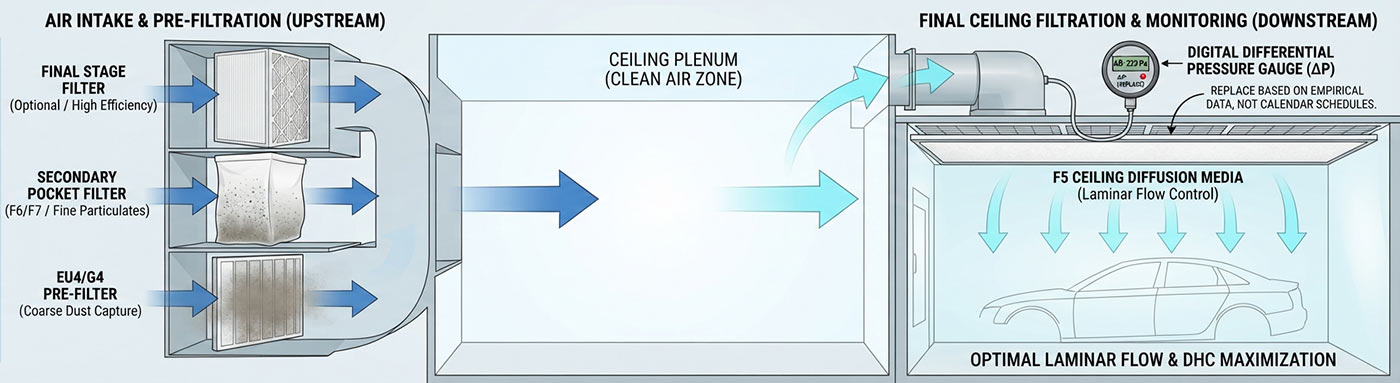
Upstream Pre-Filter Synergy: An F5 ceiling filter should never act as the sole barrier against heavy atmospheric dust. Ensure that EU4/G4 primary intake filters and secondary pocket filters (F6/F7) are regularly serviced upstream to capture coarse particulates before they reach the ceiling plenum.
Scheduled Differential Pressure Monitoring: Install digital differential pressure gauges across the air handling unit (AHU) to monitor continuous resistance curves, replacing filters based on empirical pressure data rather than arbitrary calendar schedules.
4. Conclusion: Precision Maintenance Yields Defect-Free Production
Maximizing F5 ceiling filter performance is a balance of strict aerodynamic control, rigorous frame sealing, and disciplined pressure monitoring. By adhering to these engineering guidelines, plant operators can eliminate paint defects, optimize AHU energy efficiency, and achieve maximum yield rates.
Engineering Resource Center & Next Steps
Return to Core Knowledge Base: What Makes the Best Paint Spray Booth Ceiling Diffusion Filter?
Performance Diagnostics: Struggling with high pressure drops or premature filter blinding in your spray booth? Let our senior filtration engineers review your operating parameters.
Product Specifications: Review Technical Parameters and Grammage Options of Our F5 Ceiling Filter Series
Laboratory Evaluation: Request Custom-Cut Sample Rolls & Certified Filtration Efficiency Reports for Your Facility