In the world of industrial and commercial HVAC systems, the G3 panel filter is often overlooked, yet it serves as the critical “gatekeeper” of your entire air filtration system. For facility managers and procurement professionals, selecting the correct pre-filtration solution is the most effective way to reduce maintenance costs and protect your high-value downstream filters (such as HEPA filters or pocket filters).
This guide will help you navigate the types, materials, and selection criteria to ensure you get the best performance for your facility.
What Is a G3 Coarse Dust Filter?
Based on the international standard (formerly EN 779), this G3 efficiency rating categorizes these units as coarse dust filters. They are designed to capture large particles (5μm and above), including dust, lint, fibers, and insects. By installing a high-quality primary unit, you prevent large debris from clogging your secondary filtration stages, significantly extending their service life.
Choosing the Right Filter Media
The filter media is the “heart” of the unit. Choosing the right material depends on your specific environment:
Synthetic Fiber: The most popular choice for general HVAC ventilation. It is durable, moisture-resistant, and offers a low pressure drop, making it perfect for office buildings and precision manufacturing facilities.
Fiberglass: Often treated with adhesive to enhance particle retention. This is the gold standard for spray booths and industrial environments where capturing oily mists and large particulates is essential.
Nylon or Metal Mesh: Highly durable and washable. These are ideal for extreme dust-loading environments or areas where the filter needs to be cleaned and reused frequently.
3. Frame Construction: Ensuring Stability
The filter frame must withstand the airflow pressure of your system. We offer several options:
Cardboard Frame: A cost-effective solution for dry, indoor environments with standard airflow.
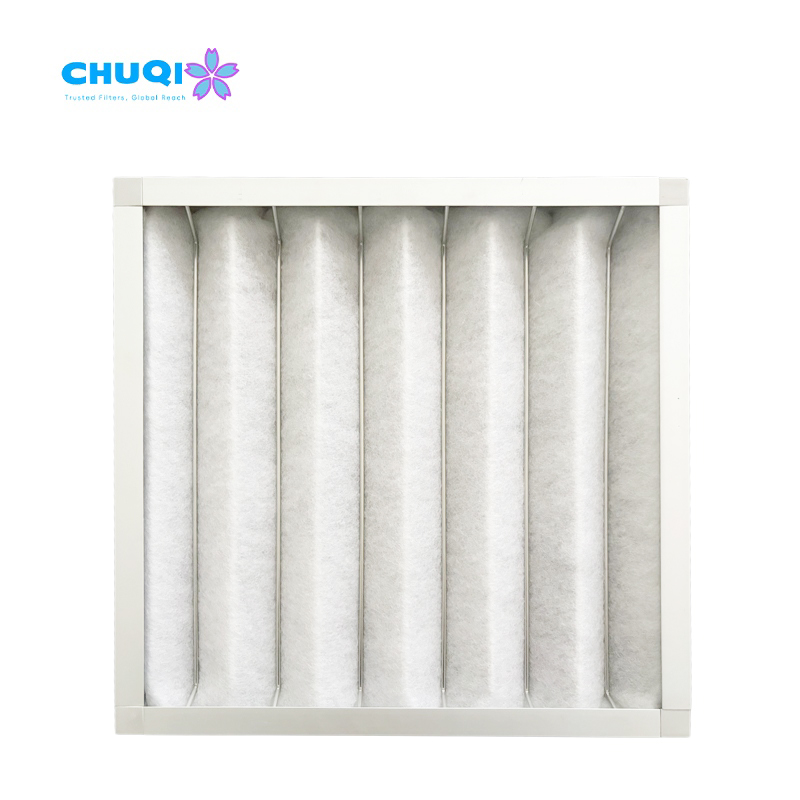
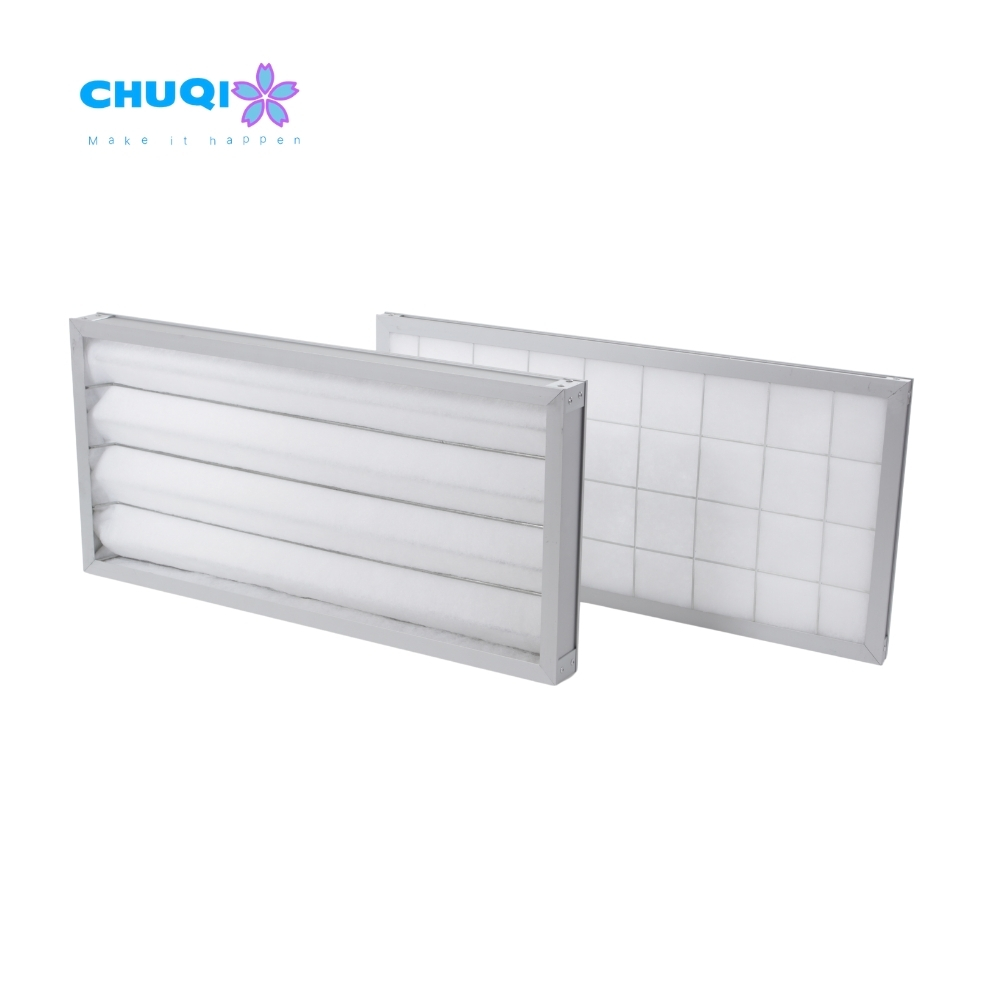
Galvanized Steel Frame: Provides excellent rigidity and rust resistance, suitable for most industrial air filtration applications.
Aluminum Frame: Lightweight and aesthetically professional, offering superior corrosion resistance for long-term use.
Stainless Steel Frame: The best choice for high-temperature or chemically corrosive environments.
4. Selection Checklist: Tips for Procurement
When sourcing from a replacement filter element factory, keep these three points in mind to avoid common pitfalls:
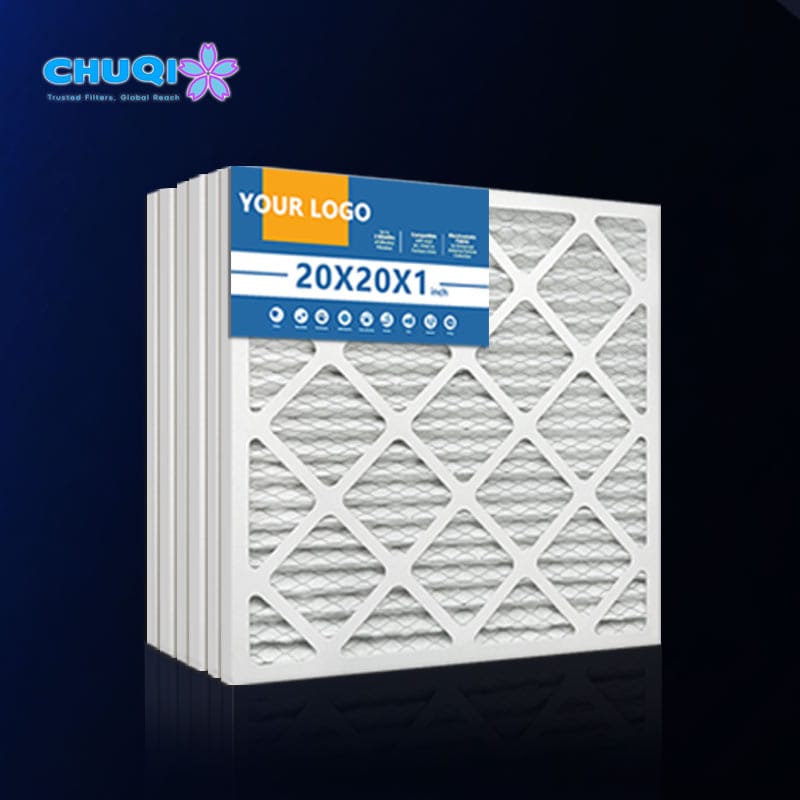
Pleated vs. Flat: If your system has limited space but requires high capacity, choose a pleated panel filter. The pleats increase the total surface area, allowing for higher dust-holding capacity compared to standard flat filters.
Seal Integrity: Always check for robust gasket design. A well-made filter prevents “bypass,” where dirty air escapes around the edges, rendering your filtration ineffective.
Custom Sizing: Does your system use legacy machinery? Don’t compromise with “close enough” sizes. Partner with a factory that can provide custom-sized panel filters to ensure a perfect, airtight fit.
Conclusion: Protect Your Investment
Your initial filtration quality directly impacts your system’s energy consumption and the longevity of your more expensive high-efficiency filters. By investing in the right materials and construction, you are securing the efficiency of your facility.
As a professional replacement filter element factory, Chuqi provides high-performance, durable G3 solutions tailored to your technical requirements.