
In heavy commercial, industrial, and institutional ventilation networks, fine particulate matter and heavy dust loads pose an invisible threat to operational continuity. When unfiltered or semi-filtered air surges through central Air Handling Units (AHUs), downstream components—such as expensive medium-efficiency bag filters, high-efficiency particulate air (HEPA) modules, and heating/cooling coils—absorb the brunt of the contamination.
For facility managers and maintenance engineers, deploying a robust first line of defense is paramount. Engineered cardboard frame pre-filters act as the vital initial barrier, intercepting heavy particulate loads before they can compromise downstream systems, trigger high pressure drops, or inflate overall energy consumption.
How Heavy Dust Destroys Unprotected Commercial HVAC Systems
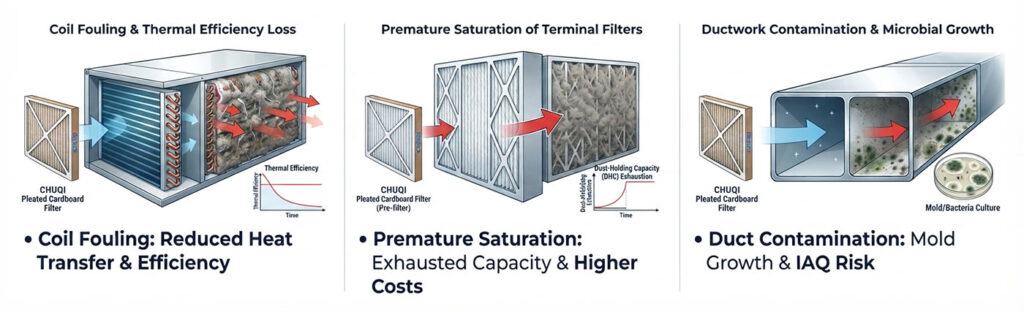
Without an optimized pre-filtration strategy, heavy dust accumulation inflicts severe systemic damage across three primary vectors:
Coil Fouling & Thermal Efficiency Loss: Airborne particulate matter settles rapidly on finned cooling and heating coils. This thermal insulation layer forces HVAC systems to work harder, directly driving up electricity consumption and escalating facility operating costs.
Premature Saturation of Terminal Filters: Expensive secondary and tertiary filters (such as rigid pocket filters or V-bank units) are designed for fine filtration, not heavy dust holding. When coarse particles hit them unchecked, their Dust-Holding Capacity (DHC) is exhausted within weeks instead of months.
Ductwork Contamination & Microbial Growth: Accumulated organic dust and moisture inside duct networks create ideal breeding grounds for mold, bacteria, and allergens, risking indoor air quality (IAQ) compliance and building health standards.
The Mechanics of Protection: How Cardboard Pre-Filters Intercept Particulates
Cardboard-framed pleated and flat panels utilize engineered synthetic, cotton, or fiberglass media designed specifically for primary particulate arrestance:
Inertial Impaction and Sieve Action: As high-velocity air passes through the filter, heavier dust particles (lint, sand, hair, and coarse pollens) lack the agility to navigate the fiber matrix and become permanently trapped via mechanical impaction.
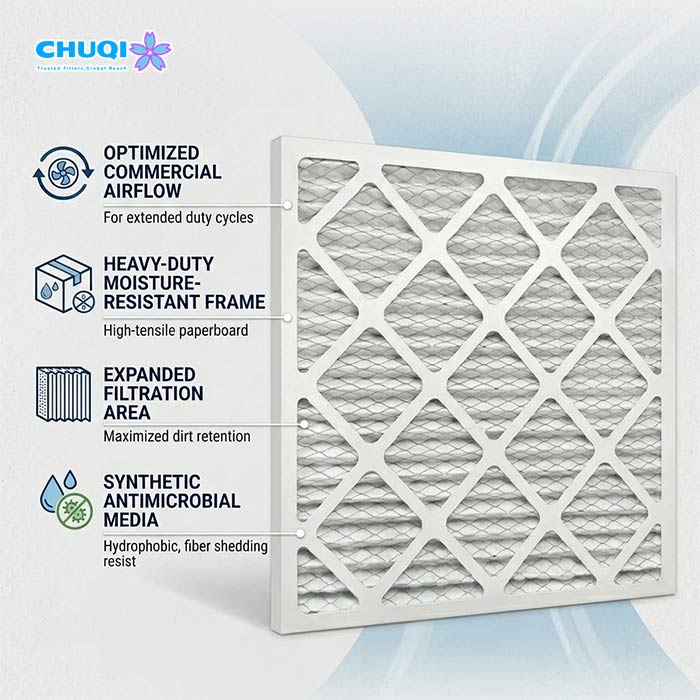
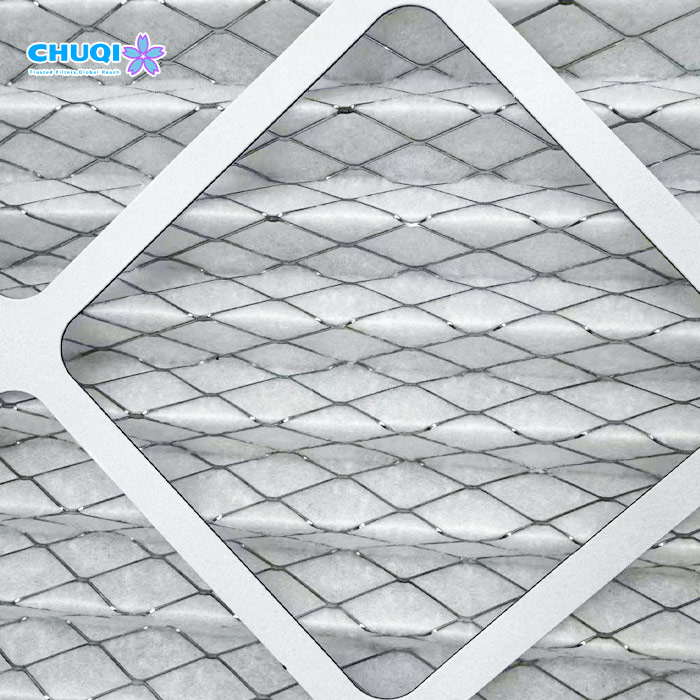
Optimized Pleat Geometry: By pleating the filtration media inside a rigid moisture-resistant cardboard frame, the effective surface area is expanded by 200% to 300% compared to flat panels. This structural expansion allows the filter to absorb massive volumes of heavy dust while maintaining stable airflow velocity.
Controlled Initial Pressure Drop: High-grade cardboard frames ensure zero media flutter, maintaining a predictable initial pressure drop that prevents sudden fan motor strain.
Key Specifications Maintenance Engineers Must Evaluate
When reviewing technical requirements for commercial ventilation upgrades, engineering teams should look for these performance benchmarks:
MERV Efficiency Range: Spanning MERV 5 to MERV 15 (ASHRAE 52.2 standards) depending on the pre-filtration tier required to protect specific multi-stage setups.
Moisture-Resistant Board Construction: Frames must be manufactured from heavy-duty Kraft paper, beverage board, or wet-strength paperboard treated to resist high relative humidity (RH) and prevent frame softening or collapse in humid intake plenums.
Adhesive Bead Integrity: Continuous, full-width glue application on both upstream and downstream sides to eliminate pleat shifting under fluctuating air volumes.
(To explore complete product specifications, standard dimensions, and commercial sourcing options, you can review our main Cardboard Frame Air Filter Product Guide.)

Strategic Benefits for Facility Operations
Integrating engineered cardboard pre-filters into large-scale commercial facilities yields measurable operational returns:
Extended Equipment Lifespan: By capturing the majority of coarse particulate loads upfront, secondary bag filters and HEPA terminals last significantly longer.
Lower Total Cost of Ownership (TCO): Routine replacement of low-cost cardboard pre-filters is far more economical than emergency overhauls of fouled AHU coils or premature replacement of expensive terminal filters.
Optimized Energy Consumption: Maintaining clean coils and unobstructed airflow keeps fan motor energy draws within target efficiency curves.
Cardboard frame air filters are far more than simple disposable inserts—they are engineered system protectors that dictate the efficiency and lifespan of entire commercial HVAC networks. By implementing a smart pre-filtration strategy, facilities can protect downstream equipment, maintain air quality, and reduce long-term maintenance overhead.