
The main difference between HEPA and ULPA filters is the level of particle penetration permitted under their respective classification requirements. ULPA filters meet more stringent filtration classifications, but that does not automatically make them the better choice for every application.
Under EN 1822, HEPA filters are classified as H13 and H14, while ULPA filters are classified as U15, U16 and U17. For example, H14 requires a minimum overall efficiency of 99.995% at the most penetrating particle size (MPPS), while U15 requires a minimum overall efficiency of 99.9995%.
These figures describe classification requirements, not the measured performance of every filter under all operating conditions.
Choosing between HEPA and ULPA also requires understanding the process requirements, operating airflow, available pressure, filter construction and housing compatibility.
The key question is not simply which filter has the higher efficiency. It is whether the additional filtration performance provides a meaningful benefit for the application.
HEPA vs ULPA: Key Differences
HEPA stands for High-Efficiency Particulate Air, while ULPA stands for Ultra-Low Penetration Air. Both are used for high-efficiency particulate filtration, but their classification ranges differ.
| Comparison Factor | HEPA Filters | ULPA Filters |
|---|---|---|
| EN 1822 classes | H13 and H14 | U15, U16 and U17 |
| Example minimum overall efficiency at MPPS | H14: ≥99.995% | U15: ≥99.9995% |
| Corresponding maximum overall penetration at the classification limit | H14: ≤0.005% | U15: ≤0.0005% |
| Particle capture | Performance depends on particle size, media and test conditions | Performance depends on particle size, media and test conditions |
| Airflow and pressure drop | Depend on the specific filter construction and operating point | Depend on the specific filter construction and operating point |
| Main selection consideration | Whether the filtration level meets the process requirement | Whether lower permitted penetration provides a necessary additional benefit |
Why Particle Penetration Matters
Efficiency percentages become difficult to compare visually when both are close to 100%. Particle penetration provides another way to understand the difference.
At the stated classification limits, H14 permits up to 0.005% overall penetration, while U15 permits up to 0.0005%. The latter is one-tenth of the former.
However, this does not mean a room using U15 filtration will automatically be ten times cleaner. Overall cleanliness also depends on airflow distribution, leakage, installation integrity, particle sources and other characteristics of the complete air system.
The classification describes filter performance under defined conditions. It does not independently predict the cleanliness of the installed environment.
For a comparison within the HEPA category, see [H13 vs H14 HEPA Filters: Efficiency, Airflow and Selection].
Does ULPA Capture Smaller Particles Than HEPA?
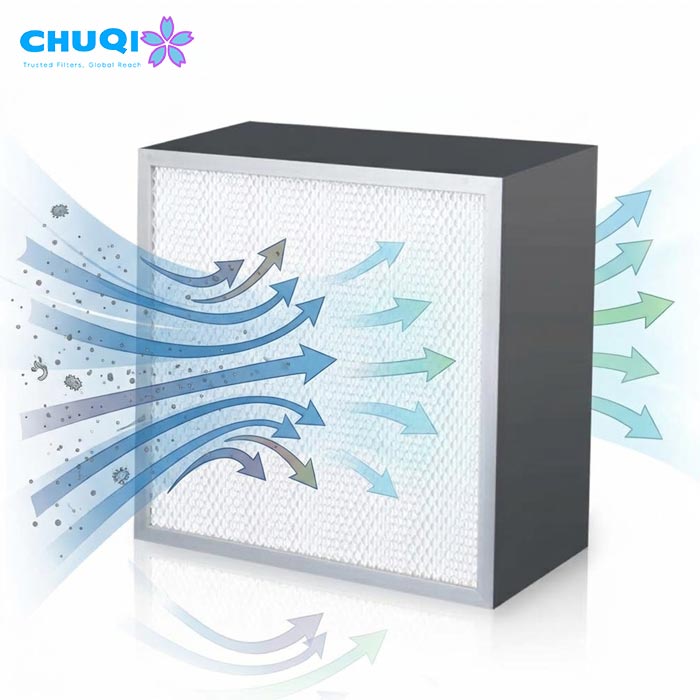
HEPA and ULPA filters should not be understood as screens with fixed opening sizes.
Their performance depends on several particle-capture mechanisms, including interception, inertial impaction and diffusion. The relative contribution of these mechanisms changes with particle size and operating conditions.
Consequently, a higher filtration classification does not mean that the filter simply has smaller physical holes or a fixed lower particle-size cutoff.
What MPPS Means for Filter Selection
MPPS stands for most penetrating particle size. It identifies the particle-size region where a filter medium has its lowest filtration efficiency under specified test conditions.
It is not the smallest particle that a filter can capture.
Particles smaller than the MPPS can still be captured effectively, with diffusion becoming particularly important at small particle sizes.
This is why the familiar statement that “HEPA filters only capture particles down to 0.3 microns” can be misleading. It suggests a fixed cutoff that does not accurately describe the filtration process.
When comparing HEPA and ULPA filters, focus on the applicable classification, test method and penetration requirements rather than assuming that either filter has a simple minimum capture size.
For more technical background, see [What Is MPPS in HEPA Filter Testing?] and [How HEPA Air Filters Work to Capture Tiny Particles Like Pollen and Dust].
When Does ULPA Filtration Make Sense?
ULPA filtration is worth considering when the process requires a more stringent filtration classification and the reduction in permitted particle penetration provides a meaningful benefit.
The appropriate choice depends on the contamination-control objective, not simply the industry in which the filter will be used.
Start with the Process Requirement
ULPA filters may be relevant in particle-sensitive applications, including certain semiconductor manufacturing operations and other controlled production environments.
However, a facility’s industry does not automatically determine the filtration class required at every location.
Different production stages, equipment zones and air-handling systems within the same facility may have different requirements. A specification for one process area should not automatically be applied to the entire building.
Before selecting ULPA, consider:
What level of particle control does the process require?
Is a more stringent filter classification explicitly specified?
What are the consequences of particle penetration at the relevant location?
Can the equipment accommodate the proposed filter’s airflow and resistance?
Are the housing, sealing and installation arrangements suitable?
These questions help establish whether the additional filtration serves a defined purpose.
When HEPA May Be the Appropriate Choice
A suitable HEPA filter may already meet the filtration requirements of the application.
If the process does not require a more stringent classification, switching to ULPA may introduce additional design or operating considerations without delivering a corresponding practical benefit.
This does not make HEPA and ULPA equivalent. Their classification requirements remain different. It means that filtration performance should be matched to the actual application.
The objective is to select the filtration level that supports the required process conditions, rather than choosing the highest available classification by default.
Does ULPA Always Have a Higher Pressure Drop?
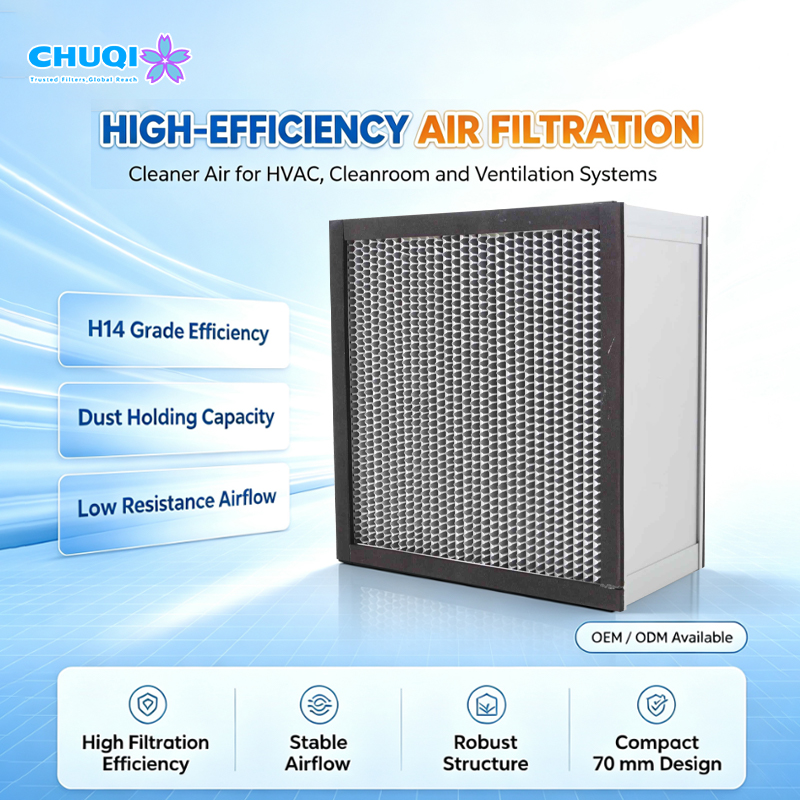
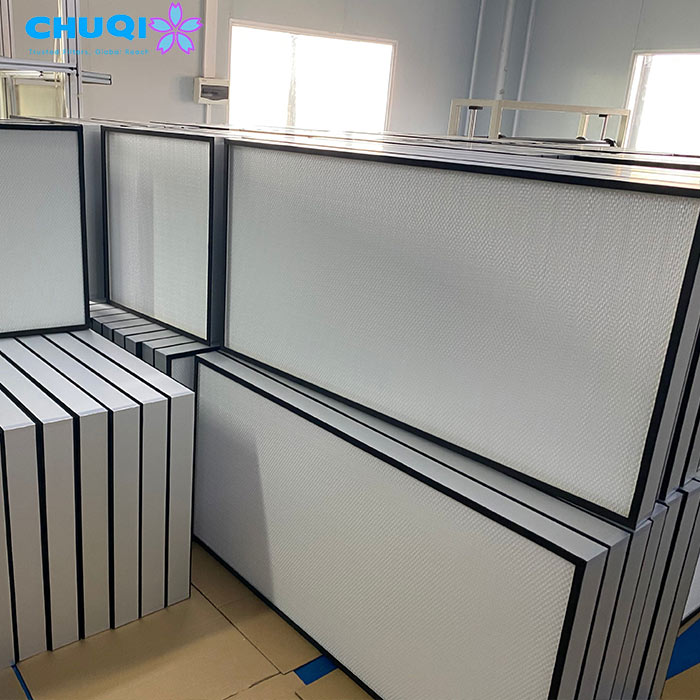
No. The HEPA or ULPA classification alone does not determine pressure drop.
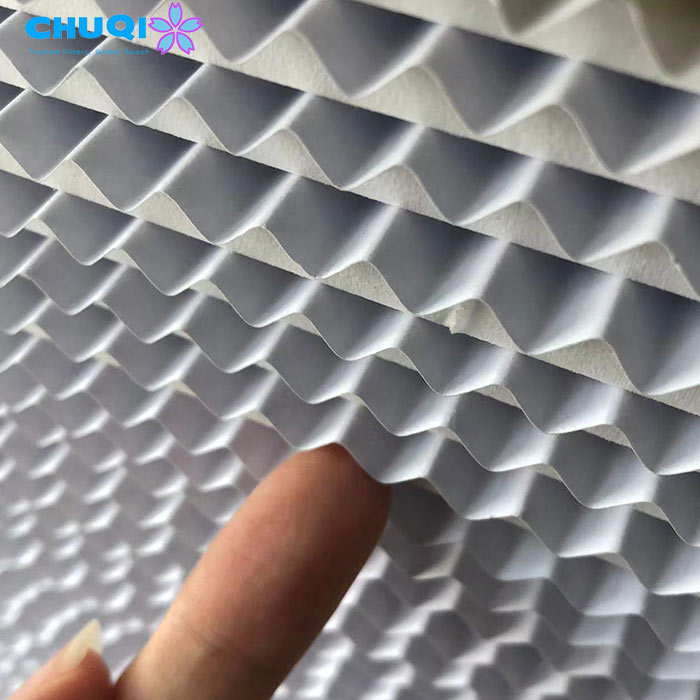
Filter pressure drop depends on the media, effective filtration area, pleat geometry, internal flow paths, frame design and airflow through the filter.
A particular ULPA configuration may have higher resistance than a HEPA alternative at the required airflow. Another comparison may produce a different result, depending on the products being evaluated.
For this reason, avoid assuming a universal pressure-drop difference between HEPA and ULPA filters.
Compare Filters at the Required Airflow
A pressure-drop figure is useful only when its associated airflow and test conditions are understood.
For a meaningful comparison:
Identify the airflow required by the equipment.
Obtain pressure-drop data for each candidate at a comparable operating point.
Check whether the equipment can accommodate the associated resistance.
Consider the available installation space and the proposed filter construction.
Verify that the selected configuration meets the required filtration classification.
If the equipment cannot maintain the intended airflow with the proposed filter, a higher filtration classification alone will not deliver the desired system performance.
For further guidance, see [HEPA Filter Pressure Drop: What Affects It and How to Specify It].
Why Construction and Available Space Matter
Two filters with similar external dimensions may have different effective media areas, pleat arrangements and internal flow paths.
The available depth and housing geometry can therefore influence which designs are practical.
Additional depth or a different construction may create useful design options, but the effect on pressure drop must be evaluated using the relevant product data.
External dimensions alone do not establish equivalent airflow performance.
For more information, see [How to Size a HEPA Filter for an Industrial Air System].
Can You Replace a HEPA Filter with ULPA?
Sometimes, but replacing a HEPA filter with a ULPA filter should be treated as an engineering change rather than an automatic drop-in substitution.
Consider an existing system using an H14 filter. A U15 alternative has the same nominal external dimensions and a more stringent filtration classification.
That makes the alternative worth evaluating, but it does not establish that it will operate correctly in the existing equipment.
Check Airflow and Pressure Capability
The replacement must meet the required performance at the intended operating airflow.
The same frame size does not guarantee the same pressure drop. If the fan and air-handling system have limited pressure capability, a change in filter construction may affect the airflow that can be maintained.
Compare the actual product data and operating requirements before deciding whether the replacement is suitable.
Check Housing and Sealing Compatibility
The filter must also match the relevant installation interface.
Depending on the equipment, this may include:
External dimensions and available depth
Gasket position and compression requirements
Gel-seal channel geometry, where applicable
Mounting and retaining features
Contact surfaces and sealing arrangements
A filter that fits into the opening may still fail to seat or seal correctly.
Air bypassing the filter is not treated by the filter media, so installation integrity remains important regardless of the filtration class.
Factory performance testing and installed-system verification address different conditions. A satisfactory factory result does not independently demonstrate that the completed installation is leak-tight.
Identify the Reason for the Upgrade
If the process requires lower particle penetration, a ULPA replacement may be appropriate, subject to compatibility and performance verification.
If the change is intended to solve an unexplained particle-contamination problem, investigate the cause before assuming that a higher filter class will resolve it.
The issue could involve the filter, installation leakage, airflow distribution, contamination sources or other aspects of the system.
A higher-rated filter should support an established contamination-control requirement, not replace a proper assessment of the problem.
How Should You Compare HEPA and ULPA Costs?
The purchase price is only one part of the comparison.
Different quotations may reflect differences in filter construction, materials, testing, documentation, dimensions, order quantity or customization requirements.
There is no universal percentage by which ULPA filters cost more than HEPA filters, and filtration classification alone does not establish product service life.
Compare Equivalent Configurations
When evaluating two proposals, confirm that the following items are comparable:
| Evaluation Factor | What to Check |
|---|---|
| Filtration classification | Whether the proposed class meets the application requirement |
| Airflow and pressure drop | Whether performance is specified at comparable operating conditions |
| Dimensions and sealing | Whether the filter fits the intended housing and sealing interface |
| Construction | Whether the proposed materials and design meet the requirements |
| Test documentation | Whether the available evidence covers the relevant product and performance |
| Customization | Whether the design and development scope are comparable |
| Order quantity | Whether the quoted quantities and production scope match |
| Operating considerations | Whether the comparison uses consistent assumptions |
A lower-priced H14 filter is not an equivalent substitute when the process explicitly requires U15. Conversely, a higher-priced U15 filter does not automatically provide better value if a suitable H14 configuration already meets the application’s needs.
Consider Operating Costs Where Relevant
Pressure drop can influence fan energy consumption in systems that operate for extended periods.
However, any potential energy benefit depends on the actual airflow, fan characteristics, operating schedule and system configuration.
Compare pressure-drop data at the required airflow and use clearly defined operating assumptions when evaluating energy costs. Do not apply a savings percentage from another installation directly to your equipment.
Service life also depends on operating conditions, particle loading, maintenance practices and the criteria used to determine when a filter requires replacement.
A sound purchasing decision considers the filtration requirement, product performance and relevant lifecycle costs together.
A Practical Example: H14 or U15 for an OEM Design?
Imagine an OEM equipment manufacturer comparing two filter proposals for a new design.
The H14 option is intended to meet the process’s existing filtration requirement. The U15 option offers a more stringent classification, but its construction and operating data differ.
The decision should begin with the process specification and then examine both options at the required airflow and within the available equipment space.
If the process explicitly requires U15, an H14 filter is not an equivalent alternative simply because it is less expensive.
If H14 already provides the required filtration performance, the U15 option should be evaluated against a clearly defined additional benefit.
In either case, the comparison should account for:
Required filtration classification
Airflow and pressure-drop characteristics
Housing dimensions and sealing compatibility
Applicable test documentation
Installation and operating requirements
This approach helps separate a genuine engineering requirement from an upgrade that may not be necessary.
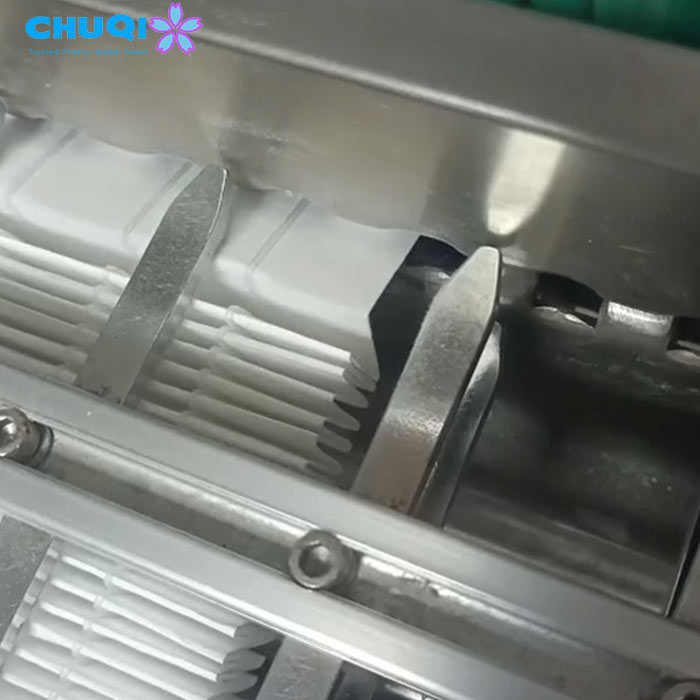
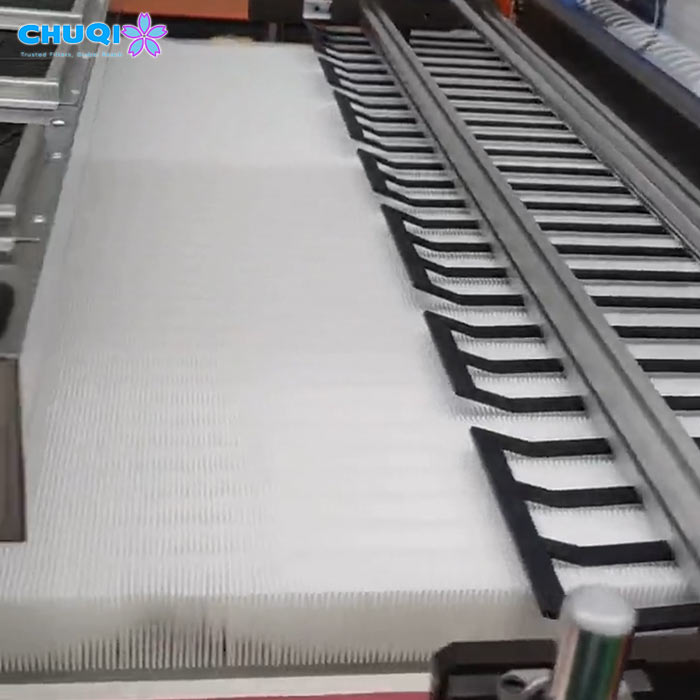
A useful supplier should be able to explain how the proposed configuration relates to these requirements and identify any details that still need verification.
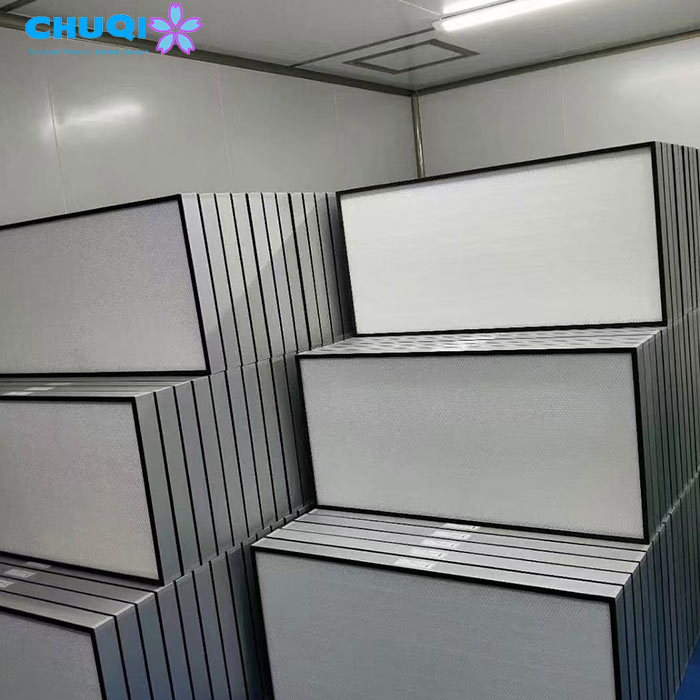
HEPA vs ULPA: How to Make the Final Decision
The choice between HEPA and ULPA should follow the requirements of the application, not the assumption that a higher classification is always better.
Use these principles to guide the decision:
Choose the required classification first. Establish whether the process needs HEPA or ULPA performance.
Compare airflow and pressure drop. Evaluate the actual candidate products at the required operating point.
Check installation compatibility. Confirm the dimensions, mounting features and sealing arrangements.
Review relevant test evidence. Establish what the available reports demonstrate about the proposed filter.
Evaluate the complete solution. Consider product cost, operating requirements and any additional performance benefit.
ULPA offers a more stringent filtration classification. HEPA may already provide the level of control required by the process. The appropriate choice is the configuration that meets the intended filtration requirement and works correctly as part of the installed system.
For broader guidance, see [How to Choose the Right Industrial HEPA Filter: Efficiency & Airflow Guide].
Frequently Asked Questions
Q: What is the main difference between HEPA and ULPA filters?
A: The main difference is their filtration classification and the permitted particle penetration under the applicable test requirements. Under EN 1822, HEPA classes include H13 and H14, while ULPA classes include U15, U16 and U17. ULPA provides a more stringent classification, but suitability still depends on the application and operating conditions.
Q: Is ULPA more efficient than HEPA?
A: ULPA classifications have more stringent efficiency requirements than HEPA classifications within the EN 1822 framework. For example, H14 has a minimum overall efficiency of 99.995% at MPPS, while U15 has a minimum overall efficiency of 99.9995% at MPPS. These figures describe classification requirements rather than the measured performance of every individual product.
Q: Does ULPA always have a higher pressure drop than HEPA?
A: No. Pressure drop depends on the filter construction, effective media area, geometry and operating airflow. Compare the actual pressure-drop data of the proposed filters at the same required airflow rather than assuming that filtration class alone determines resistance.
Q: Can I replace an H14 filter with a U15 filter?
A: A replacement may be possible, but the proposed U15 filter must be evaluated for airflow, pressure drop, dimensions, sealing and equipment compatibility. Matching external dimensions alone does not establish that the replacement will operate correctly.
Q: Do HEPA filters only capture particles larger than 0.3 microns?
A: No. HEPA filters do not operate as screens with a fixed particle-size cutoff. MPPS identifies the particle-size region of lowest efficiency under specified conditions, and particles smaller than the MPPS can still be captured through mechanisms including diffusion.
Q: Is HEPA sufficient for a cleanroom or semiconductor application?
A: The required filtration class depends on the process, contamination-control objectives, equipment design and applicable specifications. Some applications require ULPA, while others may use HEPA. The facility or industry name alone is not sufficient to determine the correct class for every process area.
Q: How should I compare HEPA and ULPA filter prices?
A: Compare products against the same required filtration classification, airflow, pressure-drop basis, dimensions, sealing arrangement and documentation requirements. Consider relevant operating costs as well as purchase price, but do not assume that a higher classification automatically delivers a better economic outcome.
Discuss Your Industrial HEPA Filter Requirements with Chuqi
Choosing between HEPA and ULPA requires more than comparing efficiency percentages. The filtration requirement, airflow, pressure drop, housing interface and verification needs all influence the suitability of the proposed configuration.
Chuqi New Materials supports B2B customers exploring industrial HEPA filtration solutions, including custom filter requirements.
If you are developing OEM equipment, evaluating a replacement filter or reviewing an existing industrial air filtration system, start with the information available to you.
An equipment drawing, existing filter reference, required dimensions or description of the operating conditions can provide a useful starting point for discussing the proposed configuration.
Explore our industrial HEPA filter products or contact our team to discuss your application and customization requirements.