
For air filter media distributors, finding a supplier is only the beginning. The real value of a supplier relationship becomes clear through repeat orders, consistent product quality, and the ability to support changing customer requirements over time.
A reliable air filter media supplier should do more than fulfill individual orders. It should help distributors maintain a dependable product range, respond to new market opportunities, and manage recurring supply needs as their businesses grow.
This matters because air filter media is often part of a customer’s ongoing production process. Changes in material properties, unexpected supply interruptions, or difficulties adapting product specifications can affect downstream manufacturing and customer satisfaction.
A successful long-term air filter media supply partnership is built on five practical foundations: consistent product quality, flexible customization, dependable supply, effective technical communication, and sustainable purchasing value.
For distributors, developing these foundations can make repeat purchasing more predictable, strengthen customer relationships, and create a more stable basis for business growth.
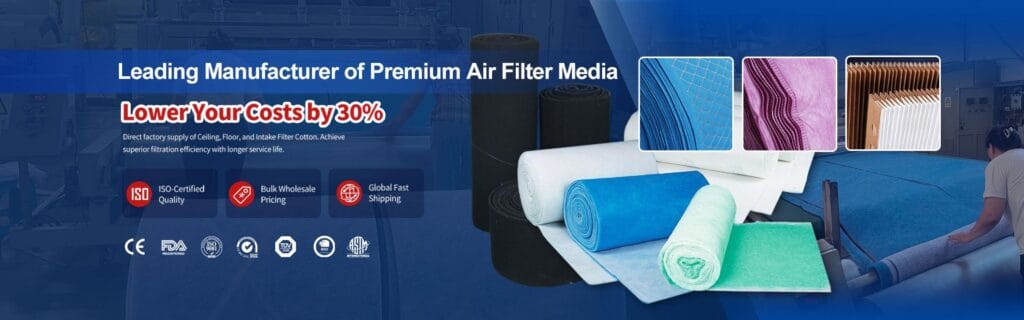
1. Why Long-Term Supplier Partnerships Matter to Air Filter Media Distributors
Air filter media distributors serve customers who often depend on regular material availability. These customers may include filter manufacturers, HVAC suppliers, industrial filtration businesses, and companies producing specialized air filtration products.
Their purchasing needs do not end with one successful order. They need materials that remain suitable for their applications and can be supplied again as production demand continues.
Consider a distributor supplying fiberglass filter media to a filter manufacturer. Once the customer has incorporated the material into its production process, a sudden change in material characteristics or difficulty obtaining the same specification can create additional work for both businesses.
The distributor may need to manage customer concerns, arrange alternative sourcing, or deal with delays in fulfilling recurring demand.
A more established supplier relationship helps reduce this uncertainty. As both sides work together over time, they develop a better understanding of product specifications, purchasing patterns, material applications, and future requirements.
The benefits extend beyond purchasing convenience:
More predictable repeat orders: Familiar product specifications and established communication make recurring purchases easier to manage.
Greater product continuity: Consistent materials help customers maintain their existing production processes.
More flexible product development: Changing customer requirements can lead to practical adjustments in material specifications and formats.
Stronger customer relationships: Reliable supply helps distributors maintain confidence among their own customers.
Better business planning: A clearer understanding of purchasing patterns supports inventory and sales planning.
A long-term supplier relationship is valuable when it helps distributors serve customers more consistently while reducing the uncertainty associated with repeated sourcing.
2. Consistent Air Filter Media Quality Is Essential for Repeat Orders
Product consistency is one of the most important factors in long-term air filter media supply.
A material that performs well in the first order should continue to deliver predictable characteristics in subsequent batches. This is particularly important for customers who have already adjusted their converting or manufacturing processes around a particular material.
For example, a filter manufacturer using nonwoven filter media may have established specific cutting, bonding, and assembly processes. If a later batch has noticeably different thickness, fiber distribution, or bonding strength, the material may behave differently during production.
Even relatively small variations can lead to additional adjustments, increased material waste, or inconsistent finished products.
Which Material Properties Influence Batch Consistency?
The important characteristics depend on the type of air filter media.
Filter Media Type | Relevant Material Characteristics |
|---|---|
Thickness, density, fiber structure, airflow resistance | |
Basis weight, fiber distribution, thickness, air permeability | |
Web uniformity, bonding, strength, thickness | |
Thickness, loft, fiber structure, air permeability, airflow distribution | |
Carbon content, material structure, adsorption-related properties | |
Thickness, air permeability, filtration characteristics, mechanical strength |
These characteristics are influenced by raw materials, production conditions, and manufacturing processes.
For example, differences in fiber distribution or density may affect the airflow characteristics of filtration media. Variations in bonding and web uniformity may influence the strength and handling properties of nonwoven materials.
Consistent production helps maintain more predictable material characteristics across repeat orders.
For distributors, this creates a practical commercial advantage: customers can continue working with familiar materials without unnecessary changes to their production processes.
It also makes it easier to develop stable product lines around materials that customers already know and trust.
3. A Long-Term Supplier Should Support Your Expanding Product Range
A distributor’s product portfolio often changes as its customer base develops.
A business may initially focus on a small number of frequently purchased materials. Later, new customers, applications, or market opportunities may create demand for additional filtration products.
For example, a distributor supplying HVAC customers may expand from fiberglass filter media into synthetic and intake filter media. A business serving automotive refinishing customers may develop a broader range of spray booth filtration materials.
Working with a supplier that understands different filtration materials can make this expansion more efficient.
Expanding into Related Air Filter Media Categories
Depending on the distributor’s market, additional product opportunities may include:
Fiberglass filter media for HVAC and industrial air filtration.
Synthetic filter media for different filtration grades and material requirements.
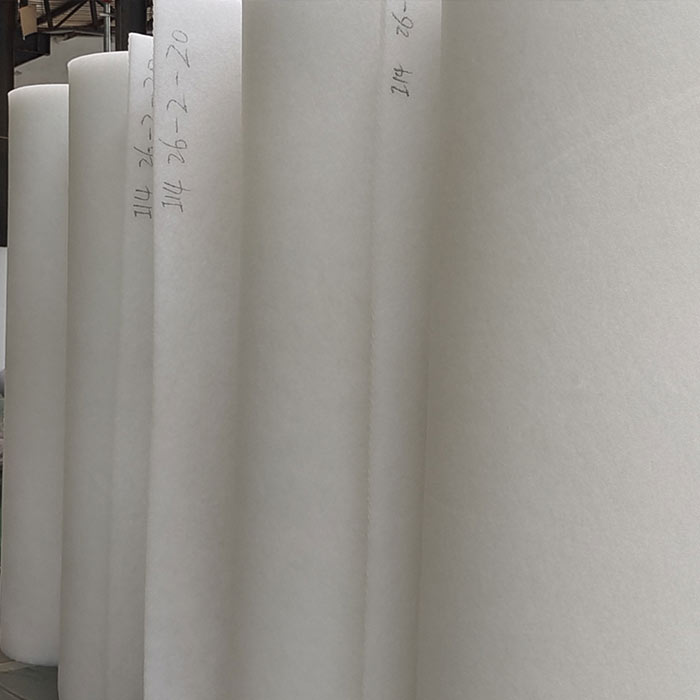
Nonwoven filter media for air filtration and downstream converting applications.
Ceiling filter media for spray booth air supply systems.
Intake filter media for ventilation and industrial air intake applications.
Pocket filter media for bag filter manufacturing.
Activated carbon filter media for applications involving certain gases and odors.
Air filter paper for air filtration element production.
Wire-backed filter media for applications requiring additional material support.
The value of a broader product range is not simply having more items to sell. It is being able to serve related customer requirements through a more coordinated supply relationship.
For example, a distributor already serving HVAC customers may have opportunities to introduce additional intake or synthetic filtration materials to its existing customer base.
This can help increase the value of established customer relationships while creating opportunities for repeat purchases across multiple product categories.
See Chuqi’s air filter media product range for an overview of the different filtration materials available.
4. Customization Helps Maintain Supply Relationships as Requirements Change
Customer requirements rarely remain exactly the same over several years.
A filter manufacturer may introduce a new product size, adjust its converting equipment, or change its production layout. A distributor may also begin serving customers with different material requirements.
When these changes occur, standard roll formats or existing specifications may no longer provide the most suitable solution.
A long-term air filter media supplier relationship becomes more valuable when material requirements can evolve alongside the customer’s business.
Custom Roll Formats Can Improve Material Utilization
Depending on the material and manufacturing process, customized air filter media may involve:
Roll width and roll length.
Thickness and basis weight.
Fiber structure and material construction.
Supporting or backing options.
Slitting and converting formats.
Packaging and labeling arrangements.
Consider a filter manufacturer producing several filter sizes. Different products may require different cutting layouts, making a single standard roll width less efficient for some production runs.
Supplying more suitable roll dimensions can reduce unnecessary trimming and improve material utilization.
This may also help distributors offer more practical solutions to customers who use different production equipment.
Private Label and Packaging Support
For distributors developing their own brands, packaging and labeling are also part of the long-term product offering.
Customers may prefer particular roll packaging formats, product identification, or private-label arrangements. Consistency in these details helps distributors maintain a recognizable product presentation across repeat orders.
Depending on the supplier’s capabilities, packaging and labeling arrangements can develop alongside the material specifications.
The goal is to keep the product offering aligned with how distributors sell, store, and supply materials to their own customers.
5. Reliable Air Filter Media Supply Supports Recurring Customer Demand
As a distribution business grows, purchasing patterns often become more regular and more varied.
Orders may involve larger quantities, multiple material categories, or different specifications for several customers. A supply relationship that works for occasional purchases may need to become more coordinated as demand increases.
Understanding Recurring Purchasing Patterns
Over time, order history provides a clearer picture of which materials customers purchase regularly and which are needed for specific projects.
For example, a distributor may have steady demand for one type of fiberglass filter media, while ceiling filter media or customized nonwoven materials are purchased less frequently.
Understanding these differences can support more practical inventory and production planning.
It can also help distributors manage stock more efficiently, rather than treating every product category in the same way.
Production Continuity and Raw Material Availability
Air filter media production depends on raw materials, manufacturing processes, and production schedules.
Changes in fiber characteristics or other input materials may influence the properties of the finished media. Different material categories may also require different production arrangements.
A supplier with direct manufacturing involvement has a closer connection to these production activities. This can support more informed communication around recurring orders, material requirements, and production planning.
For distributors, the value is not simply receiving one shipment on time. It is developing a supply relationship that can support ongoing customer demand with greater predictability.
Packaging and Overseas Delivery
For international distributors, supply reliability continues beyond manufacturing.
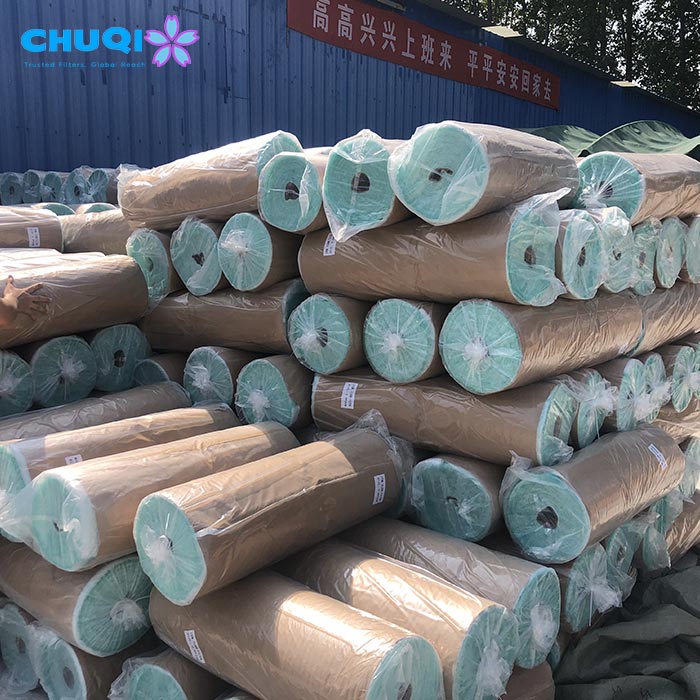
Air filter media is often shipped in rolls, and different materials may require different packaging arrangements. Suitable packaging helps protect materials during storage and transportation while making better use of shipping space.
Clear communication around packing, loading, and shipment also helps distributors coordinate their own inventory and customer deliveries.
These details become increasingly important as purchasing develops from occasional transactions into a regular supply relationship.
6. Technical Communication Turns Customer Feedback into Better Solutions
Even when a product has been used successfully for a long time, customer applications can change.
A manufacturer may introduce new equipment, adjust production conditions, or notice different material behavior during actual use. These situations create a need for communication between the distributor and supplier.
A productive technical relationship helps turn customer feedback into useful information for future orders.
Understanding Material and Application Issues
Consider a filter manufacturer reporting higher airflow resistance than expected from a particular filter media.
Possible factors may include material density, fiber structure, thickness, or other media characteristics. The issue may also involve operating conditions, airflow velocity, or the construction of the finished filter.
Not every performance issue originates in the filter media itself. Understanding the application is therefore important when discussing possible causes.
A supplier with relevant material and manufacturing knowledge can contribute useful information to this discussion.
For distributors, this makes it easier to communicate with customers and develop more practical solutions instead of relying only on general product descriptions.
Continuous Feedback Improves Future Orders
Customer feedback can also reveal opportunities to improve existing products.
For example:
A filter manufacturer may benefit from a different roll width.
A converting business may need a material with different handling characteristics.
A distributor may identify demand for an additional material category.
A customer may need a packaging format better suited to its storage or production process.
When this information is shared effectively, future orders can reflect what both sides have learned from actual applications.
Over time, technical communication becomes more focused because the supplier understands the material history and the distributor understands the customer’s operating needs.
7. Evaluate Long-Term Purchasing Value Beyond the Initial Price
Price remains important in wholesale air filter media purchasing. However, the initial quotation does not always reflect the full commercial value of a supply relationship.
For distributors, the actual cost of supplying customers can also be influenced by material utilization, processing waste, product consistency, and supply reliability.
Calculate the Cost per Usable Square Meter
Consider two suppliers offering similar filter media.
Supplier A offers a lower price per square meter, but its roll width creates more trimming waste during the customer’s converting process.
Supplier B offers a slightly higher price, but its roll dimensions are better suited to the customer’s production layout.
In this situation, Supplier B may provide better overall value because a greater proportion of the purchased material can be used.
A useful calculation is:
Cost per Usable Square Meter = Total Material Cost ÷ Usable Media Area
For example:
Total material cost: $5,000
Purchased media area: 10,000 m²
Usable media area after processing losses: 9,500 m²
The actual cost per usable square meter is approximately $0.526.
This example shows why the usable area of purchased material can matter more than the quoted price alone.
Consistent Supply Helps Protect Business Margins
Inconsistent materials may create additional processing adjustments, wasted production time, or customer complaints.
Supply interruptions may also affect inventory planning and the distributor’s ability to serve recurring customer orders.
These costs are not always visible in the original quotation, but they can influence long-term profitability.
A valuable supplier relationship therefore combines competitive purchasing costs with consistent quality, suitable material formats, and dependable supply.
The objective is to maintain a product range that delivers reliable value to customers while supporting sustainable business margins.
8. Repeat Orders Build a More Efficient Supplier Partnership
A long-term partnership develops through actual cooperation rather than a single successful purchase.
Samples provide an initial understanding of a material, but production orders reveal how it performs under normal working conditions.
For example, a sample of synthetic filter media may appear suitable during an initial assessment. Its practical value becomes clearer when it runs through the customer’s cutting, sewing, or converting process.
The same applies to fiberglass filter media, air filter paper, and other materials used in downstream manufacturing.
The first production order also provides experience with the wider supply process, including packaging, shipment coordination, and communication throughout the order.
As repeat purchases follow, both sides gain a better understanding of:
Materials and specifications used regularly.
Customer applications and processing conditions.
Preferred roll formats and packaging arrangements.
Purchasing patterns and recurring demand.
Opportunities to improve or expand the product range.
This accumulated experience can make future orders more efficient. It also creates a stronger foundation for introducing additional materials or adapting existing products as customer requirements change.
For distributors, the most valuable long-term supplier relationship is one that becomes more predictable and productive with each successive order.
Build a More Dependable Air Filter Media Supply Partnership
A successful partnership between an air filter media supplier and a distributor develops through consistent products, practical cooperation, and an understanding of changing customer requirements.
As purchasing relationships mature, both sides gain experience with the materials, applications, and supply arrangements that matter to the business. This makes it easier to manage repeat orders, adapt product specifications, and support future growth.
At Chuqi New Materials, all our air filter media products are manufactured in our own factory. Our product range includes fiberglass filter media, ceiling filter media, intake filter media, synthetic and nonwoven filter media, pocket filter media, activated carbon filter media, air filter paper, and wire-backed filter media.
With direct involvement in manufacturing, we support different material types and production-related requirements, including customized dimensions and roll formats.
Whether you are maintaining an established product range, supplying filter manufacturers, or developing new distribution opportunities, a dependable manufacturing relationship can help create a more consistent and efficient supply process.
Explore our air filter media product range to discover material options for your customers and long-term supply needs.
Frequently Asked Questions About Air Filter Media Supplier Partnerships
Q1: What makes an air filter media supplier suitable for long-term cooperation?
A suitable long-term supplier provides consistent product quality, dependable supply, practical customization, and ongoing technical communication. These capabilities help distributors maintain stable product lines and respond to changing customer requirements.
Q2: Why is batch consistency important in air filter media supply?
Changes in thickness, basis weight, fiber distribution, bonding, or air permeability can affect material performance and downstream processing. Consistent production helps customers achieve more predictable results and reduces unexpected adjustments between repeat orders.
Q3: How can an air filter media supplier support a distributor’s business growth?
A supplier can support growth through relevant product categories, customized material formats, recurring supply arrangements, and technical communication. These capabilities help distributors serve new customer applications and expand their product offering.
Q4: What types of air filter media can distributors source from one supplier?
Depending on the manufacturer’s product range, distributors may source fiberglass, synthetic, nonwoven, ceiling, intake, pocket, activated carbon, wire-backed filter media, and air filter paper through one supply relationship. Product availability depends on the supplier’s actual manufacturing capabilities.
Q5: Can air filter media be customized for repeat orders?
Yes. Depending on the material and production process, customization may include roll width, roll length, thickness, basis weight, material construction, backing options, slitting, and packaging. Once a suitable specification has been established, maintaining consistency across repeat orders becomes particularly important.
Q6: How can distributors improve the reliability of recurring air filter media supply?
A more established supply relationship helps both sides understand purchasing patterns, commonly used specifications, and recurring demand. Communication around production planning, raw material availability, packaging, and shipment can support more predictable supply.
Q7: Is a long-term air filter media supplier always the cheapest option?
Not necessarily. The actual value of a supplier relationship also depends on material utilization, processing waste, product consistency, and supply reliability. A competitive price matters, but long-term purchasing value depends on the overall performance of the materials and supply relationship.