
Two HEPA filter quotations arrive in your inbox. Both list the same dimensions. Both specify H14. Yet one is noticeably less expensive.
Is the lower-priced option better value, or are the two suppliers offering products that differ in ways the quotations do not show?
Evaluating a HEPA filter supplier requires more than comparing efficiency ratings, external dimensions and purchase prices. For industrial equipment manufacturers, HVAC contractors, facility operators and filtration distributors, the decision also involves airflow requirements, pressure drop, sealing compatibility, test documentation, customization and manufacturing consistency.
A supplier should be able to explain how its proposed filter relates to your application and which details need verification before production.
This guide outlines seven practical checks to help you evaluate a HEPA filter manufacturer, compare quotations more accurately and reduce avoidable technical uncertainties during sourcing.
1. Check Whether the Supplier Understands Your Application
A technically meaningful discussion should begin with how the filter will operate, not simply how much it costs.
For example, an inquiry for an H14 HEPA filter measuring 610 × 610 mm provides an efficiency classification and external dimensions. However, it does not establish whether the proposed filter is suitable for the intended airflow, housing or operating environment.
A knowledgeable supplier should recognize the difference between the information already available and the information still needed.
Information That Helps Define the Requirement
Depending on the application, the initial discussion may cover:
Required filtration efficiency: The applicable classification and performance requirements.
Operating airflow: The airflow at which the filter is expected to operate.
Pressure drop: The acceptable resistance under the specified airflow and test conditions.
Installation dimensions: Available width, height, depth and mounting clearance.
Sealing interface: Gasket, gel seal or another specified arrangement.
Operating environment: Relevant temperature, humidity, chemical exposure or other application-specific conditions.
Documentation: Applicable test reports, product specifications and traceability requirements.
Not every project requires all these details at the first inquiry. The purpose is to identify the information that materially affects product selection.
If you are still defining the requirements, see our guide, HEPA Filter Specifications: A Checklist for Engineers and Buyers, for a more detailed explanation of the parameters that belong in a complete specification.
2. Verify What the Efficiency Rating and Test Report Actually Mean
A HEPA filter efficiency figure is useful only when its testing basis and scope are understood.
For example, an efficiency percentage associated with a particular particle size should not automatically be treated as equivalent to an efficiency classification established using a different test method.
Under the EN 1822 framework, HEPA filter classification uses performance at the most penetrating particle size (MPPS). The relevant test method, classification requirements and test conditions determine how the result should be interpreted.
Media Testing Is Not the Same as Complete-Filter Testing
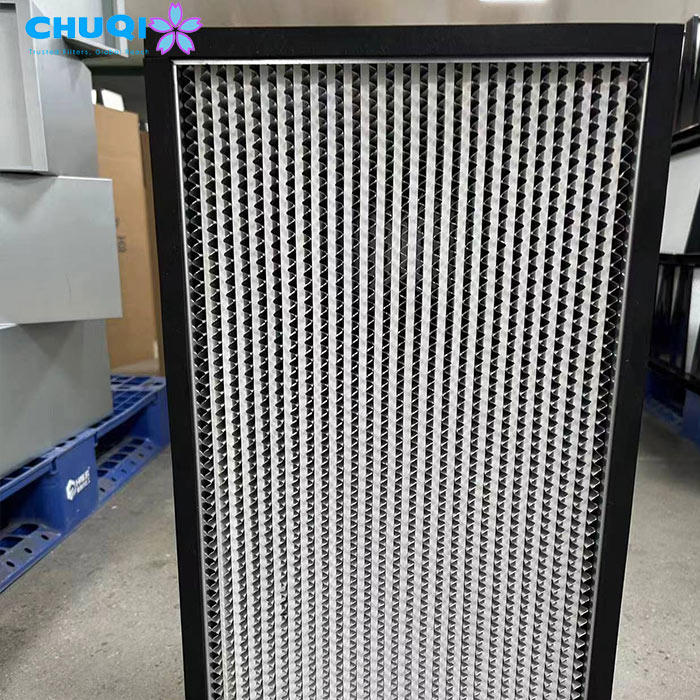
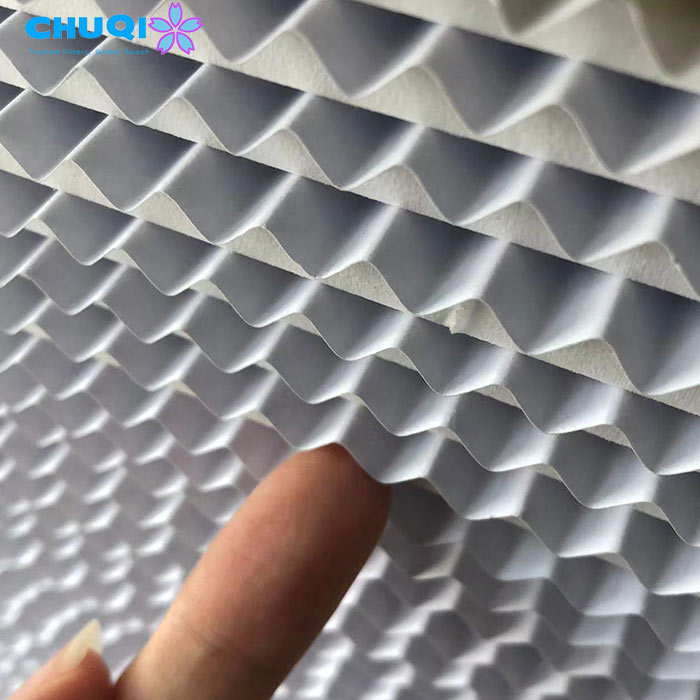
Filter media is an important component, but the finished filter also includes the media pack, frame, seals, joints and assembly.
A report describing filter media does not automatically establish the performance or leak integrity of the assembled filter.
When reviewing a HEPA filter test report, check the following:
| What to Check | Why It Matters |
|---|---|
| Product identification | Helps establish which product or configuration the report covers |
| Test method and classification | Clarifies the basis of the stated performance |
| Test conditions | Provides context for interpreting the reported results |
| Test scope | Distinguishes media-level results from complete-filter results |
| Relevant efficiency data | Helps establish whether the evidence addresses the specified requirement |
| Leak-test information, where applicable | Helps assess whether the relevant filter integrity requirements have been evaluated |
Also ask whether the document relates to a standard product, a reference configuration or the proposed custom filter.
A sample report may demonstrate how a manufacturer documents testing, but it should not be presented as proof that every configuration has the same verified performance.
The objective is not to collect as many certificates as possible. It is to determine whether the available evidence supports the specific product and application under consideration.
For further technical background, see What Is MPPS in HEPA Filter Testing?
3. Evaluate Custom Design and Housing Compatibility
A filter can match the specified external dimensions and still be unsuitable for the installation.
This is particularly important for OEM equipment, replacement filters and custom industrial filtration projects, where the mounting and sealing interfaces may be defined by an existing housing.
Check More Than Width, Height and Depth
Depending on the design, important interface details may include:
Gasket location and dimensions
Gel-seal channel geometry
Frame profile and mounting features
Available installation depth
Direction of installation
Contact surfaces and sealing requirements
A drawing review should identify details that could affect manufacturing or installation before a sample is produced.
For example, if a drawing does not make clear whether the specified dimensions include the gasket, the supplier should clarify the measurement basis rather than assume that the interface is correct.
Look for Specific Technical Feedback
Compare two possible responses to an OEM drawing.
A general response might simply confirm that the drawing has been received.
A more useful response identifies an unclear seal position, a missing dimension or a mounting feature that requires clarification.
This does not guarantee that the supplier will deliver a successful design, but it gives you a clearer basis for evaluating its technical communication.
For projects that require a nonstandard configuration, a custom HEPA filter manufacturer should be able to discuss the relationship between the drawing, the proposed construction and the intended installation.
4. Use Samples to Verify the Right Things
Samples can provide valuable information before a larger production commitment. Their usefulness depends on the questions they are intended to answer.
A sample evaluation should distinguish among three different objectives.
Fit verification: Does the filter match the relevant dimensions and install correctly in the intended housing?
Performance verification: Does the filter meet the specified performance requirements under the applicable test conditions?
Installed-system verification: Does the filter perform as intended when installed, including the relevant sealing and operating conditions?
These checks are related, but one does not automatically prove the others.
A filter that fits correctly has not necessarily demonstrated its filtration efficiency or resistance. Similarly, a satisfactory factory test does not by itself establish that the installed assembly is free from bypass leakage.
Evaluate How the Supplier Handles Feedback
A development sample may reveal a dimensional mismatch, an installation difficulty or a performance result that needs further investigation.
Pay attention to how the supplier responds.
Does it examine the relevant dimensions, construction, airflow and test conditions? Can it explain what needs to be reviewed and which aspects require retesting?
A useful corrective process connects the observed issue to a plausible cause and a specific verification step.
Simply producing another sample without clarifying the original problem may leave the underlying uncertainty unresolved.
For more detail, see OEM HEPA Filter Development: From Drawing Review to Sample Approval.
5. Check Manufacturing Consistency Before Repeat Orders
A successful sample demonstrates what was achieved in one development instance. Repeat purchasing introduces a different question: can the supplier reproduce the accepted configuration consistently?
This matters when HEPA filters are incorporated into OEM equipment, supplied across multiple projects or purchased regularly for maintenance.
Confirm the Final Product Configuration
During development, details may change. The frame, seal position, media construction or other characteristics may be revised as the design evolves.
The accepted configuration should therefore be clearly identifiable before production begins.
Relevant references may include an approved drawing, product specification, sample identification or another agreed configuration record.
These references help prevent confusion between an earlier sample and the final intended design.
Look for Product-Relevant Quality Controls
A claim of “strict quality control” is not enough to explain how a manufacturer manages the characteristics that matter to your project.
Ask how the supplier addresses relevant checks, such as:
Critical dimensions and mounting interfaces
Seal placement and assembly
Required materials and construction
Applicable performance and leak testing
Product identification and documentation
Packaging requirements for the intended shipment
The appropriate controls depend on the filter design and agreed requirements. Avoid assuming that every manufacturer uses the same process or that one generic checklist applies to every product.
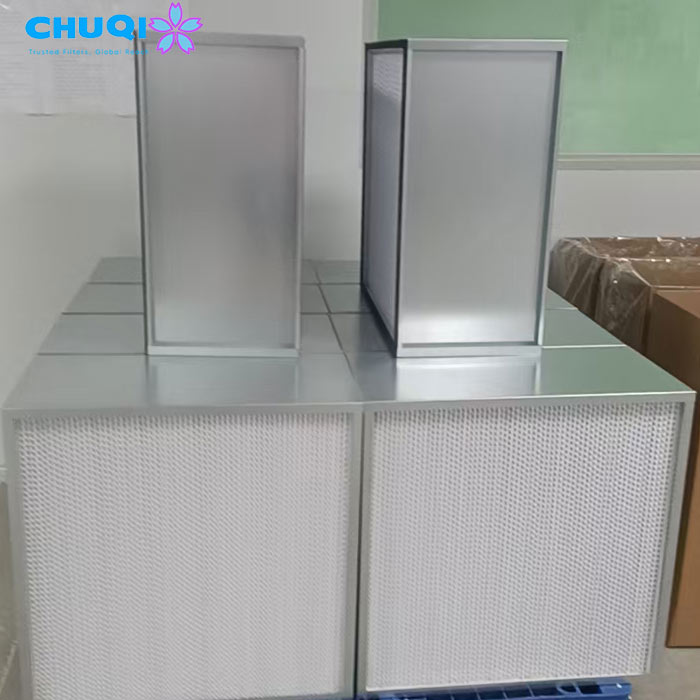
For new custom designs, an initial production batch may also help you understand how the manufacturer handles multiple units, product identification and documentation beyond a single development sample.
6. Verify What the Manufacturer Actually Does
The terms HEPA filter manufacturer and HEPA filter supplier do not always describe the same operating model.
A supplier may manufacture the finished filter, assemble components sourced from other companies, coordinate external testing or combine several of these activities.
The label alone does not establish the scope of its in-house capabilities.
Questions That Help Clarify Manufacturing Capability
When assessing a potential manufacturing partner, consider asking:
Which manufacturing and assembly activities take place at the facility?
How are materials and purchased components selected or verified?
Which tests are performed in-house, and which are handled externally?
How are custom drawings and configuration changes reviewed?
Who handles technical questions during product development?
How are the accepted product configuration and relevant quality records maintained?
These questions are especially relevant when sourcing custom HEPA filters for industrial equipment or OEM applications.
Factory photographs, videos and equipment lists can help introduce the operation, but they do not independently prove production capacity, quality or technical suitability.
Where the project justifies it, a focused remote review or facility visit can provide additional context about the activities relevant to your product.
The goal is to understand how the supplier’s actual operating model supports your requirements, rather than relying solely on the words “factory direct” or “manufacturer.”
7. Compare Total Value, Not Just the Quoted Price
A lower quotation is not automatically a sign of inferior quality. Equally, a higher price does not guarantee better performance.
Before comparing two HEPA filter offers, establish whether they cover equivalent requirements.
| Comparison Factor | What to Confirm |
|---|---|
| Filtration performance | Same required classification and applicable test basis |
| Airflow and resistance | Comparable operating conditions and performance requirements |
| Dimensions and sealing | Compatible external dimensions and installation interfaces |
| Construction | Relevant frame, media pack and sealing specifications |
| Test documentation | Comparable scope and required evidence |
| Order quantity | Equivalent quantity and production scope |
| Customization | Same design requirements and included development work |
| Packaging and delivery | Comparable requirements and delivery assumptions |
Once these factors are clear, the price difference becomes easier to interpret.
Consider Operating Costs Where Relevant
Pressure drop may affect the energy consumption of equipment that maintains airflow over long operating periods.
However, the potential impact depends on the actual system, airflow, operating schedule, fan characteristics and other conditions.
A lower initial pressure drop should therefore be evaluated alongside the required filtration performance and the relevant operating assumptions. A percentage-based energy-saving claim from another installation is not sufficient to predict savings for your equipment.
Likewise, delivery estimates should be considered in the context of drawing readiness, material availability, sample approval and production requirements.
The aim is to compare technically equivalent proposals and understand the trade-offs, rather than choosing solely by the lowest quoted price.
Practical HEPA Filter Supplier Evaluation Checklist
Use this checklist to organize your supplier evaluation.
| Evaluation Question | What a Useful Answer Should Clarify |
|---|---|
| Does the supplier understand the application? | Relevant airflow, installation and operating requirements |
| Is the efficiency claim clearly defined? | Classification, test basis and applicable conditions |
| Does the test report relate to the proposed product? | Product identification and test scope |
| Has housing compatibility been considered? | Dimensions, mounting and sealing details |
| Does the sample have a defined purpose? | Fit, performance or installed-system verification |
| How is the accepted design maintained? | Configuration references and relevant production controls |
| Are manufacturing capabilities clearly explained? | In-house activities, external services and technical responsibilities |
| Are quotations based on comparable requirements? | Performance, construction, documentation and supply scope |
| Can technical questions be resolved clearly? | Specific explanations and practical verification steps |
No single answer determines whether a supplier is suitable. Consider the overall evidence, the complexity of the application and the importance of each requirement.
A supplier that communicates limitations clearly and explains how uncertainties can be resolved may provide a more useful basis for technical decision-making than one that simply promises that every requirement can be met.
Frequently Asked Questions
Q: How do I evaluate a HEPA filter supplier?
A: Review the supplier’s understanding of your application, the basis of its efficiency claims, the relevance of its test documentation, housing compatibility, sample evaluation, manufacturing capability and production consistency. Compare quotations only after confirming that the proposed products meet equivalent requirements.
Q: What should I check in a HEPA filter test report?
A: Check the product identification, test method, classification, test conditions and scope. Determine whether the report covers the filter media or the complete assembled filter, and whether it addresses the performance and integrity requirements relevant to your application.
Q: Is a HEPA filter manufacturer always better than a distributor?
A: Not necessarily. A manufacturer may offer direct access to production and design discussions, while a distributor may provide other supply-chain advantages. Evaluate the actual technical support, product traceability, documentation and capabilities available for your project rather than relying on the business label alone.
Q: What information is needed to request a custom HEPA filter?
A: Useful starting information includes the existing filter model, equipment drawing, required dimensions, operating airflow, filtration requirement and housing interface. The information needed will depend on the application. You can begin with the details available and clarify the remaining technical requirements during the discussion.
Q: Why should I test a HEPA filter sample before bulk production?
A: A sample can help verify dimensional fit, review the proposed construction and evaluate performance against the agreed requirements. The evaluation should distinguish between installation fit, factory test results and performance in the actual equipment.
Q: How can I compare two HEPA filter quotations fairly?
A: Confirm that both quotations address the same filtration requirement, airflow conditions, pressure-drop basis, dimensions, sealing arrangement, construction, documentation and order quantity. Only then can the price difference be evaluated in context.
Discuss Your Custom HEPA Filter Requirements with Chuqi
Selecting a HEPA filter is not simply a matter of matching an efficiency label or reproducing external dimensions. The proposed construction, operating conditions, installation interface and verification requirements all influence whether the filter is suitable for its intended use.
Chuqi New Materials supports B2B customers exploring industrial HEPA filtration solutions, including custom filter requirements.
As a source-factory partner offering customization options, Chuqi can discuss your application and the information needed to review a proposed filter configuration.
You do not need to finalize every specification before starting the conversation. An existing filter reference, equipment drawing, required dimensions or description of the operating conditions can provide a useful starting point.
Explore our industrial HEPA filter solutions to review the available product options, or contact our team to discuss your OEM, replacement-filter or custom filtration requirements.