
Sourcing high-performance air filter media rolls directly impacts downstream filtration efficiency, pressure drop management, and total operating cost (TCO) for commercial HVAC systems, cleanrooms, and industrial spray booths.
Whether you are an HVAC filter OEM, cleanroom engineer, or international B2B filtration distributor, partnering with an unreliable air filter media supplier can result in rapid dust overloading, premature clogging, fiber shedding, and structural failure under moisture or high velocity.
This comprehensive procurement guide details the technical metrics, testing standards, manufacturing audits, and supplier verification steps required to source premium Air Filter Media Suppliers.
When reviewing technical datasheets (TDS) from an air filter media manufacturer, compare performance metrics against international testing standards including ISO 16890, EN 779, ASHRAE 52.2, and DIN 53438.
Filter Efficiency vs. Initial Resistance (Initial Pressure Drop)
A superior filter media roll balances high particle capture efficiency with low initial resistance. Low initial resistance reduces fan energy consumption in ventilation systems.
Coarse Filters (ISO Coarse / EN779 G2 to G4): Typical initial resistance ranges from 15 Pa to 45 Pa at 1.5 m/s airflow velocity.
Medium Filters (ISO ePM10 / EN779 F5 to F9): Designed for fine dust capture with controlled pressure drop under high air volume.
Dust Holding Capacity (DHC)
Dust Holding Capacity measures the mass of synthetic dust (e.g., ISO Fine / Coarse Dust) the media captures before reaching its maximum recommended final pressure drop (typically 250 Pa for pre-filters). High DHC directly extends filter service life and reduces maintenance frequency.
Progressive Density Structure & Fiber Uniformity
High-quality synthetic air intake media features a progressive density design (coarser fibers on the air-inlet side and finer micro-fibers on the air-outlet side). This multi-layer structure allows depth loading rather than surface clogging. Ensure the media exhibits uniform basis weight (GSM) and thickness across the full roll width.
Flame Retardancy and Temperature Resistance
Industrial automotive spray booths and commercial HVAC applications require strict fire safety compliance. Verify whether the media meets DIN 53438 (Class F1/K1) or UL 900 flame-retardant standards.
| Filter Media Type | Primary Efficiency Class | Typical Basis Weight (GSM) | Flame Retardancy Rating | Key B2B Applications |
| Ceiling Diffusion Media | EN779 F5 / ISO ePM10 50% | 500 – 600 g/m² | DIN 53438 F1 | Automotive Spray Booths, Surface Finishing |
| Fiberglass Paint Arrestor | Coarse arrestance (93%-98%) | 220 – 240 g/m² | Non-combustible glass fiber | Paint Overspray Collection, Floor Filtration |
| Synthetic Intake Cotton | EN779 G2 – G4 / ISO Coarse | 100 – 400 g/m² | DIN 53438 F1 / UL 900 | HVAC Pre-filtration, Air Handling Units |
| Pocket / Bag Filter Media | EN779 F5 – F9 / ISO ePM10 & ePM1 | 120 – 260 g/m² | DIN 53438 F1 / UL 900 | Secondary HVAC Filtration, Cleanrooms |
| Wire-Backed Synthetic Media | EN779 G3 – G4 / ISO Coarse | 150 – 300 g/m² | DIN 53438 F1 / UL 900 | Pleated Panel Pre-filters, AHU Intakes |
| Activated Carbon Media | Gas-phase odor adsorption | Custom composite | Standard / FR Treated | VOC Adsorption, Odor Control Systems |
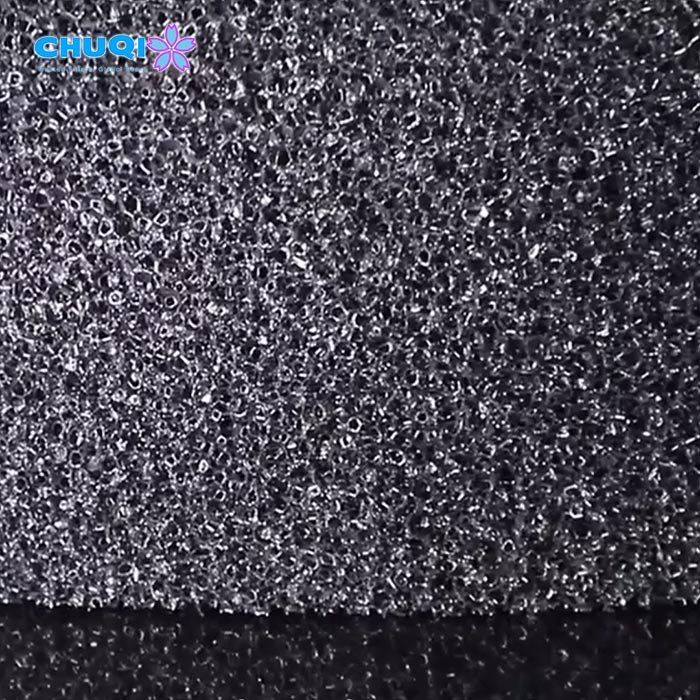
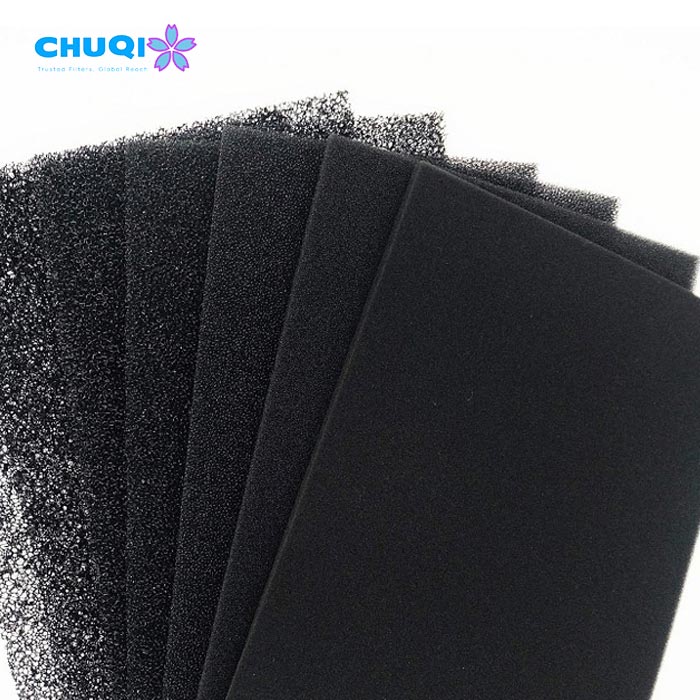
| Reticulated PPI Foam | 10 PPI – 60 PPI pore sizes | Open-cell polyurethane | Custom options | Compressors, Engine Intake, Equipment Pre-filters |
3. How to Distinguish Source Factories from Trading Intermediaries
Working directly with a source manufacturing factory guarantees batch-to-batch consistency, competitive B2B factory pricing, flexible roll slitting, and custom OEM manufacturing.
Evaluate potential suppliers on three core manufacturing dimensions:
In-House Processing Lines: Confirm if the supplier operates complete production lines—such as needle-punching, thermal bonding, melt-blown spinning, or resin impregnation—within their own facility.
Testing Laboratory Capabilities: Reliable manufacturers maintain in-house testing equipment including laser particle counters, airflow resistance test rigs, weight/thickness gauges, and flame-testing apparatus. Always request a Certificate of Analysis (COA) for every batch.
Quality Management Certifications: Verify official ISO 9001:2015 quality system certifications and third-party test reports (e.g., SGS, ISO 16890 laboratory reports).
Matching the correct media roll to your specific industry application is essential to optimizing system performance and longevity:
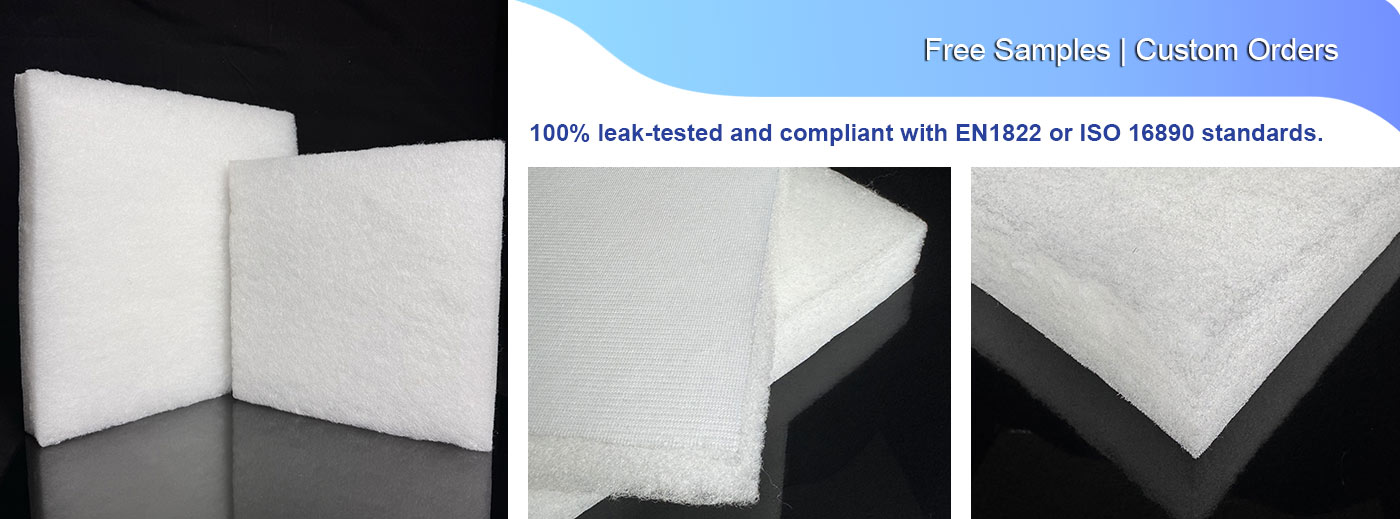
Spray Booth Ceiling Diffusion Filter Media
Designed specifically for paint spray booth ceilings and automotive finishing lines. High-grade ceiling media incorporates 100% synthetic gradient fiber structures, a fully impregnated tackifier (sticky migration barrier), and a reinforcing mesh backing to guarantee zero fiber shedding and prevent dust particles down to 5 microns from entering spray areas.
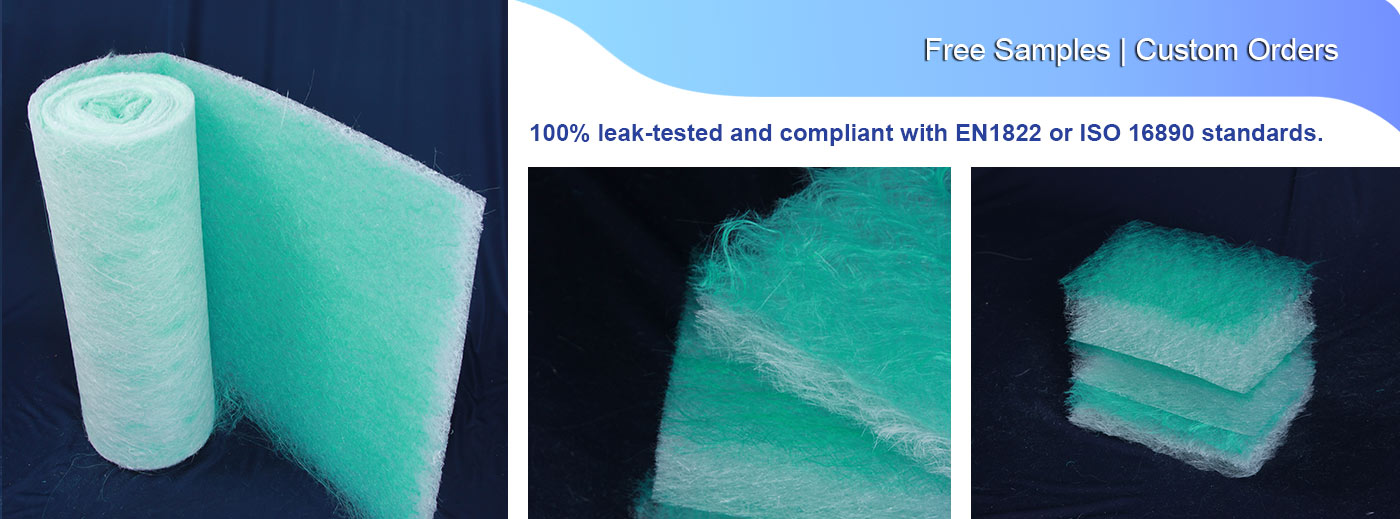
Fiberglass Paint Arrestor & Floor Media
Engineered from high-elasticity continuous glass fiber filamants with a progressive density structure. Green-and-white or all-white floor media effectively traps liquid paint overspray, prevents ductwork clogging, and withstands operating temperatures up to 170°C.
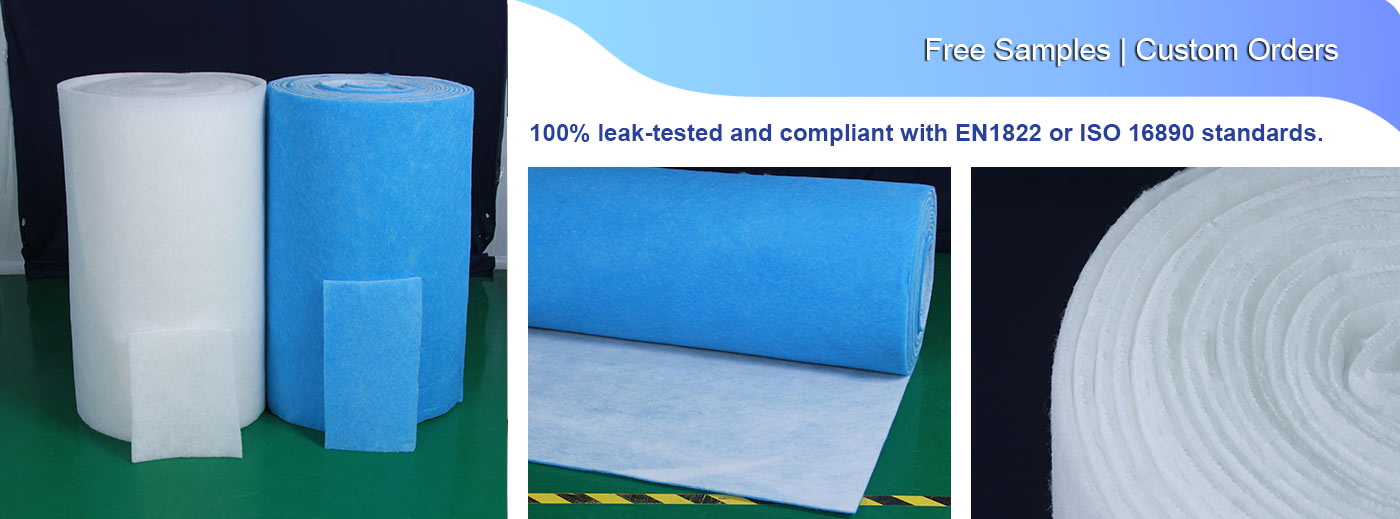
Air Intake Pre-Filter Synthetic Media
Manufactured from break-resistant synthetic polyester fibers with thermal bonding. Ideal for pad cutting or roll installation in commercial HVAC intake louvers, rooftop units, and pre-filter panel manufacturing.
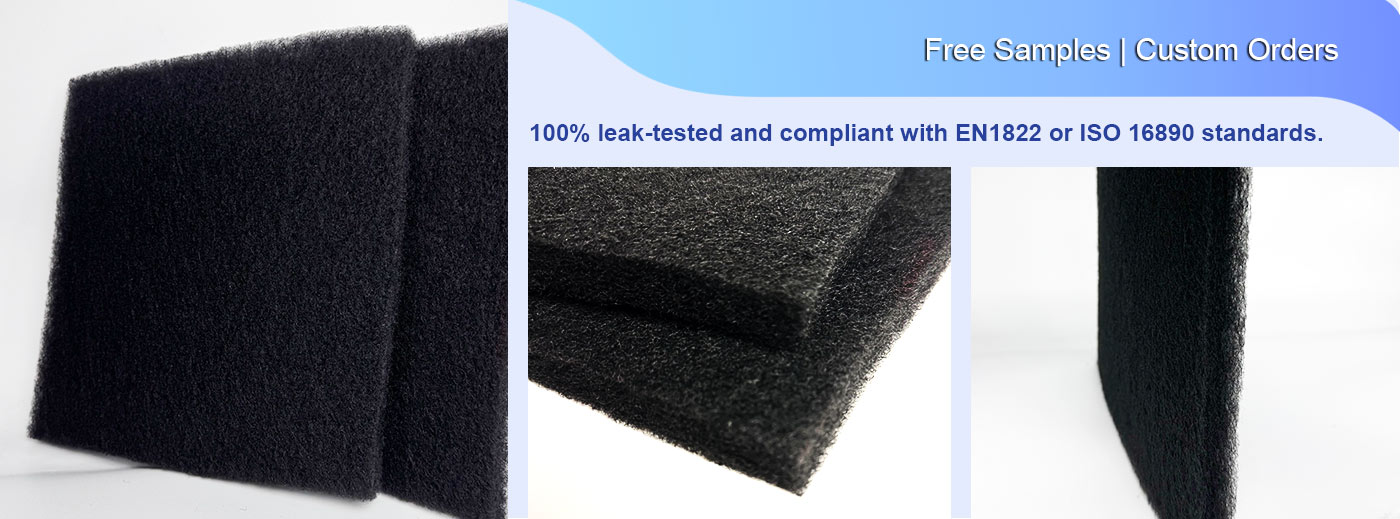
Activated Carbon Filter Media
Combines premium non-woven synthetic carrier substrates with high-activity coconut shell activated carbon powder or granules. Delivers combined particulate filtration and gaseous odor / VOC abatement.
Reticulated Polyurethane PPI Filter Foam
Washable, reusable open-cell polyurethane foam with controlled pore size ranging from 10 PPI (coarse) to 60 PPI (fine). Features 97% open void volume for minimal airflow restriction in machinery air intakes.
5. Step-by-Step Sample Testing & Factory Audit Checklist
Before placing a container-load purchase order, execute this 4-step quality verification process:
Review Detailed Technical Datasheets (TDS): Ensure the supplier provides complete parameters: airflow rate (m³/h/m²), initial/final resistance (Pa), arrestance/efficiency rating, roll width (m), roll length (m), and temperature resistance.
Request Physical Roll Samples: Request full-width sample cuts (e.g., 1m x 1m or 0.6m x 20m) to inspect fiber cohesion, surface tackiness, weight balance, and roll slitting precision.
Perform In-House Bench Testing: Run airflow velocity and pressure drop tests on sample pads. For spray booth media, conduct a sticky migration test to ensure tackifiers do not transfer to painted surfaces.
Conduct a Virtual or On-Site Factory Audit: Inspect raw material storage, roll winding machinery, roll compression packaging, and QC lab testing via a live video tour.
6. Supply Chain & B2B Customization Requirements
A reliable export supplier must support flexible converting operations and ocean shipment logistics:
Custom Slitting and Die-Cutting: Ability to slit rolls to non-standard widths (e.g., 0.5m to 2.2m), custom roll lengths (10m to 50m), or supply pre-cut pads.
Export Compression Packaging: Roll media must be tightly compressed and double-bagged with moisture-proof polybags and woven outer bags to optimize container loading capacity and prevent transport damage.
Raw Material Inventory & Lead Times: Direct factories maintain stable inventories of raw polyester fibers, glass fiber, and binders to guarantee consistent 10–15 day lead times during high-demand cycles.
Frequently Asked Questions (FAQ)
Q1: What is the difference between EN779 and ISO 16890 standards for air filter media?
A: EN779 classifies media based on average efficiency for 0.4 μm particles (e.g., G1–G4, M5–M6, F7–F9). ISO 16890 replaced EN779 globally, evaluating filter performance across four particulate matter size fractions: ISO Coarse, ePM1 (0.3–1.0 μm), ePM2.5 (0.3–2.5 μm), and ePM10 (0.3–10 μm).
Q2: Why is progressive density important in synthetic filter media?
A: Progressive density prevents surface clogging by capturing larger particles on the outer coarse layer and smaller particles deeper inside the fine fiber layer. This multi-stage trapping mechanism maximizes Dust Holding Capacity and lowers pressure drop accumulation.
Q3: How do I choose between fiberglass floor media and synthetic floor media for paint spray booths?
A: Fiberglass paint arrestors offer higher temperature resistance (up to 170°C) and superior paint holding capacity for sticky solvent-based paint overspray. Synthetic paint stop media is better suited for waterborne coatings or environments where glass fiber shedding must be completely avoided.
Identifying a reliable air filter media supplier requires assessing technical parameters, manufacturing infrastructure, application expertise, and export packaging capabilities. Partnering directly with an established source factory guarantees stable product performance, factory-direct pricing, and tailored OEM media solutions.
Are you looking for high-performance, certified air filtration media rolls for your business?
[Contact our technical engineering team today] to request free sample rolls, detailed technical datasheets, or custom roll slitting quotes!