
In commercial HVAC, cleanroom design, and heavy industrial filtration, the primary efficiency air filter (commonly referred to as a primary air filter or pre-filter) is far more than a simple piece of disposable mesh. It is the tactical boundary line that protects your secondary (F7–F9) and terminal (HEPA/ULPA) filtration stages from high dust loads, particulate clogging, and costly system downtime.
For facility managers, procurement directors, and system integrators searching for a reliable china primary filter partner, selecting the correct primary filter is a strategic balancing act: maximizing dust-holding capacity while keeping initial static pressure drop as low as possible to reduce fan energy consumption.
This comprehensive guide covers everything you need to know—from structural designs and en779 g4 efficiency standards to selecting a customized primary filter directly from a trusted primary filter factory.
What is a Primary Air Filter and How Does It Work?
A primary efficiency air filter is the initial filtration barrier situated at the fresh air intake or return air section of a primary filter ahu (Air Handling Unit). Its primary operational duty is to intercept coarse suspended particulate matter (PM10, larger particles 5 microns and larger, lint, hair, pollen, and large mechanical dust) before the airflow enters high-efficiency downstream stages.
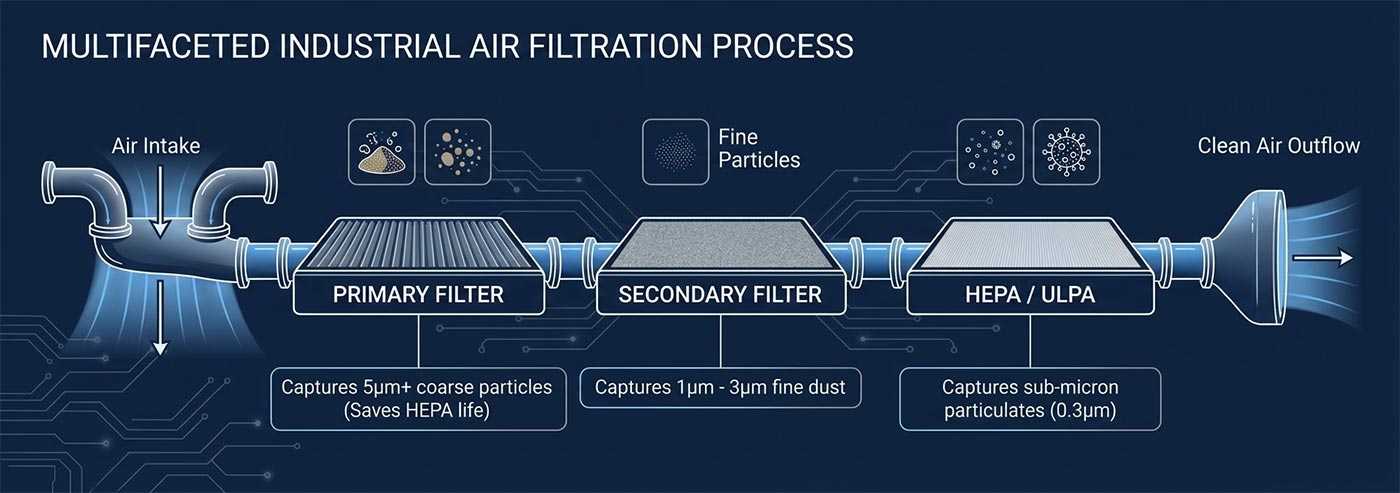
The Fluid Dynamics & Mechanical Mechanisms
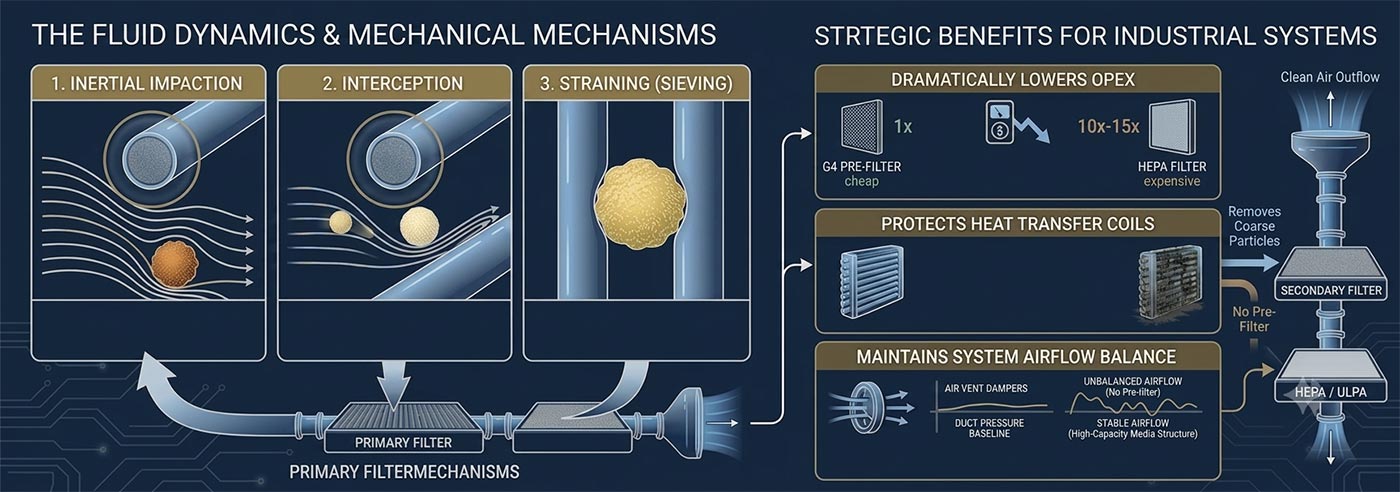
A quality primary filter does not rely on electrostatic retention alone; it depends heavily on three classic mechanical filtration principles:
Inertial Impaction: Heavy particles cannot adjust to the streamline curvature around the filter fibers and collide directly with the fiber surface.
Interception: Medium-sized particles following the air stream come into contact with the fibers as they pass within one particle radius.
Straining (Sieving): Physical entrapment where the open distance between adjacent fibers is smaller than the particle diameter.
Strategic Benefits for Industrial Systems
Dramatically Lowers Operating Cost (OPEX): A standard HEPA filter can cost 10x to 15x more than a pre-filter. By replacing a g4 pre filter regularly, you extend the service life of expensive downstream filters by 200% to 300%.
Protects Heat Transfer Coils: Unfiltered coarse airborne particulate adheres to wet cooling coils, forming insulating grime that increases thermal resistance and drastically impairs thermodynamic efficiency.
Maintains System Airflow Balance: By holding heavy dust loads in a high-capacity media structure, pre-filters keep downstream duct pressure baseline stable.
Deciphering Efficiency Grades: EN 779 vs. ISO 16890 vs. ASHRAE 52.2
Navigating global filtration standards can be challenging during international procurement. Modern specifications have largely shifted from the legacy EN 779 standard to the more accurate ISO 16890, which evaluates performance based on actual PM (Particulate Matter) spectrums.
Understanding the g4 filter micron size and efficiency ratings helps engineers select the right g3 air filter or g4 filter for their specific environmental requirements:
| Legacy EN 779 | ISO 16890 Classification | ASHRAE 52.2 Rating | Average Synthetic Dust Arrestance | Primary Application Focus |
| G1 | ISO Coarse 30%–45% | MERV 1 – 2 | 60% to 70% | Basic pest/lint screens, outdoor grilles |
| G2 | ISO Coarse 45%–60% | MERV 3 – 4 | 70% to 80% | Domestic ACs, light air handling units |
| Filter G3 | ISO Coarse 60%–80% | MERV 5 – 6 | 80% to 90% | Standard commercial HVAC, compressor intakes |
| Filter G4 | ISO Coarse > 80% / ISO ePM10 50% | MERV 7 – 8 | ≥ 90% | Cleanroom pre-filtration, automotive spray booths, hospitals |
Engineering Note: When sourcing filters g4 class or filter g3 g4 combinations for industrial AHUs, an en779 g4 rating indicates an arrestance higher than 90%, making it the ideal standard for capturing dust down to the 5–10 micron range.
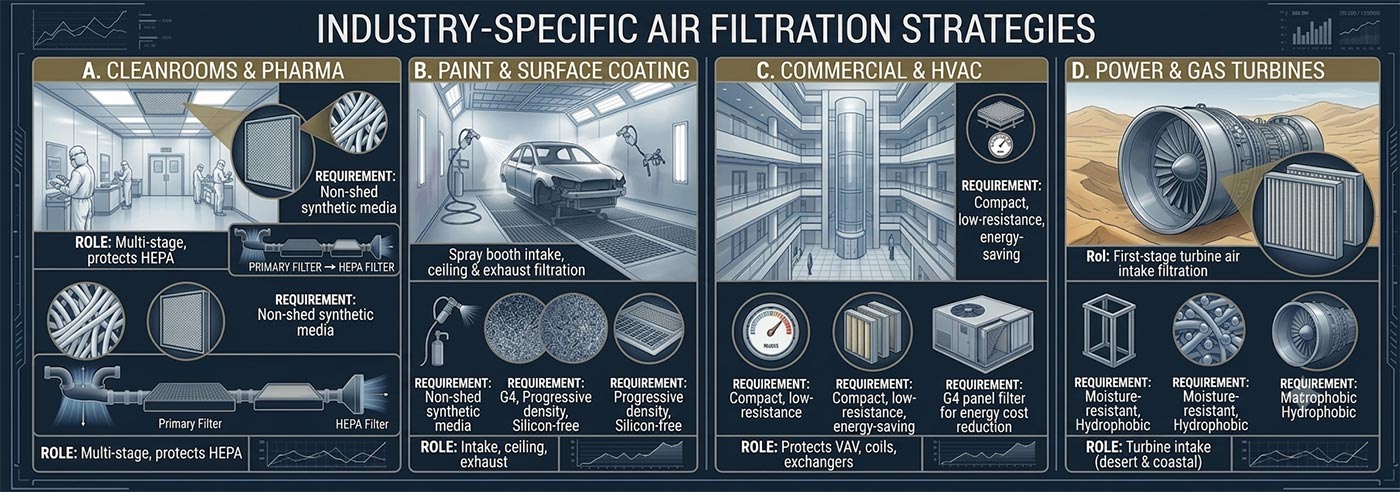
Industry-Specific Applications & Deployment Strategies
Primary air filter solutions are deployed across diverse technical environments, each demanding distinct material characteristics:
A. Cleanrooms & Pharmaceutical Facilities
Role: Multi-stage protection upstream of F9 compact filters and terminal H14 HEPA units.
Requirement: Non-shedding synthetic media to prevent fiber migration into the ductwork.
B. Automotive Paint & Surface Coating
Role: Intake air conditioning and spray booth ceiling/floor exhaust filtration.
Requirement: Silicone-free g4 filter media with progressive density structure to prevent paint cratering and surface defects.
C. Commercial Buildings & HVAC Integrators
Role: Protecting VAV (Variable Air Volume) boxes, fan coils, and heat exchangers in commercial towers, hotels, and airports.
Requirement: Low initial resistance (≤ 45 Pa) to cut HVAC energy costs using a compact g4 panel filter.
D. Power Generation & Gas Turbines
Role: First-stage filtration for high-velocity turbine air intakes operating in harsh environments (desert dust, coastal humidity).
Requirement: High-strength moisture-resistant frames paired with hydrophobic synthetic media.
Architectural Structural Types: Choosing the Right Configuration
The physical geometry of a primary filter directly dictates its effective media surface area, holding capacity, and airflow velocity limits.
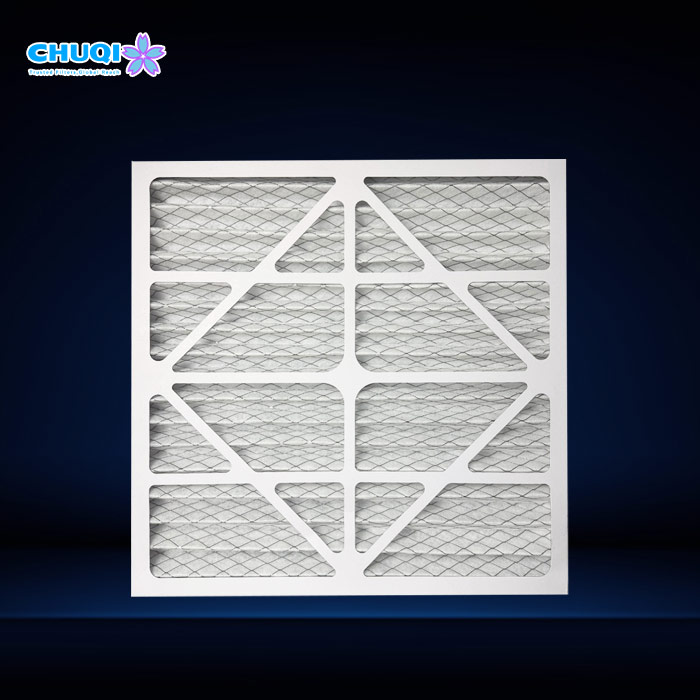
Pleated Pre-Filter
Design: Continuous non-woven synthetic media folded into uniform pleats, backed by an expanded wire mesh matrix, and encased in a moisture-resistant card, galvanized, or aluminum frame.
Advantages: High filtration surface area within a compact depth (1″, 2″, or 4″ frame options); low initial resistance and robust structural integrity. High-efficiency pleated pre-filters (G3/G4) serve as the fundamental workhorse of commercial HVAC.
Best For: Standard AHU racks and space-constrained commercial airflow systems.
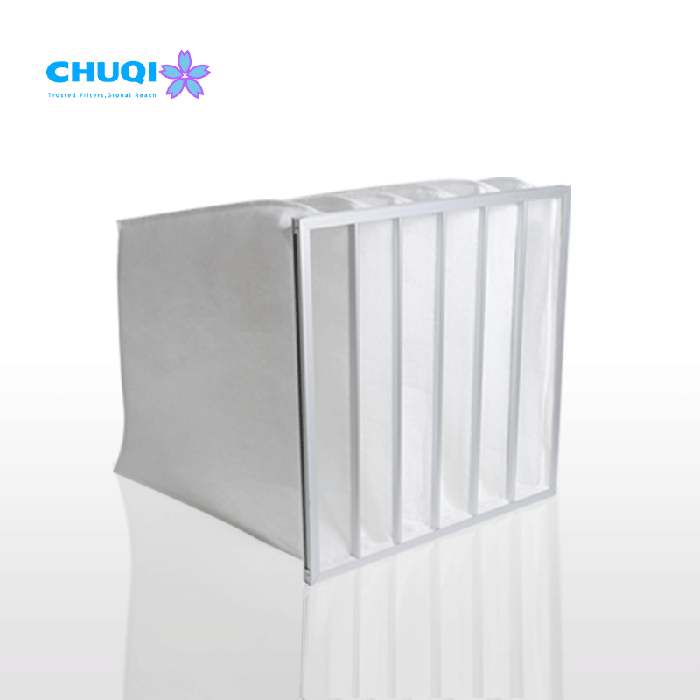
Pre-Pocket Filter (Bag Filter)
Design: Specialized pocket/bag configuration featuring multiple aerodynamically shaped pockets ultrasonically welded and mounted into a rigid header frame.
Advantages: Massive total surface area delivering exceptional Dust Holding Capacity (DHC) and extended service intervals.
Best For: High-volume airflow environments with heavy ambient particulate loads.
Heat Resistant Pre Filter
Design: Constructed with heat-tolerant filtration media (such as high-temperature fiberglass or stainless steel wire) encased in a durable metallic frame, built to withstand temperatures up to 250°C+.
Advantages: Exceptional thermal stability, non-combustible properties, and reliable operation under extreme high-temperature conditions.
Best For: Industrial drying ovens, high-temperature exhaust systems, and specialized manufacturing processes.
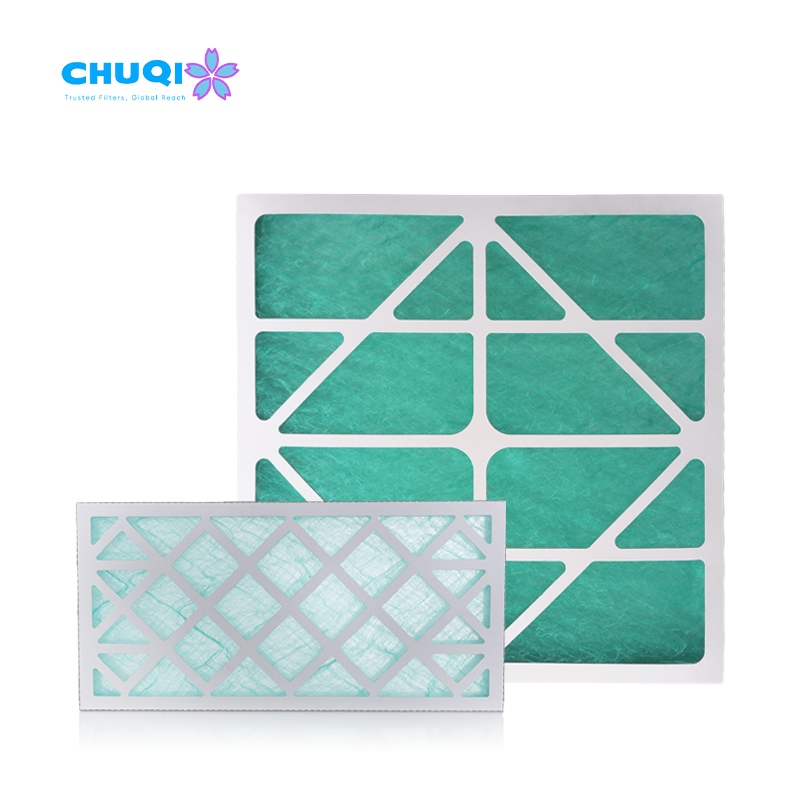
Fiberglass Panel Filter
Design: Progressive density continuous-filament glass fiber media treated with a dust-holding adhesive and fitted inside a heavy-duty cardboard or metal frame.
Advantages: High dust-holding capacity for coarse particles, excellent shape retention, and economical pre-filtration performance.
Best For: General ventilation intake, spray booth exhaust, and heavy dust pre-filtration.
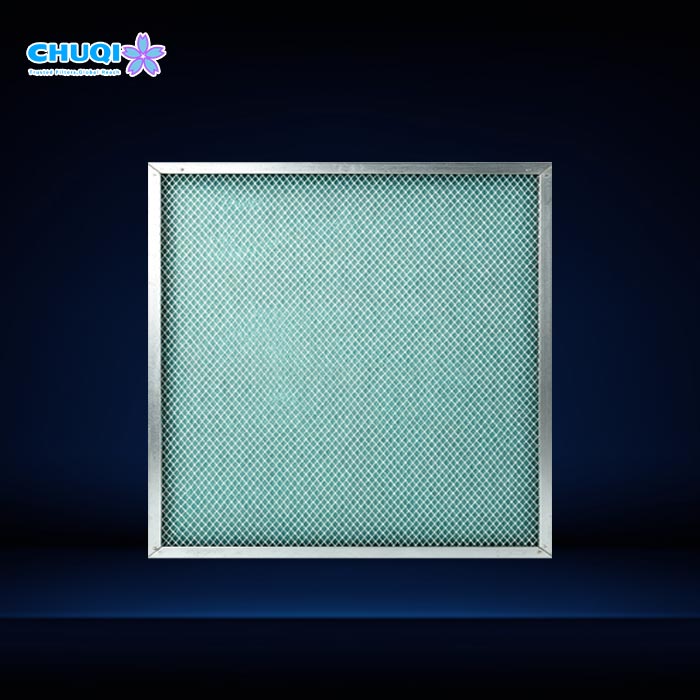
Skeleton Panel Filter
Design: A permanent reusable metal internal wire skeleton/frame covered with a quick-replaceable synthetic filter pad or media sleeve.
Advantages: Lowest ongoing maintenance costs, easy media replacement without discarding the frame, and reduced international freight volume.
Best For: Cost-conscious facility maintenance and frequent filter replacement schedules.
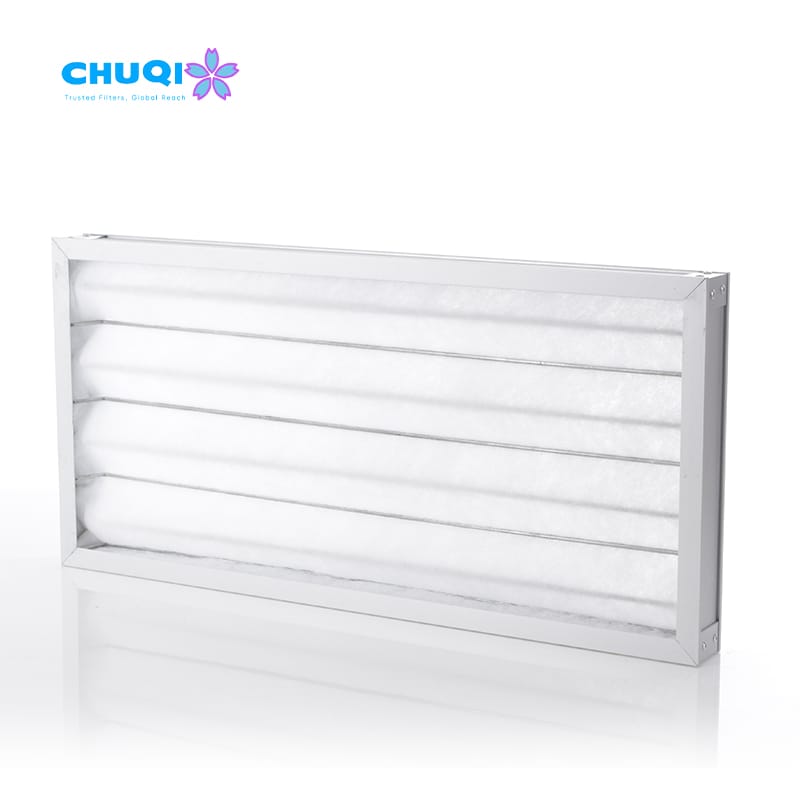
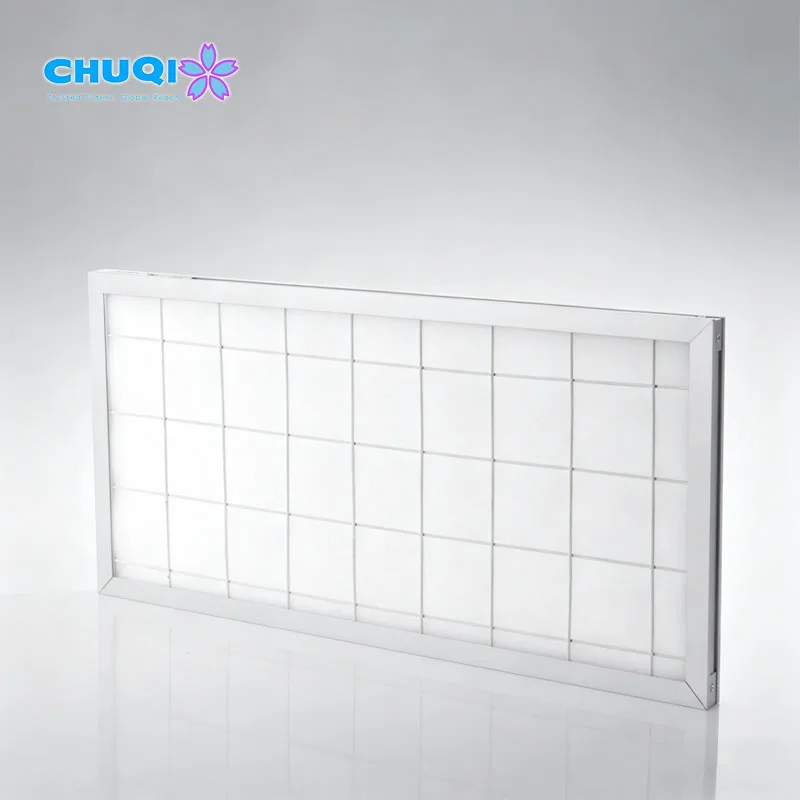
Standard Panel Air Filter
Design: Flat-pad synthetic media integrated into a rigid perimeter frame with protective support grids on both sides.
Advantages: Ultra-compact footprint, low initial pressure drop, and reliable basic coarse dust protection.
Best For: Compact fan coils, VAV terminal units, and limited-depth air intake grilles.
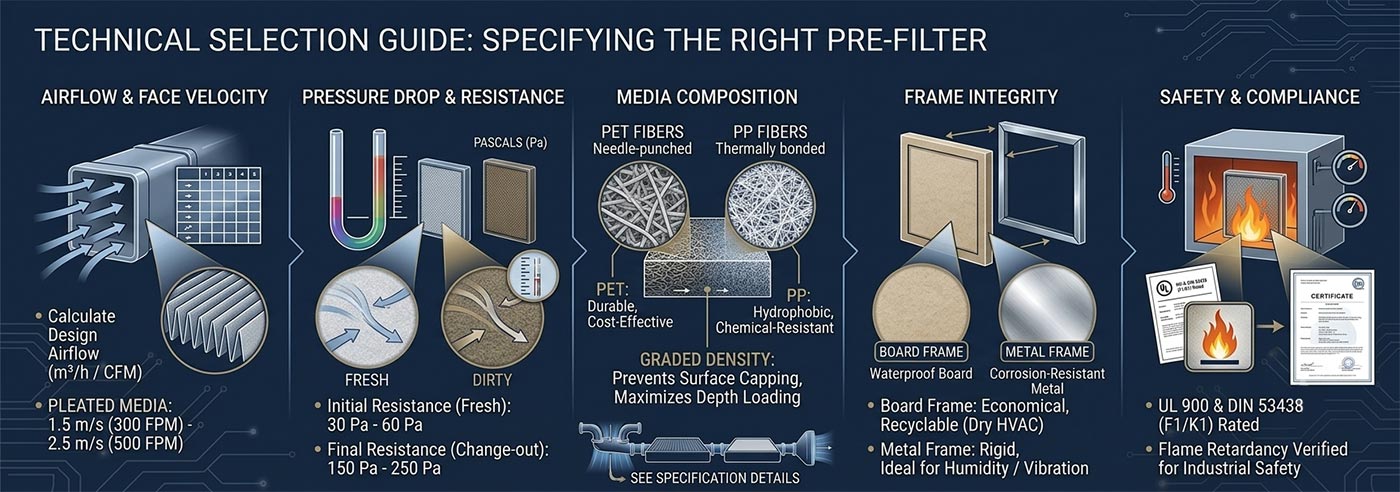
Technical Selection Guide: How to Specify the Right Pre-Filter
When writing procurement specifications or engineering bills of materials, evaluate these 5 vital parameters:
Volumetric Airflow & Face Velocity:
Calculate design airflow (m³/h or CFM) against the filter face area. Standard pleated panel filters are typically engineered for face velocities between 1.5 m/s (300 FPM) and 2.5 m/s (500 FPM).
Initial vs. Recommended Final Pressure Drop:
Initial Resistance: Fresh filter pressure drop (typically 30 Pa – 60 Pa).
Final Resistance: Recommended change-out point (typically 150 Pa – 250 Pa).
Filter Media Composition:
Needle-punched Polyester (PET): Durable, cost-effective, high mechanical strength.
Thermally Bonded Polypropylene (PP): Excellent chemical resistance and hydrophobic behavior.
Graded Density Structure: Coarse fibers on the air-entry side and fine fibers on the air-exit side to prevent surface capping and maximize depth loading.
Frame Material Integrity:
Waterproof Beverage Board: Economical, lightweight, recyclable (ideal for standard dry HVAC).
Anodized Aluminum / Galvanized Steel: Corrosion-resistant, rigid, ideal for high humidity or heavy vibration.
Operating Temperature & Flame Retardancy:
Verify UL 900 or DIN 53438 (F1/K1) flame retardancy ratings for industrial safety compliance.
Lifecycle, Maintenance & Replacement Economics
Operating a primary air filter past its optimal lifespan is a false economy. As dust accumulates, the static pressure drop increases exponentially:
Energy Relationship: Fan Power Consumption is directly proportional to (Airflow Volume × Pressure Drop) / Fan Efficiency.
When pressure drop doubles, fan motor power consumption rises dramatically to maintain constant airflow, costing significantly more in electricity than the price of a fresh pre-filter.
Service Life Benchmarks:
Standard Commercial Office HVAC: 2 to 3 months.
Industrial & Manufacturing Plants: 1 to 2 months (or upon reaching 150 – 200 Pa static drop).
Cleanroom Intake Units: Scheduled replacement based on strict differential pressure gauge readings (e.g., Dwyer Magnehelic monitoring).
Compliance, Certifications, and Quality Assurance
To ensure seamless customs clearance and consistent filtration performance, verified manufacturing standards are essential:
ISO 9001:2015: Ensures strict batch-to-batch quality control from raw material inspection to final sealing.
ISO 16890 / EN 779 Test Reports: Third-party laboratory verification of fractional arrestance efficiency.
RoHS & REACH Compliance: Guarantees that synthetic media, adhesives, and hot-melts are free from hazardous heavy metals and SVHC chemicals.
UL 900: Fire resistance certification required for North American commercial building codes.
Direct-from-Factory Manufacturing & Tailored Engineering Solutions
While standard sizes like 24″ × 24″ × 2″ (595 × 595 × 46 mm) dominate standard commercial markets, complex industrial machinery, custom AHUs, and unique geographical environments often demand specialized engineering beyond off-the-shelf catalog items.
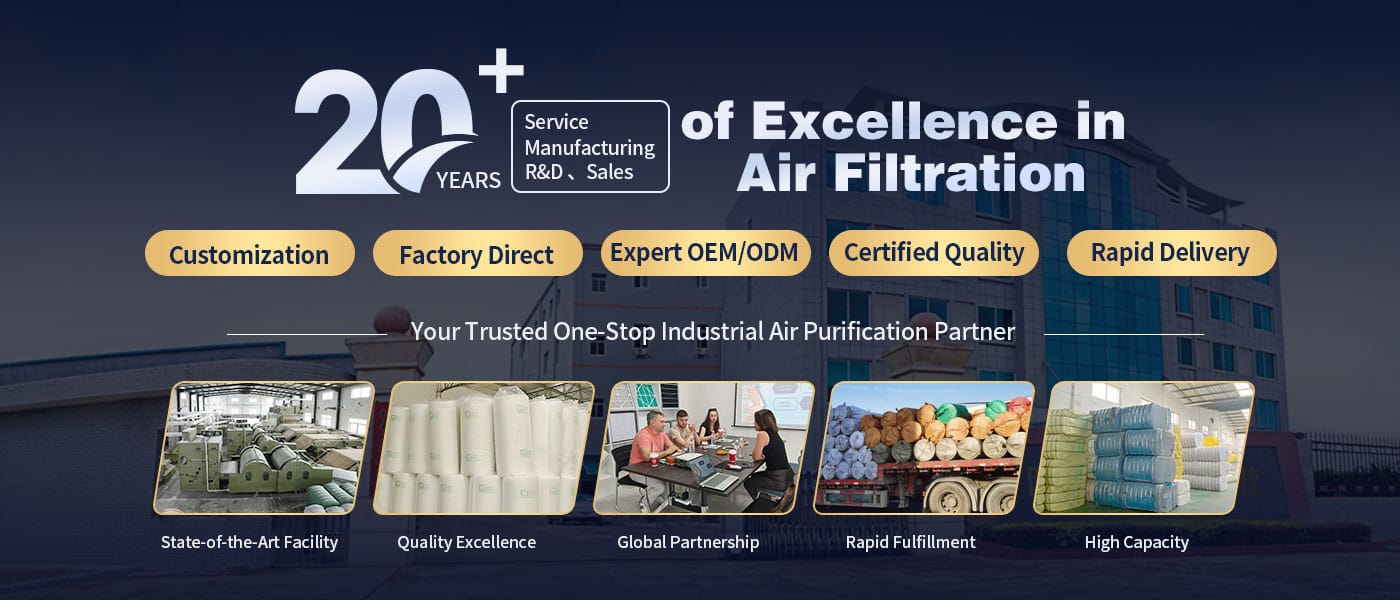
As a leading china primary efficiency air filter manufacturer with over 20 years of production expertise, Chuqi New Material Technology bridges the gap between standard production and custom industrial needs.
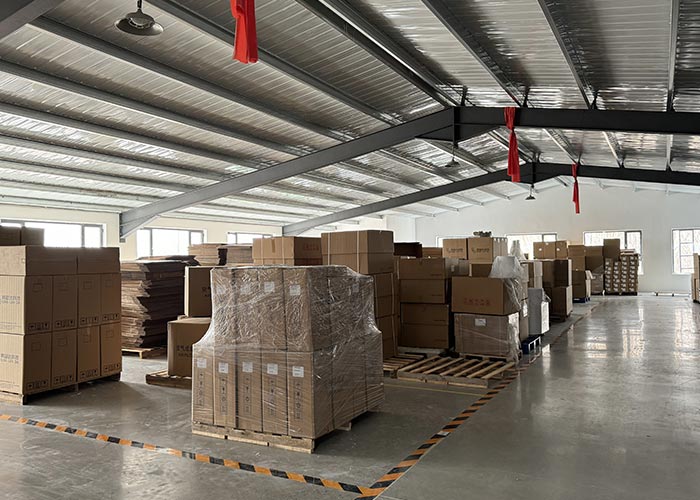
The Source Advantage: From Raw Media to Finished Filters
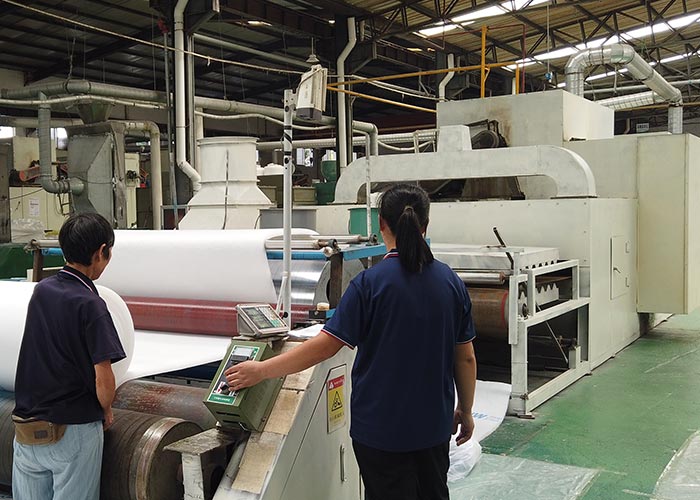
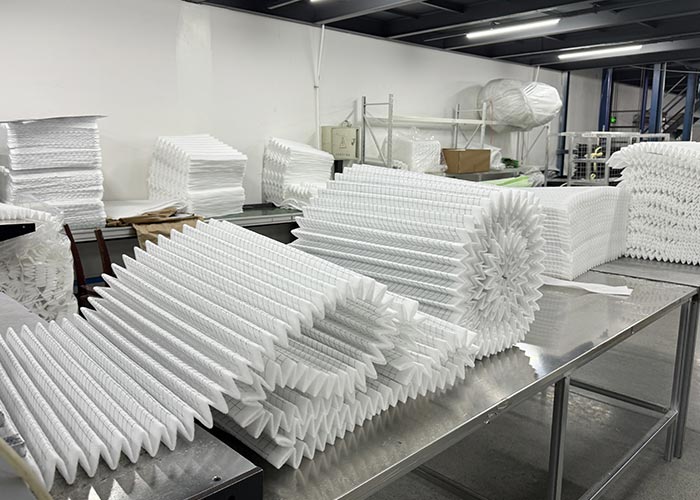
Unlike pure assembly workshops that purchase pre-made media from external suppliers, operate directly with a source primary filter factory. We control the entire supply chain—manufacturing our own synthetic filter media from raw fiber to final assembled filter. This vertical integration provides distinct advantages for global B2B procurement:
Millimeter-Precision Customization: Looking for a customized primary filter? While competitors are limited to standard sizes, we manufacture custom dimensions, non-standard frame depths, and tailored mounting flanges to match your exact equipment tolerances.
Tailored Material Formulations: Choose from custom frame substrates (Stainless Steel SUS304/316, Anodized Aluminum, Heavy-gauge Galvanized Steel, or Water-resistant Beverage Board) and functional media options (flame-retardant, anti-bacterial, or activated-carbon impregnated media).
Strict Quality Control & Wholesale Pricing: As a direct primary efficiency air filter factory, controlling raw media loft, fiber density, and thermal bonding in-house eliminates middleman markups. We provide our B2B partners with primary filter wholesale pricing, consistent batch quality, and rapid production turnaround.
Full OEM/ODM Branding: Comprehensive private labeling, custom inkjet frame marking, barcoding, and reinforced export-ready packaging tailored for international distributors.
Global Distribution: Trusted as a top-tier primary filter supplier by HVAC contractors, distributors, and cleanroom engineers across Southeast Asia, Europe, Mexico, and worldwide markets.
Request Your FREE Sample Kit & Factory Direct Quote
Test our filter media density and frame structural integrity in your own facility before placing a bulk contract. As a premier primary filter manufacturer, we provide FREE SAMPLES for qualified wholesale buyers, OEM machinery builders, and industrial distributors worldwide.
12-Hour Fast Technical Response & CAD Engineering Support
Free Sample Service Available for Laboratory & On-Site Testing
Direct Factory Pricing & Complete Technical Compliance Export Packages
 Direct Email: chuqifilter@chuqimat.com
 WhatsApp / Mobile:+86 19153383344