
A spray booth filter package brings ceiling diffusion filters and floor paint arrestors into one coordinated purchasing plan. In a typical downdraft spray booth, ceiling diffusion filters clean incoming air and help distribute it across the work area, while floor paint arrestors capture paint overspray carried toward the exhaust system.
Although these two filter types work within the same ventilation process, they serve different purposes. They have different performance requirements, loading conditions, and replacement patterns.
For spray booth distributors, equipment manufacturers, maintenance companies, and industrial coating facilities, purchasing both products together can simplify sourcing and stock planning. The key is to coordinate the supply of both filter types without assuming they are interchangeable or should always be replaced at the same time.
This guide explains how ceiling diffusion filters and floor paint arrestors work together, what matters when comparing their specifications, and how to plan a practical filter supply strategy for one booth or multiple facilities.
What Does a Spray Booth Filter Package Include?
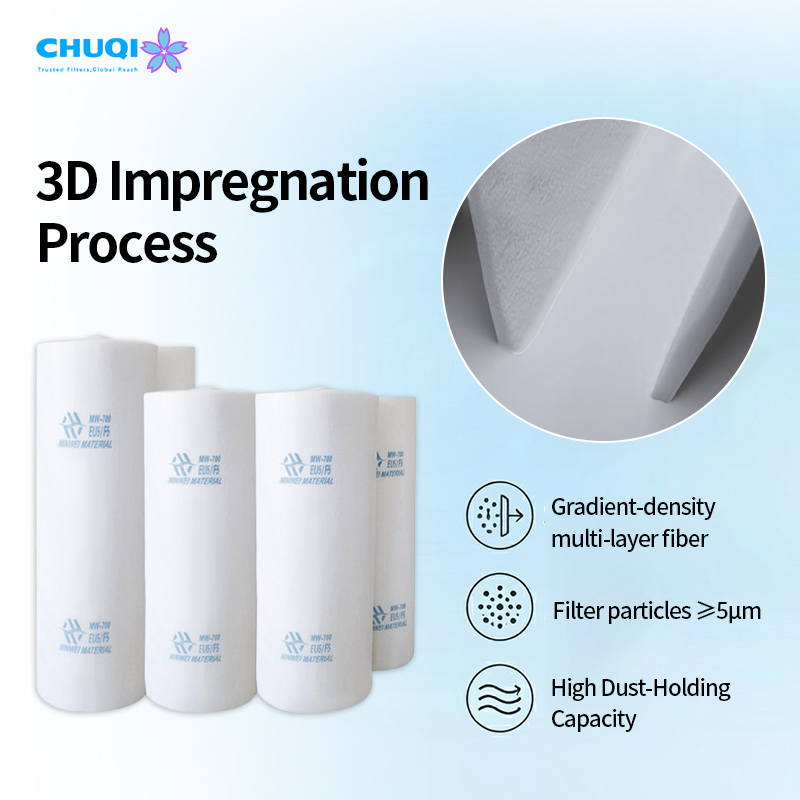
A spray booth filter package can include the ceiling diffusion media and floor paint arrestor media required for a particular booth configuration. Additional intake prefilters, secondary exhaust filters, frames, or other filtration stages are separate components unless they are specifically included in the supply arrangement.
The two main filter types have different responsibilities.
| Feature | Ceiling Diffusion Filters | Floor Paint Arrestors |
|---|---|---|
| Main function | Filter incoming air and help distribute it through the booth | Capture airborne paint overspray on the exhaust side |
| Typical location | Ceiling or final supply-air filtration position | Floor grating or designated lower exhaust position |
| Main performance concerns | Filtration performance, airflow resistance, media construction, and dimensional fit | Overspray capture, loading behavior, airflow resistance, and dimensional fit |
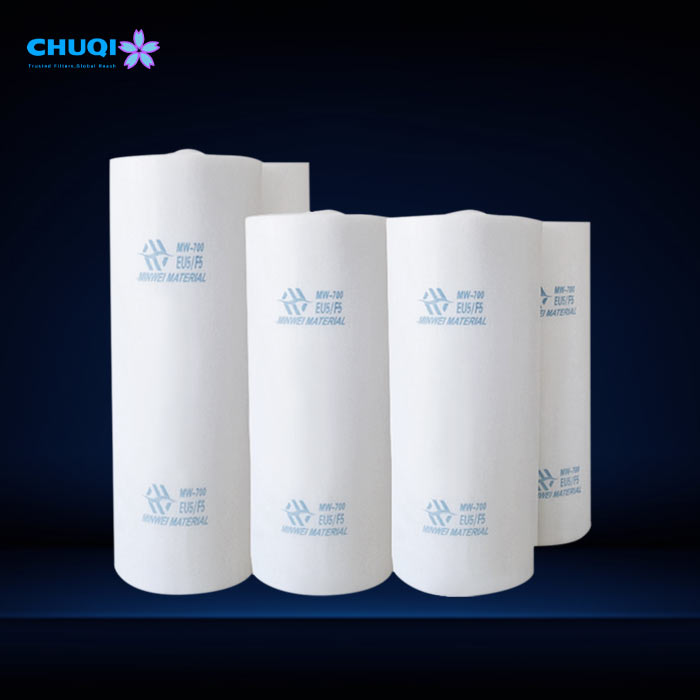
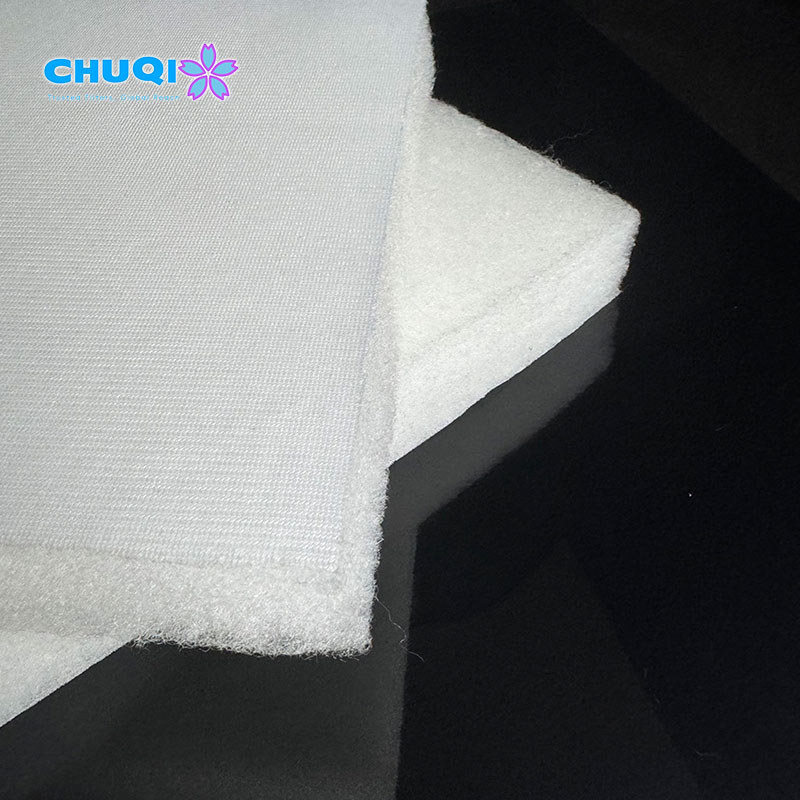
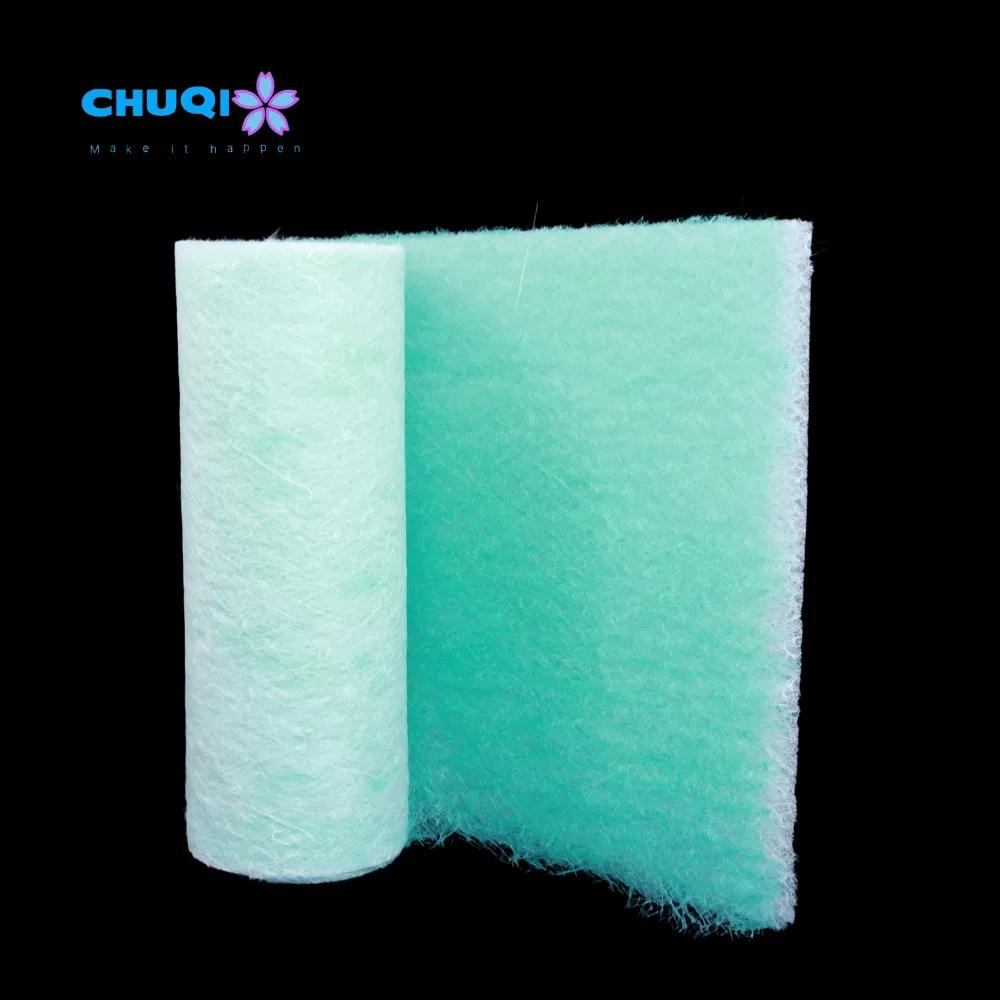
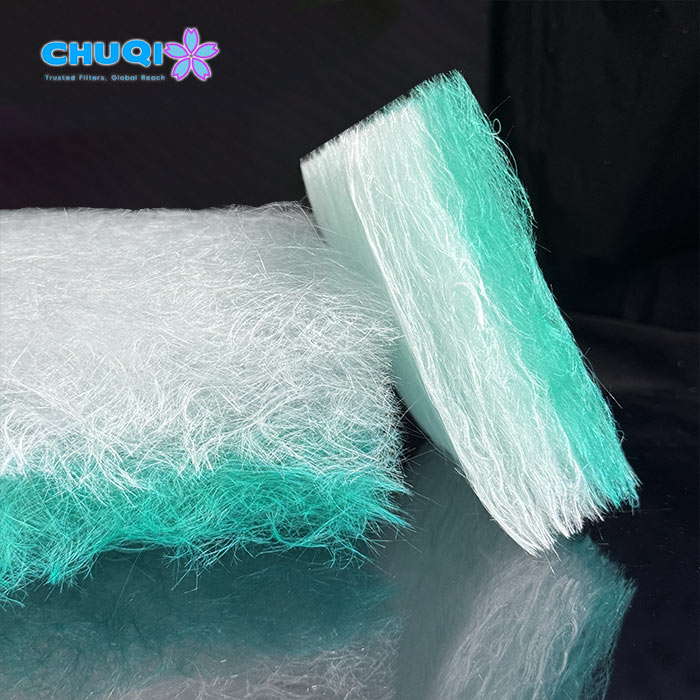
| Common supply formats | Filter rolls and cut-to-size media | Fiberglass paint arrestor rolls and pre-cut pads, depending on the product |
| Replacement considerations | Incoming-air contamination, operating conditions, and the booth manufacturer’s guidance | Paint loading, exhaust performance, coating characteristics, and applicable service limits |
This comparison applies to the typical downdraft arrangement. Crossdraft and other spray booth configurations may position intake and exhaust filters differently, so the actual airflow path should guide product selection.
The benefit of combining the two filter types is coordinated purchasing—not identical specifications or synchronized replacement.
1. How Ceiling and Floor Filters Work Together
In a typical downdraft spray booth, incoming air passes through the supply-side filtration arrangement before entering the spraying area. Ceiling diffusion media helps limit incoming particulate contamination and distribute the air across the working zone.
During spraying, some coating material misses the workpiece and becomes airborne overspray. The exhaust-side filtration arrangement captures a portion of this overspray before the air continues through the exhaust system.
The ceiling and floor filters therefore address different contamination sources.
Consider the symptoms of two different problems:
Dust or particles appearing in the painted finish: The supply-air filtration, surrounding cleanliness, installation sealing, or other contamination sources may need investigation.
Paint buildup around the exhaust plenum or downstream equipment: The exhaust filtration, coating characteristics, airflow, or maintenance condition may need attention.
Neither symptom automatically identifies a failed filter. The wider system and actual operating conditions should be considered before changing products.
For more information about the two filter types and their maintenance differences, read our guide to ceiling diffusion filters and floor paint arrestors.
2. Choose Each Filter for Its Own Job
A coordinated spray booth filter package does not require the ceiling media and floor arrestor to have the same thickness, weight, color, or efficiency rating.
The ceiling filter should be evaluated against the booth’s supply-air filtration and airflow requirements. The floor arrestor should be evaluated against the overspray collection requirements and the behavior of the coating being sprayed.
What Matters When Selecting Ceiling Diffusion Media?
Ceiling diffusion filters influence the cleanliness of incoming air and the distribution of airflow through the booth.
Relevant considerations include:
Filtration performance appropriate for the application
Initial pressure drop at the required airflow or face velocity
Media thickness, construction, and backing
Finished dimensions and compatibility with the retaining frame
Installation orientation and any applicable operating-temperature limits
Do not choose ceiling media from a grade label or thickness alone. The complete product reference and applicable technical documentation provide a more reliable basis for comparison.
Explore Chuqi’s spray booth ceiling filter mat for product-specific information.
What Matters When Selecting Floor Paint Arrestors?
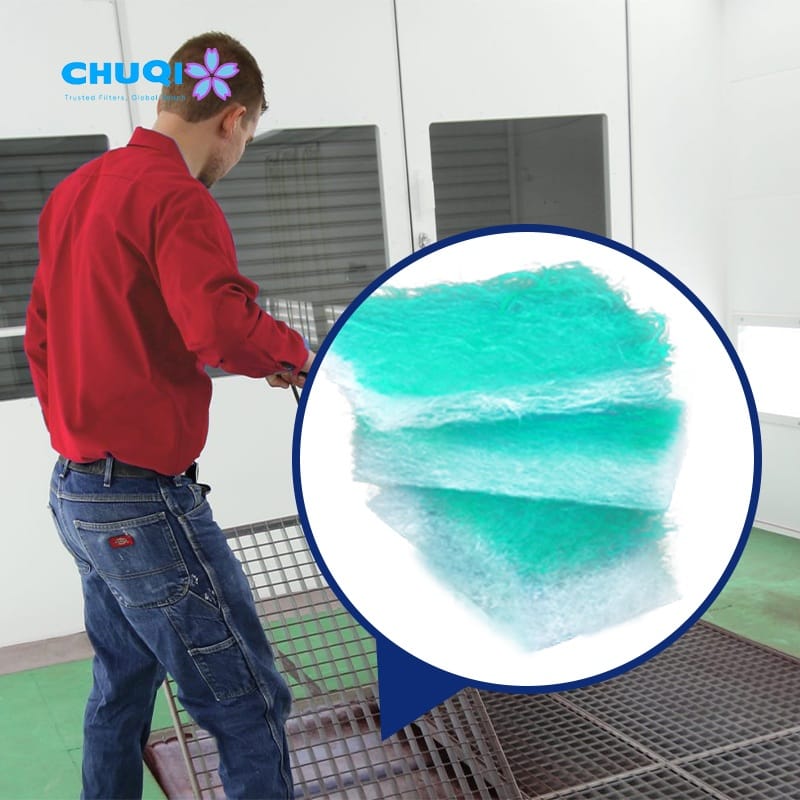
Floor paint arrestors collect overspray and help prevent excessive paint accumulation in downstream exhaust equipment.
Their behavior depends on the filter construction, coating properties, spray application, airflow, and the amount of overspray reaching the media. A product tested with one coating does not necessarily perform the same way with every other coating.
When comparing paint arrestors, focus on:
Overspray capture performance and the applicable test method
Initial resistance under stated airflow conditions
Available paint-loading or holding-capacity data
Media dimensions and installation arrangement
Recommended service limits and operating conditions
See Chuqi’s fiberglass filter media for information about floor paint arrestor media.

3. Compare Performance Using the Right Measurements
Filter specifications are useful only when the associated test conditions are understood.
For example, a pressure-drop value without its airflow condition is incomplete for a technical comparison. Similarly, a filtration percentage without its test method and product reference may not provide enough information to judge suitability.
Compare Pressure Drop at Comparable Conditions
Pressure drop is the difference in static pressure measured across a filter under specified operating conditions. It generally changes with airflow and can increase as contaminants accumulate.
When comparing two ceiling filters, evaluate their pressure-drop data at comparable airflow or face velocity. Apply the same principle when comparing floor arrestor products, using the relevant test configuration for each.
Keep the two filter positions separate in your evaluation. A low-resistance ceiling filter does not automatically compensate for a heavily loaded floor arrestor, and two catalog figures do not establish that the installed booth has balanced airflow.
Actual airflow depends on the complete ventilation system, including fans, ductwork, filter arrangement, and the condition of each filtration stage.
Do Not Treat All Efficiency Ratings as Equivalent
Ceiling diffusion media and paint arrestor media may use different performance tests because they address different filtration tasks.
For general ventilation media, use the applicable classification and test documentation for the specific product. For paint arrestors, look for test information relevant to paint overspray capture.
An EN 779 classification should not be converted mechanically into an ISO 16890 classification. These systems use different approaches to classifying general ventilation filters.
Likewise, an ordinary dust-efficiency result should not automatically be treated as evidence of paint arrestor performance. Use the test method that corresponds to the actual application.
4. Why Ceiling and Floor Filters Should Not Automatically Be Replaced Together
One of the most important considerations when purchasing the two products together is that they may be consumed at different rates.
The ceiling filter handles incoming airborne contamination, while the floor arrestor receives overspray from the coating process. Differences in ambient cleanliness, coating volume, spray technique, operating hours, and airflow can affect their replacement requirements.
For this reason, a fixed one-to-one replacement ratio is rarely a sound assumption without evidence from the actual installation.
Consider a facility that uses ceiling filter sheets and floor arrestor pads. Its maintenance records might show that one filter type is consumed more frequently than the other. Ordering equal quantities every time could leave excess stock of one product while the other needs replenishment.
A more practical approach is to record the quantity needed for each filter position and use the facility’s actual consumption history to plan future purchases.
| Planning factor | Ceiling filter | Floor paint arrestor |
|---|---|---|
| Quantity per replacement | Record the number of ceiling pieces or usable roll material needed | Record the number of pads or usable roll material needed |
| Consumption pattern | Review incoming-air conditions and the site’s maintenance history | Review overspray loading, coating conditions, and exhaust-side maintenance history |
| Stock planning | Consider typical consumption and replenishment needs | Calculate separately using its own consumption record |
| Replacement decision | Follow applicable booth guidance and operating observations | Follow applicable booth guidance, loading observations, and service limits |
Buying both together should simplify sourcing while allowing each filter to follow its own maintenance schedule.
For guidance on replacement decisions, see the ceiling diffusion filter and floor paint arrestor replacement-cycle guide.
5. How to Plan the Right Supply Quantities
The correct quantity for a combined order depends on the number of booths, the amount of media used per replacement, and the recorded consumption of each filter type.
A useful starting point is to calculate each filter position separately.
Estimated requirement for each filter type = quantity per replacement × expected replacements during the planning period
Additional reserve stock can then be considered based on actual demand variability and replenishment lead time.
For pre-cut sheets or pads, calculate the number of pieces required for each filter position. For rolls, also account for the cutting layout and the usable number of pieces that can be produced from a roll.
Total material area is useful for an initial estimate, but it does not guarantee that all required pieces can be cut from the selected roll dimensions. The actual layout, trimming requirements, and any permitted use of offcuts also matter.
Use Consumption Records Instead of an Arbitrary Bundle Ratio
If a facility replaces floor arrestor media more frequently than ceiling media, its purchasing plan should reflect that pattern.
For distributors serving multiple customers, it can also help to separate recurring demand from project-specific demand. Frequently used sizes may justify regular stock, while unusual dimensions may be more appropriate for individual projects.
Over time, this approach helps improve replenishment planning without forcing both filter types into the same replacement cycle.
6. Rolls, Pre-Cut Pads, or a Mixed Supply?
The best supply format depends on how the filters are installed, how much cutting is done locally, and how the buyer manages inventory.
| Supply format | When it makes sense | Main consideration |
|---|---|---|
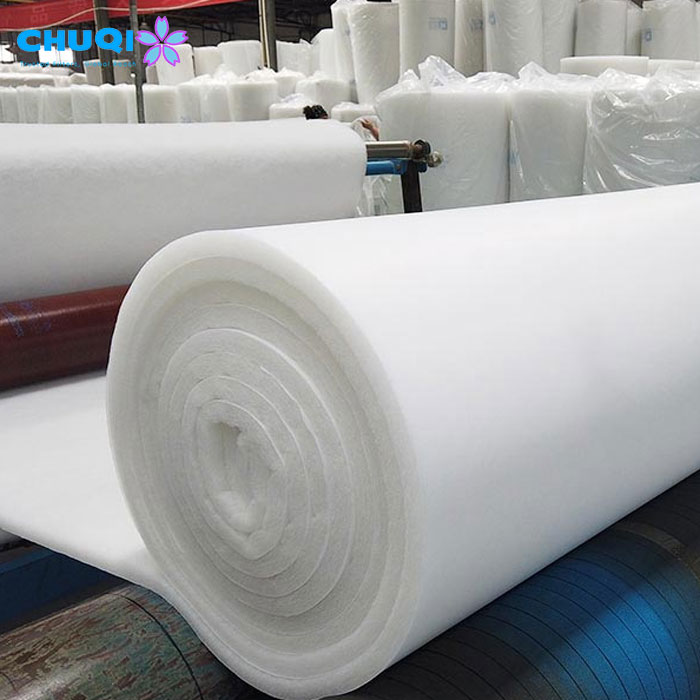
| Rolls for both filter types | Distributors or service companies cut media for several booth sizes | Cutting yield, handling, storage, and flexibility |
| Pre-cut ceiling media with floor arrestor rolls | Ceiling dimensions are standardized, but floor media is processed locally | Finished ceiling dimensions and floor cutting yield |
| Pre-cut media for both positions | Maintenance teams use established dimensions and repeat replacement quantities | Dimensional consistency, pack organization, and storage |
| Mixed formats across different booth models | Distributors or manufacturers support several equipment configurations | Keeping product references and quantities distinct |
A mixed supply approach can be particularly useful for businesses supporting multiple spray booth designs. It allows purchasing decisions to reflect how each filter is used rather than forcing both into one format.
Explore Chuqi’s paint booth filter media range to learn more about available ceiling and floor filter media.


Frequently Asked Questions
Q: Can ceiling diffusion filters and floor paint arrestors be purchased together?
A: Yes. They can be managed within one coordinated supply plan when both are used in the relevant booth configuration. Their specifications, quantities, and replacement requirements should still be considered separately.
Q: Should ceiling filters and floor paint arrestors be replaced at the same time?
A: Not necessarily. The two filter positions encounter different contamination conditions and may have different replacement requirements. Use the booth manufacturer’s guidance and actual operating observations to determine when each filter needs attention.
Q: Is there a standard ceiling-to-floor filter quantity ratio?
A: There is no single ratio suitable for every spray booth. The required quantities depend on the media used per replacement, the number of booths, actual consumption, and the maintenance history of each filter position.
Q: Can rolls and pre-cut pads be combined in one supply plan?
A: Yes. Different supply formats can be considered for the two filter positions. Rolls offer flexibility for local cutting, while pre-cut media can simplify handling when dimensions are established and repeatable.
Q: How should buyers compare ceiling and floor filter performance?
A: Evaluate each filter according to its intended function and relevant test conditions. Compare pressure drop at comparable airflow conditions, and use product-specific documentation for ceiling filtration and paint overspray capture rather than assuming the same efficiency metric applies to both.
Q: Do paint arrestors remove VOCs?
A: Dry paint arrestors are designed to collect paint overspray, not to remove VOC vapors directly. Where gas-phase treatment is required, it must be considered as a separate part of the overall control system.
Q: What is the main advantage of coordinating both filter purchases?
A: Coordinated purchasing can simplify supplier communication, product identification, stock planning, and repeat ordering. It also allows the buyer to plan quantities for both filter positions together while retaining separate technical specifications and maintenance schedules.
Request a Ceiling + Floor Filter Package Quotation
Planning to source both filter positions under one purchasing plan? Start with your booth configuration and the quantities you need for each filter.
Chuqi can review the available product references, dimensions, supply formats, and packaging requirements for your inquiry. You can begin with an existing filter model, an equipment drawing, installation photographs, or a preliminary quantity schedule; unresolved technical details can be identified for confirmation before the quotation is finalized.
To get started, share:
Your spray booth type and model
Ceiling filter and floor arrestor dimensions
Required quantity for each filter position
Preferred rolls, pre-cut pads, or mixed supply format
Destination and packaging requirements
Request a Spray Booth Filter Package Quote →
Review the Paint Booth Filter Media product range for product information, or explore the custom and OEM options for branding and manufacturing requirements.