
For plant managers and technical teams operating industrial spray booths, maintaining stable airflow and superior paint finish quality is a continuous balance. Two critical components responsible for keeping paint jobs flawless and ventilation running safely are ceiling diffusion filters and floor paint arrestor pads.
Although both are essential parts of any professional paint booth filter system, they operate in completely different environments, face distinct particle loads, and follow very different replacement cycles. Failing to replace them on time can lead to surface defects (like “fish eyes” or dust nibs), increased energy costs, or severe environmental compliance issues.
Understanding Their Core Roles In The Spray Booth
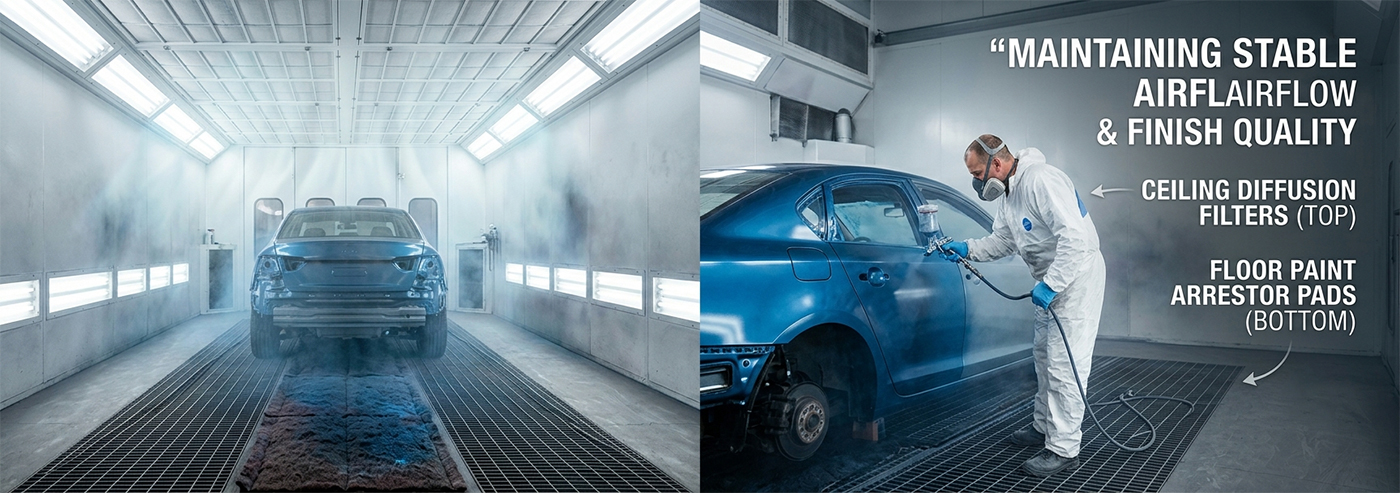
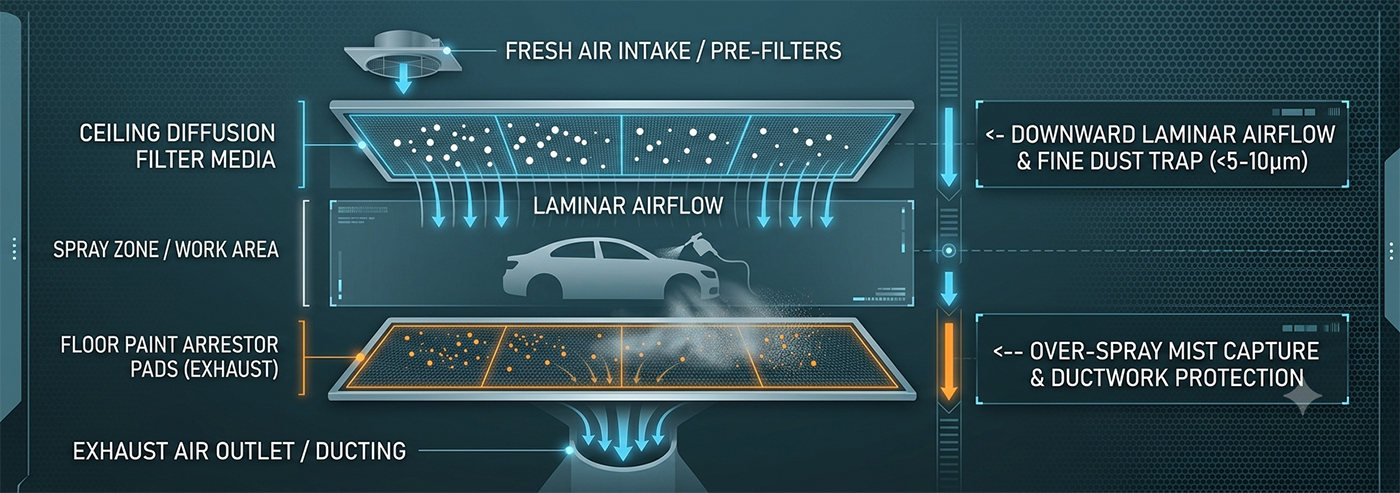
To establish an effective, science-based maintenance schedule, you must first understand how these two filtration layers work together in a push-pull dynamic to maintain booth pressure, air purity, and overspray extraction.
Ceiling Diffusion Filters: The Intake & Micro-Purity Engine
Positioned directly beneath the air plenum at the top of the spray cabin, ceiling diffusion filters serve as the ultimate defense line for incoming air.
Micro-Particulate Interception (<5–10 Microns): Outdoor ambient air—even after passing through a pre‑filter for paint booth—contains invisible airborne contaminants like pollen, fine dust, and ambient silica. Premium ceiling filter media (typically rated EU5/F5) uses thermally bonded, 100% synthetic break-resistant fibers to capture micro-particles down to 5–10 microns, preventing surface defects like pinholes, cratering, or dust nibs on fresh wet coats.
Creating True Laminar Airflow: Beyond filtration, the dense, uniform matrix of a customized ceiling filter mat acts as a pressure equalizer. It converts turbulent intake air into a stable, vertical laminar airflow moving downward at a consistent velocity (0.25 to 0.35 m/s). This downward air curtain acts as a physical shield, forcing liquid paint overspray straight down toward the floor grates.
Migration-Proof Tackifier: High-performance paint booth ceiling filter media features full-depth adhesive impregnation (a sticky tackifier treatment) to ensure trapped dust particles remain permanently bound inside the media matrix—even during sudden air blower pressure surges.
Floor Paint Arrestor Pads: The Exhaust & Overspray Trap
Installed beneath the floor grating in downdraft and semi-downdraft booths, floor filter pads manage the heavy, sticky exhaust phase of the finishing process.
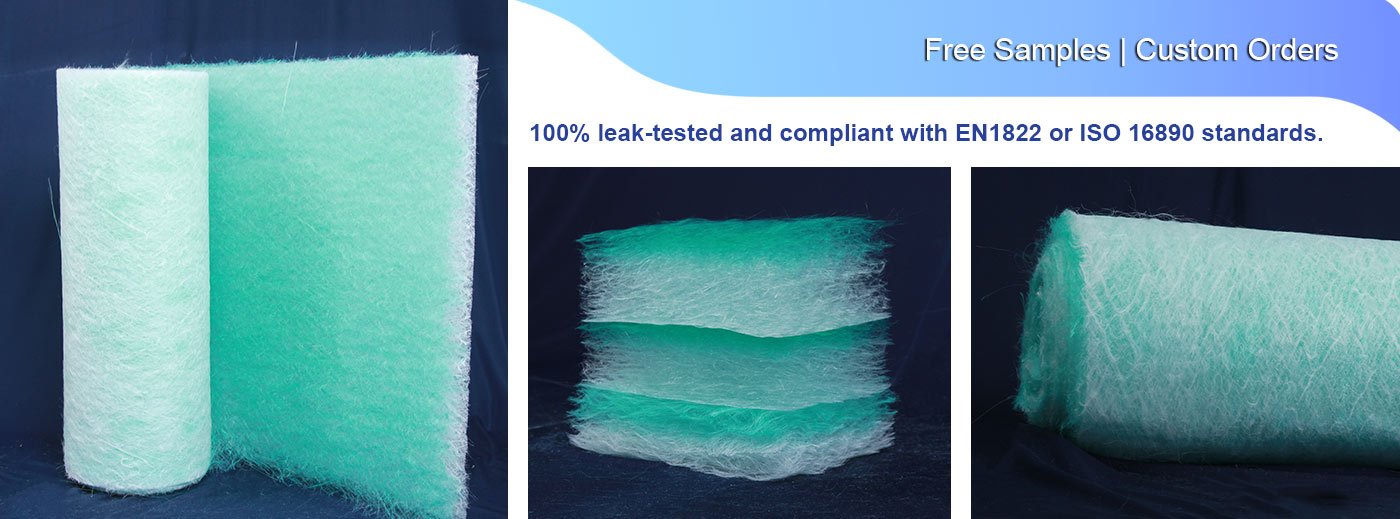
High-Capacity Overspray Capture: Unlike intake air filters that deal with dry dust, floor pads handle atomized, wet liquid mist—a combination of resin, pigments, and fast-evaporating solvents. The open-weave matrix (typically multi-layered fiberglass or heavy-duty synthetic fibers) relies on impaction: as heavy paint droplets rush downward, they collide with and stick to the glass strands rather than floating back into the cabin.
Protecting Exhaust Ductwork & Blower Fans: Unfiltered paint mist coats exhaust duct walls, balancing dampers, and fan blades. Over time, paint buildup on fan impellers creates dynamic imbalance, motor strain, and severe fire risks. High-arrestance floor pads (achieving >98% paint booth filter efficiency) ensure exhaust air is thoroughly scrubbed before exiting through the exhaust stack.
Maintaining Internal Cabin Pressure: The resistance across floor pads directly dictates whether your spray booth runs under neutral, slightly positive, or negative pressure. If floor media clogs prematurely, exhaust airflow plummets, causing positive pressure spikes that force overspray fog into surrounding plant work areas.
The Push-Pull Filtration Synergy
In a well-designed spray cabin, ceiling filters “push” clean, laminar air downward, while floor pads “pull” contaminated air outward.
If ceiling filters become restricted, downward velocity drops, allowing paint mist to hover at eye level. Conversely, if floor pads become choked with dry paint crust, exhaust resistance surges, creating dead zones and turbulence. Maintaining a balanced replacement schedule for both filter banks is the key to achieving factory-grade paint finishes and complying with workplace environmental standards.
Key Operational Factors Determining Replacement Cycles
Determining the exact lifespan of your filters depends on operational parameters rather than a single fixed date on a calendar.
Key Performance Indicators (KPIs)
Differential Pressure (Pressure Drop): The most accurate, scientific metric. As filters capture contaminants, resistance to airflow increases. Measuring static pressure via a differential pressure gauge (magnehelic gauge) is the gold standard for timing replacements.
Paint Consumption & Overspray Volume: High-volume operations using high-solid coatings, primers, or adhesive paints load floor pads exponentially faster than low-volume touch-up operations.
Finish Quality (Dust Nibs & Defective Paint): An increase in post-paint polishing or surface contamination signals that ceiling diffusion filters have reached saturation or are leaking around frame seals.
Air Velocity Drops: Reduced airspeed inside the cabin causes overspray fog to linger, lowering visibility and increasing worker exposure to volatile organic compounds (VOCs).
Ceiling Diffusion Filters: Replacement Lifespan & Benchmarks
Because ceiling diffusion filters handle ambient, pre-filtered air, their loading process is slow and progressive. However, because they directly affect paint finish quality, waiting too long to replace them leads to costly re-works.
| Metric / Parameter | Recommended Standard Benchmark |
| Typical Lifespan | 1,000 to 1,500 operating hours (roughly 12 to 18 months under standard production) |
| Initial Pressure Drop | ~25 Pa to 30 Pa |
| Final Target Changeout Pressure | 200 Pa to 250 Pa (or a rise of 150 Pa above initial reading) |
| Primary Failure Modes | Surface blinding from fine airborne dust, media hardening, sticky migration, seal degradation. |
Technical Note on Media Structure
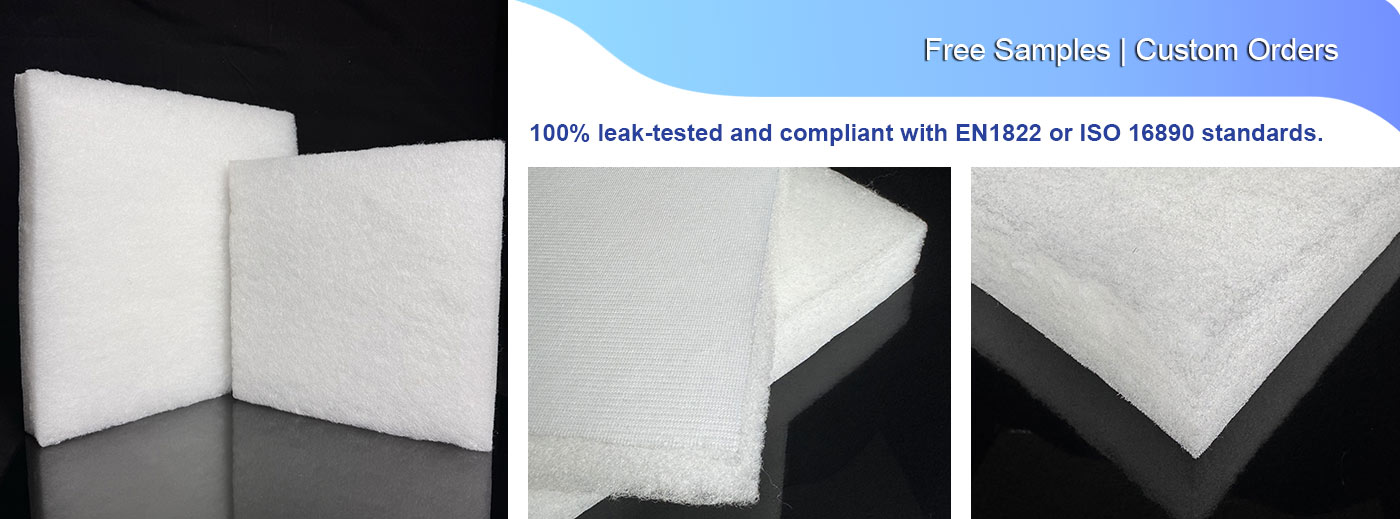
High-efficiency ceiling filters rely on a specialized tackifier process to lock fine dust particles within the matrix. Premium formulations combine thermally bonded synthetic fibers with full-depth adhesive treatment, ensuring zero fiber shedding even during system startup pressure surges.
Visual & Physical Signs It’s Time To Replace Ceiling Filters
Persistent Dust Nibs: Minute particles visible in the clear coat requiring excessive sanding and buffing.
Airflow Turbulence: “Dead zones” or uneven air distribution causing swirls in the overspray pattern.
Discoloration: Darkening or yellowing across the filter face, indicating heavy particulate accumulation.
Pro Tip: Always inspect pre-filters (intake air pocket filters or panel filters) upstream. Maintaining pre-filters every 200–300 hours can extend the lifespan of expensive ceiling diffusion filters by up to 50%.
Floor Paint Arrestor Pads: Benchmarks & Overcoming Operational Bottlenecks
Floor paint arrestor media handle heavy, wet, adhesive overspray particles. Their lifespan is significantly shorter than ceiling filters because paint solids rapidly coat the fiber structure.
| Metric / Parameter | Recommended Standard Benchmark |
| Typical Lifespan | 60 to 100 operating hours (typically every 2 to 4 weeks depending on paint volume) |
| Initial Pressure Drop | ~10 Pa to 20 Pa |
| Final Target Changeout Pressure | 80 Pa to 100 Pa (or when static pressure exceeds manufacturer specs) |
| Primary Failure Modes | Complete face-loading (paint skinning over top layer), high static backpressure, fan strain. |
How Filter Design Impacts Replacement Frequency
In high-volume painting environments, traditional low-grade floor pads often fail long before reaching their theoretical service life. Plant operators frequently encounter three main issues that drive up replacement costs and downtime:
Premature Surface Caking (Face-Loading): Standard single-density pads trap paint only on the top surface. Once a dry “skin” forms, airflow drops abruptly while the inner media remains clean. Upgrading to engineered progressive density media—like multi-layered fiberglass or synthetic pads—allows overspray mist to settle deeply into the weave, increasing paint holding capacity by up to 35% and extending changeout intervals.
Overspray Bypass & Duct Contamination: Low-density arrestor pads often allow fine paint overspray to pass directly into exhaust ducts, coating fan blades and balancing dampers. Over time, this leads to motor failure, fire hazards, and expensive duct cleaning. Choosing high-arrestance media ensures wet particles are captured completely before reaching exhaust equipment.
Airflow Turbulence from Density Fluctuation: Inconsistent roll density creates uneven pressure drop across floor grates, causing overspray fog to linger inside the cabin. Sourcing directly from a specialized ceiling filter mat factory or paint‑shop arrestor factory with automated weight-control lines ensures stable downward velocity throughout the filter’s lifespan.
Visual & Physical Signs It’s Time To Replace Floor Pads
Surface Caking: The top layer of fiberglass or synthetic media forms a solid “crust” of dried paint.
Spray Fog Lingering: Overspray remains suspended in the spray zone rather than pulling swiftly through floor grates.
Booth Pressure Shifts: Negative or positive pressure imbalance inside the booth, leading to doors popping open or drafty seals.
Summary Comparison: Ceiling Vs. Floor Filters
| Feature | Ceiling Diffusion Filter | Floor Paint Arrestor Pad |
| Primary Function | Air purification & laminar distribution | Overspray mist capture & duct protection |
| Filter Media Type | Thermally bonded synthetic fibers with tackifier | Progressive density fiberglass or layered synthetic |
| Average Lifespan | 1,000 – 1,500 hours (12–18 months) | 60 – 100 hours (2–4 weeks) |
| Key Metric | Differential pressure & paint finish quality | Differential pressure & airflow velocity |
| Main Threat | Fine ambient dust, fiber shedding | Liquid overspray, paint skinning, face loading |
Best Practices For Maximizing Filter Life & Performance
Install a Magnehelic Pressure Gauge: Avoid guessing. Monitoring real-time differential pressure across both ceiling and exhaust filter banks gives clear data on when air resistance reaches critical thresholds.
Maintain Pre-Filtration Integrity: Regularly replace intake pocket filters or primary panel filters. Dirt stopped at the intake never reaches your ceiling filter.
Choose Progressive Density Media: High-grade floor pads with open weave on the dirty side and dense backing store significantly more overspray weight before face-loading, extending run time.
Enforce Proper Frame Sealing: Air follows the path of least resistance. Ensure ceiling filter media is tightly sealed around frame edges to eliminate unfiltered bypass leaks.
Optimize Your Spray Booth Filtration Supply Chain
Achieving consistent surface finishes while controlling operating overhead comes down to selecting high-grade, reliable filter media.
As a leading china best spray booth ceiling filters supplier with over 20 years of specialized manufacturing experience, Chuqi New Materials provides integrated filtration solutions—from raw media roll production to customized ceiling filter mat fabrication and paint booth filter wall supplies. By controlling the complete manufacturing process, we deliver optimized airflow, higher holding capacity, and reliable delivery for global industrial partners looking for a trusted ceiling filter mat manufacturer.
Explore Ceiling Diffusion Media (EU5/F5 Grade Roll Stock & Custom Cut)
View Heavy-Duty Fiberglass & Synthetic Paint Arrestor Series
[ Request Technical Datasheets & Free Samples ] | [ Contact Our Engineering Team ]