
Buy G4 filter media rolls if you cut multiple sizes in-house. Choose pre-cut pads if you need fixed sizes and want to skip cutting. If you need both standard and custom sizes, combining the two formats may be the most practical option.
The real cost difference comes down to three things: material waste, cutting labor, and usable output. Rolls are not automatically cheaper. If cutting creates too many unusable offcuts or slows production, pre-cut pads may offer better value.
This guide shows you how to choose the right format and compare the actual cost per usable pad.
G4 Filter Media Rolls vs. Pre-Cut Pads: What's the Difference?
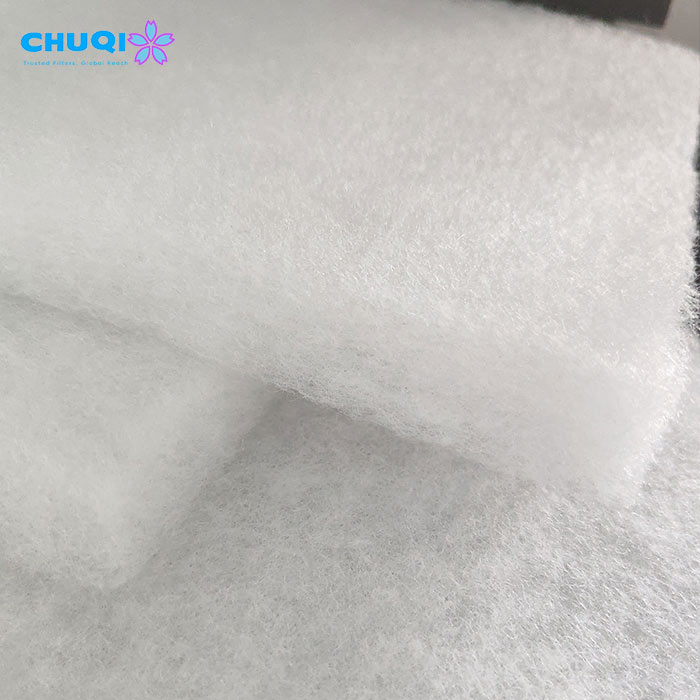
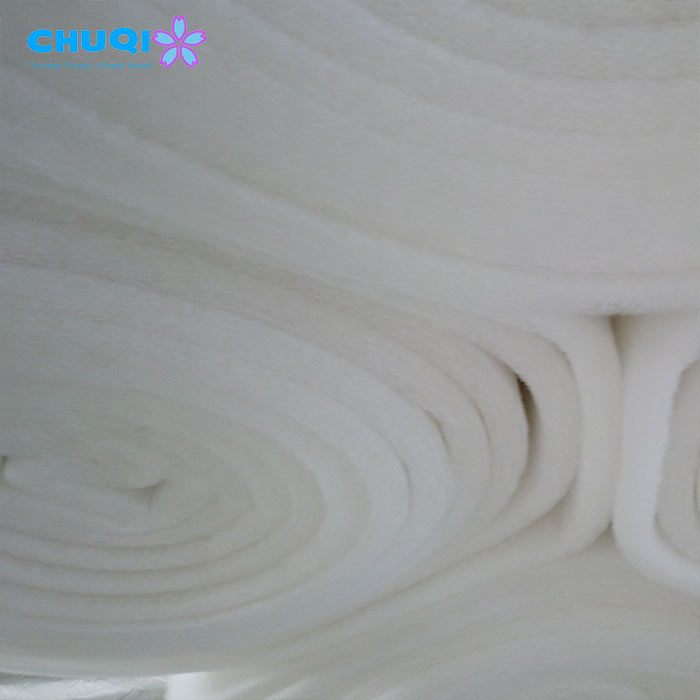
Pre-Filter media rolls are continuous lengths of filtration material that buyers or converters cut into the required dimensions. Pre-cut filter pads arrive in predetermined sizes, so the cutting step has already been completed.
When both formats use the same underlying media and construction, the supply format alone does not make one filter more efficient than the other. The main difference is where cutting takes place, how material is utilized, and who pays for conversion and handling.
| Comparison factor | G4 filter media rolls | Pre-cut filter pads |
|---|---|---|
| Supply format | Continuous roll stock | Individual cut pieces |
| Size flexibility | Suitable for producing multiple dimensions from one stock format | Best suited to selected, repeat dimensions |
| Cutting responsibility | Buyer or local converter | Supplier or converter before delivery |
| Internal preparation | Requires cutting, sorting and offcut management | Usually requires less cutting-related preparation |
| Material utilization | Depends on roll width, cutting layout and reuse of remnants | Conversion is completed upstream, but finished-piece cost still reflects the supplier’s process |
| Inventory planning | One roll format may support several product sizes | Inventory is divided among specific pad sizes |
| Cost comparison | Cost per usable pad produced | Cost per delivered pad, plus any remaining preparation |
The two workflows are different:
Roll media: Roll stock → Cutting → Sorting → Assembly, installation or packaging
Pre-cut pads: Prepared pads → Organizing → Assembly, installation or packaging
The better option is the one that fits your production or maintenance workflow with the least unnecessary cost and handling.
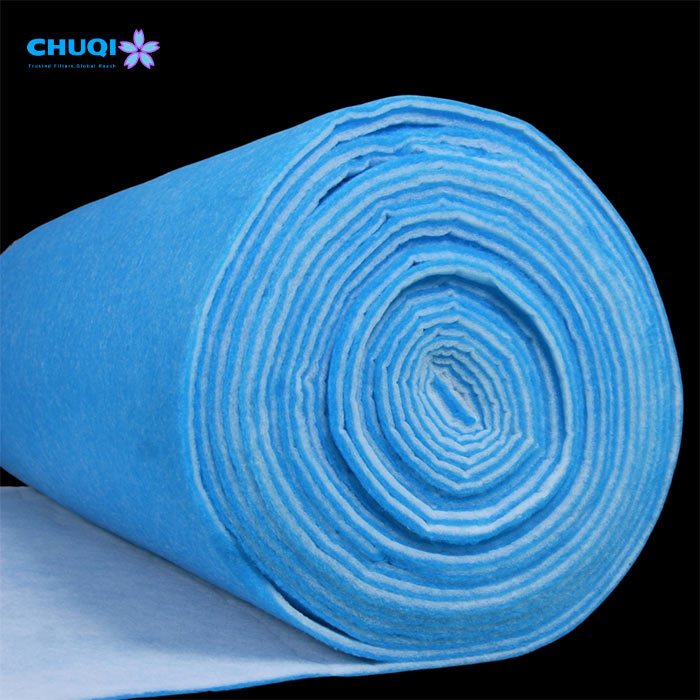
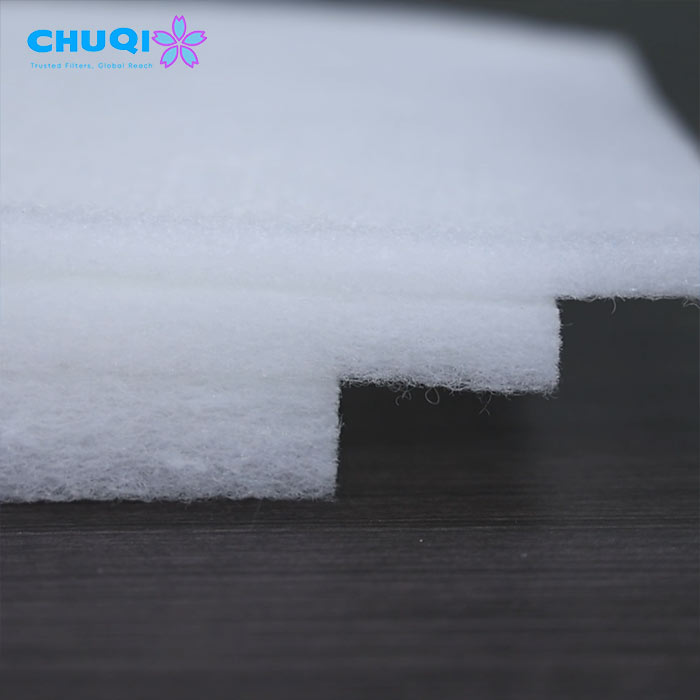
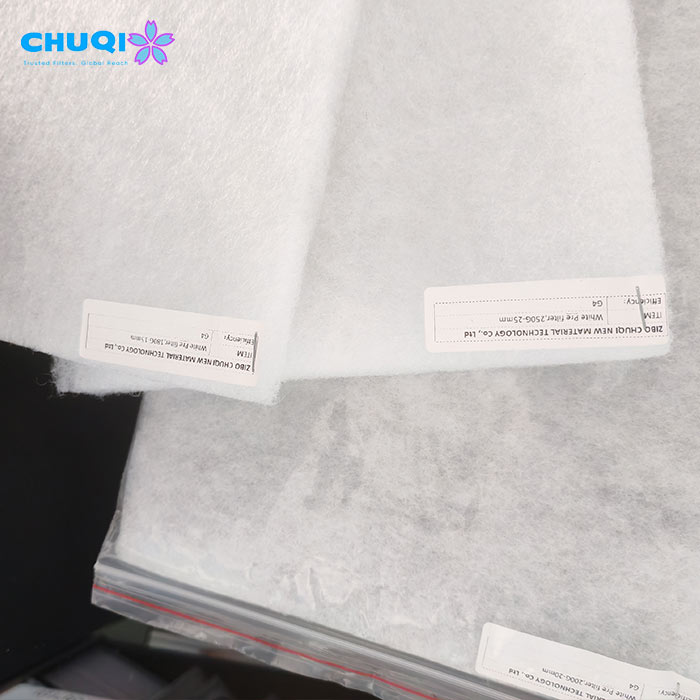
When Should You Buy G4 Filter Media Rolls?
1. Your Factory Produces Multiple Filter Sizes
Roll stock can be useful when a filter manufacturer produces several compatible dimensions and already has a reliable cutting process.
For example, a production line may manufacture rectangular filter components in different widths and lengths. Rather than stocking every dimension as a separate finished component, the factory can cut suitable pieces from a common media roll according to its production schedule.
This approach works best when:
Multiple dimensions can be arranged into efficient cutting layouts.
Cutting equipment and operators are already available.
Production orders can be grouped to reduce repeated setup and material handling.
Suitable offcuts can be identified and reused for smaller components.
However, roll stock can become a bottleneck if cutting falls behind assembly. Material may be inexpensive per square metre but costly per usable pad once labor, sorting and production delays are included.
If cutting regularly interrupts assembly, compare the total cost of selected pre-cut sizes before assuming that roll purchasing is still the most efficient option.
2. You Supply Distributors or Customers with Different Dimensions
Distributors and converters often face a mix of repeat orders and occasional custom requirements.
Keeping roll stock allows a business to convert material as demand develops instead of holding every possible pad size as finished inventory. This can be useful when customer dimensions vary or when new sizes are introduced gradually.
The key is to distinguish useful flexibility from accumulated leftovers.
A remaining strip has practical value only if it can be matched to a future product, stored appropriately and retrieved when needed. Material that remains unused for months still occupies space and ties up working capital.
A simple stock-control method is to label reusable offcuts by width, length and material type. Before starting a new roll, check whether existing remnants can meet smaller production requirements.
3. Your Business Sells Full Filter Media Rolls
If your customers buy continuous filter media for their own cutting or manufacturing operations, rolls are the natural supply format.
For an importer or industrial distributor, the main considerations may include roll dimensions, storage, handling and compatibility with customers’ conversion equipment.
For online sellers, the calculation is different depending on the product being sold. A full roll can be sold as received after any required inspection and packaging. A seller offering individual pads must also account for cutting, counting, labeling and packing.
The cost of the incoming roll is not necessarily the cost of the finished product you sell. Compare expenses at the same stage of completion.
When Are Pre-Cut Filter Pads the Better Choice?
1. Your Production Uses Repeat Dimensions
Pre-cut pads can simplify production when the same dimensions are used repeatedly.
Suppose a factory assembles the same filter size throughout the week. If operators currently unroll media, measure it, cut each piece and sort the results before assembly, those steps consume time even when the dimensions rarely change.
Receiving prepared pads moves the cutting operation upstream and can make the next production stage easier to organize.
Before switching, check three things:
Whether the required dimensions are consistent from batch to batch.
Whether the supplier can maintain the required dimensional tolerances.
Whether the delivered pads are ready for your next operation or still need trimming and inspection.
The benefit is not that pre-cut material is automatically cheaper. It is that the buyer no longer needs to manage the same cutting operation internally.
2. Your Maintenance Team Replaces Standard Sizes
Maintenance teams often need replacement media for established equipment and recurring service tasks.
Pre-cut pads can reduce the need to measure and cut material during maintenance preparation. Teams can organize the pieces by equipment model, service area or replacement dimension before scheduled work begins.
Rolls may still be preferable when several nonstandard sizes are required or replacements are prepared centrally in batches.
For repeated sizes, compare the delivered pad cost with the actual time spent preparing replacements. If cutting is a minor task performed efficiently in a workshop, rolls may remain practical. If maintenance personnel must interrupt other work to cut individual pieces, pre-cut pads may offer more operational value.
3. You Sell Fixed-Size Pads or Multi-Packs Online
For online sellers, the finished SKU—not just the media—is the relevant cost unit.
A product may pass through several stages:
Cut pad: The material has been cut to the required dimensions.
Counted pack: The correct number of pads has been grouped together.
Sale-ready product: The pack has been labeled, packaged and prepared for fulfillment.
These stages should not be treated as equivalent.
If you buy loose pre-cut pads, you may still need to count and package them. If a supplier provides a completed pack, some of that work may already be included in the delivered price.
For a seller managing multiple sizes, standardizing the most popular dimensions can also simplify SKU management and replenishment. Less common dimensions may be better handled through a separate roll-stock or custom-cut workflow.
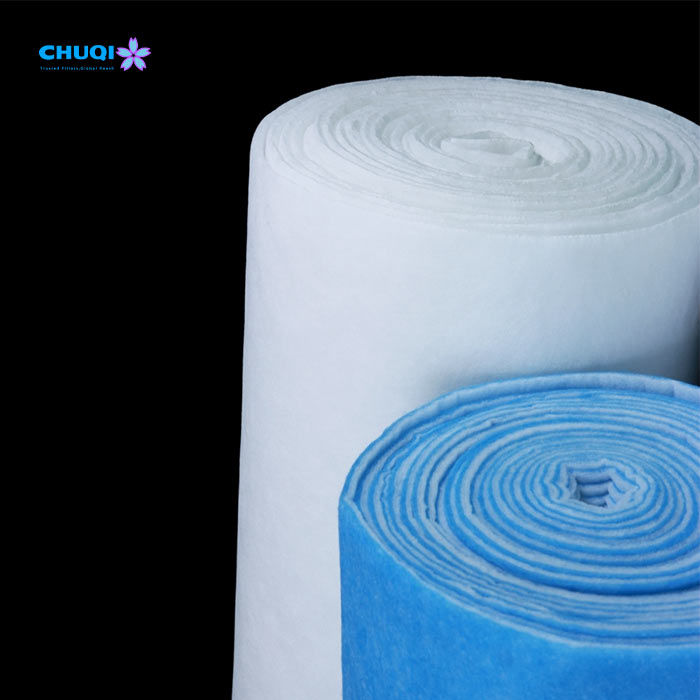
How to Calculate Cutting Yield for G4 Filter Media Rolls
The width of a roll can have a major effect on how efficiently it is converted into pads.
Consider this simplified example using hypothetical dimensions. Assume a roll is 1,000 mm wide and the required pads are 500 mm wide.
| Cutting layout | Pads across the roll | Remaining width per row |
|---|---|---|
| 500 mm-wide pads | 2 | 0 mm |
| 600 mm-wide pads | 1 | 400 mm |
In the first layout, two 500 mm-wide strips fit across the 1,000 mm roll width.
In the second layout, only one 600 mm-wide strip fits across the width, leaving a 400 mm strip.
That remaining strip is not automatically waste. It may be suitable for another component, depending on the required dimensions and future demand. If no practical use exists, however, it should not be counted as usable output.
This example considers width only. Actual cutting yield also depends on pad length, roll length, edge trimming, cutting allowances and whether different sizes can be nested together.
Three Ways to Improve Material Utilization
1. Match roll width to common product dimensions.
If your most frequently produced pads fit efficiently across a particular roll width, that format may reduce unused strips. Compare several high-volume dimensions rather than optimizing for one product alone.
2. Group compatible cutting orders.
If two products use different widths, determine whether they can be cut from the same roll in a practical layout. Grouping compatible orders may reduce setup changes and make better use of the remaining material.
3. Track offcuts that can actually be reused.
Record the dimensions and material type of reusable remnants. Review how often they are consumed in later production runs. If certain remnants consistently remain unused, consider alternative roll widths or purchasing those particular sizes as pre-cut pads.
The goal is not to achieve zero waste at any cost. A theoretically efficient cutting layout is only useful if the resulting components match real production demand.
How to Compare the Total Cost of Rolls and Pre-Cut Pads
A fair comparison uses the same finishing point. Raw roll media should not be compared directly with a finished, packaged product unless the additional work is included.
For a business that cuts its own media, a useful starting formula is:
Cost per usable pad = (Media cost + Cutting labor + Other conversion costs) ÷ Number of usable pads produced
Other relevant costs may include sorting, inspection, packaging, labeling and disposal of unusable remnants.
But the result changes if cutting efficiency falls, labor costs rise, more material becomes unusable, or the pre-cut supplier offers a lower delivered cost. A real comparison should use your own production yield and cost figures.
Compare Costs at the Right Stage
| Business type | Recommended cost unit | Costs to include |
|---|---|---|
| Finished-filter manufacturer | Cost per pad ready for assembly | Media, cutting, sorting and preparation |
| Converter or distributor | Cost per deliverable finished pad | Material yield, conversion and packing |
| Maintenance operation | Cost per prepared replacement | Media, cutting and staff preparation time |
| Online pad seller | Cost per sale-ready pack | Pads, counting, packaging and labeling |
| Full-roll distributor | Cost per deliverable roll | Media, inspection and required roll packaging |
For pre-cut pads, start with the delivered price and add any work that remains before assembly, installation or sale.
For rolls, calculate the number of usable pads rather than dividing the roll price by its theoretical area alone. At the same time, do not automatically count every offcut as waste if it can be used in a realistic future production run.
How to Choose a G4 Filter Media Supplier
Once you have identified the preferred supply format, evaluate whether the supplier can support your actual conversion or replacement requirements.
For roll media, check:
Roll dimensions: Confirm the available width and length against your cutting layout.
Material consistency: Ask how the supplier controls consistency between production batches.
Technical documentation: Check the available test data and product specifications for the selected media.
Packaging and storage: Confirm that the roll format suits your handling and storage conditions.
For pre-cut pads, check:
Dimensions and tolerances: Confirm that the finished pieces fit your assembly or installation requirements.
Cutting consistency: Check edge quality and dimensional repeatability using samples where appropriate.
Supply format: Clarify whether the pads arrive loose, counted or individually packaged.
Customization: Confirm whether less common sizes can be supplied without requiring you to manage the cutting process internally.
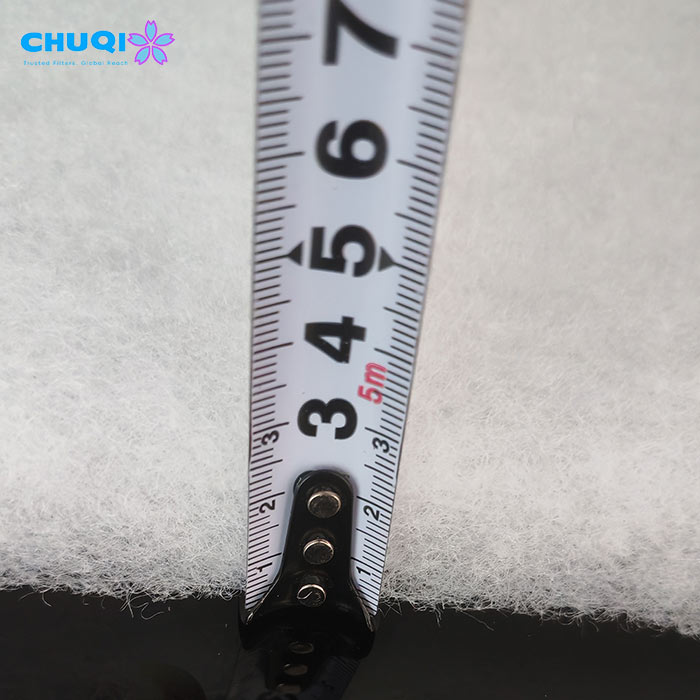
The G4 designation alone does not define every property of a filter medium. The selected material, thickness, construction and intended application should also match the requirements of the equipment.
If you are comparing grades or reviewing the role of coarse pre-filtration, see our guide to primary air filter types and efficiency grades.

Explore G4 Filter Media Rolls and Custom-Cut Options
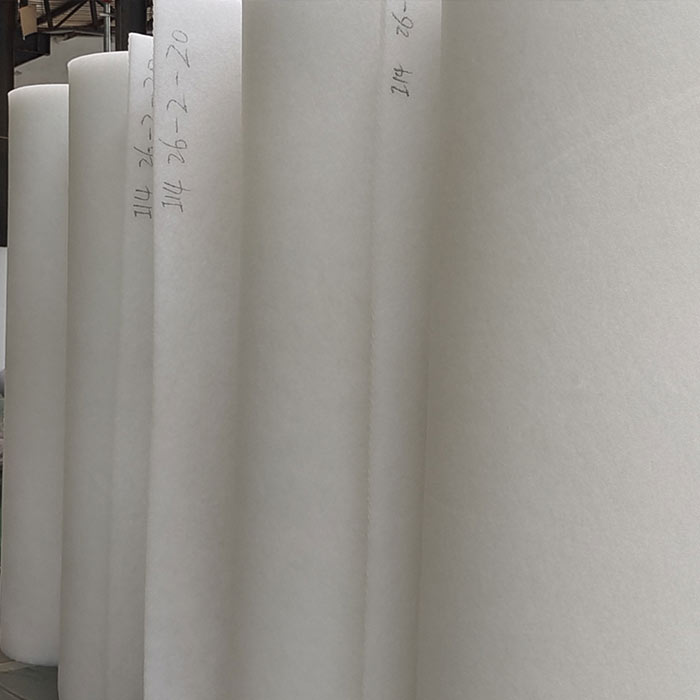
Chuqi supplies synthetic intake pre-filter media in bulk rolls, with options for different production and replacement requirements. Depending on the product and application, roll media can support in-house conversion, while custom-cut formats can help reduce preparation work for repeat dimensions.
Explore our G3–G4 intake filter media rolls to review the available product information and discuss a supply format suited to your application.
If you manufacture filters, distribute replacement media or manage recurring maintenance requirements, consider which dimensions you use most often and where cutting takes place in your workflow. That information provides a practical starting point for comparing roll supply with pre-cut options.
Contact Chuqi to discuss your required media, dimensions and preferred supply format.
Frequently Asked Questions
Q1. Are G4 filter media rolls cheaper than pre-cut filter pads?
A: Not necessarily. Rolls may have a lower material cost per square metre, but the final cost also depends on cutting yield, labor, preparation and offcut reuse. Pre-cut pads may cost more per piece while reducing internal handling. Compare the cost per usable pad at the same finishing stage.
Q2. Do pre-cut pads provide better filtration than rolls?
A: Not simply because they are pre-cut. If both formats use the same underlying media and construction, the supply format itself does not improve filtration performance. Material specifications, construction and suitability for the application determine the relevant performance characteristics.
Q3. How can I reduce waste when cutting filter media rolls?
A: Start by matching roll width to common pad dimensions. Group compatible sizes into practical cutting layouts and track reusable offcuts by dimensions and material type. Review actual production output rather than assuming every remaining strip is either fully usable or completely wasted.
Q4. Are pre-cut pads suitable for industrial filter manufacturing?
A: Yes, when their dimensions and material characteristics match the assembly requirements. They can be useful for repeat-size production where internal cutting adds little value. Before switching, confirm dimensional tolerances, batch consistency and the amount of preparation still required.
Q5. Can I combine roll media and pre-cut pads in one supply plan?
A: Yes. A business can use pre-cut pads for frequently ordered sizes and roll stock for irregular or less predictable requirements. The right mix depends on order frequency, cutting efficiency, inventory needs and the cost of maintaining each format.
Q6. What information should I prepare before asking for a custom supply option?
A: Start with the intended application, required media type or grade, roll dimensions or pad sizes, estimated usage and preferred supply format. If you are unsure which dimensions are practical, sharing an existing sample or drawing can help establish the next steps.