
F5 and M5 refer to historically corresponding filter classes from different editions of EN 779. Under EN 779:2012, M5 describes an average filtration efficiency of at least 40% but less than 60% for particles measuring 0.4 micrometres, under the standard’s test conditions.
So why might an M5 ceiling filter also show more than 99% average arrestance?
Because the figures measure different things. The M5 classification concerns average efficiency at a specified particle size. Arrestance concerns the mass of test dust captured.
Understanding this distinction makes ceiling filter specifications much easier to read. It also explains why the largest percentage is not necessarily the most useful guide to choosing filtration for a spray booth, also called a paint booth.
If you are new to the product, start with why spray booths use F5 ceiling filters. Here, we focus on what the efficiency figures mean and how they relate to practical selection.
F5 vs. M5: What Changed?
EN 779:2002 placed F5 in the fine-filter group. EN 779:2012 introduced a medium-filter group, renaming F5 as M5 and F6 as M6. This historical relationship explains why both names appear in commercial descriptions of ceiling diffusion filters.
For buyers, the important distinction is between a classification name and a complete product description.
“F5/M5” identifies a filtration category. It does not describe the filter’s dimensions, backing construction, airflow resistance, or installation requirements.
Those characteristics still matter when selecting a replacement.
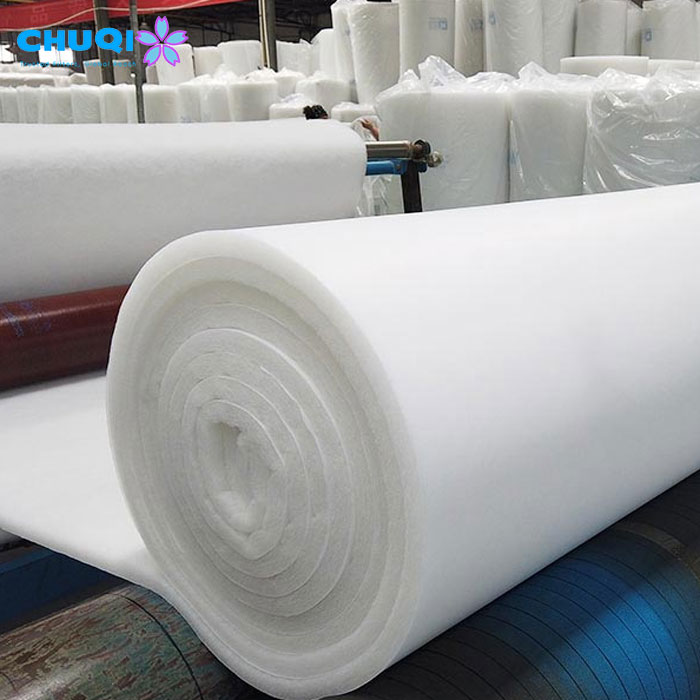
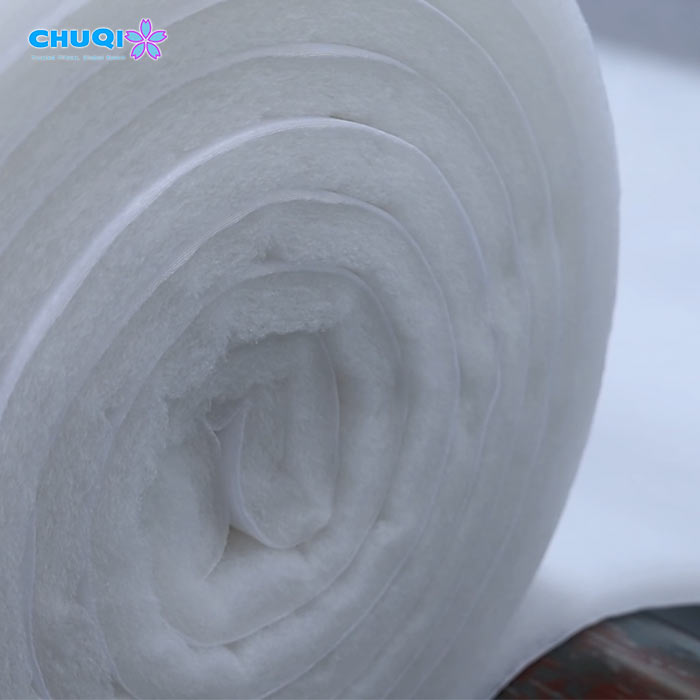
To explore the product beyond its efficiency rating, visit our spray booth ceiling filter media page.

What Does M5 Efficiency Actually Mean?
Under EN 779:2012, M5 filters have an average filtration efficiency of at least 40% but less than 60% for particles measuring 0.4 micrometres, under the standard’s test conditions.
This percentage applies to a specific particle size and test method. It does not mean the filter removes the same proportion of every type of dust entering a spray booth.
Two parts of the definition deserve particular attention.
The Particle Size Matters
“Efficiency at 0.4 micrometres” describes performance at that particle size. It does not mean the filter removes the same percentage of larger particles, smaller particles, and all other airborne contamination.
An M5 rating should therefore not be interpreted as “captures between 40% and 60% of everything entering the booth.”
The particle-size reference is part of the meaning of the number.
Average Efficiency Is Not a Minimum Guarantee
M5 uses average efficiency for classification. The EN 779:2012 classification table does not assign M5 a separate minimum-efficiency requirement at 0.4 micrometres.
An average test result and a minimum performance guarantee are different statements.
This also explains why an M5 classification cannot predict an exact reduction in paint defects. The rating describes a filtration characteristic; the painted result depends on the wider operating environment.
Why 99% Arrestance Does Not Mean 99% Fine-Particle Efficiency
Arrestance and particle efficiency answer different questions.
Arrestance is a mass-based measurement: how much of the introduced test dust is retained by weight?
Particle efficiency describes removal performance at a specified particle size or size range. Filter classification references distinguish gravimetric arrestance from efficiency at 0.4 micrometres because they are not interchangeable.
A Simple Example
Imagine a hypothetical test in which 100 grams of specified test dust reach a filter and 99 grams are retained.
The mass-based capture result would be 99%.
But that calculation does not tell you how efficiently the filter removed particles measuring 0.4 micrometres. It tells you what proportion of the total introduced dust mass was captured.
This example illustrates the difference between the measurements. It is not a performance claim for any particular ceiling filter.
Why Both Figures Can Appear on One Datasheet
A datasheet can report high average arrestance and an M5 classification without contradicting itself.
The mistake is to interpret the arrestance percentage as the removal efficiency for every fine-particle size. Commercial spray booth filter descriptions may report average arrestance above 99%, but that wording should not be read as efficiency above 99% for particles measuring 0.4 micrometres.
The useful habit is simple: read the description beside the percentage.
“99% average arrestance” is a different statement from “99% efficiency at a specified particle size.”
How Efficiency Relates to Airflow Resistance?
A ceiling filter helps control the cleanliness of incoming air, but its laboratory classification does not describe everything happening inside a spray booth, also called a paint booth.
Booth operation involves air velocity, airflow distribution, and pressure balance. Equipment manufacturers design and maintain these as connected conditions.
For practical purposes, it helps to separate two questions:
How does the filter capture particles?
Does the booth move air through the intended path?
Both matter.
Air That Bypasses the Media Is Not Filtered by It
A gap around the filter creates an alternative air path. Filters need to fit tightly in their frames to prevent unfiltered air from passing around the media.
This explains why increasing the filter class is not always the answer to contamination. A higher-rated medium does not close an installation gap.
When a booth develops recurring dust problems, the condition and fit of the installed filter deserve attention alongside the efficiency rating.
The Ceiling Also Helps Distribute Air
The ceiling plenum and filter arrangement help determine how air enters the working area. Equipment manufacturers develop these features to support consistent airflow around the vehicle.
An M5 rating does not measure that distribution.
It describes a filtration characteristic, not whether the complete ceiling arrangement is delivering the intended airflow throughout the booth.
To see how these considerations fit into the wider product selection process, explore our guide to high-efficiency spray booth ceiling filters for automotive painting.
Are Two M5 Ceiling Filters Interchangeable?
Not necessarily.
Sharing an efficiency class does not establish identical construction, resistance, or installation suitability.
When comparing products, keep these characteristics separate from the classification.
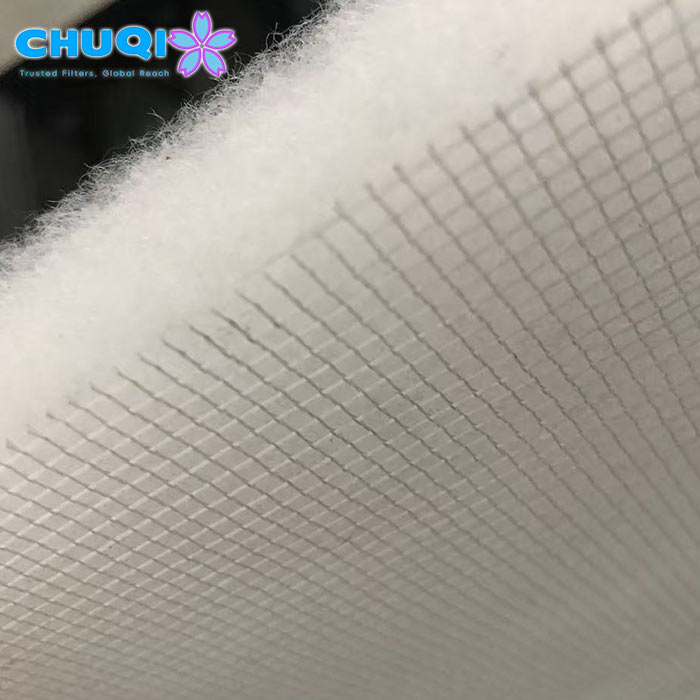
Backing Construction
An M5 label does not describe the backing material or support arrangement.
For a closer look at that part of the product, read our guide to mesh and cloth backing ceiling filters.
Resistance at the Relevant Airflow
Two products in the same class should not be assumed to have identical pressure drop.
Compare resistance under the same relevant airflow conditions rather than using the efficiency class as a substitute for airflow data.
Fit in the Existing Installation
A familiar classification does not establish compatibility with an existing frame or mounting arrangement.
A suitable replacement needs to work as an installed component, not merely carry a familiar label.
If finish problems continue after replacement, investigate the installation and wider booth conditions rather than assuming that another efficiency class will solve the problem.


Can F5/M5 Be Converted to ISO 16890?
An M5 label alone cannot establish a specific ISO 16890 classification.
ISO 16890 replaced EN 779 for general ventilation filter classification. It uses particulate-matter fractions such as ePM1, ePM2.5, and ePM10 and follows a different classification approach.
Eurovent explains that the classes cannot be directly compared or converted using a calculation method.
Comparison charts can provide broad context, but they do not prove that an individual M5 product has achieved a particular ISO ePM10 rating.
When reading older and newer specifications together, distinguish an approximate comparison from a classification established through testing.
Frequently Asked Questions
What Is the Difference Between F5 and M5 Ceiling Filters?
F5 and M5 are historically corresponding classifications from different editions of EN 779. F5 became M5 when EN 779:2012 introduced the medium-filter group. The naming relationship does not mean every commercially labelled product is identical.
Does M5 Mean 95% Filtration Efficiency?
No. Under EN 779:2012, M5 describes an average efficiency of at least 40% but less than 60% for particles measuring 0.4 micrometres, under the standard’s test conditions.
Can an M5 Filter Have 99% Average Arrestance?
Yes. Average arrestance and particle efficiency are different measurements. A high mass-based dust-capture result does not establish the same removal percentage for particles measuring 0.4 micrometres.filtercorpinternational.
Is F5/M5 the Same as an ISO ePM10 Rating?
No. EN 779 and ISO 16890 use different classification methods. A product’s ISO rating cannot be established from the M5 label alone.
Does an M5 Rating Establish Flame-Retardant Performance?
No. M5 is a filtration classification, not a fire-performance classification. A ceiling filter’s particle-capture rating and its flame-retardant properties describe different characteristics and should not be treated as interchangeable.
Choosing With a Clearer Understanding
A useful ceiling filter specification connects each figure with what it measures.
F5/M5 identifies a filtration class. Arrestance describes captured test-dust mass. Pressure drop describes airflow resistance. Construction and installation determine how the product fits into the booth.
Understanding those relationships is more valuable than comparing headline percentages alone.
Discuss Your Ceiling Filter Application
If you are exploring replacement ceiling diffusion media, CHUQI can discuss the available options in relation to your current filter and spray booth requirements.
Explore our spray booth ceiling filter media to learn more about the product and its application.
Share your filter dimensions, current product specification, and any concerns about airflow or filtration. If you are unsure which media you are using, a photo of the existing filter or its label is a helpful starting point.
Send your inquiry to chuqifilter@chuqimat.com to discuss product options, request available technical information, or get a quotation.