
Air filter media is an essential component of HVAC filtration systems, helping remove airborne particles, control certain odors, and maintain indoor air quality. Different HVAC applications require different filtration materials depending on the type of contaminants, filtration stage, operating environment, and final filter design.
Common HVAC air filter media types include polyester pre-filter media, nonwoven bag filter media, fiberglass filter media, activated carbon media, and fine-fiber materials used in high-efficiency filtration.
For air filter distributors and filter manufacturers, understanding the characteristics, applications, and processing requirements of these materials helps build suitable product ranges and select media for different HVAC systems.
This guide explains the main types of HVAC air filter media, where they are used, how they relate to finished filter designs, and what to consider when sourcing filter media.
1. Where Is Air Filter Media Used in an HVAC System?
HVAC air filtration systems commonly use multiple filtration stages. Each stage serves a different purpose and targets different types or sizes of airborne contaminants.
A typical multi-stage HVAC filtration system may include:
Pre-filtration: Captures larger particles such as dust, lint, and fibers, reducing the dust load on downstream filters.
Medium-efficiency filtration: Removes finer airborne particles and is commonly used in commercial and industrial air handling systems.
High-efficiency filtration: Used in environments with stricter particle control requirements, such as cleanrooms.
Gas-phase filtration: Uses adsorbent materials to reduce certain odors and gaseous contaminants.
Not every HVAC system requires all these filtration stages. The actual configuration depends on the building type, air source, contaminant characteristics, and indoor air quality requirements.
For example, a commercial air handling unit (AHU) may use a pre-filter followed by a bag filter. A cleanroom air system may include a high-efficiency filter downstream, while a ventilation system with specific odor-control requirements may incorporate activated carbon media.
The key is to match each filtration stage with the contaminants it is designed to handle.
2. Common Types of Air Filter Media for HVAC Applications
HVAC filter media vary in fiber structure, material composition, and filtration function. The following materials are widely used in commercial and industrial air filtration.
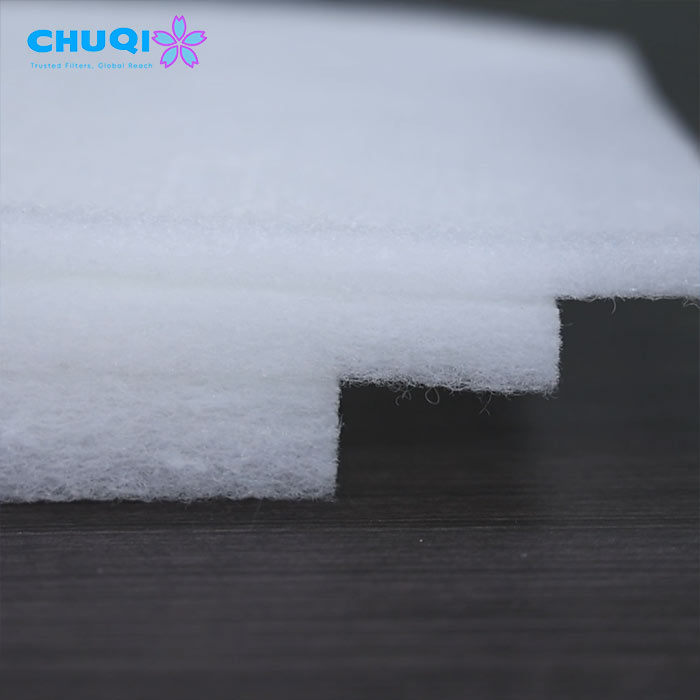
2.1 Polyester Pre-Filter Media
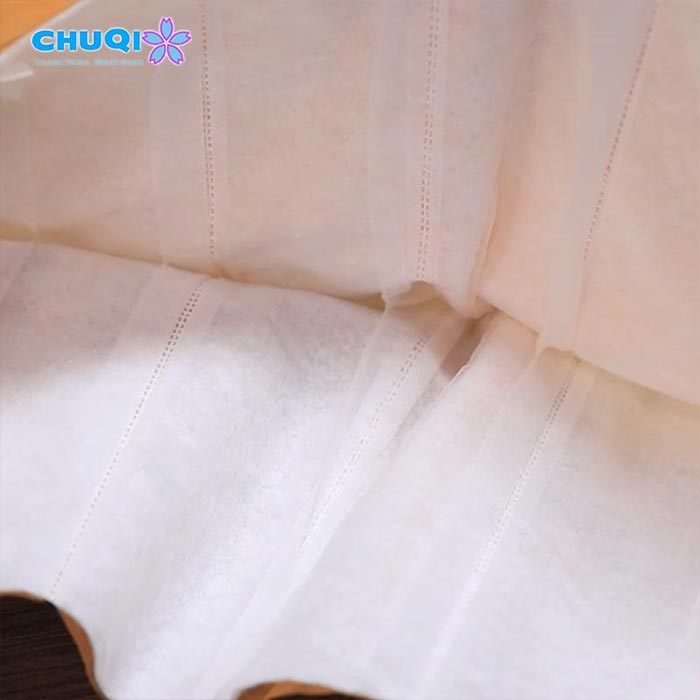
Polyester pre-filter media is widely used for initial particle filtration in HVAC air intake systems, ventilation equipment, and panel filters.
Its fiber structure captures larger airborne particles and helps reduce the dust load entering downstream filters. Different applications require different media thicknesses, densities, and structures, so material selection should take the filter design, airflow, and operating environment into account.
Media specification flexibility is also important for filter manufacturers and distributors. Different thicknesses, densities, roll widths, and roll lengths can help accommodate various filter dimensions and production requirements.
Key characteristics:
- Suitable for initial particle filtration in multi-stage systems.
- Available in different thicknesses, densities, and material structures.
- Roll widths and lengths can be selected to suit converting requirements.
- Commonly used in panel filters and other pre-filtration products.
Typical applications: Commercial HVAC systems, industrial ventilation equipment, fresh air intakes, and panel pre-filters.
Explore our intake filter media for more information about polyester pre-filtration materials.
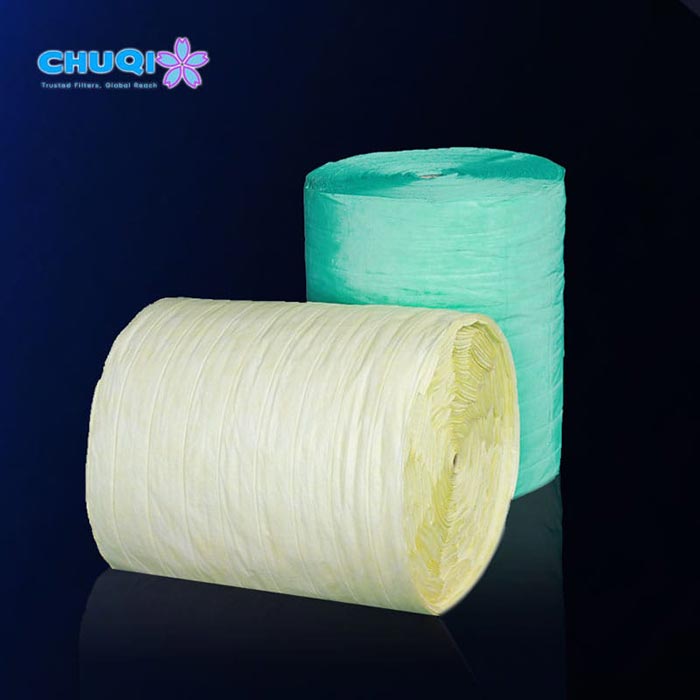
2.2 Nonwoven Bag Filter Media
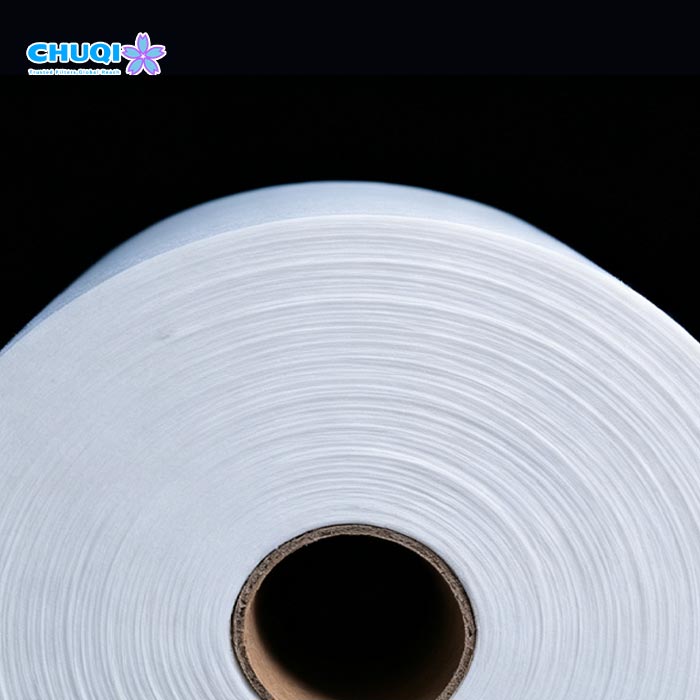
Nonwoven bag filter media is used to manufacture different types of pocket and bag air filters for commercial HVAC, industrial ventilation, and other air filtration systems.
Made from a nonwoven fiber structure, this media generally offers flexibility and good processing suitability for cutting, joining, sewing, and bag assembly. Its specific application depends on the material structure, filtration performance, and final filter design.
For bag filter manufacturers, media must do more than meet filtration requirements. It also needs to perform well during production. Flexible material can make downstream processing easier, while good structural integrity helps reduce problems such as edge fraying and tearing.
Key characteristics:
- Suitable for manufacturing different types of bag and pocket filters.
- Flexibility supports downstream cutting, joining, and assembly.
- Material specifications can be adjusted to suit filter designs and production needs.
- Available in different roll widths, lengths, and supply formats.
Typical applications: Commercial HVAC, industrial ventilation, air handling equipment, and the manufacture of different bag filter designs.
Learn more about nonwoven bag filter media.
For further information about fiber structure, material consistency, and processing suitability, see our guide to pocket filter media features.
2.3 Fiberglass Filter Media
Fiberglass filter media is made from glass fibers with different fiber diameters and material structures to meet various air filtration requirements.
It is used in selected HVAC and industrial filtration products, including certain conventional and high-efficiency filtration applications. Its suitability depends on the specific media structure and the performance requirements of the finished filter.
For example, fiberglass microglass media used in high-efficiency filters differs in structure and performance requirements from fiberglass materials used in general ventilation filtration. The fact that both contain glass fibers does not mean they can be used interchangeably.
Key characteristics:
- Available in different fiberglass structures.
- Can be designed for specific filtration applications.
- Used in selected industrial and high-efficiency air filtration products.
Typical applications: Selected HVAC filters, industrial air filtration, and high-efficiency filter manufacturing.
Learn more about our fiberglass filter paper.
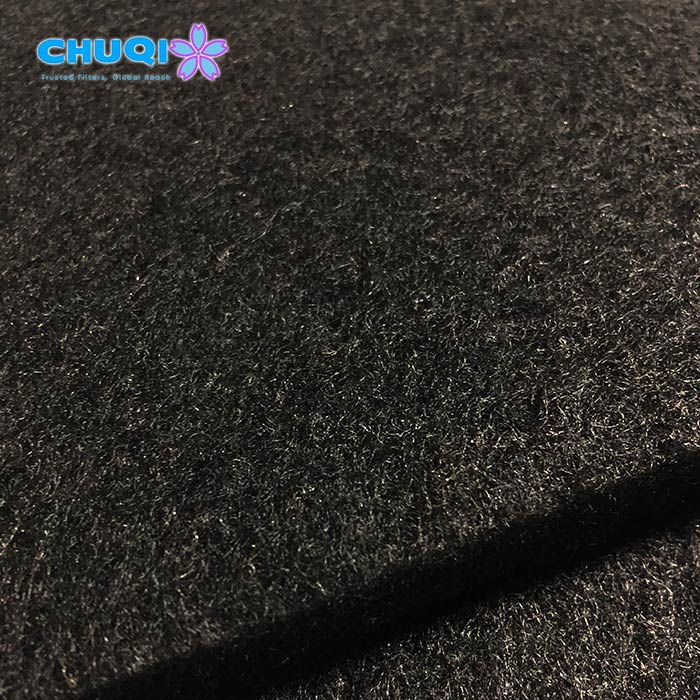
2.4 Activated Carbon Filter Media
Activated carbon media is mainly used for gas-phase filtration, particularly in HVAC systems where certain odors or gaseous contaminants need to be reduced.
Unlike conventional fibrous filter media, activated carbon works primarily through adsorption. Its porous structure provides a large internal surface area that can capture certain contaminant molecules.
Actual performance depends on several factors, including the type and concentration of the target contaminant, carbon properties, air humidity, and contact time between the air and the media.
Activated carbon media is therefore generally used as a complementary filtration stage rather than a replacement for particulate filters. Material and filter design should be selected according to the target contaminants, as activated carbon does not remove all gases and odors equally.
Key characteristics:
- Adsorbs certain gaseous contaminants and odors.
- Can be incorporated into different filter designs.
- Commonly used alongside particulate filtration media.
- Available in different material forms depending on the filter design.
Typical applications: Commercial ventilation, indoor air quality control systems, and HVAC applications requiring supplementary odor control.
Explore our activated carbon filter media for more information.
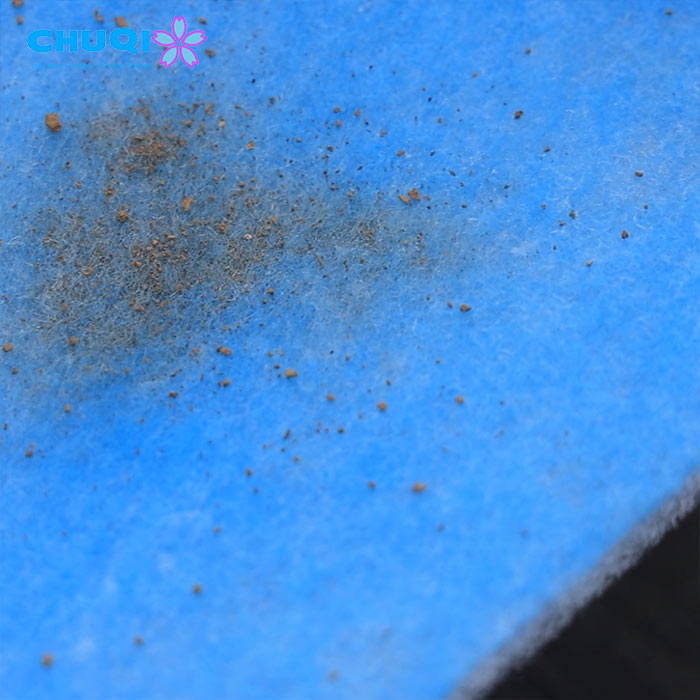
2.5 Fine-Fiber Media for High-Efficiency Filtration
Fine-fiber media is used in filtration products designed to capture smaller airborne particles. Specialized glass microfibers and other fine-fiber structures can be used in the manufacture of high-efficiency filters.
These materials are suitable for applications with stricter particle control requirements, including cleanrooms, laboratories, and certain pharmaceutical and industrial controlled environments.
One important distinction is that HEPA is a performance classification for a complete filter tested according to an applicable standard, not a separate type of filter media.
The finished filter must meet the relevant performance requirements. Its filtration performance depends not only on the media but also on pleat construction, frame design, sealing, and manufacturing quality.
Learn more about HEPA fiberglass filter paper and industrial HEPA air filters.
3. Which Air Filter Media Is Used for Different HVAC Applications?
The right HVAC filter media depends on the air source, contaminant type, filtration requirements, and operating environment. Different applications may require different material combinations.
3.1 Commercial HVAC Systems
Commercial buildings such as offices, shopping centers, and hotels commonly use multi-stage air filtration systems to treat outdoor fresh air and recirculated indoor air.
Polyester pre-filter media can capture larger particles, while nonwoven bag filter media is commonly used in downstream bag filtration stages. If certain odors or gaseous contaminants need to be controlled, activated carbon media may be added as a supplementary filtration stage.
Media selection for these applications needs to consider filtration requirements, filter construction, and system operating conditions. Air sources and dust loads can vary significantly between buildings, so the same material combination is not necessarily suitable for every system.
3.2 Industrial HVAC and Ventilation Systems
Industrial facilities may need to handle air containing production dust, fibers, and other process-related contaminants.
Filter media selection should reflect the actual operating conditions. General industrial ventilation systems may use pre-filtration followed by bag filtration, while specialized production environments may require different media structures or additional filtration stages.
For example, a factory handling coarse dust has different filtration needs from a production area requiring stricter airborne particle control. Selecting media based only on a general filter category may overlook important differences in dust characteristics, operating conditions, and maintenance requirements.
3.3 Fresh Air Intake Systems
Fresh air intake systems bring outdoor air into commercial buildings and industrial facilities. Depending on the location and surrounding environment, incoming air may contain dust, pollen, fibers, and other suspended particles.
Polyester pre-filter media and selected fiberglass materials are commonly used for initial filtration at fresh air intakes. If specific outdoor odors or gaseous contaminants need to be addressed, activated carbon media may also be considered.
The appropriate material combination depends on local air conditions and ventilation system design. For example, buildings exposed to high outdoor dust loads may need to pay particular attention to the pre-filtration stage and the protection of downstream filters.
Learn more about intake filter media.
3.4 Cleanrooms and Controlled Environments
Cleanrooms, laboratories, and other controlled environments require filtration systems designed around specific airborne particle control requirements.
Pre-filters and medium-efficiency filters may be installed upstream to reduce the particle load entering downstream high-efficiency filters. High-efficiency filters use specially designed fine-fiber media.
A pre-filter cannot replace a HEPA filter because the two serve different filtration purposes. A complete HEPA filter must meet the applicable classification and testing requirements.
Cleanroom projects may also differ in air cleanliness targets, airflow organization, and filter installation design. Filter media therefore needs to be considered as part of the overall air filtration system.
Explore our air filtration solutions for different system applications.
4. Common HVAC Filter Types and Their Media Structures
Filter media is not used in isolation. It is converted into different finished filter designs. Understanding the relationship between media and filter construction helps distributors plan suitable product ranges and helps filter manufacturers select materials that fit their production processes.
4.1 Panel Filters
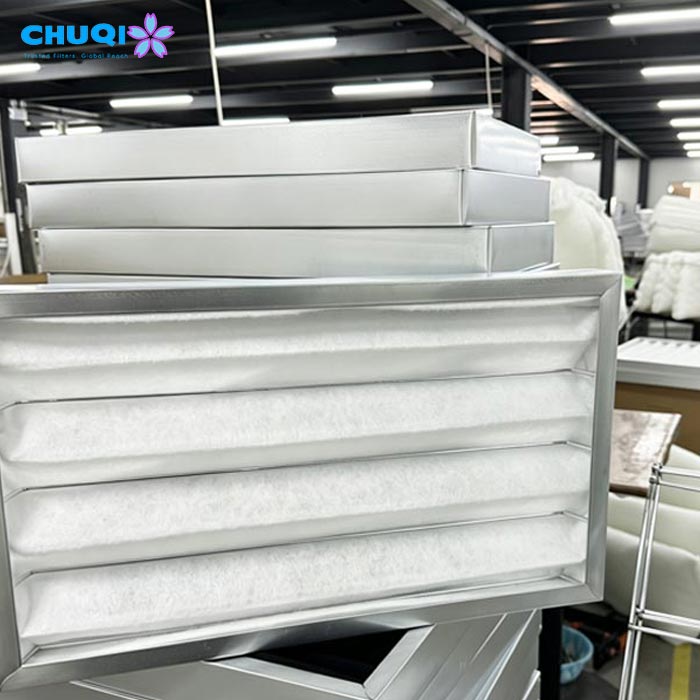
Panel filters generally use flat media held in place by a frame or support structure. They are widely used for pre-filtration in HVAC air handling and intake systems.
Depending on the design, the media may be supported by metal mesh or other structural components. Polyester media and selected fiberglass materials are common choices for panel filters.
Learn more about panel filter types and designs.
4.2 Pocket or Bag Filters
Pocket filters consist of multiple individual filter bags, providing a larger filtration surface area within a limited frontal area.
Nonwoven bag filter media is commonly used because it can be cut, joined, and assembled into flexible pockets. Pocket depth, number of pockets, and overall dimensions all affect the effective filtration area and airflow distribution.
Media flexibility, structural integrity, and processing suitability also influence pocket formation and manufacturing.
For more information, see our guide to pocket and bag air filters.
4.3 Pleated Filters
Pleated filters use folded media to increase the available filtration area within a limited frontal area. The pleated media is generally supported by a frame or other structural components.
The selected material must be suitable for the intended pleating process and meet the performance requirements of the finished filter. Not all nonwoven materials are suitable for every pleated filter design.
4.4 Activated Carbon Filters
Activated carbon filters incorporate carbon-containing media into a finished filter structure. Through adsorption, they provide supplementary filtration to help reduce certain gaseous contaminants and odors.
The specific construction can vary according to carbon content, product dimensions, and installation requirements.
4.5 HEPA Filters
HEPA filters use specially designed high-efficiency media formed into a pleated structure and assembled with suitable frames and sealing components.
The media is only one part of the finished filter. Pleat construction, assembly quality, and sealing performance all affect the final filtration result. The complete filter must also be tested according to the applicable classification requirements.
4.6 How Do You Match Filter Media with Finished Filter Designs?
The following are common relationships between filter media and finished filter structures:
Panel filters: Polyester pre-filter media and selected fiberglass media.
Bag filters: Nonwoven bag filter media.
Pleated filters: Synthetic nonwoven or other specialized media suitable for pleating.
Activated carbon filters: Activated carbon-containing filter media.
HEPA filters: Specialized high-efficiency filter media.
These are common applications rather than fixed rules. The same broad material category may be used in different filter designs when its structure and performance are suitable.
For example, bag filter production requires media that can withstand cutting, joining, and sewing while maintaining stable pocket construction. Pleated filter production has different requirements for foldability and structural support.
Therefore, selecting HVAC filter media requires consideration of both filtration needs and the construction of the finished filter.
5. What Should Distributors and Filter Manufacturers Consider When Sourcing HVAC Filter Media?
Sourcing HVAC filter media involves more than choosing a material type. For distributors and filter manufacturers, the media also needs to suit product dimensions, converting processes, packaging preferences, inventory planning, and repeat-order requirements.
5.1 Roll Width and Length: Reducing Material Waste
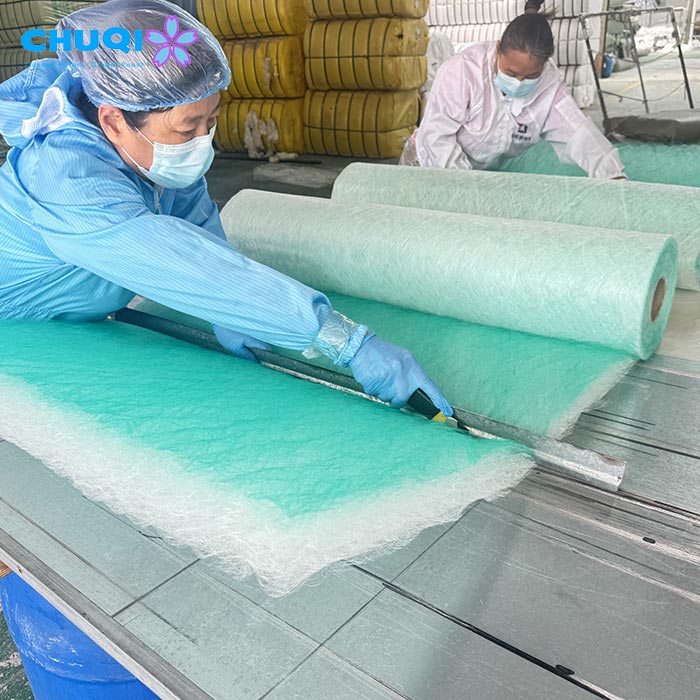
Different filter dimensions require different media specifications. If the roll width does not match the cutting layout, manufacturers may generate unnecessary offcuts and increase material waste.
For example, a manufacturer producing panel filters in several sizes may improve cutting efficiency by selecting a roll width that better fits its production layout.
Roll length also affects production scheduling, material handling, and inventory planning. For continuous converting operations, suitable roll specifications can help reduce frequent roll changes and simplify material management.
5.2 Material Consistency: Supporting Stable Production
Variations in fiber distribution, thickness, density, or surface structure may affect downstream processing and the consistency of finished filters.
For manufacturers producing the same filter model repeatedly, stable media characteristics help reduce unexpected variations during cutting, assembly, and finished-product inspection.
For distributors supplying the same products to customers over time, consistency between material batches also helps reduce potential quality issues and after-sales concerns.
5.3 Processing Suitability: Can the Media Be Cut, Pleated, or Sewn?
Different filter constructions require different converting processes.
Bag filters may involve cutting, joining, and sewing.
Pleated filters require media that can be folded according to the intended design.
Panel filters may involve cutting, supporting, and frame assembly.
A material that performs well in one filter type may not be suitable for another. Characteristics such as flexibility, structural integrity, and mechanical strength can all affect processing performance.
When selecting filter media, it is therefore important to consider not only filtration performance but also the manufacturing process used for the finished product.
5.4 Custom Specifications: Matching Media to Different Product Requirements
Standard media specifications may not suit every filter design or production line.
For filter manufacturers, roll width can affect cutting layouts and material utilization, while thickness and density influence media structure and processing performance. For distributors, different customers may also have different product specifications and sales requirements.
Common customization options include:
Material specifications: Thickness, density, and material structure.
Roll dimensions: Roll width and length.
Material selection: Fiber composition and structure suited to different filtration applications.
Supply formats: Rolls or sheets.
Packaging: Individual packaging according to purchasing requirements.
Brand identification: Product labels prepared according to the buyer’s requirements.
These options help filter manufacturers adapt media to existing production processes and allow overseas distributors to plan private-label products and different packaging formats.
5.5 Supply Formats and Packaging: Supporting Different Purchasing and Sales Models
Customers do not all purchase or use filter media in the same way.
Filter manufacturers often need rolls for downstream cutting and continuous processing. Other customers may prefer pre-cut sheets for specific dimensions, production requirements, or applications.
For overseas distributors, packaging can also affect storage, distribution, and brand sales. Depending on the material and order requirements, filter media may be supplied in different formats:
Rolls: Suitable for downstream cutting and converting.
Sheets: Suitable for specific dimensions or production requirements.
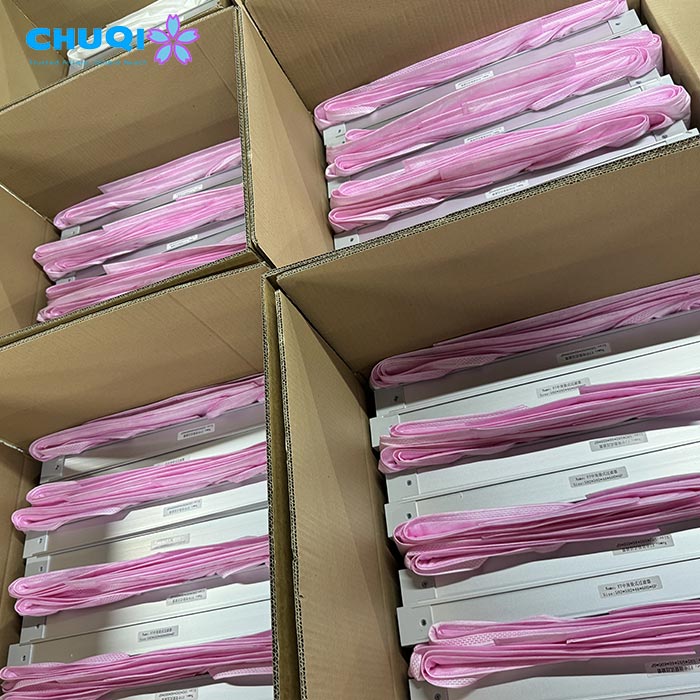
Individual packaging: Convenient for product handling, storage, and sales.
Buyer labels: Support distributor branding and product identification.
Choosing the right supply format helps integrate filter media more effectively into existing production, inventory, and sales processes.
5.6 Long-Term Supply: Maintaining Product and Quality Consistency
Suitable filter media needs to meet current requirements while remaining available for future orders.
For distributors, changes in material characteristics between batches can make product planning and customer supply more difficult. For filter manufacturers, inconsistent incoming media may affect production parameters and finished filter quality.
When sourcing filter media, it is therefore important to consider not only the material itself but also the supplier’s manufacturing capacity, specification management, customization support, and ability to maintain ongoing supply.
A stable production and supply system is particularly important for customers who need to source the same product specifications over the long term.
Choosing HVAC Air Filter Media for Your Application and Production Needs
Different HVAC systems require different filtration materials. The right choice depends on contaminant type, filtration stage, operating environment, and finished filter design.
Chuqi manufactures a range of air filter media for HVAC and industrial filtration applications, including polyester pre-filter media, nonwoven bag filter media, fiberglass filter materials, and activated carbon media.
To support different production and purchasing requirements, customization options include media thickness, density, roll width, roll length, and material structure. Supply formats include rolls and sheets, with individual packaging and buyer-specific labels available according to order requirements.
Explore our air filter media product range to learn more about the available materials and applications. If you are developing a new filtration product or looking for media that fits your existing production process, you are welcome to contact our product team to discuss your application.
Frequently Asked Questions About HVAC Air Filter Media
What are the common types of air filter media used in HVAC systems?
Common HVAC filter media include polyester pre-filter media, nonwoven bag filter media, fiberglass filter media, activated carbon media, and specialized fine-fiber media. They serve different functions, including initial particle filtration, gas-phase adsorption, and high-efficiency filtration.
What is the difference between pre-filter media and bag filter media?
Pre-filter media is defined by its role in the filtration system, where it captures larger particles during the initial filtration stage. Bag filter media is defined by its use in manufacturing pocket or bag filters. The terms describe different aspects: one refers to filtration function, while the other refers to finished filter construction.
What is nonwoven bag filter media used for?
Nonwoven bag filter media is used to manufacture different types of pocket and bag air filters for commercial HVAC, industrial ventilation, and other air filtration applications. Its flexibility and processing suitability support cutting, joining, sewing, and assembly operations.
Can HVAC air filter media be customized?
Yes. Depending on the material and application, HVAC filter media can be customized in terms of thickness, density, roll width, roll length, and material structure. These specifications help the media fit different filter dimensions and production processes.
Can HVAC filter media be supplied in rolls or sheets?
Yes. Many HVAC filter media types can be supplied in rolls or sheets. The appropriate format depends on the material, downstream converting process, equipment, and purchasing requirements.
Can distributors purchase filter media with their own brand labels?
Some filter media suppliers can provide individual packaging and buyer-specific labels according to purchasing requirements. This can support distributor product identification, inventory management, and private-label sales. The available arrangements depend on the material type and order requirements.
Can the same filter media be used for different HVAC filter types?
Not necessarily. Panel, bag, and pleated filters have different structures and converting requirements. Media suitable for one filter design may not meet the processing or filtration requirements of another. Selection should consider the finished filter construction and intended application.
Can fiberglass filter media be replaced with synthetic media?
In some applications, fiberglass media may be replaced with synthetic media, but the two should not be considered automatically interchangeable. Their fiber structures, filtration characteristics, and processing performance may differ. Any material substitution should be evaluated against the performance and construction requirements of the finished filter.
Are HEPA media and HEPA filters the same thing?
No. HEPA is a performance classification for a complete high-efficiency filter tested according to an applicable standard. The media is only one component. Pleat construction, frame design, sealing, and manufacturing quality also affect final filter performance.
What should distributors consider when sourcing HVAC filter media?
Distributors should consider the supplier’s product range, customization options, material consistency, supply formats, packaging options, and long-term supply capability. These factors help determine whether a supplier can support current product requirements and future product development.