
When sourcing air filter media, distributors often receive technical datasheets listing thickness, basis weight (GSM), air permeability, pressure drop and filtration efficiency.
But how should these figures be interpreted? Two materials may have similar thickness or GSM yet behave differently in actual filtration applications.
Understanding air filter media specifications helps distributors compare products, communicate technical differences to customers and select materials for different filtration requirements.
This guide explains eight common specifications, how to read them together and how to compare datasheets from different suppliers.
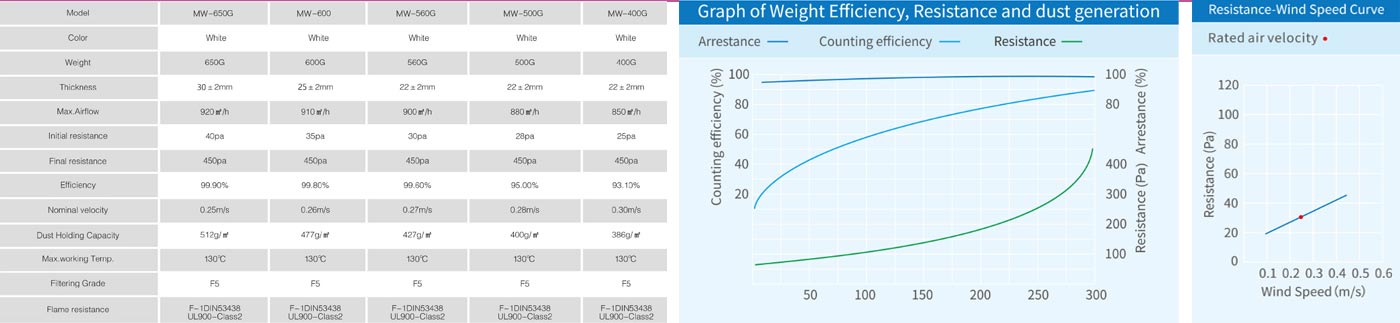
1. What Is an Air Filter Media Specification Sheet?
An air filter media specification sheet, also known as a technical datasheet, describes the physical properties and filtration characteristics of a material.
Depending on the product, it may include:
Material composition
Thickness and basis weight (GSM)
Density
Air permeability
Initial pressure drop
Filtration efficiency
Dust holding capacity
Operating temperature
Not every parameter applies to every filter media type. For example, air permeability is relevant to porous filter materials, while adsorption capacity is more important when evaluating activated carbon media.
A datasheet provides a technical reference for understanding a product. Its values should be interpreted according to the material type, intended application and test conditions.
2. Eight Key Air Filter Media Specifications Explained
2.1 Material Type
Material type identifies the main raw materials and fiber structure used to manufacture filter media.
Common examples include:
Synthetic fiber media: Used in HVAC pre-filtration, intake filtration and various industrial applications.
Fiberglass media: Used in paint overspray capture and selected industrial filtration applications.
Polyester nonwoven media: Used in different air filtration products, depending on its fiber structure and manufacturing process.
Activated carbon media: Designed to adsorb certain gases, odors and volatile organic compounds.
Material composition influences properties such as mechanical strength, moisture resistance, temperature suitability and filtration behavior.
2.2 Thickness
Thickness measures the distance between the two surfaces of a filter media, usually expressed in millimeters (mm).
It describes the material’s physical depth and is relevant to filter design, installation space and media construction.
Thickness alone does not indicate filtration efficiency or service life. It should be considered alongside the material’s structure and performance data.
2.3 Basis Weight (GSM)
Basis weight, commonly expressed as GSM (grams per square meter), measures the mass of filter media per unit area.
For example, 200 GSM means that one square meter of the material has a nominal mass of 200 grams.
GSM is useful for comparing material weight and estimating the quantity of media supplied per unit area. It does not directly measure filtration efficiency or overall product quality.
2.4 Density
Density describes the mass of material per unit volume and is commonly expressed in kg/m³.
For sheet-form filter media, apparent density can be calculated from basis weight and thickness when the units are consistent. However, this value does not fully describe the internal fiber arrangement.
Some filter media use a progressive-density structure, in which fiber distribution changes through the material depth. This can influence how particles are captured within the media.
2.5 Air Permeability
Air permeability measures how easily air passes through a filter media sample under specified test conditions.
It may be expressed in L/m²/s or other units, depending on the test method.
The reported value depends on factors such as test pressure difference, sample area and testing procedure. Therefore, air permeability results should only be compared when the relevant test conditions are consistent.
2.6 Initial Pressure Drop
Initial pressure drop is the pressure difference measured across clean filter media or a clean filter under specified airflow conditions. It is usually expressed in Pascals (Pa).
It indicates the airflow resistance before significant dust loading occurs.
A lower initial pressure drop generally means less resistance at the same airflow condition. However, it should be evaluated alongside filtration efficiency and dust holding capacity.
2.7 Filtration Efficiency
Filtration efficiency describes how effectively a filter or filter media captures airborne particles under specified test conditions.
Common classification standards include:
ISO 16890: Classifies general ventilation air filters using ePM1, ePM2.5 and ePM10 categories.
ASHRAE 52.2: Uses MERV ratings for general ventilation air filters.
EN 1822: Covers EPA, HEPA and ULPA filter classification, including testing at the most penetrating particle size (MPPS).
These standards use different testing and classification approaches. Their ratings should not be treated as directly interchangeable.
It is also important to distinguish between the performance of raw filter media and that of a finished filter. The finished product may be affected by pleat design, effective filtration area, sealing, frame construction and airflow distribution.
For more information about high-efficiency classifications, see our guide to HEPA Filter Grades.
2.8 Dust Holding Capacity
Dust holding capacity describes how much test dust a filter media sample or finished filter can retain under specified conditions before reaching a defined endpoint.
It is commonly expressed in grams (g), although the test method determines how the result is measured and reported.
The result depends on factors such as test dust, airflow, test arrangement and endpoint pressure drop. A value measured on a media sample is not necessarily equivalent to one measured on a complete filter.
3. How to Read Air Filter Media Specifications Together
Individual figures describe different properties. Looking at related specifications together provides a more useful picture of the material.
Thickness + GSM + Density: Understanding Material Structure
Thickness describes material depth, GSM measures mass per unit area, and density relates mass to volume.
Together, these values help describe the physical construction of a filter media. For example, two materials with the same thickness may have different GSM values, indicating differences in material mass per unit area.
However, these figures alone cannot establish filtration efficiency or service life. Performance testing is still needed.
Air Permeability + Initial Pressure Drop: Understanding Airflow Resistance
Air permeability measures airflow through a media sample under a specified pressure difference. Initial pressure drop measures the pressure loss across the tested material or filter at a defined airflow condition.
These measurements help assess airflow characteristics, but they should not be treated as interchangeable. Their test methods and conditions need to be considered separately.
Filtration Efficiency + Dust Holding Capacity: Understanding Filtration Performance
Filtration efficiency describes particle capture, while dust holding capacity describes the amount of test dust retained before a defined endpoint.
A material with high initial efficiency does not automatically have high dust holding capacity. Both properties matter when assessing whether a material is suitable for a particular filtration task.
4. Which Specifications Matter Most for Different Applications?
The most relevant specifications depend on the filtration function, equipment design and operating environment.
| Application | Key Specifications to Consider |
|---|---|
| Intake filter media | Air permeability, initial pressure drop, filtration efficiency and dust holding capacity |
| Spray booth ceiling filter media | Airflow distribution, thickness, basis weight and pressure drop |
| Paint arrestor media | Paint mist capture, paint holding capacity, airflow resistance and material structure |
| HVAC pocket filter media | Filtration efficiency, pressure drop, dust holding capacity and mechanical strength |
| HEPA filtration | Efficiency classification, MPPS performance, pressure drop and filter integrity |
| Activated carbon media | Carbon content, adsorption performance, contact conditions and airflow resistance |
These are general evaluation criteria, not universal specifications for every product.
Each filtration stage performs a different function. Distributors should therefore assess a material according to its intended application rather than applying the same specification criteria to every filter media type.
Explore the relevant Chuqi product categories:
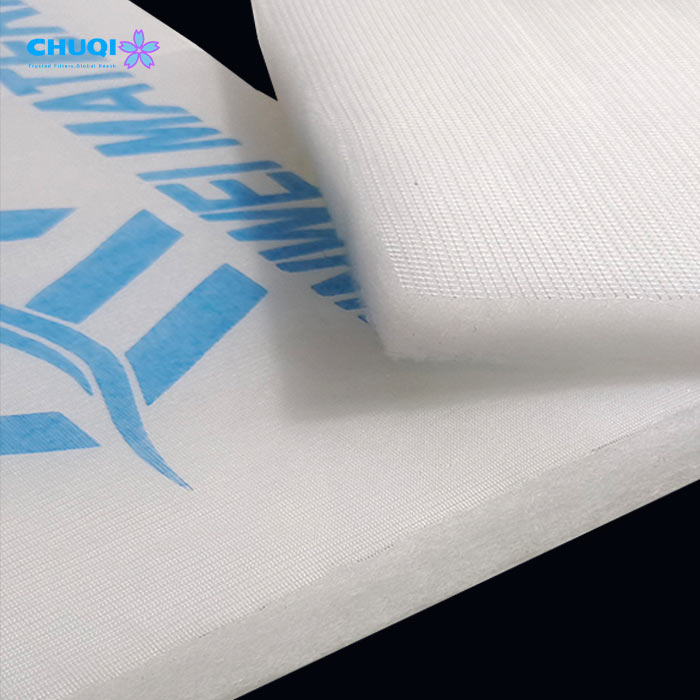
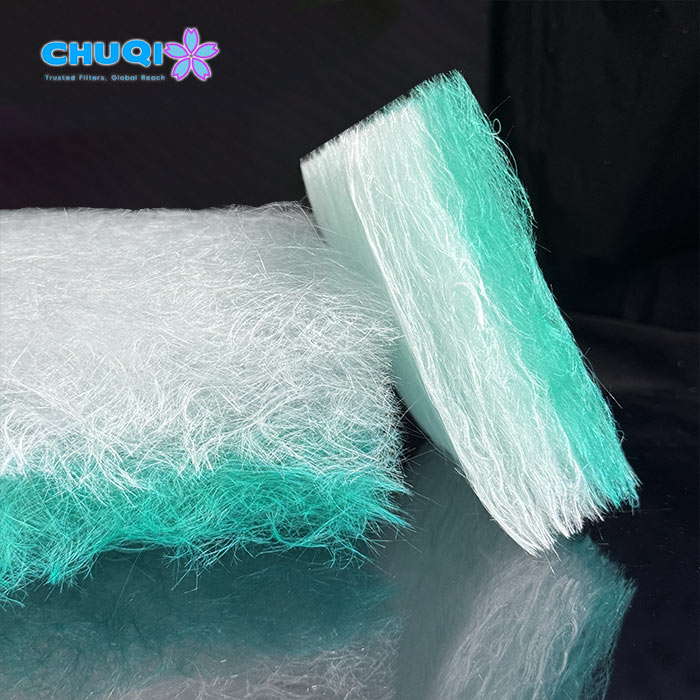
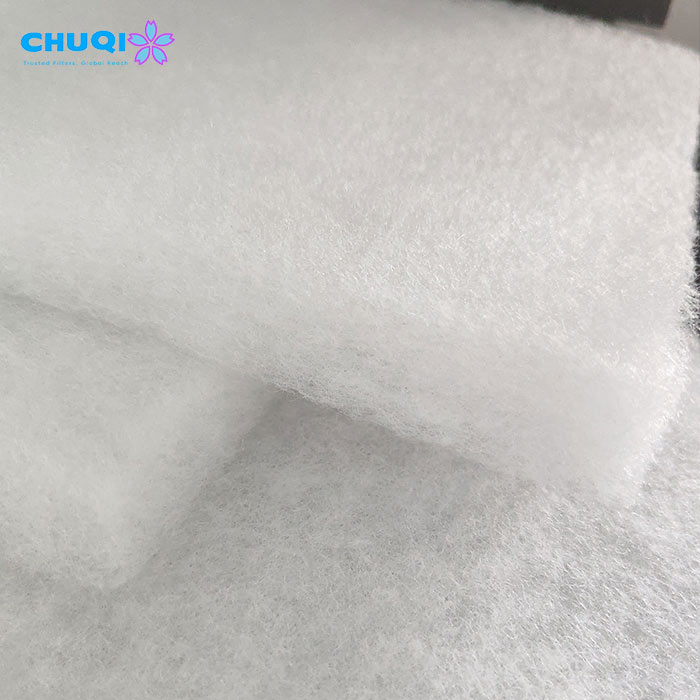
5. How to Compare Air Filter Media Datasheets from Different Suppliers
When comparing products from different manufacturers, similar figures do not necessarily mean equivalent materials. Use the following points to assess whether the datasheets provide a meaningful comparison.
| Comparison area | What to look for |
|---|---|
| Material | Are the material types and fiber compositions comparable? |
| Physical properties | Are thickness, GSM and density measured and reported consistently? |
| Airflow performance | Are air permeability and pressure drop measured under comparable conditions? |
| Filtration efficiency | Is the same classification standard used? Does the result refer to media or a finished filter? |
| Dust holding capacity | Are the test dust, airflow conditions and endpoint defined? |
For example, if one supplier reports initial pressure drop at a different face velocity from another, the two values cannot provide a direct comparison. Similarly, filtration efficiency figures should not be compared without understanding the applicable test standard.
A useful comparison therefore looks beyond the headline numbers. It considers the material, measurement method, test conditions and intended application as one technical profile.
6. Choosing an Air Filter Media Manufacturer
For distributors, a reliable manufacturer should offer more than a list of product specifications. Three areas deserve particular attention:
Manufacturing consistency: Production control helps maintain consistent material characteristics across repeat orders.
Product range and customization: Different media types, roll dimensions and processing options help distributors serve varied customer requirements.
Technical documentation and supply support: Clear datasheets and responsive product support make it easier to evaluate materials and communicate with downstream customers.
Chuqi manufactures its air filter media in its own factory, with products covering multiple industrial and commercial filtration applications. B2B customers can discuss material types, customized roll dimensions and related processing options.
You can explore our complete air filter media range, view filter media for spray booth applications, or visit our Technical Datasheets page for product information.
If you are sourcing filter media for distribution or filter manufacturing, our team can discuss your application and supply requirements.
Frequently Asked Questions About Air Filter Media Specifications
What are air filter media specifications?
Air filter media specifications are technical parameters that describe a material’s physical properties and filtration characteristics. Common examples include thickness, GSM, density, air permeability, pressure drop and filtration efficiency.
What does GSM mean in air filter media?
GSM means grams per square meter. It measures the mass of filter media per unit area and is commonly used to describe the basis weight of nonwoven and other filter materials.
What is the difference between thickness and density?
Thickness measures the physical depth of a material, usually in millimeters. Density measures mass per unit volume, commonly expressed in kg/m³. They describe different physical properties.
Does higher GSM mean better filter media quality?
No. Higher GSM means more material mass per unit area, but it does not automatically indicate higher filtration efficiency or longer service life. Fiber structure and performance test results must also be considered.
Why should pressure drop be compared at the same airflow velocity?
Pressure drop changes with airflow velocity. Comparing results measured at different velocities can lead to misleading conclusions about airflow resistance. Products should be evaluated under consistent test conditions.