
Intake pre-filter media and spray booth ceiling filter media are generally not direct substitutes. In a typical multi-stage air supply system, an intake pre-filter captures larger airborne particles before the air reaches downstream filtration equipment, while a ceiling diffusion filter provides further filtration before supply air enters the spray booth.
However, spray booth designs vary. In some systems, the ceiling filter is itself the main intake filtration stage rather than a separate filter installed after an upstream pre-filter.
Understanding this distinction is important when replacing spray booth filter media. The right material depends on its position in the air system, required particle capture performance, airflow resistance, and the booth’s air distribution design.
This guide explains how intake pre-filters and ceiling filters differ, why they are not automatically interchangeable, and when alternative filter media may be suitable.
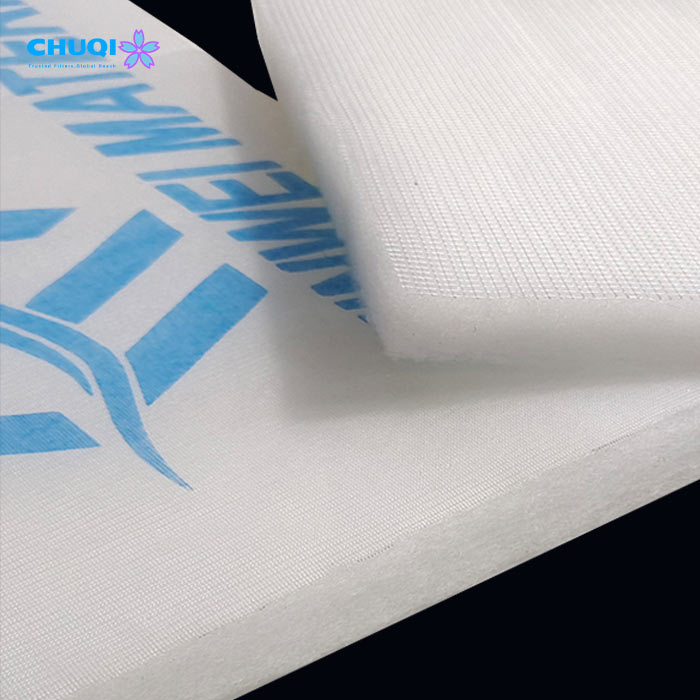
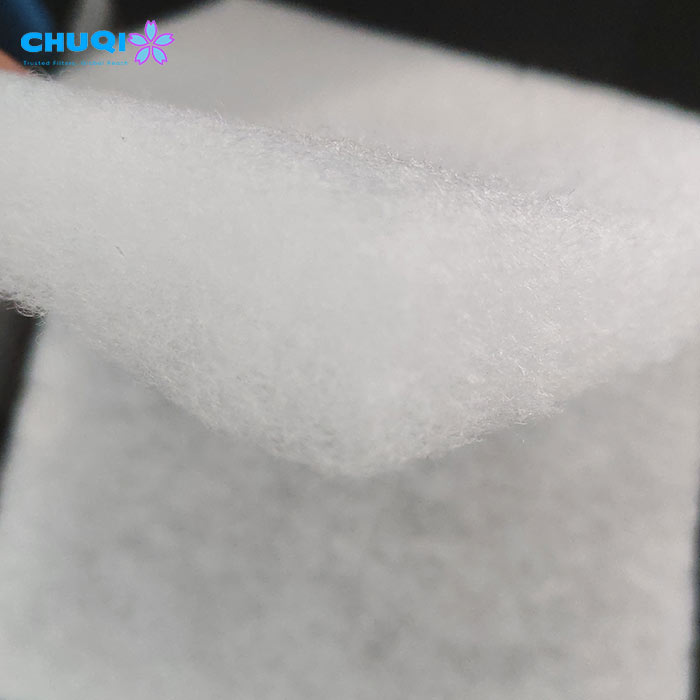

What Is the Difference Between Intake Pre-Filter Media and Ceiling Filters?
The main difference is their position and function within the spray booth air system.
An intake pre-filter is generally installed upstream to capture larger airborne particles before they reach downstream filters or ventilation equipment. A ceiling diffusion filter is installed near the air supply area of the booth, where it provides final or further filtration and supports the designed airflow pattern.
The exact arrangement depends on the booth design. Some systems use separate pre-filtration and ceiling filtration stages, while others rely on the ceiling filter as the primary supply-air filtration stage.
Intake Pre-Filter Media: Upstream Particle Capture
In a multi-stage air supply system, intake pre-filter media handles the initial filtration load. It captures larger dust particles and airborne contaminants entering through the fresh-air intake.
This helps reduce the amount of dust reaching downstream filters and can extend the operating life of more finely structured filtration media.
Common intake pre-filter applications include:
Fresh-air intake systems for spray booths
Industrial ventilation and HVAC pre-filtration
Upstream filtration before finer filter stages
Air handling systems exposed to relatively high dust loads
Chuqi supplies intake filter media for G1–G4 pre-filtration applications, with different thicknesses, grades, and dimensions available for industrial air intake systems.
Ceiling Diffusion Filter Media: Supply-Air Filtration
Ceiling filters are installed in the supply-air area of many spray booths, particularly in downdraft designs.
Their role is not limited to capturing airborne particles. The media structure also contributes to airflow resistance and helps support the air distribution pattern designed for the booth.
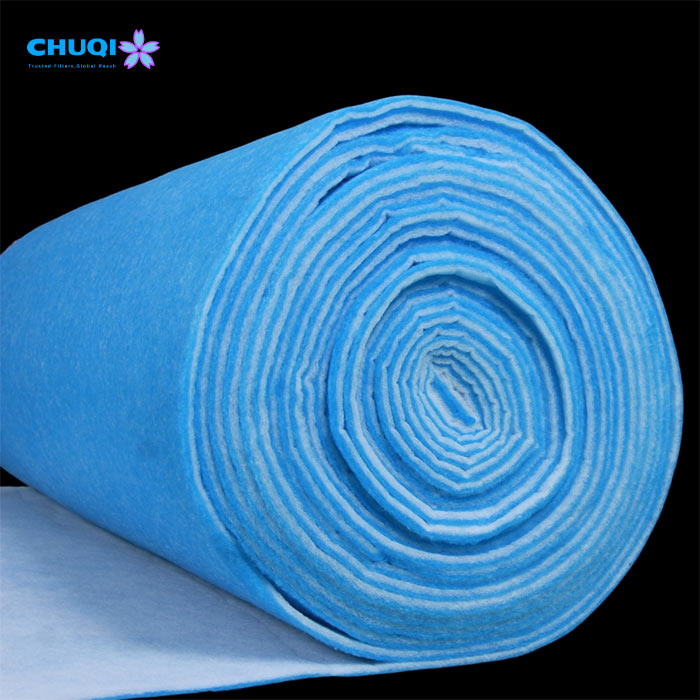
Many ceiling filter media products use a progressive-density fiber structure. The less dense upstream side allows air to enter the media, while the denser downstream structure captures finer particles. Depending on the product design, adhesive treatment or a supporting backing may also be used.
Explore Chuqi’s spray booth ceiling filter media for applications requiring supply-air filtration and consistent media performance.
Different Media Structures and Airflow Characteristics
Intake pre-filter media and ceiling diffusion media are designed for different operating conditions.
| Feature | Intake Pre-Filter Media | Ceiling Diffusion Filter Media |
|---|---|---|
| Typical position | Upstream air intake | Supply-air ceiling area |
| Main function | Initial particle capture | Further or final supply-air filtration |
| Typical structure | Synthetic or other coarse filtration media | Often progressive-density fiber structure |
| Main performance considerations | Particle capture, dust holding capacity, airflow resistance | Filtration performance, airflow resistance, media consistency |
| Typical application | Fresh-air pre-filtration | Spray booth supply-air filtration |
These are typical differences rather than universal rules. Actual performance depends on the media construction and the booth’s filtration arrangement.
Why Can't Intake Pre-Filter Media Simply Replace Ceiling Filter Media?
The two materials may look similar in roll form, but similar appearance does not mean they perform the same function.
Replacing one with the other without considering the filtration stage can affect particle capture, system resistance, and the way air moves through the booth.
Will Intake Pre-Filter Media Provide the Same Air Cleanliness?
Usually, not when the intake pre-filter is designed only for coarse particle capture.
Spray booth ceiling filters are often selected to capture finer airborne particles before supply air enters the working area. If a relatively coarse pre-filter is used in place of the intended ceiling media, more particles may pass through and enter the booth.
This can increase the risk of dust contamination on painted surfaces, especially in applications where surface finish is sensitive to airborne particles.
Filtration efficiency also varies with particle size. A filter that performs well against larger particles may be less effective at capturing smaller particles.
The relationship between particle size, fiber structure, and capture performance is explained in our guide to how particle size affects air intake filter media efficiency.
Can Different Media Change Airflow Distribution?
Yes. Different filter media can create different levels of airflow resistance, which may affect the operating point of the ventilation system.
The actual airflow is determined by the interaction between the fan performance curve and the resistance of the complete air system, including filters, ducts, dampers, and other components.
If replacement media has substantially higher resistance, a fixed-speed fan may deliver less airflow than before. A variable-speed fan or control system may compensate by increasing fan speed, but only within its available operating range.
The distribution of resistance across the ceiling filter area also matters. Uneven media thickness, inconsistent compression, poor sealing, or irregular installation can contribute to differences in local airflow.
This is why a ceiling filter should not be selected based on filtration efficiency alone. Its resistance and physical consistency also influence how it performs in the booth.
For more detail on how filter resistance relates to airflow in intake filtration, see our guide to intake filter media airflow and pressure drop.
What Happens If Ceiling Filter Media Is Used as an Intake Pre-Filter?
A ceiling filter may physically fit an intake filter section, but that does not automatically make it a suitable pre-filter.
A finer or more densely structured ceiling media may have a higher initial resistance than the original intake pre-filter. If it receives a heavy upstream dust load, its resistance may increase more quickly, potentially shortening its useful service interval.
This can lead to:
More frequent filter replacement
Additional resistance in the air supply system
Greater operating demands on the ventilation system
Higher filtration costs if fine media is used where coarse pre-filtration would be sufficient
The issue is not that ceiling filter media can never be used upstream. It is that the media must be suitable for the particle load, airflow, and operating conditions at that location.
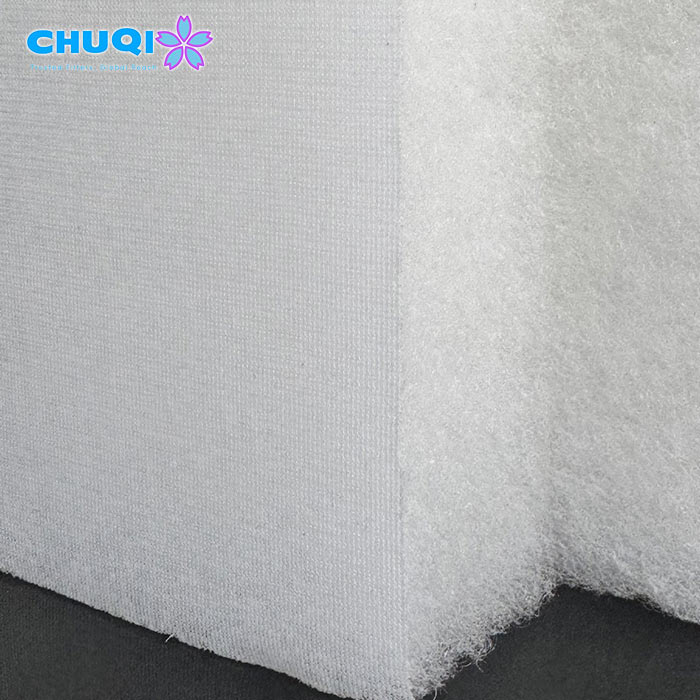
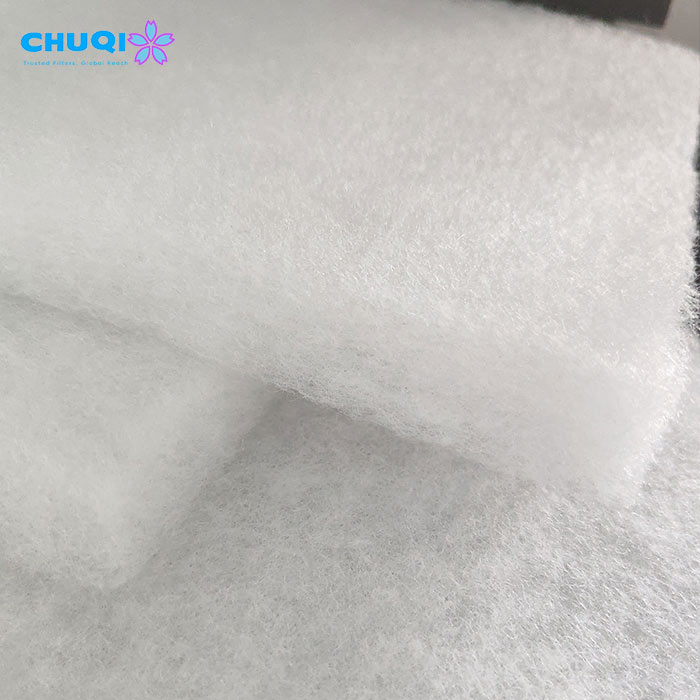
When Can Intake Pre-Filter Media and Ceiling Filters Be Used as Alternatives?
There are situations where alternative filter media can work, but substitution should be based on system performance rather than appearance or product naming.
Situations Where Substitution May Be Possible
An alternative media may be suitable when:
The original filter grade or material is no longer available, but a comparable performance option can be sourced.
The booth design uses a single supply-air filtration stage rather than separate pre-filtration and ceiling filtration.
The alternative media has suitable filtration performance and airflow resistance for the installation position.
The ventilation system can operate within its required airflow range with the replacement material.
For example, a spray booth that uses a ceiling-mounted intake filter as its main supply-air filtration stage should not be evaluated in the same way as a system with a separate upstream pre-filter.
The filter’s actual function in the air system is more important than whether its product name includes the word “intake” or “ceiling.”
What Determines Whether an Alternative Media Will Work?
Five factors are particularly important.
1. Filtration Efficiency
The replacement media should capture the particle sizes relevant to its position in the system. Coarse pre-filtration and final supply-air filtration have different performance expectations.
2. Airflow Resistance
The replacement should provide suitable airflow resistance for the ventilation system. A material with substantially different resistance can change the system’s operating airflow, even when its nominal filtration grade appears similar.
3. Dust Holding Capacity
Dust holding capacity affects how much airborne dust a filter media can retain during operation. For an upstream intake pre-filter exposed to a relatively high dust load, this can influence how frequently the material needs replacement.
However, laboratory dust holding capacity does not directly predict service life in a spray booth. Actual performance depends on incoming dust concentration, airflow, particle characteristics, and the system’s allowable final resistance.
For a detailed explanation of how dust accumulation affects pressure drop and filter service life, see our guide to G4 filter media dust loading and pressure drop.
4. Thickness and Fiber Structure
Media thickness, fiber arrangement, density profile, and bonding method influence particle capture, airflow resistance, and mechanical stability.
Two filter materials with the same nominal thickness may perform differently because their internal fiber structures are not the same.
5. Installation and Airflow Distribution
The media should fit the filter section without excessive gaps, compression, or uneven loading. For ceiling applications, consistent coverage across the supply-air area is particularly important.
A Practical Way to Evaluate a Replacement
Instead of comparing only the product name or nominal grade, evaluate the replacement in the context of the complete air system.
A practical approach is to:
Identify whether the original material is an upstream pre-filter or a ceiling supply-air filter.
Compare the filtration performance and airflow resistance of the original and alternative media under comparable operating conditions.
Consider the incoming dust load and expected operating conditions.
Assess whether the replacement can maintain the required airflow and fit the existing filter section.
Observe pressure-drop changes and booth performance after installation.
The aim is to maintain the intended filtration function without creating unnecessary resistance or reducing the air cleanliness required by the application.
Intake Pre-Filters, Ceiling Filters and Floor Filters: Three Different Roles in a Spray Booth
A spray booth filtration system may include several filter stages. Each stage handles a different part of the air filtration process.
1. Intake Pre-Filter: Capturing Incoming Dust
An upstream intake pre-filter captures larger airborne particles from incoming fresh air. It reduces the dust load reaching downstream filtration stages.
2. Ceiling Filter: Filtering and Distributing Supply Air
In many downdraft spray booths, ceiling diffusion media provides further filtration before air enters the working area. Its structure and resistance also contribute to the designed supply-air distribution.
3. Floor or Exhaust Filter: Capturing Paint Overspray
Floor filters and exhaust filters handle contaminants generated during spraying, including paint overspray. They are designed for the exhaust side of the booth rather than incoming-air filtration.
Fiberglass filter media is commonly used in paint arrestor applications to capture overspray before exhaust air leaves the booth. Learn more about fiberglass filter media.
The three filter stages should not be treated as interchangeable simply because they are all used in the same spray booth.
For a complete overview of how these stages work together, see our guide to designing, building, and installing a high-performance paint booth filter system.



How to Choose the Right Filter Media for a Spray Booth
Ceiling filter media needs to support the supply-air filtration requirements of the booth.
Important characteristics include:
Appropriate particle capture performance
A suitable progressive-density structure
Consistent airflow resistance across the media
Stable thickness and fiber distribution
Suitable backing or reinforcement when required by the installation
Reliable fit across the ceiling filter area
A well-designed ceiling filter should perform consistently across its working area. Large variations in media structure or installation compression can affect local resistance and airflow distribution.
For a more detailed look at the factors behind ceiling filter performance, explore Chuqi’s spray booth ceiling filter media.
Why Media Consistency Matters for Spray Booth Performance
Filter media performance is not determined by its nominal grade alone. Fiber distribution, thickness, bonding, density profile, and mechanical stability all influence how the material behaves during operation.
Inconsistent media can create variations in airflow resistance and filtration performance across the filter area. For manufacturers and distributors supplying replacement materials, consistent production quality is therefore important for maintaining repeatable product performance.
Chuqi produces air filter media in its own manufacturing facilities and supplies materials for spray booth intake filtration, ceiling filtration, and paint overspray applications.
The product range covers different media structures, grades, thicknesses, and customized formats. Explore our air filter media range to learn more about materials for industrial air filtration.
Choosing the Right Filter Media for Your Spray Booth
Intake pre-filters, ceiling diffusion filters, and floor exhaust filters each serve a different purpose in a spray booth. Choosing the right material means understanding its position in the air system, the particle load it handles, and its effect on airflow resistance.
For filter manufacturers, distributors, and spray booth operators, media consistency and application-specific performance are just as important as the nominal filter grade.
Chuqi manufactures air filter media in-house and supports customized materials for different spray booth filtration stages, Explore our air filter media products to learn more about materials for your spray booth application.
Frequently Asked Questions
Can intake pre-filter media replace spray booth ceiling filters?
Not automatically. Intake pre-filter media is generally designed to capture larger particles upstream, while ceiling diffusion media provides further filtration near the booth’s supply-air area. A replacement must provide suitable particle capture, airflow resistance, and physical fit for the intended stage.
What is the difference between intake filters and ceiling filters in a spray booth?
In a multi-stage system, an intake pre-filter is installed upstream to reduce the incoming dust load, while a ceiling filter is installed near the supply-air area to provide further filtration and support the booth’s designed airflow pattern. Some spray booths use the ceiling filter as their main intake filtration stage, so the system layout matters.
Why are ceiling filters important in spray booths?
Ceiling filters help capture airborne particles before supply air enters the spray booth. Their media structure and resistance also contribute to the air distribution pattern. This is important for applications where airborne dust can affect paint finish quality.
Can ceiling filter media be used as an intake pre-filter?
It may be possible in some systems, but it is not always economical or technically suitable. Fine ceiling media exposed to a high upstream dust load may experience faster resistance increases. The media should be evaluated for its filtration performance, dust loading conditions, and pressure drop at the intended location.
What happens if the wrong filter media is installed in a spray booth?
The wrong media can reduce particle capture, increase system resistance, shorten filter service life, or affect airflow. The actual result depends on the difference between the original and replacement media and how the booth ventilation system is designed.
Are spray booth ceiling filters and floor filters the same?
No. Ceiling filters handle incoming supply air, while floor or exhaust filters capture paint overspray from the air leaving the spray booth. They operate in different parts of the air system and are designed for different contaminants.