
Dust accumulation increases the airflow resistance of G4 filter media as particles build up within its fibrous structure. As airflow passages become increasingly restricted, pressure drop generally rises. How quickly this happens depends on the fiber structure, dust characteristics, airflow rate, and incoming dust concentration.
Dust holding capacity is another important factor. It describes the amount of dust a filter retains before reaching a specified final pressure drop under defined test conditions. However, higher dust holding capacity does not automatically guarantee longer service life in every application. Actual filter life also depends on operating conditions and the pressure drop limit of the filtration system.
Understanding these relationships helps HVAC operators, filter manufacturers, and distributors evaluate G4 filter media beyond its initial resistance, and make better decisions about filtration performance and operating costs.
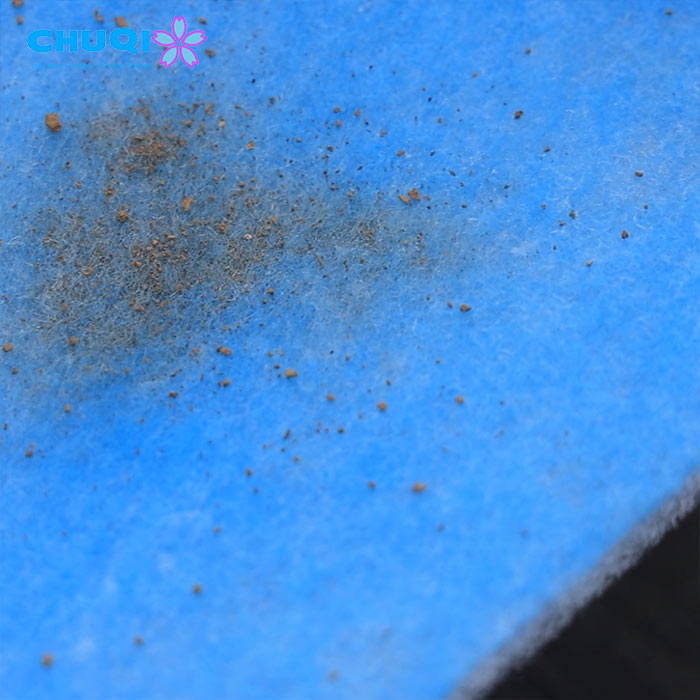
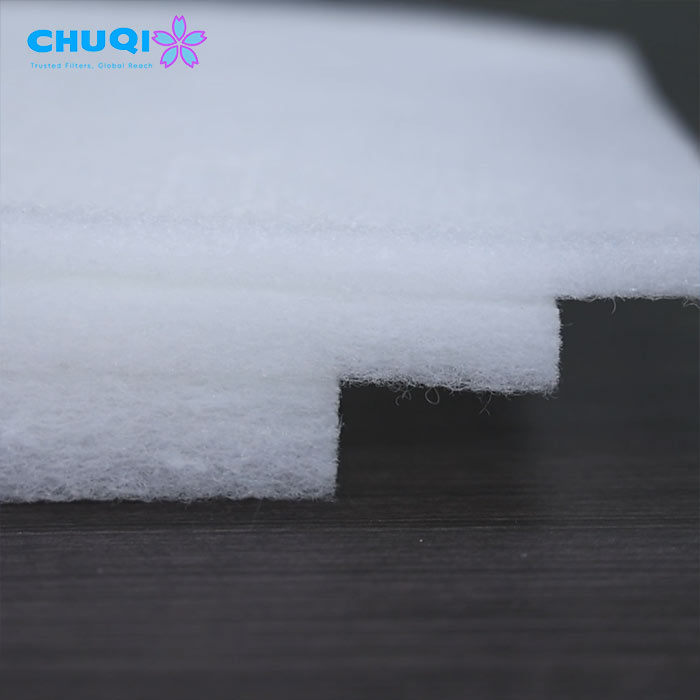
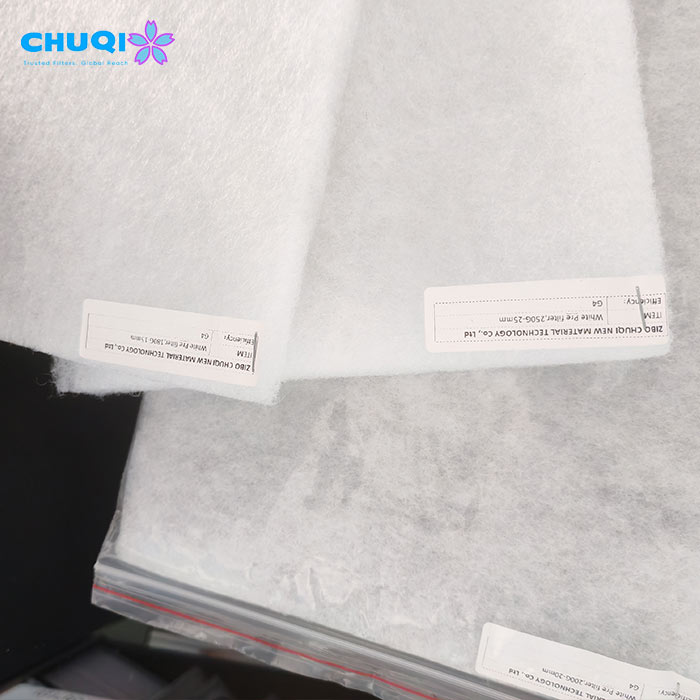
Why Does Pressure Drop Increase as G4 Filter Media Loads with Dust?
Pressure drop is the difference in air pressure between the upstream and downstream sides of filter media. It reflects the resistance that air encounters as it passes through the material.
When G4 filter media is clean, air flows through interconnected spaces between fibers. During operation, airborne particles are captured on fiber surfaces and within the media structure. As dust accumulates, these spaces become smaller or partially blocked, making it harder for air to pass through.
This is why pressure drop generally increases as dust loading progresses.
How Dust Accumulation Changes Airflow
Dust does not always form a uniform layer on the surface of G4 filter media. Depending on the fiber arrangement, particle characteristics, and airflow conditions, particles may collect on the surface, penetrate into the media, or accumulate in different regions.
As loading continues:
Dust gradually occupies open spaces between fibers.
Airflow paths become narrower and more restricted.
Local airflow resistance increases.
The pressure difference across the media generally becomes higher.
The loading pattern also matters. If dust accumulates mainly near the upstream surface, airflow may become restricted relatively quickly. If the media structure distributes particles more evenly throughout its depth, the available dust-holding space may be used more effectively.
For this reason, two G4 filter media products with similar initial pressure drops may behave differently after extended dust exposure.
Does Higher Pressure Drop Mean Lower Filtration Efficiency?
Not necessarily.
As dust accumulates, the existing dust layer may capture additional particles, including particles that could otherwise pass through the clean media. This can temporarily increase filtration efficiency for certain particle sizes.
However, this does not mean that increasing pressure drop is always beneficial.
A heavily loaded filter can consume more fan energy, reduce airflow in systems with limited fan capacity, and eventually exceed the allowable operating resistance. The actual filtration performance also depends on particle size, media structure, and the characteristics of the accumulated dust.
In practical HVAC applications, the objective is not simply to achieve the highest possible dust capture or allow pressure drop to rise indefinitely. It is to maintain an appropriate balance between filtration performance, airflow, and energy consumption.
For a closer look at how particle size affects capture performance, see our guide to air filter media particle size and capture efficiency
What Determines the Dust Holding Capacity of G4 Filter Media?
Dust holding capacity describes how much dust a filter retains before reaching a defined final pressure drop during a specified test.
It is influenced by more than the thickness or weight of the material. The internal fiber structure, dust characteristics, airflow, and loading conditions all affect how effectively the media uses its available filtration space.
Fiber Distribution and Media Structure
The arrangement and distribution of fibers influence both airflow resistance and dust retention.
A well-designed fiber structure provides interconnected airflow passages while offering sufficient opportunities for particles to contact and adhere to fibers.
If the structure is too open, smaller particles may pass through more easily, depending on the media’s capture mechanism. If it is too dense, the initial airflow resistance may be higher, and dust may block the available passages more quickly.
Progressive-density structures can help distribute particle capture through different layers of the media rather than concentrating all dust near the surface. This can improve the utilization of the available media depth, depending on the material design and operating conditions.
For G4 air intake filter media, the goal is to provide effective coarse-particle capture without creating unnecessary airflow resistance.
Dust Characteristics and Loading Behavior
Not all dust behaves in the same way.
Particle size, shape, density, moisture content, and surface properties can influence how dust interacts with filter fibers.
For example:
Coarse particles may be captured relatively close to the upstream surface.
Fine particles may penetrate further into the fiber structure before being captured.
Fibrous or irregular particles may become entangled with fibers and contribute to localized blockage.
Moist or sticky dust may adhere more strongly and restrict airflow passages differently from dry dust.
This explains why the same G4 filter media can show different dust-loading behavior in different industrial environments.
A filter operating in a relatively clean HVAC intake system may accumulate dust more gradually than one exposed to heavy outdoor dust, industrial particles, or process-related contamination.
How Airflow and Dust Concentration Affect Dust Loading
Airflow determines how much air passes through the filter over time, while dust concentration determines how much airborne particulate matter enters the system.
A simplified estimate of the incoming dust mass is:
Dust mass entering the filter = Dust concentration × Airflow rate × Operating time
However, not all incoming dust is retained by the media. The actual captured amount also depends on particle capture efficiency.
A simplified estimate is:
Captured dust mass ≈ Dust concentration × Airflow rate × Operating time × Capture efficiency
For these calculations, the units must be consistent. For example, dust concentration in mg/m³, airflow in m³/h, and operating time in hours produce a dust mass in milligrams.
These formulas provide a basic estimate of dust exposure. They do not replace standardized dust holding capacity tests, because actual loading behavior also depends on particle distribution, media structure, and test conditions.
In real applications, a higher airflow rate or greater incoming dust concentration can accelerate dust accumulation. This may cause the filter to reach its operating pressure drop limit sooner, even when the media itself has not changed.

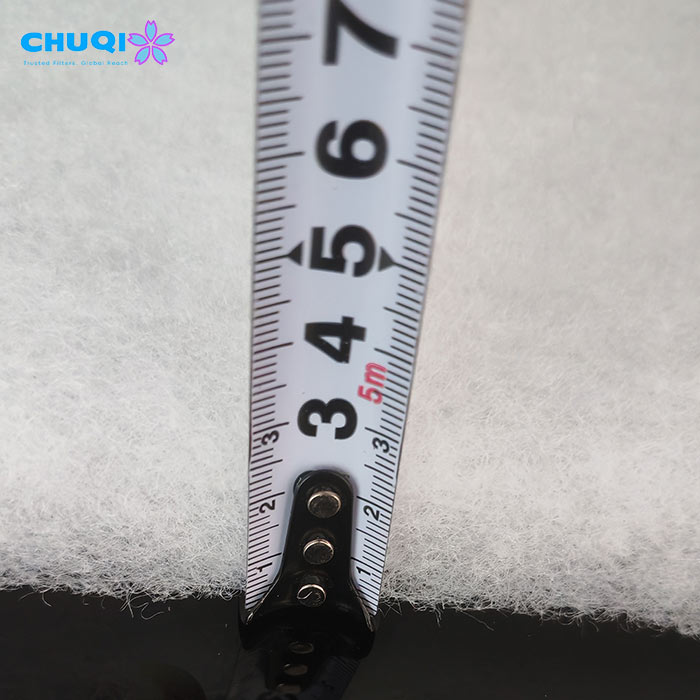
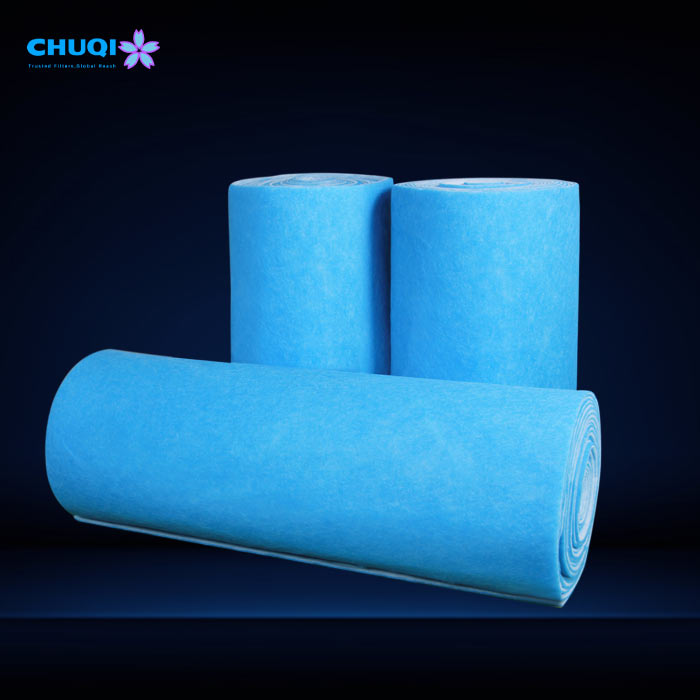
Why Do Some G4 Filter Media Have a Longer Service Life?
Two G4 filters may have the same nominal filtration grade but perform differently during operation. Their service life depends on how much dust they can retain, how evenly that dust is distributed, and how quickly airflow resistance increases.
Initial Pressure Drop vs. Loaded Pressure Drop
Initial pressure drop describes the airflow resistance of clean filter media at a specified airflow rate or face velocity.
Loaded pressure drop describes the resistance after dust has accumulated.
A lower initial pressure drop can reduce airflow resistance when the filter is new, but it does not automatically mean the filter will last longer.
For example, one media may have a very open structure and low initial resistance but limited dust retention under a particular loading condition. Another may begin with slightly higher resistance but maintain a more gradual pressure drop increase as dust accumulates.
The second media could offer a longer operating period before reaching the system’s replacement limit.
This is why evaluating G4 filter media based only on its clean-state pressure drop can lead to an incomplete assessment.
Dust Distribution Across the Media
How dust is distributed within the media has a direct influence on loading behavior.
When particles accumulate mainly in a small surface area, local airflow passages can become blocked quickly. This may cause a rapid increase in pressure drop, even if other areas of the media remain relatively clean.
A media structure that allows particles to distribute more effectively through its depth can make better use of its available filtration volume.
However, this behavior is influenced by the relationship between fiber distribution, particle characteristics, and airflow. A progressive-density structure alone does not guarantee longer service life; its performance must be evaluated under relevant operating or test conditions.
Operating Conditions and Service Life
Actual G4 filter media service life is determined by the operating environment and the filtration system’s allowable resistance.
Important influences include:
Dust concentration: Higher airborne dust levels generally increase the rate of loading.
Airflow rate: Greater airflow can increase the total volume of dust-bearing air passing through the media.
Operating hours: Longer daily operation increases cumulative dust exposure.
Humidity and moisture: Moisture can change particle adhesion and loading behavior, particularly in environments with sticky or hygroscopic dust.
System pressure drop limit: A filter may need replacement when its resistance reaches the operating limit, even if some dust-holding capacity remains.
For this reason, laboratory dust holding capacity should be treated as a comparative performance indicator rather than a direct prediction of how many weeks or months a filter will last in service.
How to Interpret G4 Filter Media Pressure Drop and Dust Holding Capacity Test Results
Test data helps buyers and filter manufacturers understand how G4 filter media behaves under controlled conditions. However, individual values should not be interpreted in isolation.
Three measurements are particularly useful: initial pressure drop, final pressure drop, and dust holding capacity.
Initial Pressure Drop
Initial pressure drop measures the resistance of clean media under a defined airflow condition.
It is useful for evaluating how much resistance the media creates before dust loading begins.
When comparing different materials, the airflow rate or face velocity must be the same. A pressure drop measured at a lower airflow cannot be fairly compared with a result obtained at a higher airflow.
For filter manufacturers, this measurement also helps assess the airflow resistance contribution of the media used in the finished filter.
Final Pressure Drop
Final pressure drop is the specified resistance endpoint used in a dust loading test.
The test continues until the media reaches this defined pressure drop, at which point the accumulated dust mass can be measured.
It is important to distinguish this laboratory endpoint from the actual replacement threshold in an HVAC system.
A real filtration system may use a different operating limit depending on fan capacity, required airflow, energy consumption, and equipment design. Reaching the test final pressure drop does not automatically mean that every installed filter should be replaced at the same value.
Dust Holding Capacity
Dust holding capacity is the mass of dust retained by the media before reaching the specified final pressure drop during the test.
A higher value can indicate that the media retains more dust under the same test conditions.
However, comparisons are meaningful only when the test method, dust type, airflow conditions, sample dimensions, and final pressure drop are comparable.
Dust holding capacity should also be considered alongside initial pressure drop and filtration efficiency. A high dust holding capacity figure alone does not describe the complete operating performance of a filter.
Why Airflow Matters When Comparing Pressure Drop
Airflow has a direct influence on pressure drop.
As airflow through a filter increases, air must pass through the media at a higher velocity. This generally increases the resistance measured across the material.
For this reason, pressure drop values should always be interpreted alongside their corresponding airflow rate or face velocity.
For example, a media sample showing 20 Pa at one airflow condition cannot automatically be considered better or worse than another sample showing 15 Pa at a different airflow condition.
For meaningful comparisons, the test conditions must be consistent.
How to Balance Pressure Drop, Dust Holding Capacity and Service Life
Choosing G4 filter media involves more than looking for the lowest initial pressure drop or the highest dust holding capacity.
These performance characteristics work together. A material that offers low clean-state resistance but loads rapidly may not provide the best long-term operating value. Similarly, a material with high dust retention may still be unsuitable if its airflow resistance is too high for the application.
Why Low Initial Resistance Is Not the Only Goal
Low initial pressure drop is useful because it reduces the resistance introduced by a clean filter.
However, the more important question for long-term operation is how pressure drop changes as dust accumulates.
A media that maintains a more gradual pressure drop increase may provide a better balance between airflow and operating life, depending on the system conditions.
This is why both clean and dust-loaded performance should be considered when evaluating G4 filter media.
How Media Performance Affects Operating Costs
Filter resistance influences fan energy consumption.
As pressure drop increases, a ventilation system may require more fan power to maintain the desired airflow. In systems with limited fan capacity, airflow may instead decrease as the filter becomes more heavily loaded.
This affects more than the filter replacement cost. It can also influence energy consumption, ventilation performance, and maintenance frequency.
A suitable G4 filter media helps balance:
Initial airflow resistance.
Dust holding capacity.
Pressure drop development during loading.
Required filtration performance.
Expected operating conditions.
For distributors, these characteristics help explain product differences beyond nominal filtration grades. For filter manufacturers, they provide a more complete basis for evaluating media performance in finished filters.
What Matters When Selecting G4 Media for Different Applications
Different applications place different demands on filter media.
For general HVAC intake systems, stable airflow and effective coarse-particle capture are important. In industrial air intake applications, higher dust concentrations may make dust holding capacity and loading behavior more significant.
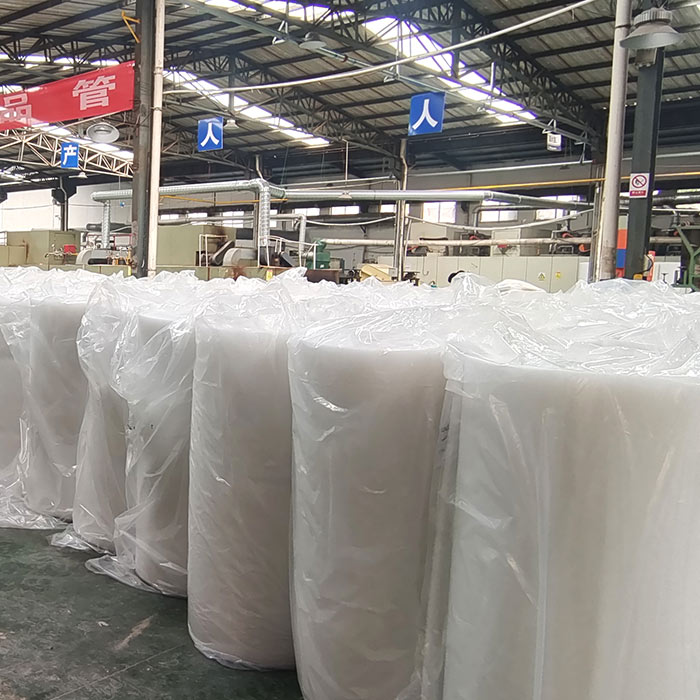
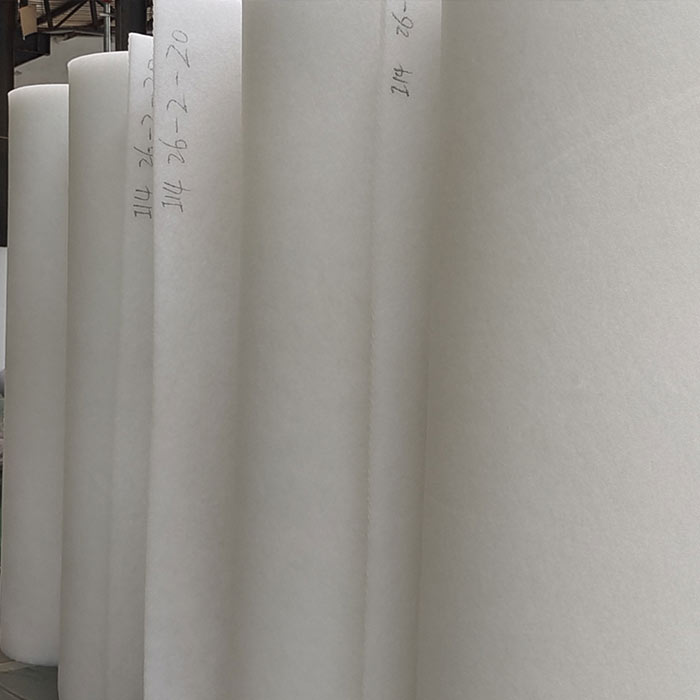
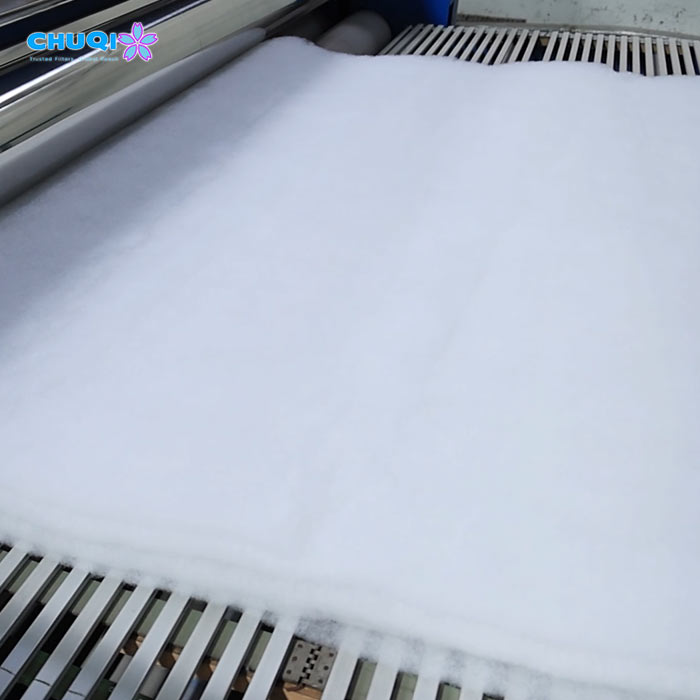
For filter manufacturers, consistent media properties are important not only for filtration performance but also for production repeatability. Variations in thickness, fiber distribution, and airflow resistance may affect pleating, cutting, media handling, and the consistency of finished filters. A stable supply of media with consistent product characteristics helps support more predictable downstream manufacturing.
Choosing G4 Filter Media for Your Application
Understanding dust loading, pressure drop, and dust holding capacity helps distinguish between G4 filter media products that may appear similar when clean but behave differently during operation.
For HVAC operators, these factors help explain changes in airflow resistance and filter replacement intervals. For distributors and filter manufacturers, they provide a more useful basis for comparing media performance and selecting materials for different applications.
Chuqi supplies air filter media manufactured in its own factory, with options for different filtration applications and customized product requirements. Visit our air filter media product range or contact our team to discuss G4 media for your application.
Frequently Asked Questions About G4 Filter Media
Why does G4 filter media pressure drop increase over time?
Pressure drop generally increases because accumulated dust occupies spaces between fibers and restricts airflow passages. The rate of increase depends on the media structure, particle characteristics, airflow rate, and incoming dust concentration.
What is the dust holding capacity of G4 filter media?
Dust holding capacity is the amount of dust retained by filter media before reaching a specified final pressure drop during a defined test. It is a useful indicator for comparing dust-loading performance under consistent test conditions, but it does not directly represent actual service life.
Does lower initial pressure drop mean longer G4 filter media service life?
No. Lower initial pressure drop means that clean media creates less airflow resistance under the measured conditions. It does not indicate how quickly pressure drop will increase during dust loading. Dust holding capacity and loaded pressure drop behavior are also important.
What factors affect the service life of G4 filter media?
Service life is influenced by incoming dust concentration, airflow rate, operating hours, particle characteristics, humidity, media structure, and the filtration system’s allowable pressure drop. Filters exposed to heavier dust loads generally reach their operating limits sooner.
Does thicker G4 filter media always have higher dust holding capacity?
No. Thickness can provide more space for dust retention, but it does not determine capacity by itself. Fiber distribution, density, airflow resistance, and dust penetration behavior also affect how effectively the media uses its available depth.
Does dust accumulation improve G4 filter media filtration efficiency?
Dust accumulation may increase the capture of certain particles as a dust layer develops on the media. However, this can also increase pressure drop and airflow resistance. The overall effect depends on particle size, media structure, and loading conditions, so increasing dust accumulation should not be treated as a reliable way to improve filter performance.