Finding a high-quality industrial air filter supplier in China comes down to five essential benchmarks:
1) In-house filter media production for total quality control and direct cost savings;
2) Supply chain stability with guaranteed raw material stock;
3) Full compliance with ISO 16890, EN 1822, and UL 900 standards;
4) Agile OEM/ODM engineering featuring 3–7 day quick-turn sampling; and
5) Transparent commercial terms and flexible pricing. Key regional hubs in Shandong, Jiangsu, Zhejiang, and Guangdong offer specialized manufacturing capabilities for international procurement.
Whether you are sourcing replacement elements for heavy dust collection systems, automotive paint spray booths, gas turbines, or pharmaceutical cleanrooms, this guide outlines the key technical and commercial benchmarks to evaluate Chinese filtration suppliers.
Primary Categories of Industrial Air Filtration Products
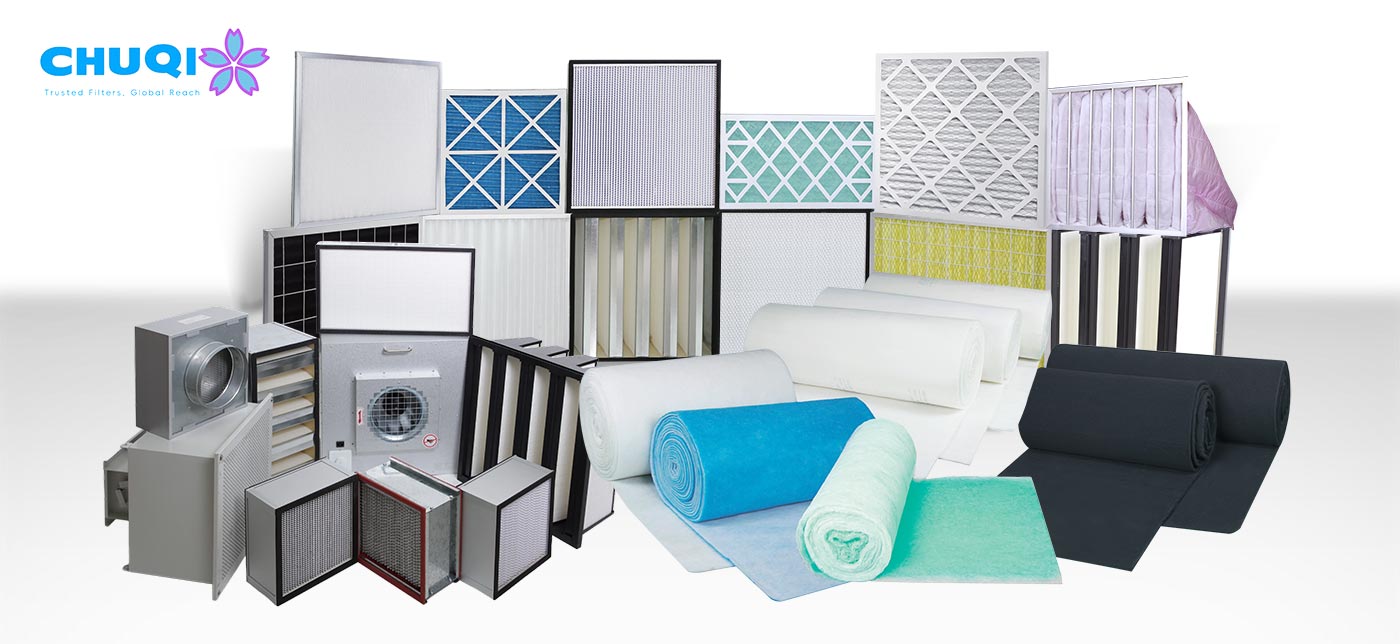
When defining technical requirements for your application, Chinese industrial filter manufacturers typically support four core product categories:
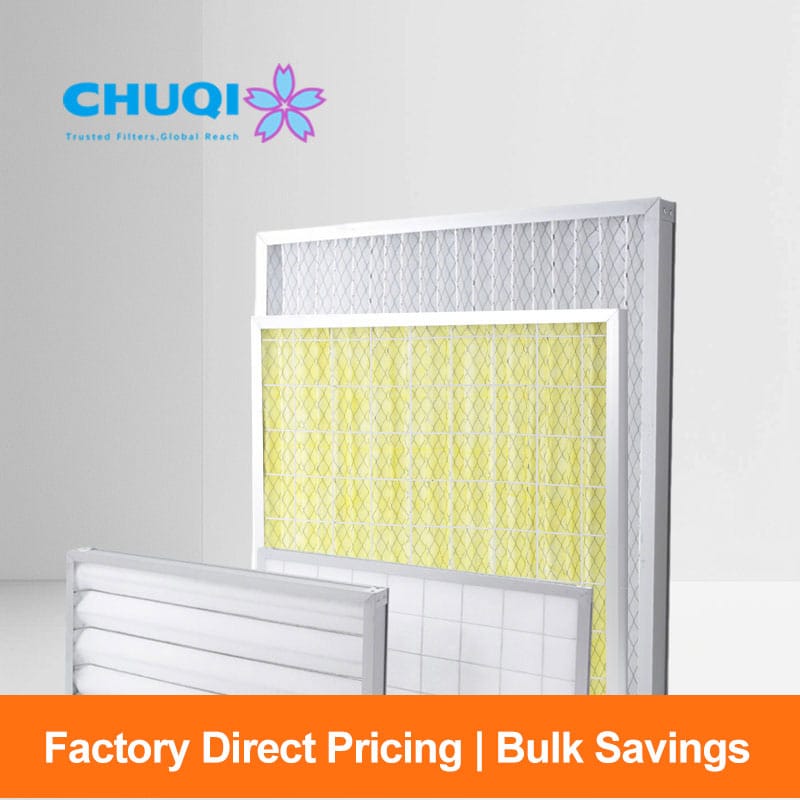
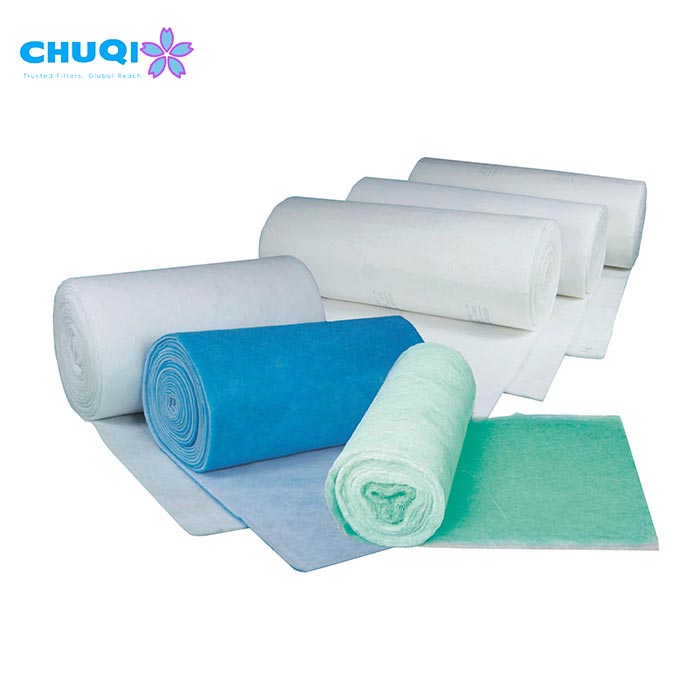
Primary Efficiency Filters & Filter Media: Washable intake filter (air intake media), ceiling diffusion filter media (spray booth ceiling cotton), fiberglass floor paint arrestor media (floor cotton), pleated primary panel filters, and skeleton panel pre-filters (G1 to G4 / ISO Coarse).
Medium-Efficiency Air Filters: Synthetic nonwoven pocket/bag filters, rigid cell filters, medium separator filters, pleated medium-efficiency filters, and mini-pleated filter (M5 to F9 / ePM10 to ePM1).
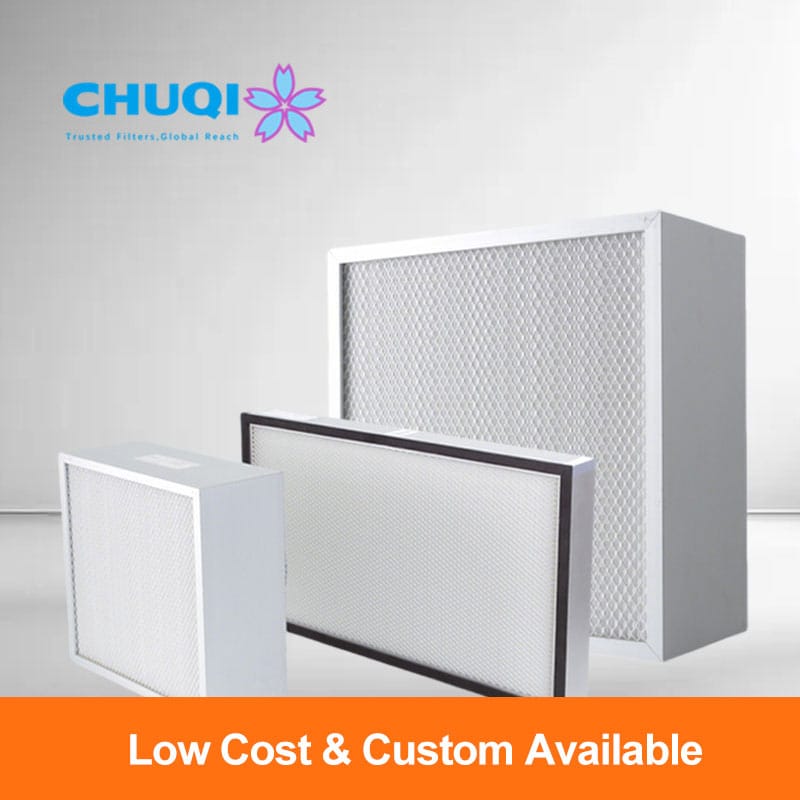
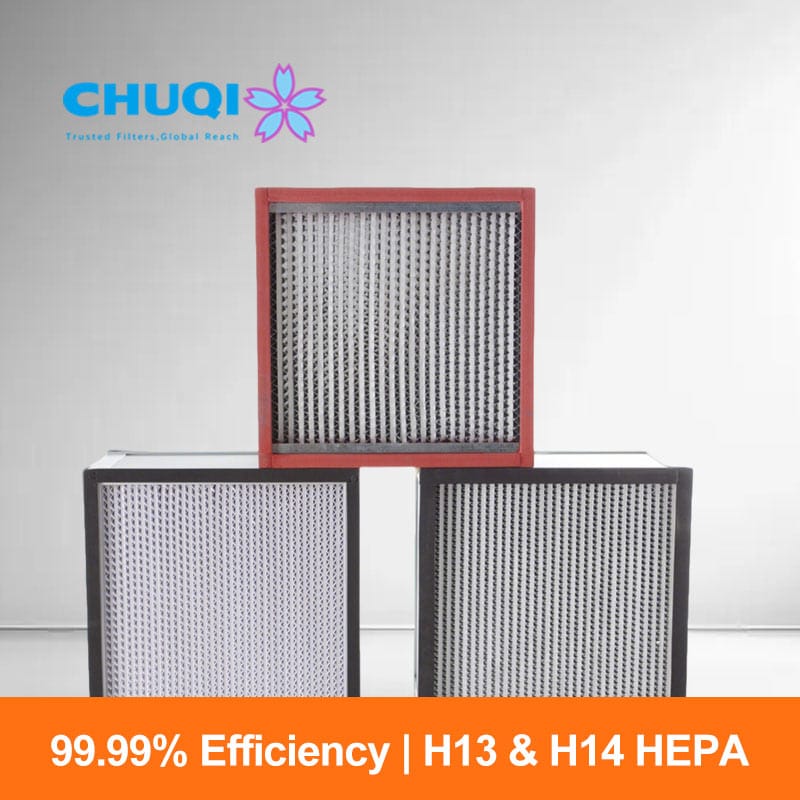
High-Efficiency (HEPA/ULPA) Filters & Units: Mini-pleat HEPA filters, deep-pleat separator HEPA filters, gel-seal filters, knife-edge filters, high-temperature HEPA filters, and Fan Filter Units (FFU) rated from H13 to U17 for cleanrooms and critical processing environments.
Specialized & High-Temperature Filtration Media: Reticulated polyurethane filter foam sponge (10–60 PPI), activated carbon filter media, high-temperature fiberglass filters (250°C to 300°C), micro glass fiber paper, and PTFE membrane dust collector elements.
Comprehensive B2B Vendor Evaluation Framework
Evaluating a long-term supply chain partner involves looking beyond basic price quotes. Global procurement teams focus on five core evaluation pillars:
In-House Media Manufacturing Capability: Prioritize factories with proprietary filter media production lines (PTFE membrane, synthetic nonwovens, fiberglass, and pocket media). This guarantees consistent GSM weight, uniform pore distribution, precise air permeability, and direct factory cost efficiency.
Supply Chain & Capacity Resilience: Verify robust monthly production capacity, safety stock levels for essential raw materials (media rolls, galvanized steel, aluminum extrusions), agile scheduling systems for urgent requests, and predictable lead times for bulk orders.
Certifications & International Standard Compliance: Ensure full adherence to ISO 9001, ISO 14001, and ISO 45001 management protocols. Look for UL 900 flame resistance compliance for North American standards, CE, RoHS, and REACH compliance for European markets, as well as verified third-party factory audits (SGS, TÜV Rheinland, or Bureau Veritas).
OEM/ODM Engineering & Customization Support: Demand precise CAD/STEP drawing interpretation, rapid sample turnaround (typically within 3–7 days), private label printing, neutral custom packaging, moisture-proof vacuum packing, and custom shipping mark/barcode labeling.
Commercial Terms & Financial Flexibility: Evaluate suppliers on flexible MOQs for initial trial orders, transparent price stability agreements against raw material fluctuations, and adaptable payment terms (T/T, L/C, or open account options for established partners).
The Operational Advantages of In-House Filter Media Production
Partnering with an integrated supplier that manufactures both raw filter media and finished filter assemblies delivers distinct commercial and technical benefits over pure assembly operations:
Uncompromising Quality Control: Direct oversight of fiber distribution, initial airflow resistance, and dust-holding capacity right from the media roll phase.
Competitive Factory-Direct Pricing: Elimination of middleman markups on media rolls directly translates to lower procurement costs for finished filters.
Custom Technical Engineering: Ability to tailor specific media parameters—such as flame retardancy (UL 900 class), hydrophobic properties, or antistatic treatments—to match unique field requirements.
Supply Chain Logistics & Regional Manufacturing Hubs
Navigating China’s industrial filtration supply chain involves understanding key regional manufacturing advantages:
Shandong & Northern China: Recognized for large-scale production of specialized industrial filter media rolls (ceiling diffusion media, paint stop fiberglass), heavy dust collection systems, and high-temperature filtration materials.
Eastern China (Jiangsu, Zhejiang): Known for precision cleanroom HEPA/ULPA manufacturing, automated filter assembly, and immediate proximity to Ningbo and Shanghai ports.
Southern China (Guangdong): Specialized in commercial HVAC filtration units, air handler components, and rapid export logistics via Shenzhen and Guangzhou.
Frequently Asked Questions (FAQ for Global Procurement)
Q1: What is the difference between ISO 16890 and EN 779 standards for air filters?
ISO 16890 is the current global testing standard that evaluates filter performance based on particulate matter size (ePM1, ePM2.5, ePM10), replacing the older European EN 779 standard (G1-F9 classification) to provide more realistic real-world efficiency measurements.
Q2: How can I verify if a Chinese air filter factory is a real manufacturer or a trading company?
Request a live virtual factory audit or video tour showing raw filter media production lines, continuous pleating equipment, and leak testing stations. Authentic manufacturers can also provide batch-specific Certificate of Analysis (COA) test reports and customized CAD technical drawings.
Q3: What is the typical lead time for custom OEM industrial air filter samples?
For non-standard sizes or custom frame configurations, reliable Chinese manufacturers typically produce and dispatch verified engineering samples within 3 to 7 working days upon technical drawing approval.
Building a resilient supply chain for industrial air filters requires looking beyond basic trading intermediaries. Verifying a manufacturer’s in-house media production capability, supply chain resilience, compliance standards, and engineering support ensures long-term operational reliability and maximum cost-efficiency.
Need customized industrial air filters, bulk filter media rolls, or an OEM quotation? 【Contact our technical sales team today】 to request datasheets, product catalogs, or sample testing for your project.