
Choosing flame-retardant spray booth ceiling filters requires more than checking a fire-rating label. DIN 53438 F1 and UL 900 address fire-related performance under defined test conditions, but neither designation alone establishes a filter’s operating-temperature limit, filtration efficiency, or suitability for every paint-baking process.
For spray booth operators, HVAC engineers, maintenance teams, and industrial filter buyers, the key is to evaluate three separate requirements:
Fire behavior: Which test method or classification does the project require?
Temperature resistance: Can the exact filter construction tolerate the conditions at its installed location?
Airflow performance: Does the media provide the required air distribution and acceptable pressure drop?
This guide explains how DIN 53438 F1 and UL 900 differ, how to interpret supporting documentation, and what to check before selecting replacement spray booth ceiling filter media.
What Does DIN 53438 F1 Mean for Spray Booth Ceiling Filters?
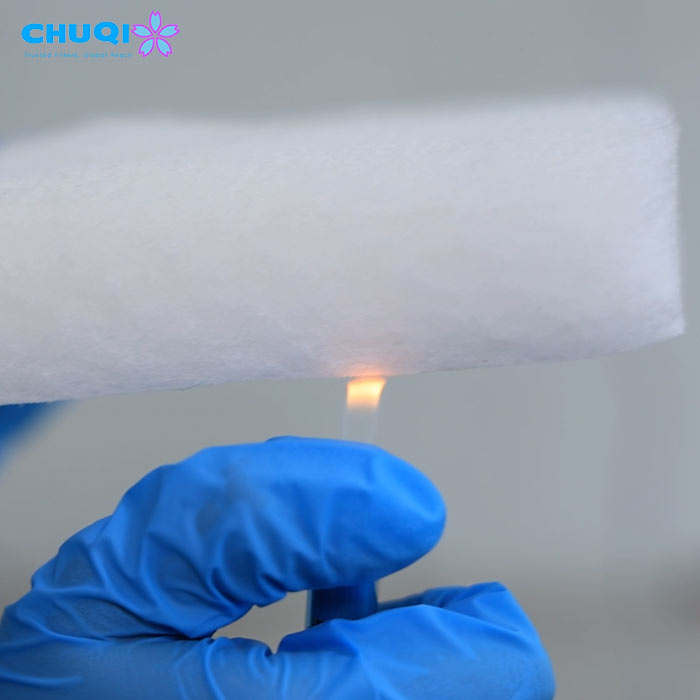
DIN 53438 addresses the response of combustible materials to exposure to a small flame. DIN 53438-3 specifically concerns surface ignition.
In air filtration, an F1 designation is commonly associated with self-extinguishing behavior under the applicable test conditions. However, buyers should verify the exact test method, reported result, and material construction covered by the supporting documentation.
An F1 result should not be interpreted as proof that a filter is noncombustible, fireproof, or safe under every fire scenario. It also does not establish a continuous operating-temperature rating.
When evaluating DIN 53438 F1 filter media, check whether the documentation covers the supplied product construction, including relevant fibers, binders, tackifiers, and backing materials. If the supplied material differs from the tested specimen, confirm whether the change remains within the documented test scope.
For buyers: Use DIN F1 evidence to evaluate the specified fire-behavior requirement. Assess temperature resistance and airflow performance separately.
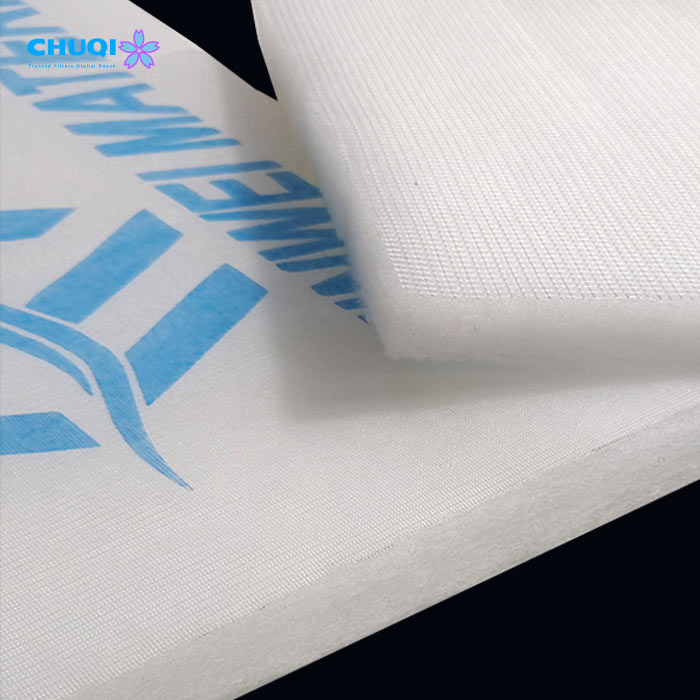
DIN 53438 F1 vs. UL 900: What Is the Difference?
UL 900 addresses the combustibility and smoke generation of air filter units and also covers media intended for assembly into those units. Its test method uses a defined duct arrangement and airflow, with flame exposure applied to the filter. Unlike a small-flame surface-ignition test, it evaluates filter behavior under a different set of test conditions.
UL 900 classification testing applies to clean filters. Accumulated contaminants can affect combustibility and smoke generation, so a clean-filter result should not be treated as a complete description of performance under every service condition.
The main differences are summarized below.
| Comparison point | DIN 53438 F1 | UL 900 |
|---|---|---|
| Primary focus | Response to small-flame exposure under the applicable DIN test conditions | Combustibility and smoke generation of air filter units |
| Test approach | Relevant small-flame test method, depending on the applicable part | Defined duct arrangement, airflow, and flame exposure |
| Documentation to check | Applicable standard part, test result, and covered material construction | Classification or certification details, covered product, and issuing organization |
| Establishes filtration efficiency? | No | No |
| Establishes continuous operating temperature? | No | No |
| Automatically interchangeable? | No | No |
A specification stating “DIN F1 or equivalent” should therefore be clarified before product substitution. Determine whether the project requires a particular test method, a recognized third-party certification, or an alternative approved by the responsible project authority.
What About UL 900 Class 1 and Class 2?
Older filter specifications may refer to UL 900 Class 1 or Class 2. When reviewing these requirements, distinguish historical product documentation from the current standard edition, applicable regulations, and the evidence accepted for the specific installation.
UL 900 Edition 8 is listed as active in the UL Standards & Engagement standards catalog. However, legacy regulatory wording has not necessarily disappeared.
For example, A Class 2 combustibility reference for clean filters used in conventional dry-type spray booth overspray collectors. This provision concerns exhaust air filters, not a universal specification for every supply-air ceiling filter.
If a US project specification still requires “UL 900 Class 2,” do not automatically remove that requirement or assume that a newer product description satisfies it. Ask the booth manufacturer, safety professional, or responsible authority which current test evidence or product classification is acceptable.
The correct decision depends on the applicable requirement and the exact filter application.
Flame Retardancy Is Not the Same as Heat Resistance
A flame-retardant rating does not establish whether spray booth ceiling filter media can withstand a particular paint-baking cycle.
Temperature suitability depends on the exact material construction and the conditions experienced at the filter’s installed location. Relevant factors include fiber type, binder, tackifier, backing, exposure duration, and the operating mode of the booth.
Before selecting replacement ceiling diffusion media, establish:
Actual filter-location temperature: Consider the temperature during each operating mode, not only the nominal oven setpoint.
Exposure duration: Determine whether the requirement involves continuous exposure, intermittent exposure, or a defined heating and cooling cycle.
Media construction: Confirm whether the complete supplied construction is suitable for the intended conditions.
Manufacturer’s temperature limits: Obtain documented limits for the specific model and application.
Booth requirements: Follow the equipment manufacturer’s installation, airflow, and operating instructions.
For example, a replacement filter may have documented F1 performance but no stated temperature limit. That information alone is insufficient to approve the product for a bake cycle.
Likewise, a flame-retardant claim does not independently establish low emissions, dimensional stability, zero shrinkage, or a particular service life. Each requires its own supporting evidence.
Selection principle: Evaluate fire behavior, temperature capability, and filtration performance as separate requirements.
Ceiling Diffusion Media vs. Exhaust Paint Arrestors
Spray booth filters should be selected according to their position and function in the airflow system.
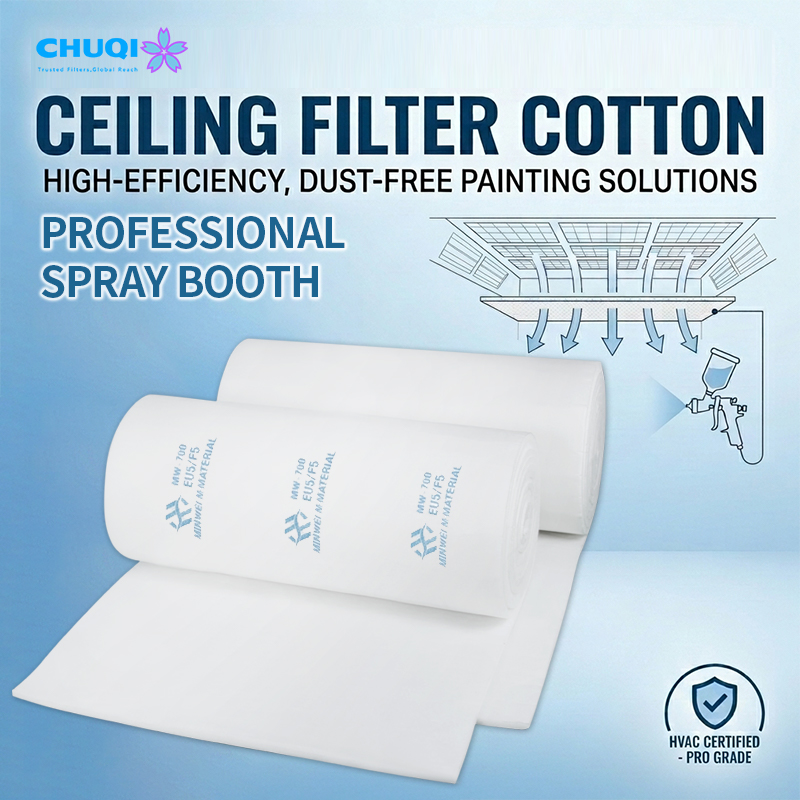
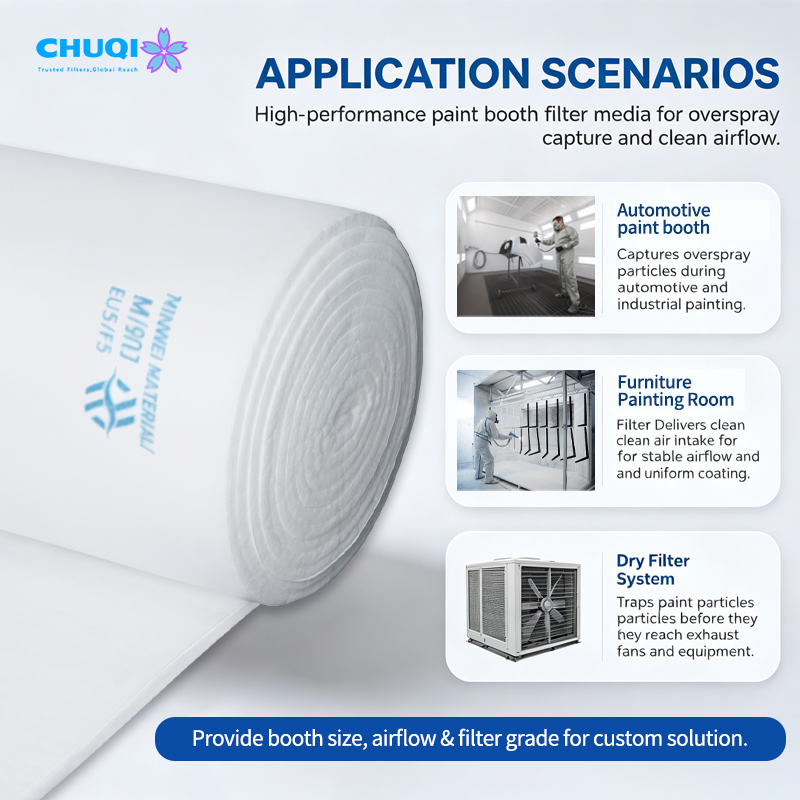
Ceiling diffusion media is installed in the supply-air path to help distribute incoming air and capture airborne particles before the air enters the work area. Depending on the booth design, the media may be installed in a ceiling plenum or a dedicated retaining arrangement.
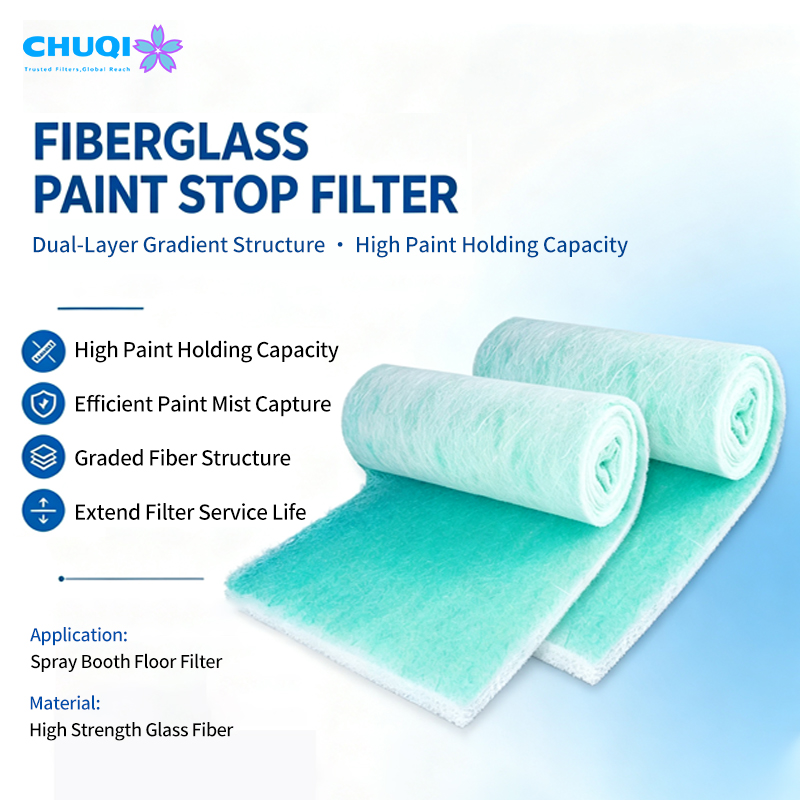
Exhaust paint arrestors are installed in the exhaust path to capture overspray leaving the painting zone. They face different contamination conditions and serve a different purpose.
These products should not be treated as interchangeable simply because both are described as spray booth filters.
Before requesting a replacement, identify whether the existing filter is installed in the:
Supply-air ceiling or diffusion section
Intermediate intake or prefiltration stage
Exhaust overspray collection section
This basic information helps prevent specification errors before dimensions, filtration performance, and fire-related documentation are compared.
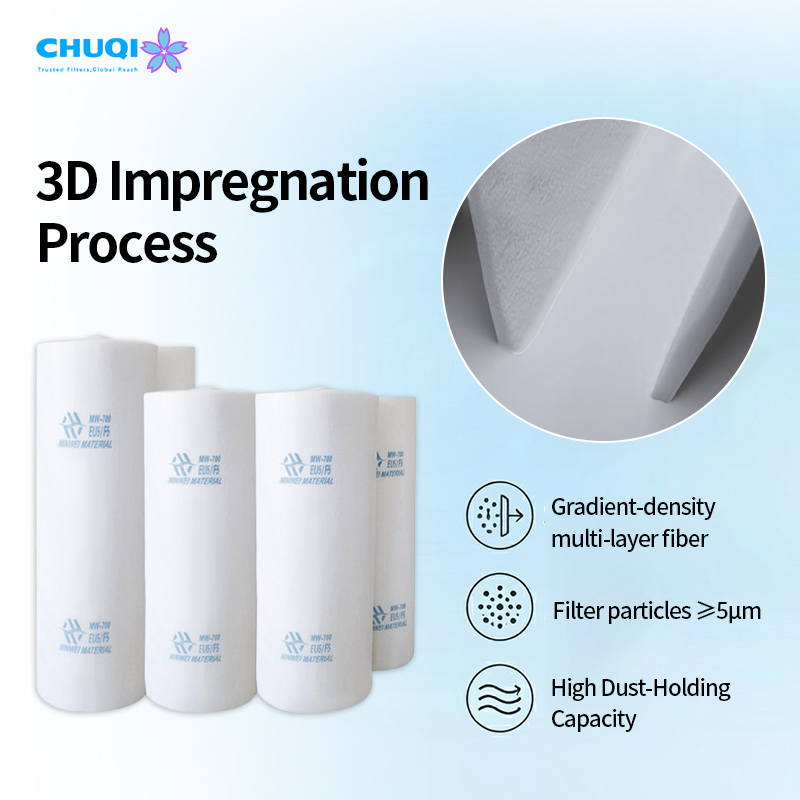
What Happens to Filter Performance After Loading?
A clean-filter fire classification does not describe every condition a filter may encounter during service.
UL 900’s classification testing applies to clean filters because collected material can affect combustibility and smoke generation. For spray booth operators, this reinforces the importance of routine inspection and replacement.
A fire-rating label does not eliminate the need to monitor filter condition or follow the booth manufacturer’s maintenance procedures.
Airflow resistance is another important consideration. Establish a clean-filter pressure-drop baseline at the specified operating airflow after installation. Subsequent readings should be compared under reasonably consistent operating conditions because changes in fan speed or airflow can affect the measured pressure drop.
During inspection, check for:
Excessive contamination or uneven loading
Sagging, tears, or other media damage
Gaps around the filter or retaining frame
Changes in airflow distribution
Differential pressure approaching the limit specified for the particular system
Do not assume that a media manufacturer’s published final resistance is automatically the correct operating limit for every spray booth. The applicable limit should be established from the equipment requirements and the intended operating conditions.
For additional installation and maintenance guidance, see the spray booth ceiling filter guide.
How to Select Replacement Spray Booth Ceiling Filters
When comparing replacement products, evaluate the complete specification rather than choosing by thickness, basis weight, or fire-rating wording alone.
| Selection factor | What to verify | Why it matters |
|---|---|---|
| Filter position | Supply ceiling, intake, or exhaust | Confirms that the media is designed for the intended duty |
| Fire-related requirements | Applicable test method, covered construction, and accepted documentation | Prevents unsupported equivalence claims |
| Temperature capability | Model-specific limit and exposure conditions | Separates heat suitability from fire-test results |
| Airflow resistance | Pressure drop at the relevant airflow or face velocity | Enables meaningful performance comparisons |
| Filtration performance | Test method and stated efficiency metric | Avoids comparing results measured on different bases |
| Dimensions and construction | Length, width, thickness, backing, and retaining arrangement | Helps confirm compatibility with the existing installation |
| Maintenance requirements | Inspection procedures and applicable replacement criteria | Supports reliable operation over the filter’s service life |
For example, two media products may both claim F1 performance but report pressure drop at different face velocities. Those figures cannot establish which product has lower resistance under the same operating conditions.
Similarly, a higher basis weight does not automatically mean higher filtration efficiency, better fire performance, or longer service life.
For a reliable comparison, request supporting information for the actual product construction and compare the available performance data at equivalent test conditions.
Frequently Asked Questions
Q: Does DIN 53438 F1 mean a ceiling filter cannot burn?
A: No. F1 describes performance under the applicable test conditions. It should not be interpreted as proof that a material is noncombustible or fireproof.
Q: Can DIN 53438 F1 replace UL 900?
A: Not automatically. The methods and evaluation conditions differ. Any proposed alternative should be accepted by the party responsible for the project specification.
Q: Does UL 900 prove that a filter is suitable for a paint-baking cycle?
A: No. UL 900 addresses combustibility and smoke generation under defined test conditions. It does not independently establish a continuous operating-temperature limit. Check the exact model’s temperature capability and the conditions at the installation location.
Q: Is a filter described as “tested to UL 900” necessarily UL certified?
A: No. Testing, classification, and certification are distinct. Verify the issuing organization, product scope, and documentation before making or accepting a certification claim.
Q: Does an F5 or M5 efficiency designation establish flame retardancy?
A: No. Filtration efficiency and fire behavior are separate properties. The applicable evidence for each must be evaluated independently.
Q: Which fire-related standard is required for an overseas spray booth project?
A: Start with the booth manufacturer’s specification, applicable local requirements, and the project authority’s acceptance criteria. A country name alone does not establish which test or certification is required. For US projects, distinguish supply-air ceiling media from exhaust overspray filters addressed by the relevant OSHA provisions.
Q: What information is needed to select a replacement ceiling filter?
A: Start with the installation position, existing filter reference or dimensions, required airflow, available pressure-drop data, operating-temperature conditions, and the specified fire-related requirement. The manufacturer’s documentation can then be checked against the intended application.
Find the Right Spray Booth Ceiling Filter Media for Your Application
Selecting a suitable spray booth ceiling filter replacement requires the right combination of fire-related evidence, temperature capability, airflow performance, filtration requirements, and installation compatibility.
CHUQI supports B2B buyers evaluating spray booth ceiling filter media for industrial applications. Start with your existing filter reference, dimensions, installation position, and available operating data. If the booth has a paint-baking cycle, include the temperature conditions at the filter location and the applicable equipment requirements.
Explore the spray booth ceiling filter media range to review relevant product options, or contact CHUQI by email to discuss your application.
For buyers sourcing media in roll formats or evaluating sizing and packaging options, see the ceiling filter roll sizing and packaging guide.
The goal is not simply to match a fire-rating label. It is to identify a filter construction supported by the appropriate documentation and suitable for the actual operating conditions.