The Ultimate Guide to Pleated Air Filters: MERV Ratings, Standards, and Selection for B2B Buyers

Air filtration plays a critical role in maintaining indoor air quality (IAQ), protecting HVAC equipment, and ensuring compliance with environmental standards across industrial and commercial facilities. Among the various filter designs available on the market, pleated air filters have become the industry standard for balanced performance, longevity, and cost-efficiency.

In this comprehensive guide, we address the core questions surrounding pleated air filters, break down what truly determines MERV ratings, compare different filter types, and outline key standards for selecting a reliable B2B supplier.

What Are Pleated Air Filters?

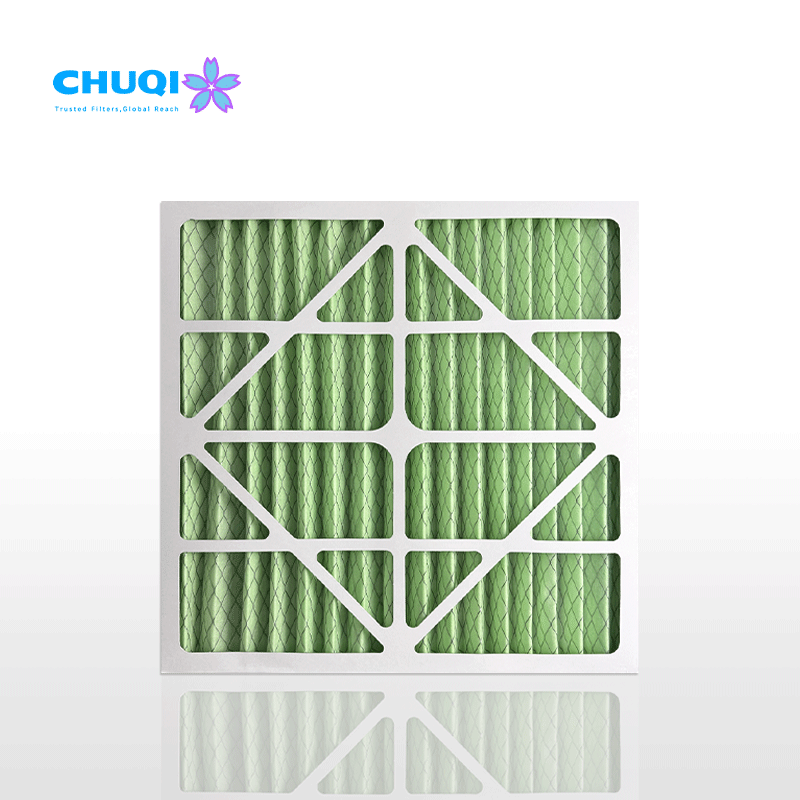
pleated air filter is an air filtration component constructed by folding synthetic, cotton, or fiberglass filter media into an accordion-like “V” shape (pleats) and securing it within a rigid frame (often cardboard, beverage board, or galvanized steel).

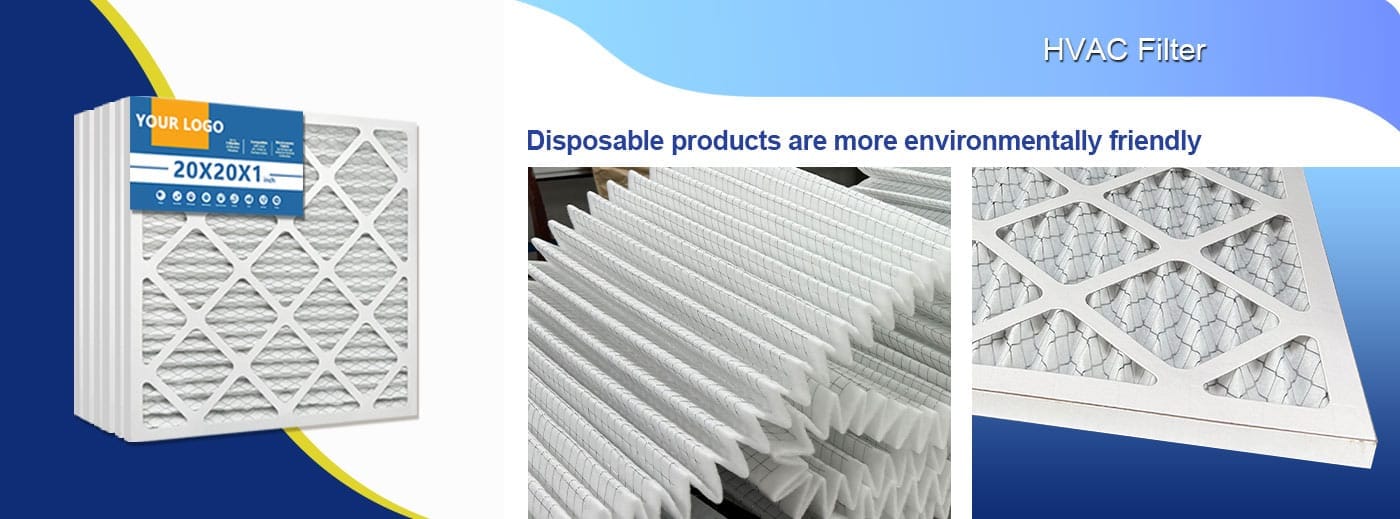
Unlike traditional flat-panel filters, the pleated design significantly increases the total surface area of the filter media within the same outer frame dimensions.

Expanding the surface area allows pleated filters to capture a higher volume of airborne contaminants—such as dust, pollen, mold spores, and pet dander—while keeping air resistance (pressure drop) low and extending the filter’s operational lifespan.

Disposable Hvac Panel Filter Media Pleats Structure

What Primarily Determines a Filter’s MERV Rating?

There is often confusion in the procurement market regarding what influences a filter’s MERV (Minimum Efficiency Reporting Value) rating.

The Core Factor: Fiber Performance

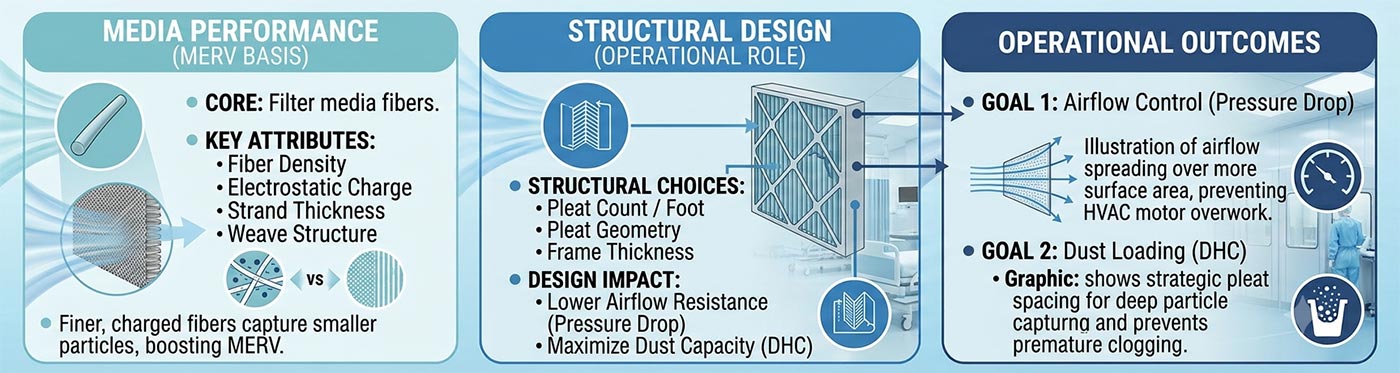
The MERV rating is primarily determined by the inherent performance of the filter media fibers—specifically fiber density, electrostatic charge, strand thickness, and weave structure. Finer, electrostatically charged synthetic fibers or high-density glass fibers capture smaller sub-micron particles, elevating the filter’s MERV rating.

The Role of Structural Design

Features such as pleat count (pleats per foot), fold geometry, and frame thickness are structural engineering choices. They do NOT directly dictate the MERV rating. Instead, structural engineering serves two key operational purposes:

  • Controlling Airflow Resistance (Pressure Drop): More surface area spreads out airflow, preventing the HVAC blower motor from overworking.

  • Maximizing Dust Holding Capacity (DHC): Strategic pleat spacing ensures deep particle loading without premature clogging.

hvac filter merv 8 vs merv 13 vs merv 16

Pleated Air Filters vs. Other Filter Types: Pros and Cons

To select the right filtration solution for your facility, it is essential to understand how pleated air filters compare to alternative filter designs:

Filter TypeProsConsIdeal Applications
Pleated Air Filters

• High surface area & dust capacity

• MERV ratings from MERV 8 to MERV 16

• Excellent balance of airflow & filtration

• Higher initial cost than flat fiberglass

• Requires precise size fitting

Commercial HVAC, industrial pre-filtration, cleanrooms, residential systems
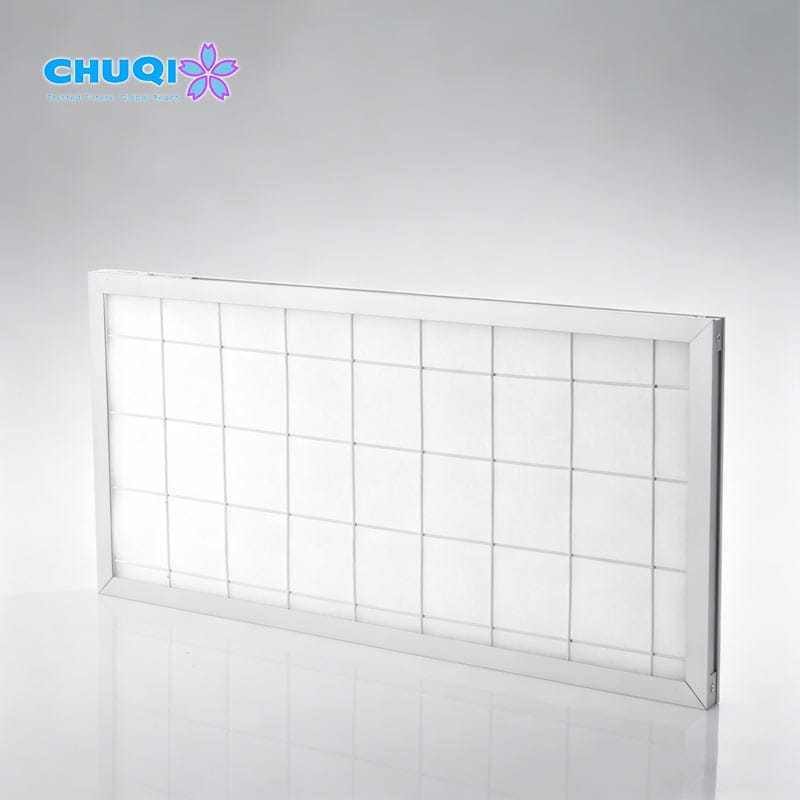
Flat Panel / Fiberglass Filters

• Very low initial unit cost

• Minimal airflow resistance

• Low efficiency (MERV 1–4)

• Captures only large debris

• Frequent replacement needed

Basic equipment protection, low-budget temporary setups
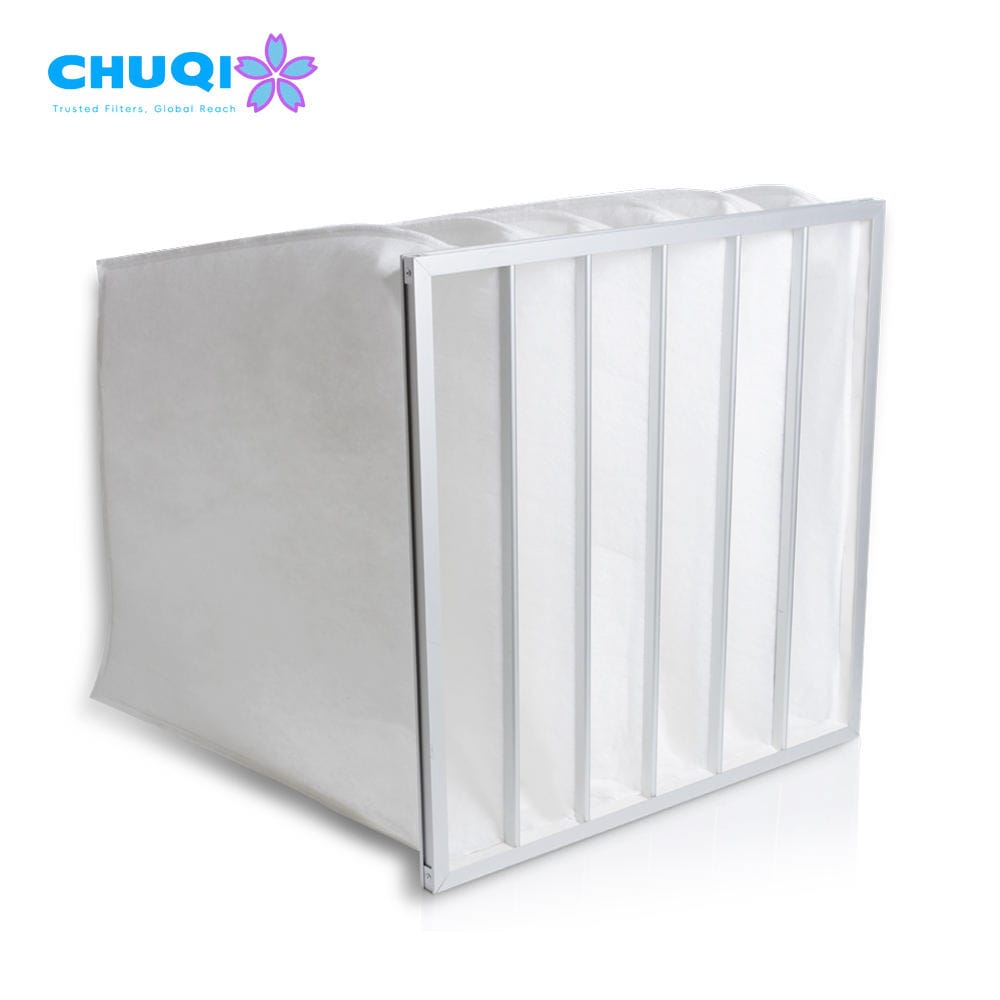
Pocket / Bag Filters

• Extreme dust holding capacity

• High airflow volume capability

• Deeper frame depth required

• Higher unit cost

• Difficult handling during disposal

Heavy-duty commercial HVAC, industrial exhaust, hospital secondary filtration

What Makes the “Best” Pleated Air Filter? International Compliance Standards

The “best” pleated air filter is not simply the one with the highest efficiency; it is the filter that matches your system’s airflow specifications while meeting recognized international testing and safety standards.

Key International Standards to Look For:

  1. ASHRAE 52.2 (North America): Defines the MERV scale (MERV 1 to 16) by measuring particle size removal efficiency for particles between 0.30 and 10 microns.

  2. ISO 16890 (Global Standard): The international standard replacing EN779. It classifies filters based on particulate matter size:

    • ePM1 (nano-particles, smoke, bacteria)

    • ePM2.5 (fine dust, combustion particles)

    • ePM10 (pollen, coarse dust)

    • ISO Coarse

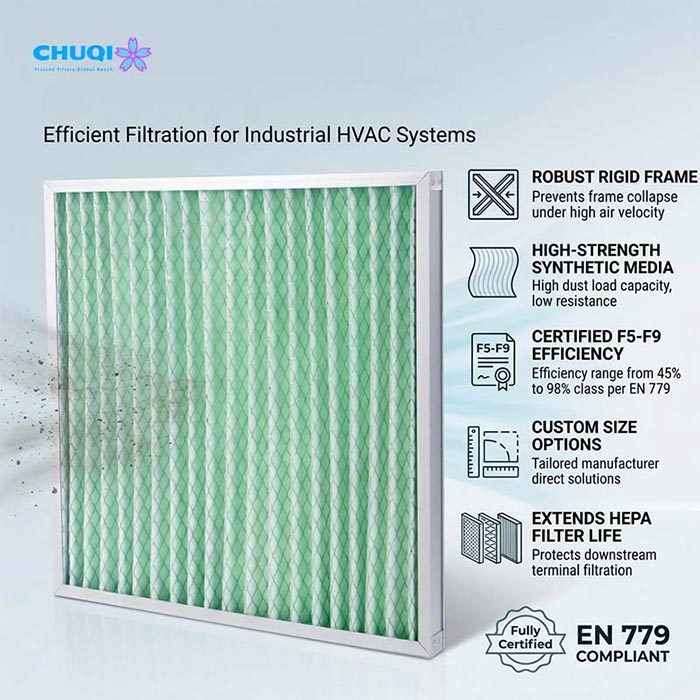
  3. EN 779 (European Standard – Historical reference): Classified filters from G1–G4 (Coarse) and M5–F9 (Medium/Fine).

  4. UL 900 (Fire Flammability Safety): Ensures the filter media and frame meet strict flammability standards, producing minimal smoke when exposed to flame.

Efficiency Classes & Common Applications

Selecting the correct efficiency rating prevents unnecessary energy consumption while ensuring adequate air purity:

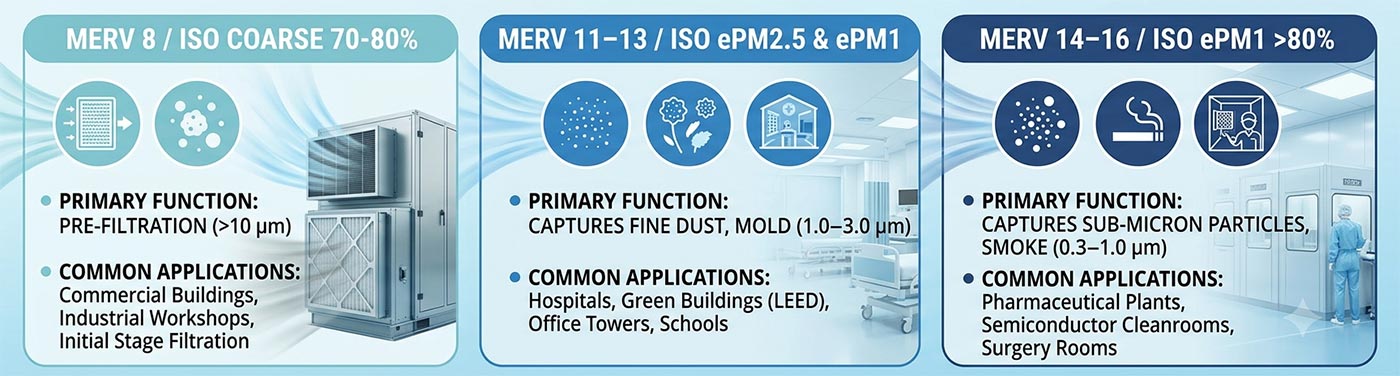
MERV 8 / ISO Coarse 70-80%

  • Primary Function: Pre-filtration for larger particles (>10 µm).

  • Applications: Standard commercial buildings, industrial workshops, initial stages of multi-stage filtration.

MERV 11–13 / ISO ePM2.5 & ePM1

  • Primary Function: Captures fine dust, auto emissions, mold spores, and bacteria (1.0–3.0 µm).

  • Applications: LEED-certified green buildings, hospitals, commercial office towers, schools.

MERV 14–16 / ISO ePM1 >80%

  • Primary Function: Captures sub-micron particles, tobacco smoke, and droplet nuclei (0.3–1.0 µm).

  • Applications: Pharmaceutical facilities, semiconductor cleanroom pre-filtration, surgery rooms.

merv 8 merv 13 merv 16 air filter efficiency chart

Operating Guidelines & Replacement Cycles

Operating pleated air filters properly protects downstream equipment and reduces energy costs.

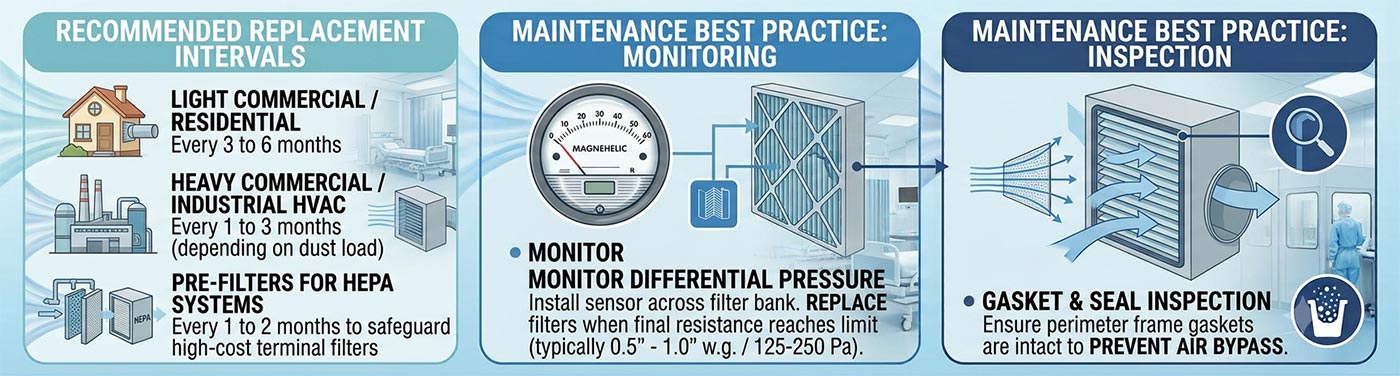
Recommended Replacement Intervals:

  • Light Commercial / Residential: Every 3 to 6 months.

  • Heavy Commercial / Industrial HVAC: Every 1 to 3 months (depending on ambient dust load).

  • Pre-filters for HEPA systems: Every 1 to 2 months to safeguard high-cost terminal filters.

Maintenance Best Practices:

  • Monitor Differential Pressure: Install a magnehelic gauge or differential pressure sensor across the filter bank. Replace filters when final resistance reaches the manufacturer’s recommended limit (typically around 0.5″ to 1.0″ w.g. / 125–250 Pa).

  • Gasket & Seal Inspection: Ensure perimeter frame gaskets are intact to prevent air bypass.

pleated air filter merv rating application guide

What to Look for When Choosing a Pleated Filter Supplier

For international buyers and procurement managers, choosing an OEM/ODM filter manufacturer requires evaluating more than just price per unit:

  • Certified Testing Infrastructure: Does the supplier provide verified test reports under ASHRAE 52.2 or ISO 16890 from accredited third-party laboratories?

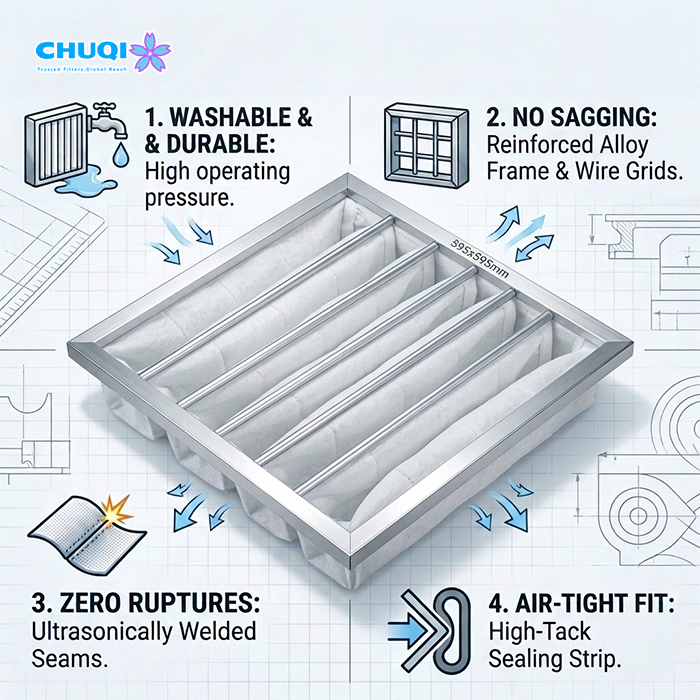
  • Raw Material Consistency: High-grade synthetic media with moisture-resistant cardboard or rigid galvanized frames prevent sagging under high humidity.

  • Customization Capabilities: Ability to manufacture custom dimensions, custom pleat depths (1″, 2″, 4″, or rigid box filters), and private labeling options.

  • Supply Chain & Global Logistics Experience: Proven expertise in international shipping, moisture-proof export packaging, and container loading density optimization.

Partner with a Trusted Air Filtration Manufacturer

At CHUQI, we specialize in engineering and manufacturing high-performance pleated air filtersbag filters, and custom HVAC filtration solutions for global distributors and industrial clients.

With automated production lines, strict ISO 9001 quality control, and full compliance with ISO 16890 and ASHRAE 52.2 standards, we deliver reliable OEM filter solutions tailored to your exact market specifications.

  • Custom Sizes & Private Labeling Available

  • Direct Factory Pricing & High Production Capacity

  • Strict Quality Inspection & Third-Party Test Reports

Ready to Upgrade Your Air Filtration Supply Chain?

Contact our engineering team today to request product catalogs, technical datasheets, or a competitive factory quote.

📩 Email: chuqifilter@chuqimat.com

📞 Phone / WhatsApp: +86-19153383344

Do you have any questions about how our air filtration products apply to your specific industry?
Scroll to Top