
When sourcing air filter media for distribution, choosing the right supplier can affect more than the purchase price. It can influence product consistency, customization options, delivery planning, and your ability to serve customers over the long term.
Some suppliers manufacture air filter media in their own facilities. Others purchase products from manufacturers and resell them to overseas buyers. Both business models can serve distributors, but the level of involvement in production is different.
For distributors handling recurring orders or building their own product ranges, understanding this difference is especially important. Working directly with an air filter media manufacturer can provide closer access to production information, more direct technical communication, and greater flexibility for product customization.
This guide explains how manufacturers and trading companies operate, where their advantages differ, and how to choose a sourcing model that supports your distribution business.
1. What Is an Air Filter Media Manufacturer?
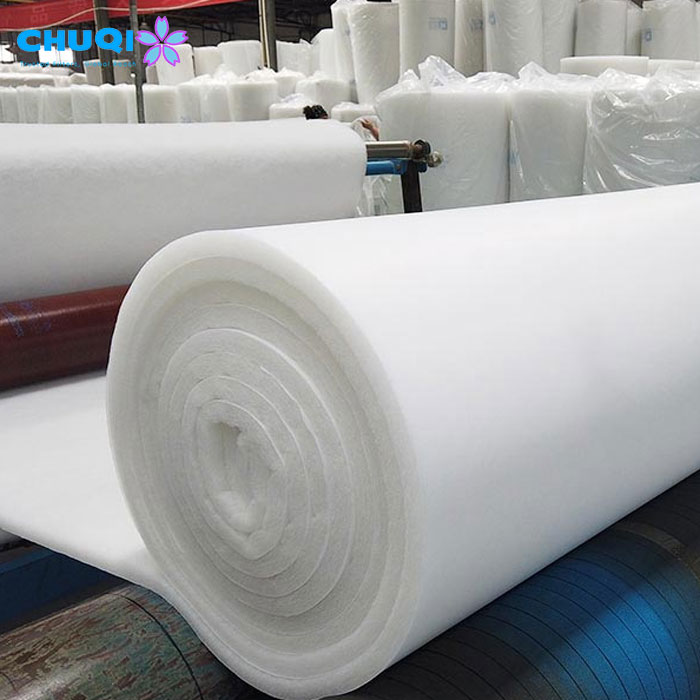
An air filter media manufacturer produces filtration materials through its own manufacturing facilities and production processes.
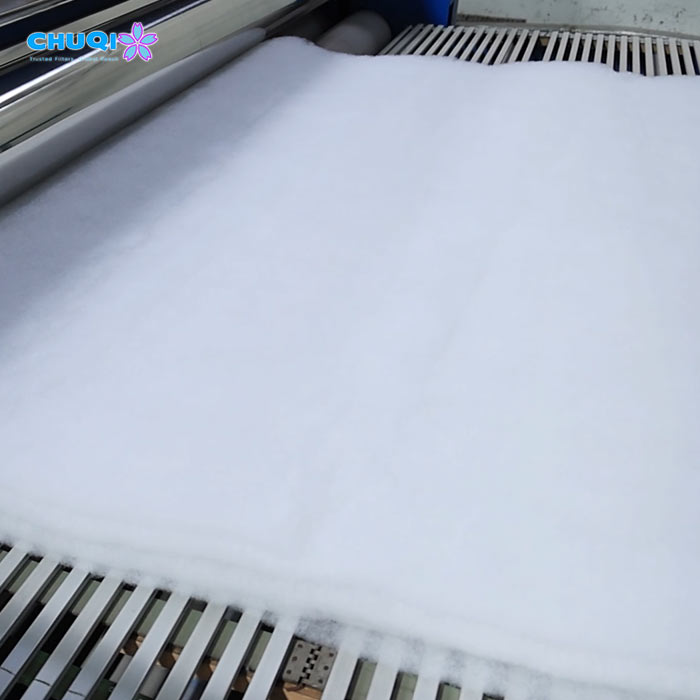
Depending on the material type, production may involve fiber preparation, web formation, bonding, curing, impregnation, slitting, and other processing steps. These processes determine important product characteristics, including thickness, basis weight, fiber distribution, air permeability, and mechanical strength.
Common types of air filter media manufactured for industrial and commercial applications include:
Fiberglass Filter Media: Used in HVAC systems, industrial filtration, and paint booth applications, with different grades and structures for different filtration requirements. Explore our fiberglass filter media for industrial filtration applications.
Ceiling Filter Media: Designed for spray booth ceiling filtration, helping distribute incoming air evenly and capture airborne particles before they reach the painting area. Learn more about our spray booth ceiling filter media.
Intake Filter Media: Used in air intake systems to capture dust and airborne particles before air enters ventilation systems, HVAC equipment, or industrial machinery. Explore our air intake filter media for different air intake applications.
Pocket Filter Media: Used in the manufacture of bag or pocket filters, where media strength, airflow resistance, and dimensional stability influence finished filter performance.
- Activated Carbon Filter Media: Designed for applications requiring the adsorption of certain gases, odors, and other gaseous contaminants.
- PPI Filter Foam Sponge: Open-cell foam material available in different pore densities, used in air filtration and ventilation applications requiring porous filtration structures.
Air Filter Paper: Used in the production of various air filtration elements, with filtration efficiency, air permeability, and mechanical strength selected according to the application.
Wire-Backed Filter Media: Filter media reinforced with a supporting wire structure to improve rigidity and help maintain its shape during installation and operation.
A genuine manufacturer has direct involvement in how these materials are produced. This makes a difference when buyers need to understand why two products with similar thickness or appearance may perform differently.
For example, two fiberglass filter media products may have the same nominal thickness but different fiber structures, density distributions, or bonding characteristics. These differences can affect airflow resistance, particle capture, dust loading, and downstream processing.
Because the manufacturer is involved in production, technical discussions can go beyond product descriptions. Buyers can discuss how material structure and processing conditions relate to the properties they need.

2. What Is an Air Filter Media Trading Company?
An air filter media trading company purchases products from manufacturers or other suppliers and resells them to customers.
Its main activities usually include product sourcing, sales, order coordination, export documentation, logistics, and customer service.
Trading companies can offer useful advantages, particularly for buyers who need products from multiple manufacturers or want to consolidate different product categories through one supplier.
For example, a distributor may need several types of filtration materials in relatively small quantities. A trading company with an established supplier network may be able to combine these products into one purchasing arrangement.
However, a trading company does not necessarily control the manufacturing process. When a technical question involves fiber structure, bonding, production adjustments, or material consistency, the company may need to communicate with the actual manufacturer before providing an answer.
The key distinction is therefore not whether a supplier can sell air filter media, but whether it is directly involved in producing the material.
3. Air Filter Media Manufacturer vs. Trading Company: What's the Difference?
The main difference lies in production involvement and how directly the supplier can support product-related decisions.
| Comparison | Air Filter Media Manufacturer | Trading Company |
|---|---|---|
| Business model | Produces filtration materials | Purchases and resells products |
| Production involvement | Direct involvement in manufacturing | Usually relies on external manufacturers |
| Product knowledge | Direct knowledge of production processes | Depends on information from suppliers |
| Customization | Can discuss adjustments within its production capabilities | Depends on the manufacturing partner |
| Quality management | Can manage production-related controls directly | Relies on supplier quality systems and incoming checks |
| Technical communication | Can communicate with production and technical teams | May need to pass technical questions to manufacturers |
| Product range | Based on its own manufacturing capabilities | May source from multiple manufacturers |
| Pricing structure | Direct factory pricing may reduce intermediary costs | May include additional sourcing or distribution margins |
| Repeat orders | Can manage recurring production of established specifications | Depends on coordination with the original manufacturer |
Neither business model is automatically better in every situation.
A professional trading company may provide excellent service, especially when a buyer needs multiple product categories, small mixed orders, or local inventory support. A manufacturer may also have limitations in product range, export services, or order flexibility.
However, for distributors purchasing core air filter media products repeatedly, working directly with a manufacturer can offer important advantages in production communication, customization, quality management, and supply planning.
4. Why Buy Air Filter Media Directly from a Factory?
For distributors developing a long-term filtration materials business, factory-direct sourcing is not simply about removing an intermediary. It is about gaining a closer connection to the production process behind the products they sell.
4.1 Direct Access to Production and Product Information
Air filter media performance is influenced by more than its material name or nominal thickness.
Fiber distribution, density, bonding, material structure, and airflow characteristics all contribute to the finished product’s behavior.
Consider a distributor receiving complaints that a particular filter media creates higher airflow resistance than expected. If the supplier is directly involved in manufacturing, the technical discussion can focus on the material itself.
The manufacturer can investigate relevant production characteristics, such as fiber distribution, density profile, and bonding conditions, rather than relying entirely on information passed through another supplier.
This direct access can help distributors understand product differences, respond to customer questions, and make better decisions when selecting materials for different applications.
4.2 Greater Flexibility for Customized Filter Media
Distributors do not always sell standard-size materials. Their customers may use different converting equipment, production lines, or finished filter designs.
Common customization needs include:
Roll width and roll length
Material thickness and basis weight
Different fiber structures or material constructions
Slitting and converting formats
Packaging and labeling requirements
Product specifications for different market applications
For example, a filter manufacturer may operate a cutting line designed for a particular roll width. If the supplied media is wider or narrower than the production setup requires, the difference can create unnecessary trimming waste or reduce material utilization.
A manufacturer with suitable production and slitting capabilities can discuss whether a more appropriate roll width or processing format is feasible.
This is where direct factory communication becomes valuable. Customization is not just about changing a dimension on a product sheet. It involves connecting the customer’s application and processing needs with the manufacturer’s actual production capabilities.
For distributors, this can create opportunities to serve customers who need more than standard off-the-shelf materials.
4.3 More Direct Quality Control and Product Consistency
Product consistency is particularly important when distributors supply the same material to customers over an extended period.
A change in thickness, basis weight, fiber distribution, bonding, or air permeability may affect how the material performs or how easily it can be processed.
For example, inconsistent material thickness across a roll can create difficulties during converting. Differences in bonding or fiber distribution may also influence mechanical strength and airflow characteristics.
A manufacturer directly involved in production can manage relevant process parameters and investigate production-related issues at their source.
This does not mean that every factory automatically delivers better quality. Actual consistency depends on its production controls, inspection methods, equipment, and management practices.
The advantage of factory-direct cooperation is that the distributor has a more direct communication channel when product-related questions or production issues arise.
4.4 More Transparent Purchasing Costs
Buying directly from a manufacturer may reduce certain intermediary costs, but factory-direct sourcing does not automatically guarantee the lowest total cost.
For distributors, the more meaningful comparison is the total cost of obtaining usable, saleable material.
Consider a simple example:
Total material purchase cost: $5,000
Purchased media area: 10,000 m²
Usable media area after processing losses: 9,500 m²
The cost per usable square meter is:
$5,000 ÷ 9,500 m² = approximately $0.526/m²
If another supplier offers a lower purchase price but the material creates more trimming waste or processing difficulties, the actual cost per usable square meter may be higher.
Several factors influence the real purchasing cost:
Roll width utilization
Material consistency
Edge quality
Processing waste
Packaging and transportation
Import duties and other landed costs
For distributors, comparing the cost of usable material rather than looking only at the quoted price provides a more realistic view of purchasing value and potential profit.
4.5 Better Continuity for Long-Term Supply
Distributors often need more than a successful first order. They need a supplier capable of supporting recurring purchases as their customer base grows.
When a material becomes an established part of a distributor’s product range, changes in its physical characteristics can create problems downstream. Customers may need to adjust their production processes, product specifications, or inventory planning.
Direct cooperation with a manufacturer can make it easier to maintain production-related communication across repeat orders.
It also provides a clearer channel for discussing future requirements, including changes in roll dimensions, packaging, order quantities, or additional product types.
For distributors building a stable product portfolio, this production connection can be valuable well beyond the first purchase.


5. Is Factory-Direct Air Filter Media Cheaper?
Factory-direct purchasing can be cost-effective, especially for distributors with regular demand and established product specifications. However, it is not always the cheapest option for every order.
The difference often depends on purchasing volume, product range, order complexity, and logistics.
Factory-direct sourcing may be more suitable when:
You purchase the same types of filter media regularly.
Your business requires consistent specifications across repeat orders.
You need customized roll widths, thicknesses, or other material characteristics.
You purchase larger quantities of core product lines.
You want direct technical communication with the production team.
Trading companies may be more convenient when:
You need several unrelated product categories in one order.
Your purchasing quantities are small and varied.
You prefer one supplier to coordinate products from different manufacturers.
Local inventory or regional service is a priority.
The best purchasing decision depends on the overall cost and operational value, not simply the supplier’s business label.
For distributors with stable demand, working directly with manufacturers for core product lines can help improve purchasing efficiency and create a more predictable supply arrangement.
6. Which Sourcing Model Is Better for Air Filter Media Distributors?
The right sourcing model depends on how your distribution business operates.
Choose a Manufacturer for Core Product Lines
Direct manufacturer cooperation is often a strong option when your business focuses on:
Regular purchases of specific air filter media products
Long-term supply relationships
Customized material specifications
Private-label or branded product programs
Supplying filter manufacturers and industrial customers
Building consistent product ranges for regional markets
In these situations, direct production involvement can make it easier to manage product specifications, technical communication, and repeat orders.
Choose a Trading Company for Mixed Purchasing Needs
A trading company may be a practical option when you need:
Multiple product categories from different manufacturers
Small quantities of various materials
Consolidated purchasing arrangements
Local stock and regional distribution services
Its supplier network can simplify sourcing when your product requirements extend beyond one manufacturer’s production range.
Consider a Combination of Both
Many established distributors do not rely on only one sourcing model.
They may purchase their main air filter media products directly from manufacturers while using trading companies for supplementary products or categories that require a different supplier network.
This approach allows distributors to maintain direct relationships for their core products while keeping flexibility in their wider purchasing operations.

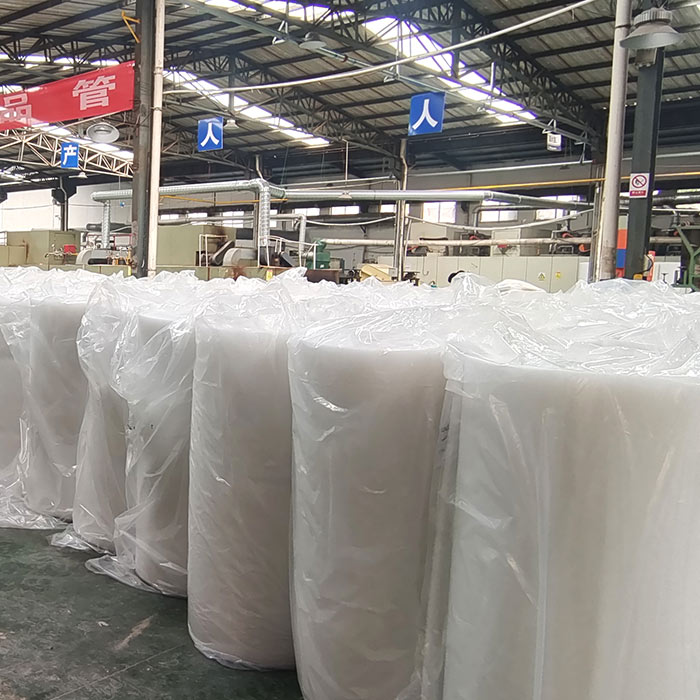
7. How to Identify a Genuine Air Filter Media Manufacturer
A company describing itself as a manufacturer does not necessarily mean that every product it sells is made in its own factory.
Before developing a long-term supply relationship, distributors should look beyond company descriptions and understand the supplier’s actual production involvement.
Here are four useful areas to examine.
7.1 Look at Actual Manufacturing Operations
A genuine manufacturer should be able to explain its production processes and show relevant manufacturing facilities or equipment.
Depending on the product, this may include fiber processing, web formation, bonding, curing, impregnation, slitting, or other material-specific operations.
Factory videos, production-line photographs, and product samples can help buyers understand whether the supplier is directly involved in manufacturing.
7.2 Evaluate Its Technical Knowledge
A manufacturer should understand how production characteristics affect the material.
For example:
For fiberglass filter media: thickness, density, fiber structure, and airflow resistance.
For synthetic filter media: fiber distribution, material structure, bonding, and mechanical strength.
For nonwoven filter media: web uniformity, bonding characteristics, air permeability, and processing suitability.
For activated carbon filter media: carbon content, adsorption-related properties, and material construction.
A supplier that can explain these characteristics in practical terms is better positioned to support technical discussions.
7.3 Understand Its Quality Management Process
Ask how the manufacturer manages important product characteristics during production.
Depending on the material, relevant parameters may include thickness, basis weight, width, air permeability, and mechanical properties.
It is also useful to understand how samples are evaluated, how production batches are managed, and how product-related issues are investigated.
The purpose is to understand the manufacturer’s actual quality management practices, rather than relying only on general quality claims.
7.4 Evaluate Its Ability to Support Repeat Orders
A supplier may be able to provide a satisfactory sample but still struggle to maintain consistent production over time.
For distributors, long-term supply capability involves more than manufacturing capacity. It also includes production planning, material availability, specification management, packaging, and communication.
A manufacturer that understands recurring distributor requirements can become a more valuable partner as the business grows.
Choose a Manufacturing Partner That Understands Your Product Needs
For air filter media distributors, choosing a supplier is not only about finding the next shipment. It is about building a product range that can serve customers consistently as the business develops.
A manufacturing partner with direct production involvement can help distributors understand material characteristics, explore customization possibilities, and maintain closer communication throughout repeat purchases.
At Chuqi New Materials, all our air filter media products are manufactured in our own factory. Our product range includes fiberglass, synthetic, nonwoven, activated carbon, and paint booth filter media for different industrial and commercial filtration applications.
Whether you are expanding an existing distribution business, sourcing core product lines, or looking for customized filter media, our manufacturing team can work with you to explore suitable material options and production possibilities.
Explore our air filter media product range and discuss the materials, dimensions, and supply arrangements that best fit your market and customers.
Frequently Asked Questions
Q1: What is the main difference between an air filter media manufacturer and a trading company?
An air filter media manufacturer produces filtration materials through its own manufacturing operations. A trading company purchases products from manufacturers or other suppliers and resells them. The main difference is the level of direct involvement in production.
Q2: Is buying air filter media directly from a factory cheaper?
It can be, particularly for regular or larger-volume purchases. Factory-direct sourcing may reduce intermediary costs, but the total purchasing cost also depends on material utilization, processing waste, packaging, transportation, and import expenses.
Q3: Can an air filter media manufacturer provide customized products?
Yes. Depending on its production capabilities, a manufacturer may support customized roll widths, lengths, thicknesses, basis weights, material constructions, slitting formats, and packaging. The available options depend on the specific material and manufacturing process.
Q4: Can a trading company also provide customized air filter media?
Yes. Trading companies can arrange customized products through their manufacturing partners. However, technical discussions and production adjustments usually need to be coordinated with the actual manufacturer.
Q5: How can I tell whether an air filter media supplier is a real manufacturer?
Look for evidence of actual production operations, manufacturing equipment, process knowledge, product samples, and quality management practices. A genuine manufacturer should be able to explain how its materials are produced and how production characteristics influence product performance.
Q6: What are the advantages of working directly with an air filter media factory?
Direct factory cooperation can provide closer access to production information, more direct technical communication, greater flexibility for customization, and a clearer channel for managing product consistency and repeat orders.
Q7: Should distributors work with one manufacturer or multiple suppliers?
It depends on the product range and purchasing strategy. Many distributors work directly with manufacturers for their core products while using additional suppliers for supplementary categories. This balances production control with sourcing flexibility.