
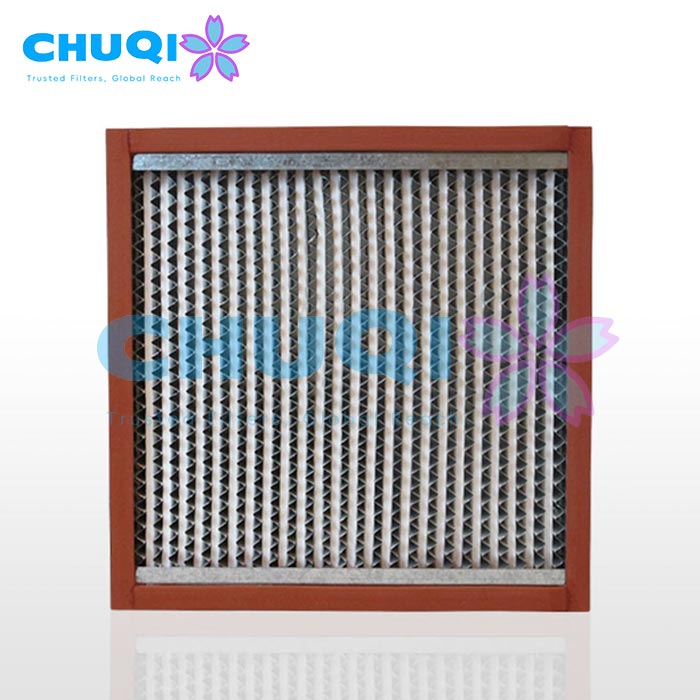
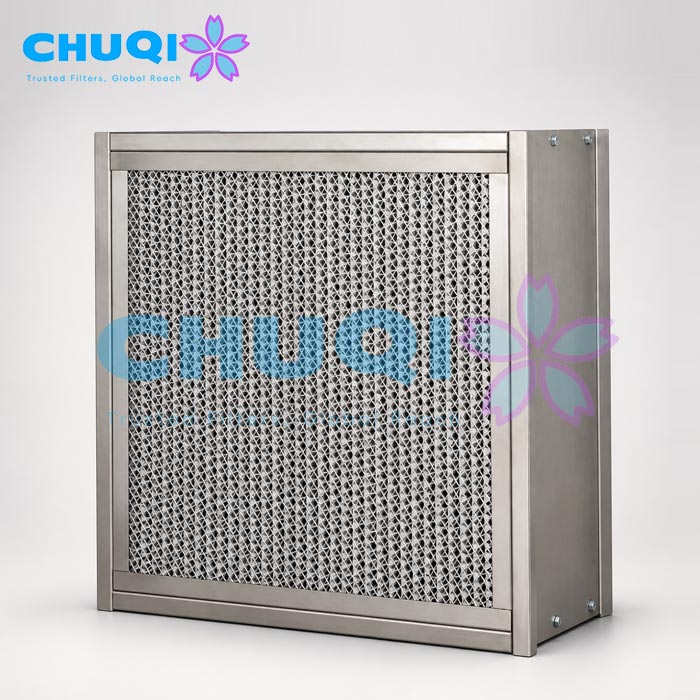
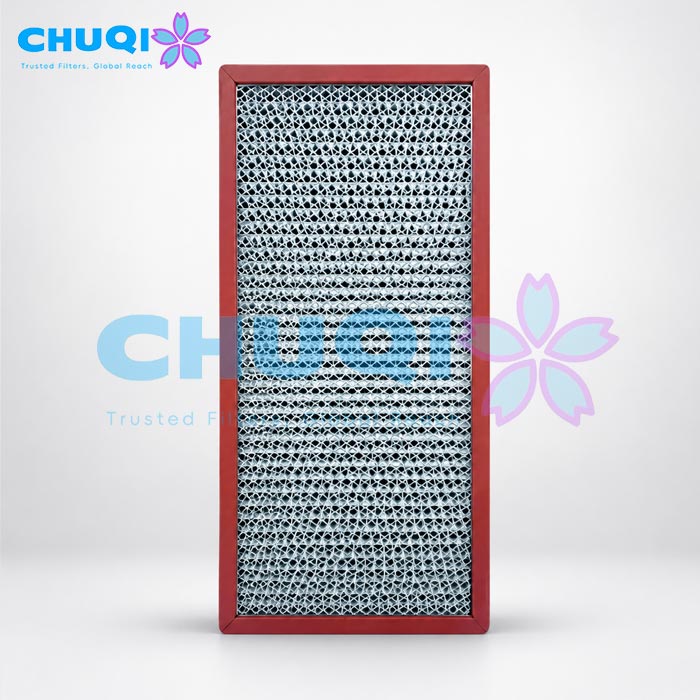
High-temperature HEPA filters are designed for air filtration systems operating in elevated-temperature environments, where conventional HEPA filters may experience seal deterioration, frame deformation or reduced structural reliability.
They are used in applications such as industrial ovens, high-temperature drying systems, heat-treatment processes and specialized manufacturing environments where fine-particle control must be maintained under elevated temperatures.
However, a high-temperature HEPA filter is not simply a standard HEPA filter made with heat-resistant media. Its reliability depends on how well the complete filter assembly performs under the intended operating conditions.
Several components play an important role:
Filter media: Must retain its filtration properties and structural integrity at elevated temperatures.
Sealants and bonding materials: Must maintain adhesion and prevent internal air leakage.
Frame and structural components: Must resist thermal stress and maintain the filter’s shape.
Gaskets and installation interfaces: Must prevent unfiltered air from bypassing the filter.
A weakness in any one of these components can affect the performance of the complete filter. For industrial applications, material selection and filter construction therefore need to be considered together.
The key to high-temperature HEPA filtration is not simply choosing heat-resistant media, but ensuring that the entire filter assembly remains reliable in its intended environment.
1. How to Choose Between 150°C, 200°C–250°C and 300°C HEPA Filters
The required operating temperature is one of the first considerations when selecting a high-temperature HEPA filter. Different temperature ranges place different demands on the filter media, bonding materials and mechanical structure.
1.1 150°C HEPA Filters: For Moderate High-Temperature Applications
A 150°C HEPA filter is generally considered for applications where the filtration system operates above the temperature range of conventional HEPA filters but does not require an extreme-temperature construction.
Potential applications include:
Industrial drying equipment
Moderate-temperature curing ovens
Heated air circulation systems
Specialized manufacturing ventilation
Depending on the design, glass microfiber media, heat-resistant bonding materials and suitable metal frames may be used.
At this temperature range, the complete assembly still requires careful consideration. The media may retain its filtration characteristics, but the bonding material, frame and sealing components must also remain suitable for the operating environment.
1.2 200°C–250°C HEPA Filters: For More Demanding Thermal Conditions
At 200°C–250°C, material compatibility becomes increasingly important.
Different filter components may respond differently to elevated temperatures. Repeated heating and cooling can create stress at the media-to-frame bonding interface, potentially affecting adhesion and airtightness.
Applications may include:
High-temperature industrial ovens
Advanced curing and drying processes
Specialized heat-treatment equipment
High-temperature recirculating air systems
These filters may require carefully selected glass microfiber media, temperature-compatible sealants and metal structural components.
The bonding system deserves particular attention in this range. A material that tolerates high temperatures briefly may not provide reliable performance under repeated thermal exposure.
1.3 300°C HEPA Filters: For Specialized High-Temperature Systems
A 300°C HEPA filter belongs to a more demanding category of high-temperature filtration.
At this level, the entire assembly must be engineered around the thermal conditions. Standard filter construction should not be assumed suitable simply because one component is rated for 300°C.
Potential applications may include specialized industrial heating systems, high-temperature process equipment and other engineered filtration installations.
Depending on the required operating conditions, the design may involve:
High-temperature-resistant filter media
Specialized inorganic or otherwise temperature-compatible bonding systems
Heat-resistant metal frames
Structural components designed to withstand thermal stress
A suitable sealing and mounting arrangement
A 300°C rating should be treated as an engineered performance requirement, not a universal specification for every filter using a particular material.
2. Critical Materials and Construction of High-Temperature HEPA Filters
The reliability of a high-temperature HEPA filter depends on the interaction between its filtration media, bonding system and mechanical structure.
Each component serves a different purpose. A heat-resistant filter medium cannot compensate for an unsuitable sealant, and a strong metal frame cannot prevent leakage caused by a failed bonding interface.
2.1 Filter Media: Maintaining Filtration Performance at High Temperatures
Glass microfiber media is commonly considered for high-temperature HEPA filtration because of its fine-fiber structure and filtration characteristics.
Compared with conventional synthetic filter media, glass microfiber can be suitable for applications requiring elevated-temperature resistance. However, its suitability depends on the specific media formulation, binder system, construction and operating environment.
Important media characteristics include:
Fiber structure and uniformity: Consistent fiber distribution supports stable filtration performance across the media area.
Filtration performance: The media must provide the required particle capture characteristics for the intended application.
Air permeability: Media resistance affects the airflow and pressure-drop characteristics of the completed filter.
Mechanical integrity: The media must retain sufficient strength during pleating, assembly, transportation and operation.
Thermal stability: The media and any binders or treatments must remain suitable at the actual operating temperature.
It is important to distinguish between the temperature resistance of the base fiber and that of the finished filter medium. Binders, coatings and other treatments may have different thermal limits.
For this reason, high-temperature media should be evaluated as a complete material system rather than by fiber type alone.
2.2 Sealants and Bonding: Protecting the Filter Against Internal Leakage
The bonding system is one of the most critical parts of a high-temperature HEPA filter.
The filter media must be securely connected to the frame so that air cannot pass around the media through gaps or failed bonding areas.
At elevated temperatures, conventional adhesives may soften, lose adhesion or deteriorate. Repeated temperature changes can further increase stress at the bonding interface.
Common engineering considerations include:
Temperature-Compatible Silicone Systems
Certain high-temperature silicone formulations may be suitable for applications requiring flexibility and resistance to thermal movement. However, silicone products vary significantly in their temperature ratings and chemical compatibility.
Ceramic or Inorganic Bonding Systems
Certain ceramic or inorganic bonding materials may be considered for more demanding thermal conditions. Their suitability depends on formulation, curing process, adhesion to the substrate and resistance to thermal cycling.
| Bonding Consideration | What It Affects |
|---|---|
| Continuous temperature rating | Long-term stability of the bonding material |
| Thermal expansion compatibility | Stress at the media-to-frame interface |
| Adhesion strength | Resistance to separation or detachment |
| Curing process | Final bonding integrity and consistency |
| Thermal cycling resistance | Ability to withstand repeated heating and cooling |
There is no universal rule that silicone is always suitable for medium temperatures or ceramic bonding is always suitable for 300°C. The correct choice depends on the complete formulation and the intended operating conditions.
The objective is to maintain an airtight media-to-frame connection throughout the filter’s service cycle.
2.3 Frames and Structural Components: Maintaining Shape Under Thermal Stress
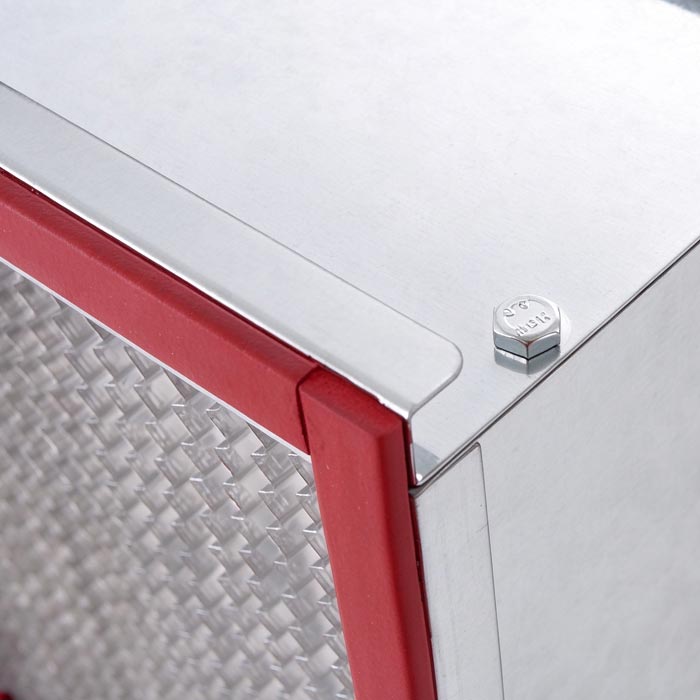
The frame provides mechanical support for the filter assembly. In high-temperature applications, its role extends beyond simply holding the filter media in position.
Temperature changes can cause the frame to expand or contract. If the structural design does not accommodate these movements, the filter may experience distortion, stress concentration or damage to the bonding interface.
Common frame considerations include:
Stainless steel: Often considered for demanding thermal environments and applications where corrosion resistance is also important. The appropriate grade depends on the operating environment.
Aluminum: Can be suitable for certain engineered filter configurations, but its use must be evaluated against the actual temperature and mechanical requirements.
Galvanized steel: May be suitable for selected conditions, but coating stability and corrosion behavior must be considered at elevated temperatures.
Other structural components also affect filter stability:
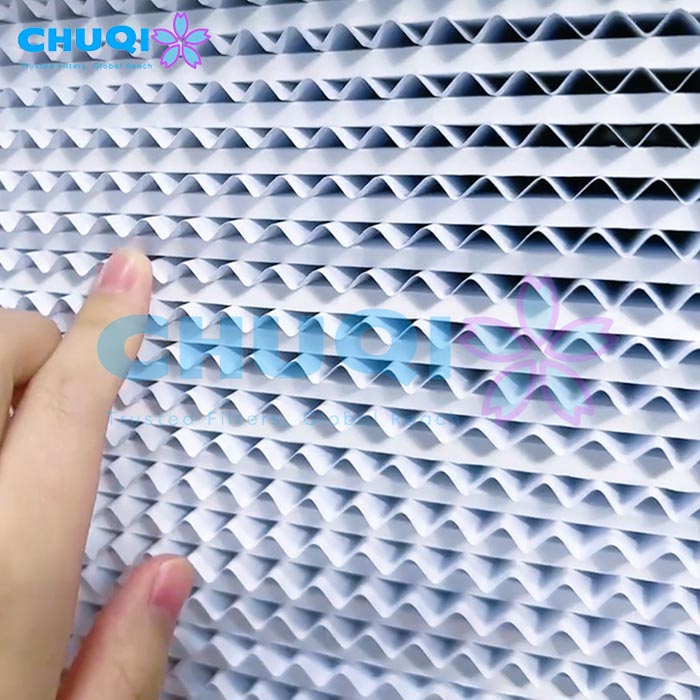
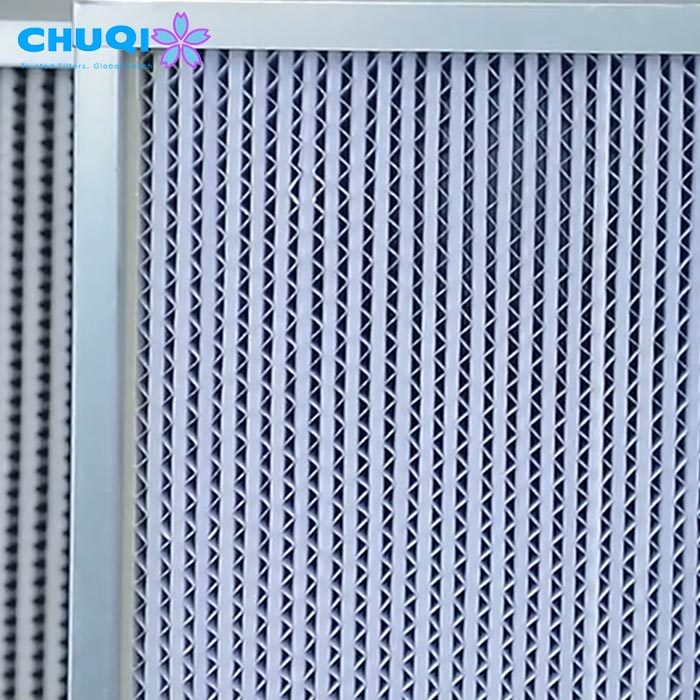
Separators or pleat-support structures help maintain the spacing and geometry of the filter media.
Faceguards and protective screens can provide mechanical protection during handling and installation.
Reinforcement components help the assembly retain its shape under airflow and mechanical loads.
The frame material, thickness, connection method and structural design should be considered together. Choosing a material based only on its nominal temperature resistance does not guarantee that the completed filter will remain dimensionally stable.
3. Technical Factors That Affect High-Temperature HEPA Filter Performance
Temperature is only one part of high-temperature HEPA filter selection. Airflow, filter resistance, effective filtration area and system conditions also influence the performance of the finished assembly.
3.1 Filter Media Resistance and Effective Filtration Area
The resistance of the filter media affects the pressure drop of the completed filter.
However, media resistance alone does not determine the final pressure drop. Pleat geometry, pleat spacing and effective filtration area also play important roles.
For example, increasing the effective filtration area can help distribute airflow across a larger media surface. This may reduce the air velocity through the media under comparable operating conditions.
The actual result depends on the filter design, media characteristics and airflow distribution.
3.2 Airflow and Pressure Drop Under Operating Conditions
Air density changes with temperature. As air temperature increases at approximately constant pressure, its density decreases.
This means that airflow and pressure-drop values measured under standard conditions should not automatically be treated as identical to those under high-temperature operating conditions.
For a high-temperature HEPA filter, pressure drop is influenced by:
Filter media resistance
Pleat geometry and effective filtration area
Actual volumetric airflow
Air temperature and density
System operating pressure
Upstream dust loading
When comparing filter performance, the airflow reference conditions and measurement boundaries should be consistent. Otherwise, two pressure-drop figures may not be directly comparable.
For a deeper explanation, see our guide to HEPA Filter Pressure Drop.
4. Common High-Temperature HEPA Filter Problems and How to Prevent Them
A high-temperature HEPA filter may initially perform well but develop problems after extended operation. In many cases, the cause is not the filter media alone. Thermal stress, upstream contamination and installation conditions can all affect service life.
4.1 Thermal Cycling: Cracked Seals and Bonding Failure
Typical symptoms:
Cracks or separation around the media-to-frame bonding area
Visible gaps between the filter media and frame
Unexpected leakage during integrity testing
Changes in pressure drop or airflow after repeated heating cycles
Why It Happens
During heating, the frame, media and bonding materials may expand at different rates. During cooling, they contract again.
Repeated expansion and contraction can create stress at the bonding interface. If the bonding material is not suitable for the temperature profile or lacks sufficient thermal-cycle resistance, it may gradually crack or detach.
How to Reduce the Risk
Select bonding materials based on the actual operating conditions and thermal-cycle requirements.
Use a frame construction compatible with the operating temperature.
Avoid unnecessary mechanical stress during installation.
Evaluate finished-filter integrity after relevant thermal exposure when the application requires it.
A material’s short-term heat resistance does not automatically demonstrate long-term bonding reliability.
4.2 Upstream Contamination: Why HEPA Filters Can Clog Prematurely
Typical symptoms:
Rapid increase in differential pressure
Reduced airflow
Uneven dust accumulation across the filter surface
Shorter-than-expected service life
Why It Happens
HEPA filters are designed for fine-particle filtration, not for handling large quantities of coarse dust, fibers or process contaminants.
If a high-temperature HEPA filter is installed without suitable upstream protection, larger particles can accumulate on the media surface and increase resistance.
Other contaminants can create additional problems:
Oil mist: Can adhere to fibers and contribute to difficult-to-remove deposits.
Condensable vapors: May form deposits when temperature conditions change, potentially affecting media permeability.
Sticky process particles: Can cause localized blockage and uneven airflow.
Heavy particulate loading: Can accelerate pressure-drop increases and reduce the useful service life of the final filter.
How to Reduce the Risk
A properly designed filtration system should distribute the particle-loading task across suitable filtration stages.
Where the process allows, upstream prefiltration can remove larger particles before air reaches the HEPA stage. However, the prefilter must also be suitable for the actual operating temperature, chemical exposure and dust characteristics.
A conventional G4 filter or standard synthetic filter media should not automatically be assumed suitable for a 150°C–300°C environment. The temperature rating of every filtration stage must be evaluated independently.
If oil mist, sticky particles or condensable vapors are present, the upstream treatment strategy may need to address these contaminants before they reach the HEPA filter.
4.3 Installation Bypass: Leakage Between the Filter and Housing
Typical symptoms:
Failed filter integrity or leakage tests
Particle readings downstream of the filter that exceed expectations
Leakage concentrated around the filter perimeter
Performance differences after filter replacement or reinstallation
Why It Happens
Not all leakage originates inside the filter.
Even when the filter media and media-to-frame bonding remain intact, air can bypass the filter through gaps between the filter frame and the equipment housing.
Common causes include:
Incorrect filter dimensions
Incompatible gasket materials
Uneven clamping pressure
Distorted mounting surfaces
Improper installation or damaged sealing interfaces
How to Reduce the Risk
The filter-to-housing interface should be designed as carefully as the filter itself.
For high-temperature installations, the gasket and mounting arrangement must remain compatible with the operating temperature. Standard sealing materials may lose elasticity or deteriorate under sustained heat.
Where HEPA integrity is critical, leakage testing should distinguish between internal filter leakage and installation bypass. This makes troubleshooting more effective and helps avoid replacing a filter when the actual problem is in the housing or mounting system.
5. Why Filter Media and Finished Filter Manufacturing Matter
A high-temperature HEPA filter is only as reliable as the materials and construction behind it.
Even when the filter media has suitable thermal properties, problems can still arise if the bonding system, frame structure or sealing arrangement is not compatible with the operating environment. This is why high-temperature filtration requires a coordinated approach to material selection and finished-filter manufacturing.
From Filter Media to a Complete Filtration Solution
The filter media forms the foundation of filtration performance, but its characteristics must work together with the finished filter design.
For example, media resistance affects airflow and pressure drop, while pleat configuration influences the effective filtration area. Frame construction and bonding methods also affect dimensional stability and airtightness during operation.
When these elements are developed separately, differences between material specifications and finished-product requirements can create unnecessary manufacturing challenges.
Chuqi manufactures its own air filter media and also produces finished filters. This allows material characteristics to be considered alongside product construction, rather than treating the filter media as an unrelated purchased component.
Manufacturing That Adapts to Different Filter Requirements
Industrial filtration equipment often has its own structural dimensions and operating conditions. A standard filter configuration may not always provide the most suitable fit.
Depending on the product and application, filter construction can be adapted in areas such as:
Filter dimensions and depth
Frame materials and structural design
Pleat arrangement and effective filtration area
Sealing and installation interfaces
Filter media characteristics and airflow resistance
This flexibility is particularly relevant to OEM projects, equipment manufacturers and filtration distributors working with different equipment models or application environments.
Consistency Across Production
For industrial buyers, product consistency matters beyond the first sample.
Changes in media characteristics, assembly methods or structural dimensions can affect finished-filter performance. Coordinating material production and filter manufacturing helps maintain a closer connection between the material and the final product.
From initial product development to repeat production, attention to manufacturing details helps support more consistent product construction and smoother project coordination.
The goal is not simply to manufacture a filter that fits the equipment, but to bring the media, structure and finished product together as a dependable filtration component.


6. Discuss Your High-Temperature HEPA Filter Application
Every high-temperature filtration system has its own operating conditions. A suitable filter design should account for the actual temperature, airflow, filtration requirements, installation structure and process environment.
Useful technical information for discussing a high-temperature HEPA filter project includes:
Operating temperature and temperature profile
Required filtration efficiency
Airflow and initial pressure-drop target
Filter dimensions and frame configuration
Process environment and possible contaminants
Equipment drawings or existing filter samples
Frequently Asked Questions About High-Temperature HEPA Filters
1. What is a high-temperature HEPA filter?
A high-temperature HEPA filter is a high-efficiency air filter engineered to operate in elevated-temperature environments. Its media, bonding materials, frame and sealing components must all be suitable for the intended thermal conditions.
2. Can a standard HEPA filter be used at 150°C?
Not necessarily. Most standard HEPA filters are not designed for sustained operation at 150°C. Their adhesives, gaskets, frames or media treatments may deteriorate under elevated temperatures. A purpose-designed high-temperature construction is required.
3. What is the difference between a 250°C and a 300°C HEPA filter?
The difference is not simply the filter media. A 300°C filter may require a more specialized combination of media, bonding materials, frame construction and sealing components. The actual distinction depends on the operating conditions and thermal requirements of the complete assembly.
4. Is glass microfiber suitable for high-temperature HEPA filters?
Glass microfiber is commonly considered for high-temperature filtration because of its thermal characteristics and fine-fiber structure. However, the suitability of the finished filter also depends on binders, treatments, bonding materials and structural design.
5. Why does a high-temperature HEPA filter develop a sudden increase in pressure drop?
Possible causes include upstream dust loading, oil mist, condensable vapors, media contamination or changes in operating airflow. A pressure-drop increase should be evaluated alongside the actual operating conditions and upstream filtration stages.
6. How can leakage occur even when the HEPA filter media is undamaged?
Leakage can occur at the media-to-frame bonding interface or around the filter-to-housing mounting interface. The first is an internal filter integrity issue; the second is an installation bypass issue. Identifying the leakage location is essential for effective troubleshooting.
7. Can high-temperature HEPA filters be customized to fit industrial equipment?
Depending on manufacturing feasibility, filter dimensions, frame construction, sealing arrangements and other structural details can be adapted to suit industrial equipment and specific installation requirements.
8. What information is needed to develop a custom high-temperature HEPA filter?
Useful information includes the operating temperature, required filtration efficiency, airflow, pressure-drop target, filter dimensions, mounting arrangement and process environment. Equipment drawings or an existing filter sample can also help with product development.
9. Does a higher temperature rating always mean a longer filter service life?
No. A higher temperature rating does not automatically mean longer service life. Actual service life depends on thermal exposure, particle loading, chemical contaminants, airflow, installation conditions and maintenance practices.