
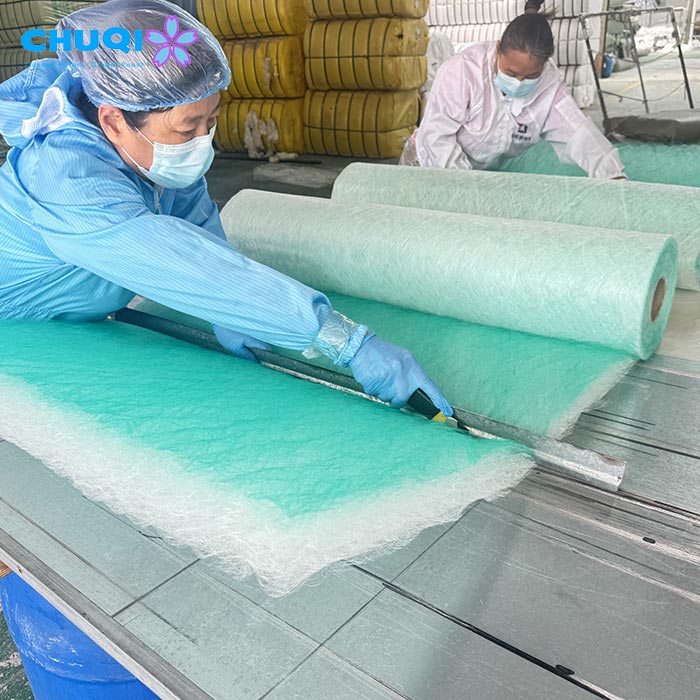
Buying air filter media directly from a factory can give distributors closer access to manufacturing capabilities, product specifications, and bulk supply arrangements. It can also make communication about custom sizes, material construction, and repeat orders more straightforward.
However, factory-direct purchasing does not automatically guarantee lower costs or better product quality. The actual value depends on whether the manufacturer can produce the right media, maintain consistent specifications, and supply products that meet your market’s requirements.
For air filter media distributors, wholesalers, and importers, successful direct sourcing involves more than requesting a price list. You need to understand the product, communicate technical requirements clearly, evaluate samples, and calculate the real cost of bringing the media into your market.
This guide explains how to buy air filter media directly from a factory, from the first supplier inquiry to bulk purchasing and long-term supply planning.
1. Why Buy Air Filter Media Direct from a Factory?
Distributors often begin sourcing through trading companies, local wholesalers, or established import channels. As purchasing volumes increase or product requirements become more specialized, buying directly from an air filter media manufacturer can offer several practical advantages.
Direct Access to Manufacturing Information
When you communicate directly with a manufacturer, you can obtain information closer to the production source.
This is particularly useful when discussing:
Fiber composition and media construction
Thickness, basis weight, and product density
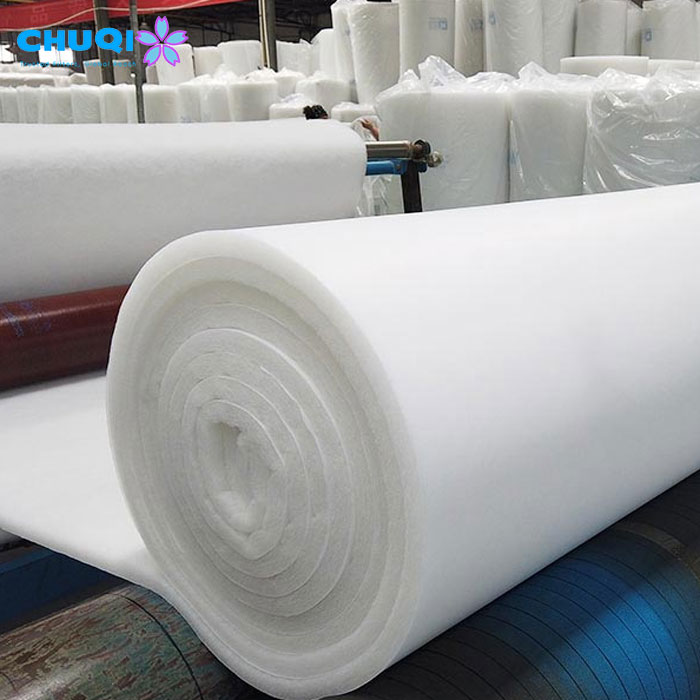
Roll width, length, and available formats
Air permeability and pressure drop
Custom specifications and production feasibility
Changes required for repeat orders
For example, if your customers need a different roll width or media thickness, direct communication with the production team can help establish whether the change is technically feasible and how it may affect the finished material.
Better Control Over Product Specifications
Air filter media is not a standardized product simply because two suppliers use the same product name.
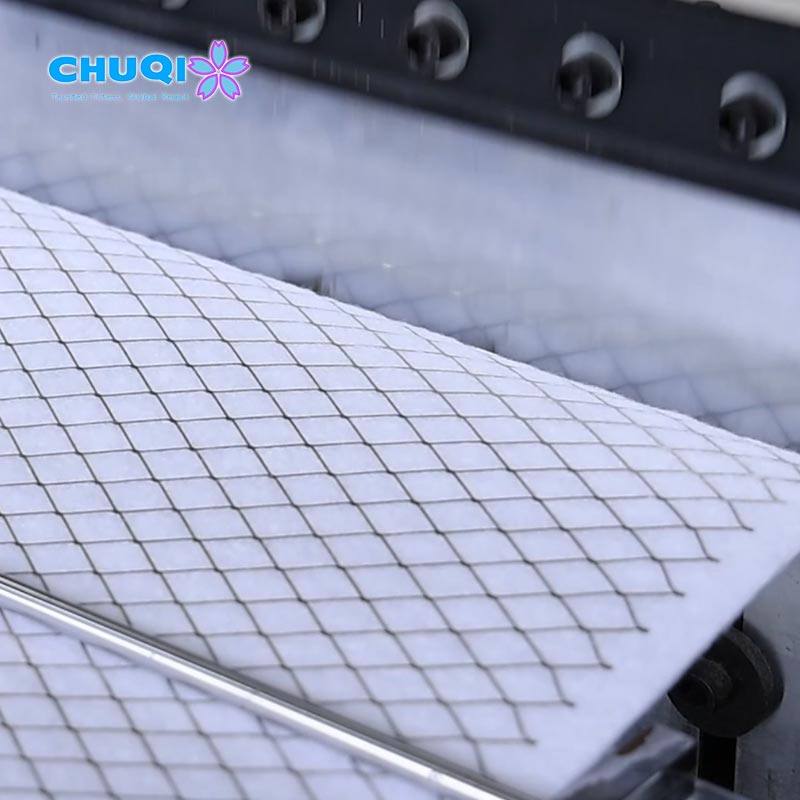
Two products described as fiberglass filter media or synthetic filter media may differ in fiber structure, thickness, basis weight, bonding method, airflow resistance, and mechanical strength.
Working directly with a manufacturer makes it easier to discuss these differences and understand what is actually being supplied.
More Flexible Product Development and Bulk Supply
Distributors serving different markets may need several media types, roll dimensions, and product specifications.
A manufacturing partner with relevant production capabilities can support product development and recurring purchasing more directly than a supplier that only resells finished products.
The main advantage of factory-direct sourcing is therefore greater access to production capabilities and technical communication. A lower purchase price may be possible, but it should never be the only reason for choosing this channel.
2. How to Buy Air Filter Media Direct from a Factory: Five Practical Steps
A clear sourcing process helps reduce communication delays, technical misunderstandings, and avoidable purchasing costs.
Step 1: Define the Product and Its Application
Start with the product your customers actually need.
A distributor supplying automotive paint booth operators will have different requirements from one supplying HVAC filter manufacturers.
Prepare the following information:
Media type: fiberglass, synthetic, nonwoven, activated carbon, or another material
Application: HVAC, industrial air intake, paint booth, or another filtration process
Product format: rolls, sheets, or cut-to-size media
Dimensions: width, thickness, roll length, or sheet size
Performance requirements: filtration efficiency, air permeability, pressure drop, or other relevant parameters
Estimated quantity: initial order volume and potential recurring demand
You do not need to know every technical parameter before contacting a factory. An existing sample, product photograph, technical data sheet, or description of the current material can provide a useful starting point.
The application matters because the same material category can be manufactured in different constructions for different operating conditions.
Step 2: Find Manufacturers with Relevant Production Capabilities
Search for manufacturers that actually produce the media categories you intend to purchase.
Useful search terms include:
Fiberglass filter media manufacturer
Synthetic filter media factory
Nonwoven filter media manufacturer
Paint booth filter media manufacturer
You can identify potential suppliers through search engines, B2B platforms, industry directories, and trade exhibitions.
However, a company describing itself as an air filter media manufacturer does not necessarily produce every product it sells.
Look for evidence of its actual manufacturing operations. Relevant information includes production equipment, manufacturing processes, in-house processing, quality control, and the ability to explain how the media is produced.
For a broader guide to finding and evaluating manufacturers, read How to Find a Reliable Air Filter Media Manufacturer for Your Distribution Business.
For a closer comparison of sourcing channels, read Air Filter Media Manufacturer vs. Trading Company: What’s the Difference?.
Step 3: Send a Clear Product Inquiry
A useful inquiry should give the manufacturer enough information to understand the product and prepare a relevant quotation.
For example, instead of asking only for the price of fiberglass filter media, describe the intended application, approximate thickness, required roll width, and purchasing quantity.
A practical inquiry can include:
| Information | Example |
|---|---|
| Product | Fiberglass filter media |
| Application | Paint booth ceiling filtration |
| Format | Roll |
| Width | 1,000 mm |
| Thickness | Target thickness or existing sample |
| Quantity | Estimated monthly or initial requirement |
| Destination | Country or destination port |
| Reference | Product photograph, sample, or technical data sheet |
The dimensions above are illustrative only. Actual specifications should reflect the product and application.
If you are replacing an existing material, providing a sample or technical data sheet is often more useful than describing the product only by a general name.
This gives the manufacturer a better basis for understanding the material structure and identifying a suitable production option.
Step 4: Compare Factory Quotations on the Same Basis
Different quotations are only meaningful when the products and commercial conditions are comparable.
For air filter media, a price difference may result from:
Fiber composition and material construction
Thickness and basis weight
Product density
Roll width and length
Filtration or airflow performance
Packaging and order quantity
Shipping arrangements and delivery terms
For example, two synthetic filter media products may have the same thickness but different basis weights and fiber structures. Their material costs, airflow characteristics, and mechanical properties may therefore be different.
When comparing quotations, pay attention to the actual product specification rather than relying on the product name alone.
Also distinguish between the product price and the delivery basis. A factory quotation excluding freight and import charges cannot be compared directly with a delivered price that already includes those costs.
Step 5: Evaluate Samples and Place an Initial Order
Samples allow distributors to assess whether the material is suitable before committing to a larger quantity.
The evaluation should reflect how the media will actually be used or processed.
For example:
Does the media have a reasonably uniform structure?
Are thickness and basis weight consistent across the sample?
Does the material tear or fray excessively during cutting?
Is the airflow resistance suitable for the intended application?
Does the material maintain its structure during normal handling?
Are the physical characteristics consistent with the supplied technical information?
For filtration applications, visual appearance alone is not enough. Where relevant, compare filtration efficiency, air permeability, and pressure drop using comparable test methods and conditions.
Once the sample is suitable, an initial commercial order can reveal additional information about production consistency, packaging, communication, and delivery performance.
This is a more reliable basis for deciding whether to increase purchasing volume than choosing a supplier based only on a quotation.


3. What Technical Specifications Should You Understand Before Buying?
Air filter media specifications directly influence product performance, processing suitability, and purchasing cost. Understanding the main parameters helps distributors avoid comparing products that are not technically equivalent.
Thickness and Basis Weight
Thickness describes the physical depth of the media, while basis weight describes its mass per unit area, commonly expressed in g/m².
These measurements provide useful information about the material, but neither independently determines filtration performance.
Two media products with the same thickness can have different basis weights, fiber structures, and airflow characteristics.
Likewise, a heavier product is not automatically more efficient or better suited to every application.
Air Permeability and Pressure Drop
Air permeability describes how readily air passes through a material under specified test conditions.
Pressure drop describes the resistance to airflow across the media at a particular airflow rate or face velocity.
These properties are related but are not interchangeable measurements.
When comparing products, the test method and conditions matter. A pressure-drop value without its corresponding airflow or face velocity provides incomplete information.
Filtration Efficiency and Dust-Holding Behavior
Filtration efficiency indicates how effectively a media captures particles under a defined test method.
Dust-holding behavior describes how much dust the media can retain under specified operating or test conditions before reaching a defined endpoint.
For distributors, these properties should be considered together with airflow resistance and the intended filtration stage.
A product with higher initial efficiency is not automatically the best choice if it creates excessive airflow resistance or does not suit the operating conditions.
Mechanical Strength and Dimensional Stability
Mechanical strength affects how the media withstands handling, cutting, installation, and normal operating conditions.
Dimensional stability matters when the material is processed into sheets, pads, or other finished formats.
Weak bonding, uneven fiber distribution, or poor edge integrity may increase tearing and processing waste.
The appropriate specifications depend on the media type and application. A manufacturer should be able to explain which parameters are relevant to the product being supplied.
4. How to Calculate the Real Cost of Buying Air Filter Media Direct
A low factory quotation does not necessarily mean the lowest purchasing cost. Distributors should consider the complete cost of receiving, handling, processing, and selling the material.
Calculate the Total Landed Cost
For international purchasing, the total landed cost may include:
Total Landed Cost = Product Cost + Packaging + Freight + Insurance + Import Duties and Applicable Charges + Other Logistics Costs
The actual cost components depend on the destination country and agreed delivery terms.
For example, a supplier may offer a lower unit price but use packaging that provides insufficient protection during transportation. If the media arrives damaged or compressed, part of the shipment may become unusable.
Freight and import charges can also change the economics of an order, particularly when comparing different shipment sizes or delivery arrangements.
Calculate the Cost per Usable Square Meter
For distributors who resell rolls or convert filter media into smaller formats, material yield is another important cost factor.
A useful calculation is:
Cost per Usable Square Meter = Material Purchase Cost ÷ Usable Media Area
Consider a simplified example:
A media purchase costs $5,000 and contains 10,000 m² of material. If all the material is usable, the material cost is $0.50 per square meter.
If cutting and handling losses reduce the usable area to 9,500 m², the effective material cost becomes approximately $0.526 per usable square meter.
This example considers material purchasing cost only. Freight, duties, packaging, and other logistics expenses should be added when calculating the full landed cost per usable square meter.
The purchase price has not changed, but the actual cost of the usable material has increased.
This is why roll width consistency, edge quality, material uniformity, and processing suitability can affect distributor profitability.
Balance Bulk Purchasing with Inventory Costs
Larger orders may reduce unit production or shipping costs, depending on the product and shipment arrangement.
However, excessive inventory ties up working capital and warehouse space.
A more practical purchasing plan considers:
Average monthly sales
Existing inventory
Replenishment lead time
Seasonal demand
Storage capacity
Product shelf life and storage conditions, where applicable
The goal is not to purchase the largest possible quantity. It is to achieve a reasonable balance between unit cost, material availability, and inventory turnover.


5. What Should You Evaluate Before Placing a Bulk Order?
Before increasing order quantities, distributors should look beyond the quotation and sample appearance. The following factors provide a more practical view of whether a factory can support commercial purchasing.
Actual Production Capability
Understand which manufacturing processes are performed in-house and which products are produced by the factory itself.
A manufacturer should be able to explain its production processes, relevant equipment, and how different specifications are achieved.
This is particularly important when purchasing several media categories or non-standard specifications.
Quality Control and Product Consistency
Ask how the manufacturer manages the quality of raw materials, production processes, and finished media.
Depending on the product, relevant controls may include:
Thickness and basis weight
Air permeability and pressure drop
Fiber distribution and surface uniformity
Bonding quality and mechanical strength
Roll dimensions and finished product condition
Test results are most useful when the test method, conditions, and corresponding product specification are clearly identified.
Customization and Processing Flexibility
A manufacturer’s ability to produce different widths, thicknesses, basis weights, and formats depends on its equipment and production processes.
More importantly, specification changes can affect the finished media’s performance.
For example, changing fiber composition or bonding conditions may influence airflow resistance, strength, and structural stability.
A technically capable manufacturer should be able to explain these relationships rather than simply accepting every requested specification without discussing its production implications.
Packaging and Delivery Arrangements
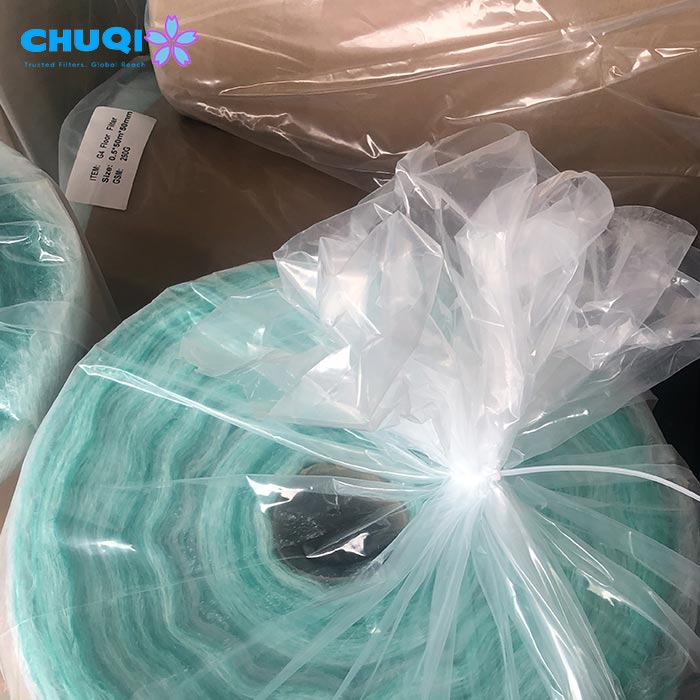
Air filter media can be damaged by unsuitable handling, moisture exposure, compression, or poor packaging during storage and transportation.
For roll products, packaging should protect the material while allowing practical handling and shipment.
For sheet or cut media, protection against deformation and contamination may be particularly important.
The packaging arrangement should match the product format and expected transportation conditions.
6. Is Factory-Direct Purchasing Right for Every Distributor?
Factory-direct sourcing is especially useful for distributors with recurring demand, established product categories, or specific requirements that benefit from direct manufacturing communication.
It may be suitable if your business:
Purchases air filter media regularly or in commercial quantities
Needs multiple product specifications
Requires custom dimensions or product formats
Wants direct access to manufacturing information
Plans to develop a stable supply relationship
However, factory-direct purchasing is not always the most convenient option.
A trading company or local wholesaler may be more practical when you need several unrelated product categories, small mixed orders, local inventory, or local service support.
The right choice depends on your product portfolio, purchasing frequency, order volume, and supply chain structure.
For a closer comparison, see Air Filter Media Manufacturer vs. Trading Company: What’s the Difference?.
7. Build a More Reliable Factory-Direct Supply Relationship
The value of buying directly from a factory becomes clearer when the relationship moves beyond the first shipment.
For distributors, stable product specifications and predictable replenishment are important because their own customers expect consistent materials across repeat purchases.
Keep Product Specifications Consistent
Once a media product becomes part of your regular catalog, maintain a clear record of its key specifications.
This may include material type, thickness, basis weight, roll dimensions, product construction, and relevant performance information.
Changes in raw materials or manufacturing conditions may affect the finished product, so repeat orders should be managed against an established product specification.
Use Sales Data to Plan Replenishment
Purchasing decisions should reflect actual market demand.
Historical sales, inventory levels, replenishment lead times, and seasonal fluctuations can help distributors avoid both emergency purchasing and excessive stock.
A regular supply arrangement can also make purchasing and inventory planning more predictable.
Expand Product Categories Based on Customer Demand
As your distribution business grows, your customers may need additional media categories, sizes, or specifications.
A manufacturer with relevant production capabilities can help you explore these opportunities while maintaining a more connected sourcing relationship.
For a broader guide to long-term supplier selection, read What Should Distributors Look for in a Long-Term Air Filter Media Supplier?
Explore Air Filter Media Options for Your Market
Every distribution business serves different customers and applications. You may be looking for established filter media products to add to your catalog, or exploring new material types and specifications to meet changing market demand.
If you are considering fiberglass, synthetic, nonwoven, paint booth, or activated carbon filter media, you can explore our [Air Filter Media Products] to learn more about the available options.
If you have a particular application, product specification, or sourcing requirement in mind, Feel free to discuss it with our team. We would be glad to learn more about your needs and explore suitable options together.
Frequently Asked Questions About Buying Air Filter Media Direct from a Factory
Is it cheaper to buy air filter media directly from a factory?
Factory-direct purchasing may reduce intermediary costs, but the lowest quotation does not always produce the lowest total purchasing cost. Product specifications, order quantity, packaging, freight, import charges, and material waste all affect the final cost.
What is the minimum order quantity for factory-direct air filter media?
Minimum order quantities depend on the manufacturer, media type, dimensions, and production process. Standard products and customized specifications may have different order conditions. Contact the manufacturer with your product details and estimated quantity to understand the available options.
Can I buy air filter media directly from a factory in rolls or sheets?
Many manufacturers supply filter media in rolls, while sheet or cut-to-size formats may also be available depending on their production and processing capabilities. Roll width, length, thickness, and packaging requirements can affect the available options.
What information should I provide when requesting a factory quotation?
Provide the media type, intended application, product format, dimensions, estimated quantity, destination, and relevant performance requirements. If exact specifications are unavailable, an existing sample, photograph, or technical data sheet can help the manufacturer identify a suitable product.
How can I check whether an air filter media supplier is a real manufacturer?
Look for evidence of actual production operations, including manufacturing equipment, production processes, in-house processing, quality control, and the ability to explain how the media is produced. Product catalogs and factory photographs are useful starting points, but they should not be the only evidence.
Can an air filter media factory customize products for distributors?
Customization may be available for dimensions, thickness, basis weight, material construction, and product format, depending on the manufacturer’s equipment and production processes. Changes to specifications should also be evaluated for their potential impact on airflow resistance, strength, and filtration performance.
What should I check before placing a bulk order?
Evaluate the product sample, technical specifications, manufacturing capability, quality control, packaging, and delivery arrangements. An initial commercial order can also help you understand how consistently the factory produces and supplies the material under actual purchasing conditions.