
When selecting an HVAC bag filter, buyers often focus on filtration efficiency and overall dimensions. However, two structural details can also have a significant impact on filter performance: pocket depth and the number of pockets.
A bag filter with deeper pockets may provide more filter media, while a design with more pockets can distribute the media across a wider frame. But increasing either dimension does not automatically improve filtration performance or extend service life.
The actual result depends on how the pockets are arranged, how much space they have to expand, and how effectively air can pass through the available filter media.
The right pocket depth and number of pockets depend on the available installation space, required airflow, filter frame dimensions and pocket geometry. Deeper pockets can provide more filtration media area, while pocket quantity determines how that media is distributed across the frame. Neither should be maximized independently. A suitable configuration allows the pockets to expand properly, maintains sufficient spacing and makes effective use of the available media.
This guide explains how pocket depth and pocket quantity affect HVAC bag filter design, what happens when the configuration is unsuitable, and how to select a practical layout for different HVAC applications.
If you are new to pocket filter construction, our ultimate guide to pocket air filters provides a broader introduction to filter structure, efficiency, applications and sourcing.
1. What Do Pocket Depth and Number of Pockets Mean?
Before comparing different bag filter configurations, it is useful to understand what these two dimensions describe.
1.1 What Is Pocket Depth?
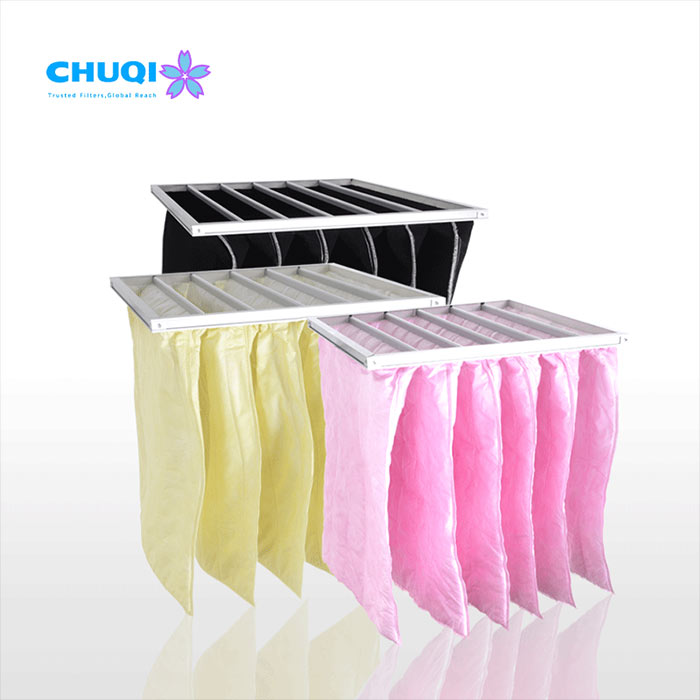
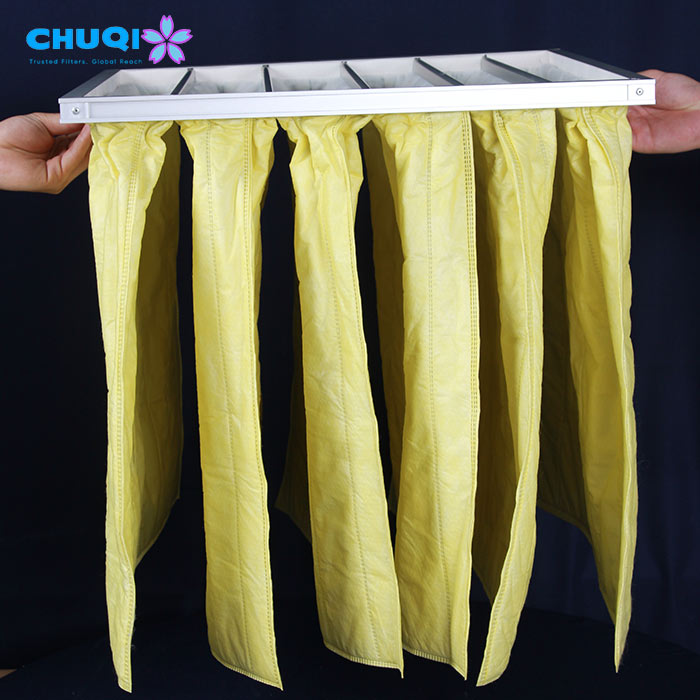
Pocket depth refers to the length of each filter bag extending from the filter frame into the airflow direction.
It is an important structural dimension because it influences how much filter media can be incorporated into the filter.
In general, a deeper pocket can accommodate more media than a shallower pocket of otherwise similar construction. This may provide additional filtration area and help distribute dust loading over a larger media surface.
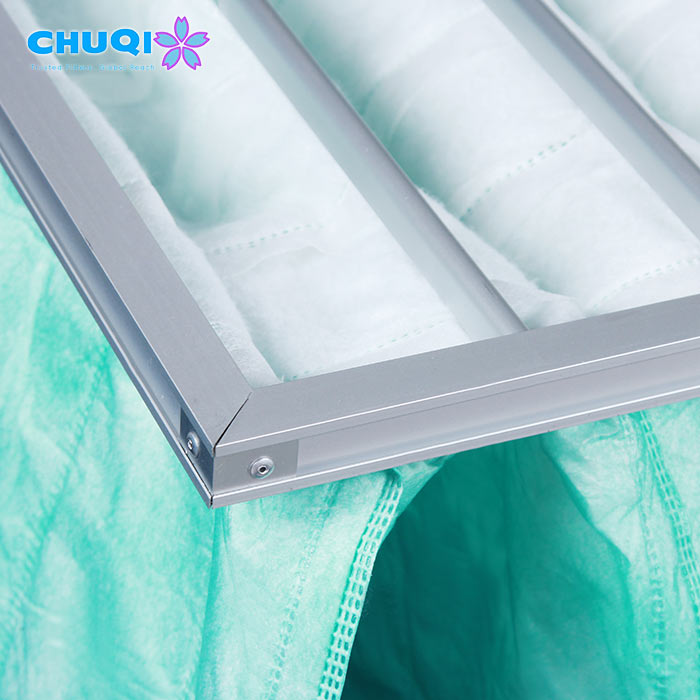
However, the usable media area does not depend on depth alone. Pocket width, side construction, bag shape, seams and the way the media expands all affect the actual area available for filtration.
It is also important to distinguish between overall filter depth and actual pocket depth. A product’s catalog dimension may describe the overall filter configuration rather than the exact length of the media bag. These measurements should not automatically be treated as interchangeable.
1.2 What Is the Number of Pockets?
The number of pockets refers to how many individual filter bags are arranged within one filter frame.
Common HVAC bag filter designs include different pocket quantities, such as 5-, 6- and 8-pocket configurations, depending on the filter size and construction.
Pocket quantity affects how the available frame width is divided among the individual bags.
For example, a filter with more pockets may use narrower individual bags, while a filter with fewer pockets may have wider bags. The actual arrangement depends on the manufacturer’s design.
This is why pocket quantity should always be considered together with pocket width, depth and spacing—not as an independent performance indicator.
1.3 How Do Pocket Depth and Pocket Quantity Work Together?
Pocket depth and pocket quantity determine the overall geometry of a bag filter.
They influence:
The amount and distribution of filter media.
The width and shape of each individual pocket.
How freely the pockets can expand during operation.
The spacing between adjacent pockets.
The effective use of the available filter frame.
A deeper design with too little expansion space may not use its additional media effectively. Likewise, adding more pockets to a fixed frame can make individual pockets narrower and change their expansion behavior.
The best design is therefore not necessarily the one with the greatest depth or the highest pocket count. It is the one that provides suitable media distribution and stable airflow within the available installation space.
The pocket structure also offers advantages in HVAC filtration beyond its physical dimensions. Learn more about the benefits of pocket air filters in HVAC systems.
2. How Does Pocket Depth Affect HVAC Bag Filter Performance?
Pocket depth affects more than the physical size of a filter. It changes the amount of media that can be incorporated into the structure and how the filter behaves inside an HVAC system.
2.1 Deeper Pockets Can Provide More Filter Media
One reason bag filters use a pocket structure is to accommodate a relatively large amount of filter media within a compact front-facing frame.
Compared with a flat filter of similar face dimensions, a pocket filter can use its three-dimensional bag structure to provide a larger filtration surface.
Increasing pocket depth can provide additional media, provided the pocket width and construction are suitable.
A larger media area can help reduce the average airflow passing through each unit of media area. This may contribute to lower media loading and more gradual pressure-drop development under comparable operating conditions.
However, actual performance also depends on media efficiency, permeability, fiber structure, airflow and dust characteristics.
The additional depth is only useful when the media can expand and participate effectively in filtration.
The structure and characteristics of the pocket filter media also influence how effectively the available media area is used.
2.2 Why Deeper Pockets Are Not Always Better
A common mistake is to assume that a deeper bag filter will always have a longer service life.
In practice, an overly deep pocket can create structural and installation problems.
For example:
Insufficient installation clearance: The pockets may come too close to downstream components or adjacent filters.
Restricted expansion: Pockets may not open fully when the available space is limited.
Unstable bag shape: Long, narrow pockets may be more difficult to keep evenly separated without suitable construction and support.
Uneven airflow: Poorly expanded pockets can cause some media areas to carry more airflow than others.
When this happens, the theoretical increase in media area may not translate into a proportional improvement in operating performance.
The useful question is not simply how deep the pockets can be, but whether the available space allows them to expand and work effectively.
2.3 Installation Space Determines the Practical Pocket Depth
The installation space behind the filter frame is one of the most important factors in selecting pocket depth.
A bag filter needs sufficient clearance for its pockets to extend and expand during operation.
If the available space is too short, the bags may be compressed or obstructed. This can interfere with airflow distribution and reduce the benefit of the pocket design.
For replacement filters, the existing filter’s overall dimensions and installed arrangement provide a useful starting point. For new HVAC systems, pocket depth should be considered alongside the filter section layout and the clearance available downstream.
A deeper configuration may be suitable for an AHU with sufficient installation space. A shallower design may be more practical where the filter section is compact or where downstream components limit the available depth.
2.4 How Does Filter Media Affect Pocket Design?
Pocket depth and quantity are only part of the design. The media itself also affects how the filter performs.
Different media structures can have different permeability, flexibility and mechanical characteristics. These properties influence how air passes through the material and how the pockets maintain their shape during operation.
For a closer comparison, read our guide to synthetic vs. non-woven pocket filter media.
3. How Does the Number of Pockets Affect Filter Performance?
Pocket quantity changes the way filter media is distributed within the frame. It also affects the width and spacing of individual bags.
3.1 Fewer Pockets: Wider Individual Bags
With fewer pockets in a frame of the same overall width, each pocket may be wider.
This can provide more room for individual bags to expand, depending on their depth and construction.
However, fewer pockets do not automatically mean better airflow or lower pressure drop. The final result depends on the total effective media area, media characteristics and the way the bags are arranged.
A design with too few pockets may also make it difficult to distribute the available media evenly across a wide filter frame.
3.2 More Pockets: Greater Media Distribution Across the Frame
Increasing the number of pockets can distribute the filter media across more individual bags.
This may be useful when the filter design requires a particular media arrangement within a given frame size.
However, as pocket quantity increases, the width available for each individual bag generally becomes smaller unless the overall frame width also increases.
If the pockets become too narrow or are placed too close together, they may not expand properly. Adjacent bags can restrict one another, reducing the effective use of the media.
More pockets therefore do not necessarily mean more usable filter area or longer service life.
3.3 Why Pocket Spacing Matters
Pocket spacing is an important part of bag filter design because each bag needs enough room to expand under operating airflow.
When adjacent pockets are too close, they may touch or overlap as airflow passes through the filter.
This can lead to:
Restricted expansion of individual bags.
Uneven airflow distribution across the filter.
Reduced use of the available media surface.
Unnecessary mechanical contact between adjacent pockets.
A well-designed pocket arrangement allows each bag to open into a stable shape while maintaining suitable separation from neighboring bags.
The relationship between pocket width, depth and spacing is therefore more important than pocket quantity alone.


4. How to Choose the Right Pocket Depth and Number of Pockets
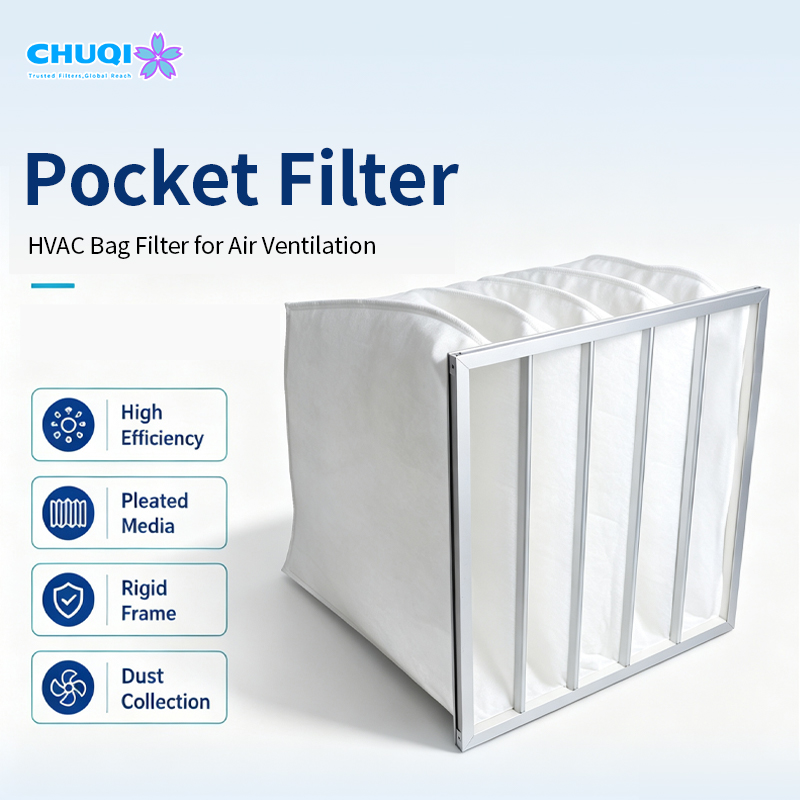
The most practical way to select a bag filter configuration is to start with the HVAC system and work toward the filter structure.
Step 1: Start with the Available Installation Space
First, consider the space available behind the filter frame.
The filter must fit into the existing filter section, but the pockets also need room to extend and expand.
For replacement applications, the original filter’s overall dimensions and installed arrangement are useful references.
For new installations, consider the available downstream clearance and whether adjacent filters or equipment could restrict pocket expansion.
A deeper pocket is only beneficial when the installation allows it to function as designed.
Step 2: Understand the Required Airflow
Airflow influences how quickly air passes through the filter media.
A useful starting point is face velocity:
Face velocity (m/s) = Airflow (m³/h) ÷ [3600 × Filter face area (m²)]
For example, consider an HVAC filter with a face dimension of 595 × 595 mm and an airflow of 3,600 m³/h.
The filter face area is:
0.595 × 0.595 = 0.354 m²
The approximate face velocity is:
3,600 ÷ (3,600 × 0.354) = 2.82 m/s
This value describes the average air velocity across the filter’s front-facing area. It is not the actual velocity through each pocket or through the filter media.
The example helps illustrate why pocket geometry matters: the same frame size can be used under different airflow conditions, but the resulting operating behavior may differ.
If airflow is high relative to the available media area, the filter may experience greater resistance and dust loading. A suitable pocket arrangement helps make effective use of the media, but pocket depth or quantity cannot compensate for an unsuitable filter grade or media selection.
Pocket configuration is only one part of filter performance. The filtration efficiency of the media is equally important. Our guide to ISO 16890 pocket filter efficiency explains how ePM classifications help evaluate HVAC filter performance.
Step 3: Select a Practical Pocket Depth
Once the installation space and airflow are understood, consider the pocket depth.
A deeper design may be useful when:
The HVAC system has sufficient downstream clearance.
A larger media area is beneficial for the operating conditions.
The pocket structure can expand without obstruction.
The filter frame and pocket construction can maintain stable bag geometry.
A shallower design may be more suitable when installation space is limited or when a deeper pocket would interfere with nearby equipment.
The objective is to select a depth that makes effective use of the available space—not simply to choose the longest pocket available.
Step 4: Select the Number of Pockets According to Frame Geometry
Pocket quantity should be selected together with the filter frame width and individual pocket dimensions.
For example, a 595 mm-wide frame has a different design requirement from a 295 mm-wide frame. The number of bags that can be arranged effectively depends on the available width, pocket construction and required spacing.
Adding pockets to a fixed frame changes the width available for each bag. If the bags become too narrow, their expansion may be restricted.
A suitable configuration balances:
Individual pocket width.
Pocket depth.
Separation between adjacent bags.
Available filter frame dimensions.
Airflow distribution through the complete filter.
This is why a 5-pocket, 6-pocket or 8-pocket design should not be judged by quantity alone.
Step 5: Consider Dust Loading and Operating Conditions
The filter’s service life depends on more than its pocket configuration.
Dust concentration, particle characteristics, filter efficiency, airflow, operating hours and upstream filtration all influence how quickly the filter loads.
A larger effective media area may help distribute dust over a wider surface, but it does not guarantee a fixed increase in service life.
For example, two bag filters with similar dimensions can behave differently if their media structures, filtration efficiencies or operating conditions differ.
Pocket depth and quantity should therefore be treated as part of the overall filter design rather than as standalone indicators of service life.
Filter service life also affects the total cost of HVAC operation. For a broader view of maintenance expenses and replacement planning, see our guide on reducing HVAC filter replacement costs.
5. Practical Example: Choosing a Pocket Configuration for a 595 × 595 mm AHU Filter
Consider an AHU that uses a 595 × 595 mm bag filter.
The available frame width is fixed, but different pocket arrangements can produce different individual bag widths and expansion characteristics.
A useful way to think about the design is:
Situation A: Limited downstream clearance
If the space behind the filter is restricted, a deeper pocket may be difficult to install. Even if it provides more theoretical media area, the bags may not expand properly.
In this situation, a shallower configuration that fits the available space may perform more reliably.
Situation B: Sufficient installation space
If there is enough clearance, a deeper pocket design may provide additional media area.
However, the pocket width and spacing still matter. The bags need sufficient room to expand without pressing against adjacent pockets.
Situation C: More pockets within the same frame width
Increasing pocket quantity changes how the frame width is divided.
For example, a 6-pocket layout and an 8-pocket layout do not simply differ by two additional bags. They also differ in individual pocket width and potentially in the way the bags expand and distribute airflow.
A higher pocket count is only useful when the complete geometry remains suitable.
The key lesson: For a 595 × 595 mm AHU filter, the best configuration is the one that fits the installation space, handles the required airflow and allows the individual pockets to expand effectively. The frame size alone does not determine the ideal pocket depth or pocket count.
6. Common Pocket Filter Design Mistakes
Several design assumptions can lead to unsuitable bag filter configurations.
| Common mistake | Why it can cause problems | Better approach |
|---|---|---|
| Choosing the deepest pocket available | The pockets may not have enough installation clearance to expand | Match pocket depth to the available downstream space |
| Assuming more pockets mean better performance | More bags can reduce individual pocket width and restrict expansion | Evaluate pocket width, spacing and overall geometry |
| Comparing filters by overall dimensions alone | Similar dimensions do not guarantee similar media area or performance | Consider media construction and pocket arrangement |
| Treating catalog depth as actual pocket length | Overall filter dimensions and media bag depth may describe different measurements | Use the product drawing to distinguish the dimensions |
| Assuming more media always means longer service life | Dust loading and operating conditions also affect service life | Evaluate the complete filter and HVAC operating conditions |
A well-designed bag filter is a combination of suitable media, stable pocket construction and an appropriate arrangement within the filter frame.
7. Custom Pocket Filter Configurations from Chuqi New Materials
Standard pocket filter configurations are useful for common HVAC applications, but not every air handling unit uses the same filter dimensions or operating conditions.
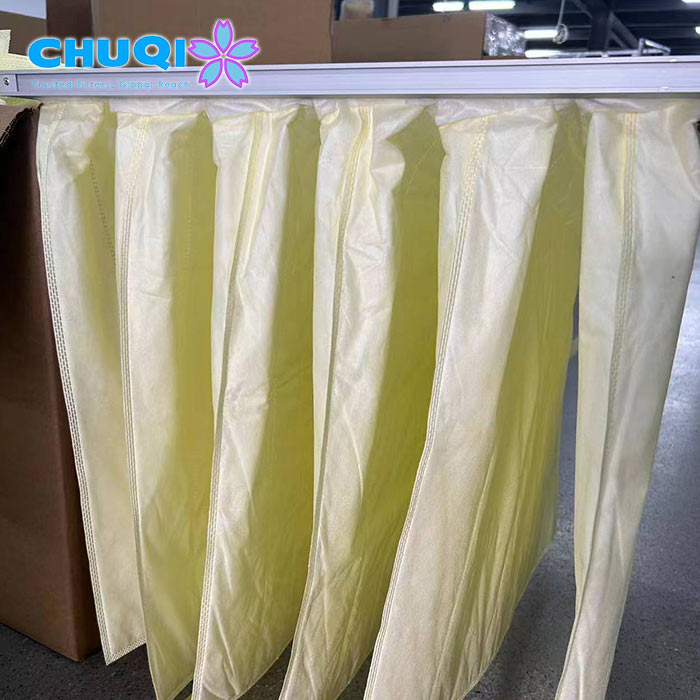
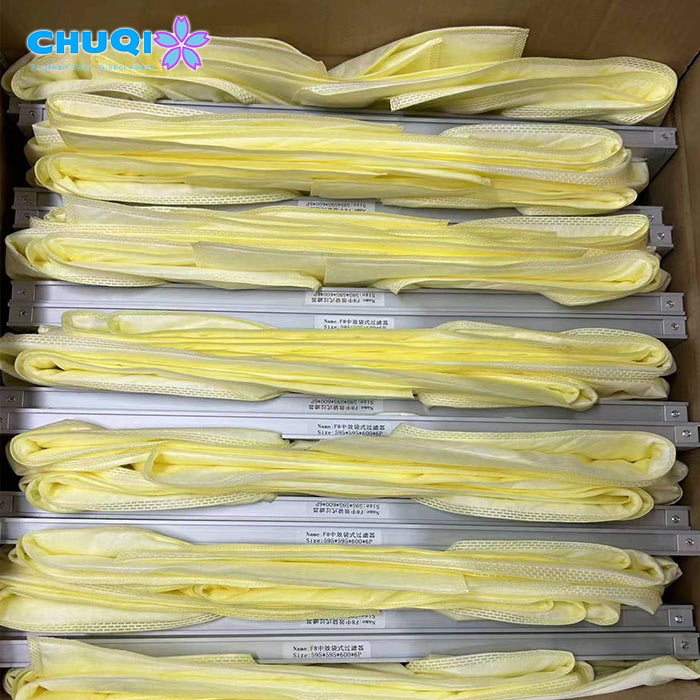
Chuqi New Materials manufactures HVAC pocket and bag filters in different dimensions and pocket layouts, including 5-, 6- and 8-pocket configurations in its listed product range.
Examples shown in the product range include:
| Listed filter dimensions | Pocket configuration |
|---|---|
| 495 × 295 mm | 5 pockets |
| 495 × 495 mm | 5 pockets |
| 595 × 295 mm | 6 pockets |
| 595 × 495 mm | 6 pockets |
| 595 × 595 mm | 8 pockets |
The dimensions above are examples of listed product configurations. The catalog depth reference should not be interpreted automatically as the actual media bag length.
For applications with non-standard filter sections, Chuqi can work with different filter dimensions and customized configurations.
Depending on the application, the design can be developed around:
Filter frame dimensions.
Required pocket depth and arrangement.
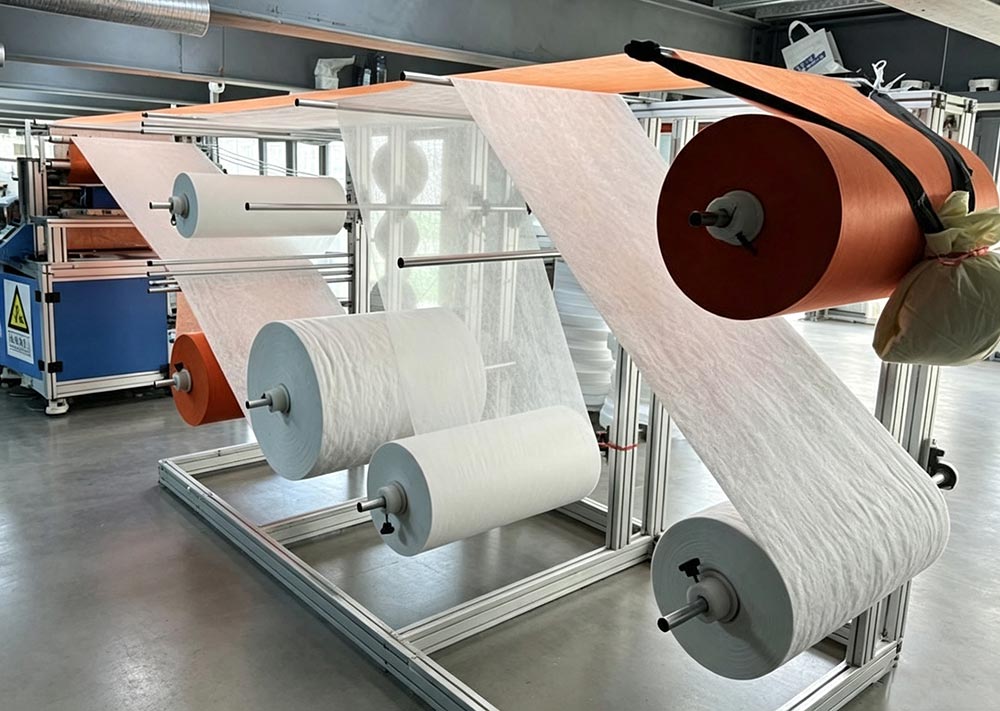
Filter media type and efficiency.
Airflow and operating conditions.
Installation and replacement requirements.
The goal is to produce a filter that fits the HVAC system and uses its media effectively, rather than simply increasing the number or depth of pockets.
For buyers comparing manufacturers, our guide on choosing a reliable pocket filter supplier explains the factors that matter beyond product price.
Explore Chuqi’s pocket and bag air filters to see available product configurations.
For more information about customized filter solutions, contact the Chuqi team to discuss a configuration suited to your HVAC application.
Frequently Asked Questions
Q1. What is the best pocket depth for an HVAC bag filter?
There is no single best pocket depth for every HVAC system. The suitable depth depends on the available installation space, required airflow, filter frame dimensions and pocket construction. A deeper pocket can provide more media, but only when it has enough room to expand properly.
Q2. How many pockets should an HVAC bag filter have?
The appropriate number of pockets depends on the filter frame size and the required pocket geometry. Common configurations include 5-, 6- and 8-pocket designs. More pockets do not automatically mean better filtration because individual bag width and spacing also affect performance.
Q3. Do deeper bag filters last longer?
Not necessarily. Deeper pockets can accommodate more filter media, which may help distribute dust loading over a larger area. However, actual service life also depends on dust concentration, media efficiency, airflow, operating hours and upstream filtration.
Q4. Does increasing the number of pockets reduce pressure drop?
Not automatically. Pressure drop depends on media permeability, filtration efficiency, airflow and the effective media area. Increasing pocket quantity changes the filter geometry, but it does not guarantee lower resistance. Poor spacing can even restrict pocket expansion and reduce effective media utilization.
Q5. Can a bag filter have custom pocket depth and quantity?
Yes. Pocket depth and quantity can be customized according to the filter frame dimensions, installation space, airflow requirements and media construction. Custom configurations are particularly useful when replacing non-standard filters or developing filters for specific AHU designs.
Q6. Is overall filter depth the same as pocket depth?
No. Overall filter depth and actual pocket depth can be different measurements. The overall dimension may include the filter frame or header construction, while pocket depth describes the media bag extending from the frame. The product drawing is the most reliable way to distinguish the two.