
Choosing between a bag filter and a pleated filter is not simply a matter of choosing between two filter shapes. Both designs increase the amount of filter media available within a given installation space, but they use that media differently.
A bag filter uses multiple extended pockets, while a pleated filter arranges the media into repeated folds inside a panel frame. These structural differences influence airflow distribution, dust accumulation, pressure drop and the way each filter fits into an HVAC system.
For example, a pleated filter may be a practical choice when installation depth is limited. A bag filter may be more suitable when the system needs a larger filtration area and has sufficient downstream space for the pockets.
But there is an important consideration: more filter media does not automatically mean lower pressure drop or longer service life. The way air moves through the media and how evenly dust accumulates are just as important.
In this article, “bag filter” refers to HVAC pocket air filters used in air handling and ventilation systems, not industrial baghouse dust collector bags. The comparison focuses on HVAC bag filters and pleated panel filters used for general ventilation.
This guide explains how the two designs work, compares their performance and shows how to choose the right filter for different HVAC applications.
1. What Is a Bag Filter?
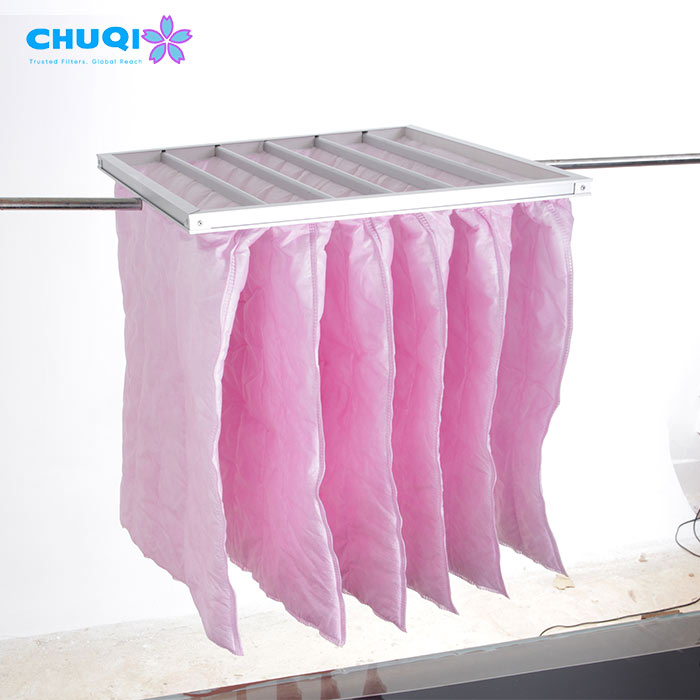
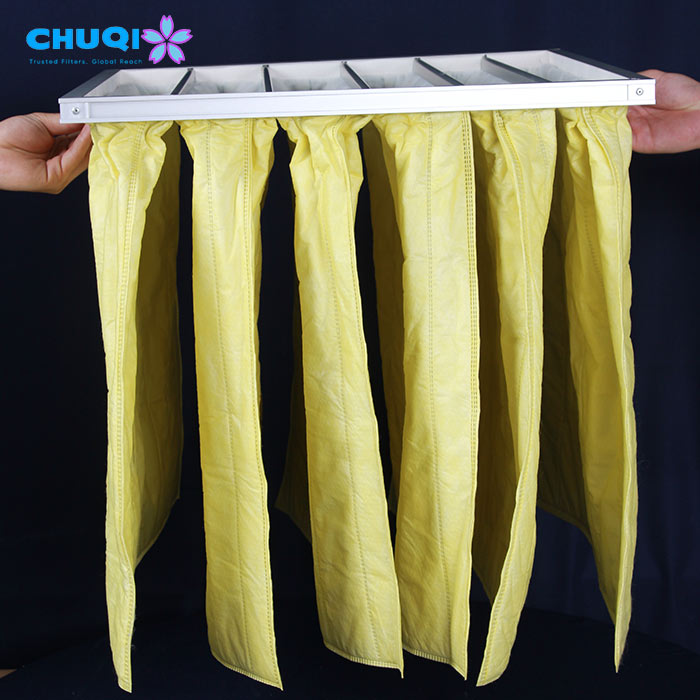
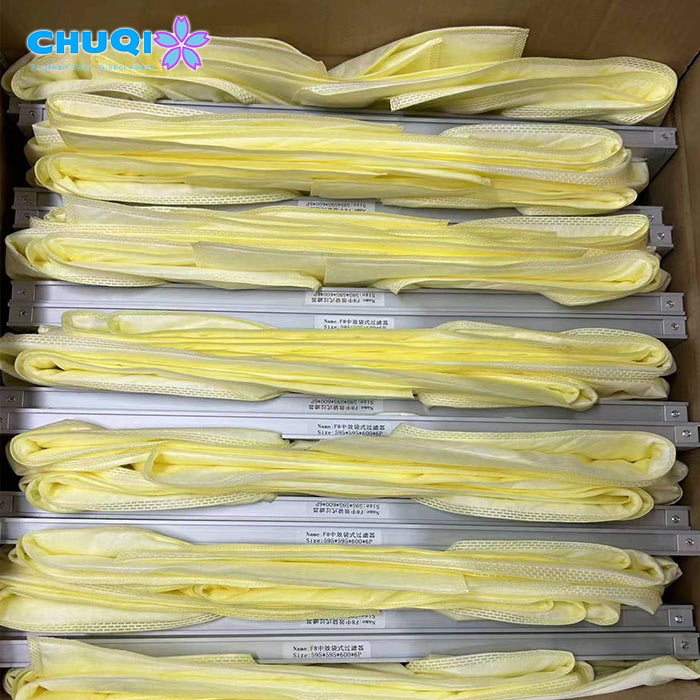
A bag filter, also known as a pocket air filter, is an HVAC air filter made of multiple flexible pockets attached to a supporting frame.
Instead of keeping the filter media flat, the pockets extend downstream into the airflow. This arrangement provides a relatively large filtration area within a defined front-facing installation size.
How does a bag filter work?
When air enters the filter, it passes through the pocket media. Airborne particles are captured through several filtration mechanisms, including interception, inertial impaction and diffusion.
As dust accumulates, the media gradually develops a dust layer, while its internal fiber structure continues to capture particles. The pressure drop generally increases as the filter loads.
The pocket design offers two important advantages.
More media area within a limited face size
A flat filter is restricted by its front-facing dimensions. A bag filter extends the media into the airflow, creating additional surface area without requiring the entire filter to become wider or taller.
A deeper structure for dust accumulation
The extended pockets provide a different dust-loading arrangement from a flat panel. When the media and pocket geometry are properly designed, the filter can distribute dust collection across a larger media surface.
However, pocket depth alone does not determine performance. If pockets are compressed, too close together or exposed to uneven airflow, some sections may collect dust faster than others.
This is why the quality of the media, pocket construction and overall filter design all matter.
For a broader introduction to pocket filter structures, materials and applications, see our guide to pocket air filters and their selection.
2. What Is a Pleated Air Filter?
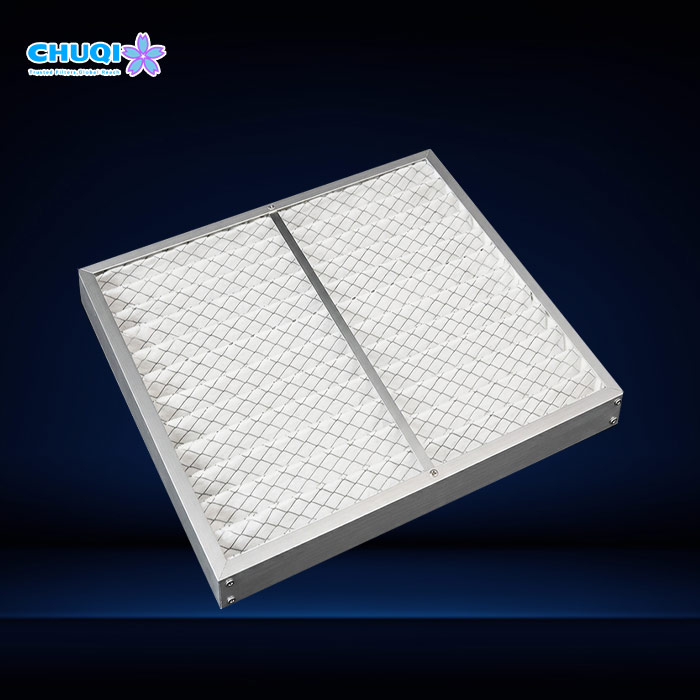
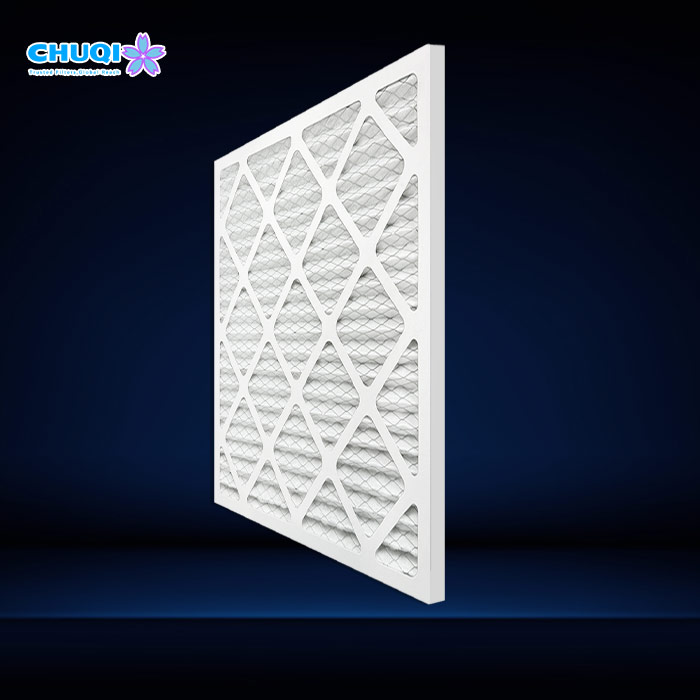
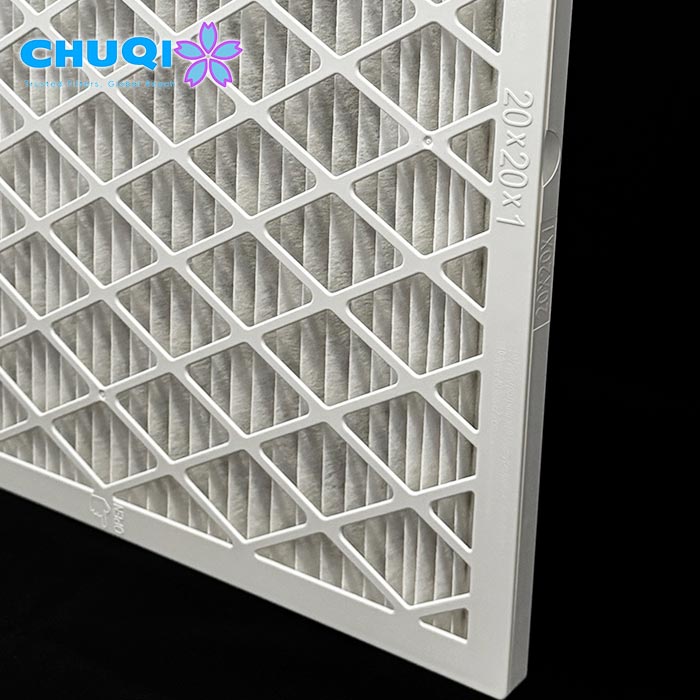
A pleated air filter uses filter media folded into repeated pleats and installed inside a supporting frame.
The folds increase the media surface area compared with a flat panel of the same face dimensions. This allows a pleated filter to provide additional filtration area while maintaining a relatively compact installation format.
Pleated filters are commonly used in HVAC pre-filtration and other filtration stages, depending on their media, construction and tested efficiency.
Why does pleat spacing matter?
Pleated filters rely on the space between folds to maintain effective airflow.
Consider what happens when the pleats are too close together.
As dust accumulates, it can bridge the gaps between adjacent folds. This reduces the available airflow channels and may cause resistance to rise more quickly.
Pleat stability is also important. If the folds deform under airflow, the filter may lose some of its usable media area. This can create uneven airflow and concentrate dust loading in certain sections.
A well-designed pleated filter therefore needs more than a large number of folds. Pleat depth, spacing, media properties and mechanical support all contribute to its performance.
This is particularly important in systems with high airflow or relatively heavy dust loading.
3. Bag Filter vs. Pleated Filter: Key Differences
The main difference lies in how each design arranges its filter media.
| Comparison | Bag Filter | Pleated Filter |
|---|---|---|
| Filter structure | Multiple flexible pockets | Folded media in a panel frame |
| Media arrangement | Extended downstream into pockets | Arranged in repeated folds |
| Installation depth | Generally requires more downstream depth | Often suitable for more compact installations |
| Media area | Created through pocket depth and number | Created through pleat depth and number |
| Airflow characteristics | Influenced by pocket geometry and distribution | Influenced by pleat spacing and stability |
| Dust accumulation | Distributed across pocket media | Accumulates on and within pleated media |
| Mechanical support | Frame, seams and supporting components | Frame, separators or supporting structure |
| Common HVAC applications | Medium-efficiency and secondary filtration | Pre-filtration and other stages depending on design |
Neither filter structure automatically provides higher filtration efficiency, lower pressure drop or longer service life.
These properties depend on the filter media and the complete filter design.
A bag filter with unsuitable media may have higher resistance than a well-designed pleated filter. Likewise, a pleated filter with restricted airflow channels may lose its initial performance advantages as dust accumulates.
The meaningful comparison is therefore between complete filter products under comparable operating conditions—not simply between two filter shapes.
4. How Do Bag Filters and Pleated Filters Differ in Performance?
4.1 Filter Media Area: Why Does More Area Matter?
One of the biggest advantages of both bag and pleated filters is their ability to increase the available filtration media without increasing the front-facing dimensions of the filter.
However, two different measurements need to be understood:
Filter face area: The front-facing area through which air enters the filter.
Filter media area: The physical surface area of the filter media arranged within the filter structure.
These two areas are not the same.
For example, two filters may both measure 592 × 592 mm at the front, but one may use extended pockets while the other uses folded media. Their actual media areas can be significantly different.
Why does this matter?
At the same airflow rate, increasing the media area can reduce the average velocity through the media. This may help control pressure drop and distribute dust loading across a larger surface.
But the benefit depends on how effectively air is distributed across that surface.
Media that is poorly utilized because of uneven airflow, compressed pockets or restricted pleat channels may not deliver the expected reduction in pressure drop or improvement in dust holding capacity.
The important principle is that physical media area alone does not determine filter performance. Its arrangement and actual use within the airflow matter just as much.
4.2 Airflow and Pressure Drop: Which Filter Offers Lower Resistance?
Pressure drop is the resistance air encounters when passing through a filter.
It directly affects the fan’s workload and the energy needed to move air through an HVAC system.
Neither bag filters nor pleated filters always have lower pressure drop. Their performance depends on:
Filter media permeability and fiber structure.
Actual airflow rate.
Filter media area.
Pocket depth or pleat geometry.
Airflow distribution.
Dust accumulation during operation.
A useful starting point is to calculate the filter face velocity:
Face velocity (m/s) = Airflow (m³/h) ÷ [3600 × Filter face area (m²)]
Example:
An HVAC system delivers 3,600 m³/h of air through a filter with a face area of 0.6 m².
Face velocity = 3,600 ÷ (3,600 × 0.6)
Face velocity = 1.67 m/s
The average face velocity is approximately 1.67 m/s.
This calculation shows how airflow and filter dimensions affect the operating conditions.
However, face velocity is not the same as velocity through the filter media. The actual media velocity also depends on the media area and airflow distribution.
This distinction helps explain why two filters with identical face dimensions can have different pressure drops.
A deeper bag structure may provide more media area, while a pleated filter can achieve a similar objective through its folds. The result depends on how effectively each design uses its media.
What should you learn from the pressure-drop comparison?
Do not compare two filters using pressure drop figures measured at different airflow rates. Compare their initial resistance under comparable operating conditions, then consider how resistance increases as dust accumulates.
A filter with a low initial pressure drop may not necessarily have the lowest operating cost over its entire service life.
4.3 Dust Holding Capacity: Which Filter Can Hold More Dust?
Dust holding capacity describes how much dust a filter can retain under defined test conditions before reaching a specified final resistance or test endpoint.
It is an important performance indicator because it helps explain how a filter behaves as it collects dust.
A bag filter can provide a large media area through its extended pockets. A pleated filter can also provide substantial media area through its folded structure.
But total media area alone cannot determine which filter holds more dust.
Consider two examples.
Example 1: Uneven loading in a bag filter
Suppose a bag filter has several pockets, but airflow is concentrated in the central section.
The central pockets may collect more dust than the outer pockets. As resistance increases in these heavily loaded areas, the filter may not use its entire media area as efficiently as expected.
Even with a large total media area, uneven loading can limit the practical benefit of the design.
Example 2: Restricted channels in a pleated filter
A pleated filter may have a large media area, but if the pleats are too closely spaced, dust can accumulate between adjacent folds.
As the gaps become restricted, airflow distribution changes and pressure drop may increase more rapidly.
These examples show why filter design must consider both media area and dust distribution.
A filter’s actual dust holding capacity is influenced by:
Media fiber structure and permeability.
Particle size and dust characteristics.
Airflow rate and operating conditions.
Filter media area.
Filter geometry and dust distribution.
For HVAC operators, this also explains why a filter with a lower purchase price may not always be the more economical option. A filter that loads quickly can increase replacement frequency, labor costs and maintenance requirements.
Our guide to reducing HVAC filter replacement costs explains why filter selection should be considered over the entire operating life, rather than by purchase price alone.
4.4 Filtration Efficiency: Does Filter Structure Determine the Grade?
No. A bag filter is not automatically more efficient than a pleated filter, and a pleated filter is not automatically a lower-efficiency product.
Filtration efficiency is mainly determined by the filter media and its tested performance.
For HVAC applications, efficiency classification should also be understood in relation to the applicable standard.
EN 779 classifications such as F5, F7 and F8 remain common in older specifications and industry searches. However, EN 779 has been replaced by ISO 16890.
ISO 16890 classifies general ventilation filters using particle-size-related efficiency groups, including:
ISO Coarse
ISO ePM10
ISO ePM2.5
ISO ePM1
These systems use different classification methods, so an old EN 779 grade should not be treated as an exact equivalent to an ISO 16890 class without appropriate test evidence.
When comparing bag and pleated filters, the more useful question is:
Which filter achieves the required filtration performance at the airflow and operating conditions of the HVAC system?
You can explore this topic further in our article on ISO 16890 pocket filter efficiency and classification.
5. When Should You Choose a Bag Filter?
Bag filters are commonly used when an HVAC system needs a larger filtration area and has enough installation depth to accommodate the pockets.
Typical applications include:
Commercial building air handling units (AHUs).
Office buildings, shopping centers and public facilities.
Industrial ventilation systems.
Secondary filtration stages.
HVAC systems requiring medium-efficiency filtration.
Why are bag filters widely used in AHU systems?
Many AHU systems use multiple filtration stages instead of relying on a single filter.
For example:
An upstream pre-filter captures larger airborne particles.
A bag filter provides a further level of filtration.
A downstream high-efficiency filter may be used where the application requires it.
This arrangement distributes the filtration workload across different stages.
The upstream filter reduces the amount of larger dust reaching the bag filter, helping the downstream stages operate under more suitable conditions.
Bag filters are particularly useful when:
The AHU has sufficient downstream installation depth.
A larger media area is beneficial.
The required filtration efficiency suits the available bag filter design.
The filter needs to operate as part of a staged HVAC filtration system.
For applications with heavier dust loading, the performance of the upstream pre-filter can also have a significant influence on the service life of the bag filter.
6. When Is a Pleated Filter the Better Choice?
Pleated filters are often more practical when the installation space is limited or the HVAC system uses a panel-style filter arrangement.
Typical applications include:
Compact HVAC units.
Return-air and supply-air filtration.
Pre-filtration stages.
Equipment with limited installation depth.
Systems designed for rigid panel filter replacement.
Why can a pleated filter be more convenient?
A pleated filter provides additional media area through its folds while maintaining a compact panel format.
Its rigid frame also makes handling and installation straightforward in systems designed for panel filters.
However, compactness should not be confused with superior performance.
If the system has high dust concentrations or operates at a high airflow rate, pleat spacing and media characteristics become particularly important.
A pleated filter that works well in a relatively clean commercial building may not deliver the same service life in a dusty industrial environment.
In some cases, a more suitable upstream pre-filtration arrangement can improve the performance of the entire filtration system.


7. How to Choose Between Bag Filters and Pleated Filters
The best filter is not necessarily the one with the largest media area or the lowest initial pressure drop. It is the one that performs effectively within the actual HVAC system.
Here are five factors that make the decision easier.
1. Available Installation Depth
This is often the first practical difference between the two designs.
A bag filter needs enough downstream space for its pockets to extend freely. If the pockets are compressed or obstructed, airflow may become uneven and the filter may not perform as intended.
A pleated filter may be more suitable where the available installation depth is limited.
If the existing filter housing is designed for panel filters, replacing them with bag filters may also require changes to the mounting arrangement.
2. Dust Concentration and Particle Characteristics
The dust entering the filter has a major influence on service life.
A system handling relatively clean office air has different filtration demands from an industrial ventilation system exposed to higher dust concentrations.
Particle characteristics also matter.
For example, coarse dust may accumulate differently from fine airborne particles. Sticky or fibrous contaminants may create additional challenges for the filter media and airflow channels.
If the upstream dust load is high, improving pre-filtration may be more effective than simply choosing a filter with more media area.
3. Airflow and Pressure Drop
The filter should be evaluated at the airflow it will actually handle.
A filter that has low resistance at a relatively low airflow may experience a much higher pressure drop when the system operates at a greater flow rate.
Comparing pressure drop at a common airflow provides a more meaningful basis for selection.
It is also useful to consider how resistance changes during dust loading, because operating pressure drop affects fan energy consumption.
4. Filtration Stage and Required Efficiency
A filter should be selected according to its role in the complete HVAC filtration arrangement.
For example, a pleated panel filter may be suitable as an upstream pre-filter, while a bag filter provides a subsequent filtration stage.
In another system, a pleated filter may be sufficient for the required filtration duty.
The important point is to select the filter according to the required particle removal performance and the demands of the entire system—not simply its structure.
5. Total Operating Cost
The purchase price is only one part of the cost of an HVAC filter.
A more useful comparison includes:
Initial filter cost.
Replacement frequency.
Pressure drop during operation.
Fan energy consumption.
Maintenance labor.
The effect of filtration performance on downstream equipment.
For example, a filter with a lower purchase price may become more expensive if it loads quickly and requires frequent replacement.
Likewise, a filter with a higher initial price may offer better operating value if it maintains suitable airflow and service life.
This is why the total cost over the operating period is more meaningful than the purchase price alone.
Example: Replacing a Pleated Filter with a Bag Filter
Imagine an AHU currently using pleated panel filters. The maintenance team is considering bag filters because they want to increase the available media area and potentially extend replacement intervals.
However, the bag filter requires more downstream installation depth. If the existing housing cannot accommodate the pockets, the replacement may create installation problems.
Even when installation is possible, a longer service life is not guaranteed. The actual result depends on the filter media, airflow distribution, dust concentration and pressure-drop development.
This is why changing filter structure should be evaluated as a system-level decision rather than simply replacing one filter format with another.
Choose the Filter That Works with Your HVAC System
Bag filters and pleated filters both increase the available filtration area, but they achieve this through different structures.
Bag filters use extended pockets and are often suitable for HVAC systems with sufficient installation depth and a need for larger filtration areas.
Pleated filters use folded media in a compact panel format and can be a practical option where installation space is limited.
Neither design guarantees lower pressure drop, higher dust holding capacity or longer service life. Those results depend on the media, filter geometry, airflow distribution and operating environment.
The best choice is the filter that delivers the required filtration performance while maintaining suitable airflow, pressure drop and operating cost throughout its service life.
Chuqi New Materials manufactures air filtration media and finished filters for commercial and industrial applications. With in-house manufacturing capabilities and customized production options, Chuqi supports different pocket configurations, filter sizes and media requirements for HVAC projects.
Explore our Pocket & Bag Air Filters to learn more about our product range and available configurations.
Frequently Asked Questions
Is a bag filter better than a pleated filter?
Neither is universally better. Bag filters provide extended pockets that can accommodate a large media area, while pleated filters provide a compact panel design. The better choice depends on installation depth, airflow, dust loading, filtration efficiency and operating conditions.
Do bag filters have a lower pressure drop than pleated filters?
Not automatically. Pressure drop depends on media permeability, effective media area, airflow rate, filter geometry and dust accumulation. A well-designed pleated filter can have lower resistance than a poorly designed bag filter, and vice versa.
Do bag filters have a higher dust holding capacity?
A bag filter can provide substantial media area through its extended pockets, but this does not guarantee higher dust holding capacity. Airflow distribution, media structure, particle characteristics and operating conditions all influence how much dust the filter can retain.
Can a bag filter replace a pleated filter in an HVAC system?
Sometimes, but not in every installation. Bag filters generally need more downstream depth than panel-style pleated filters. The existing filter housing, mounting arrangement and available space may affect whether a replacement is practical.
Are F7 and F8 bag filters still used?
Yes. F7 and F8 are legacy EN 779 classifications that remain common in older specifications and industry searches. EN 779 has been replaced by ISO 16890, so current filter selection should consider the applicable classification and actual product test data rather than assume a direct grade conversion.
Which filter is more suitable for industrial HVAC systems?
It depends on the dust concentration, airflow, installation space and required filtration efficiency. Bag filters are commonly used for secondary filtration in industrial ventilation and AHU systems, while pleated filters can be useful where a compact panel format is preferred. Heavy dust loading may also make upstream pre-filtration particularly important.