
Pocket filter media is the synthetic nonwoven filtration material used to capture airborne particles in bag filters. For filter manufacturers, selecting the right media involves more than choosing a filtration grade. Material structure, filtration efficiency, initial pressure drop, dust holding capacity and roll dimensions all influence how the material performs and fits into the manufacturing process.
Two pocket filter media products may carry similar grade descriptions but behave differently under actual airflow and dust-loading conditions. One may offer lower initial resistance, while another may provide a different balance of particle capture and dust retention.
These differences matter when developing bag filters for different ventilation systems and industrial applications.
This guide explains the key characteristics of pocket filter media, how its performance indicators relate to one another, and how manufacturers can select or customize material to suit their products and production requirements.

1. What Is Pocket Filter Media?
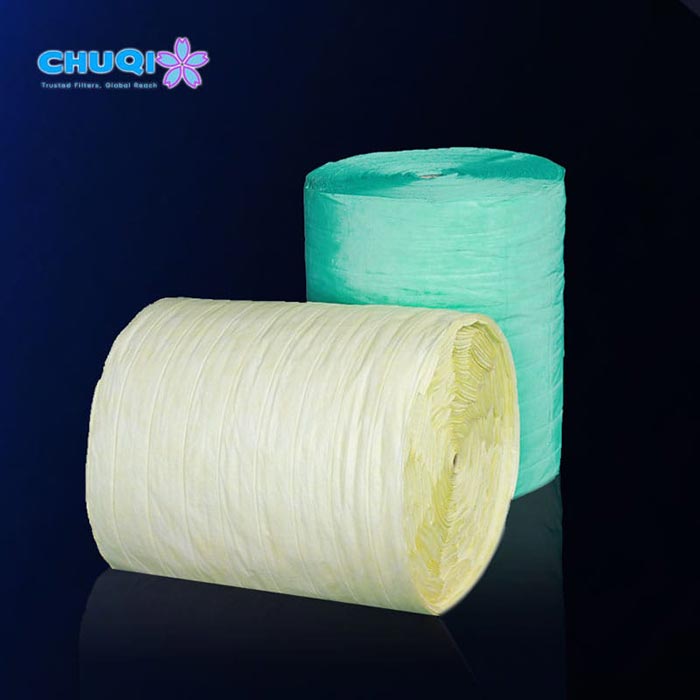
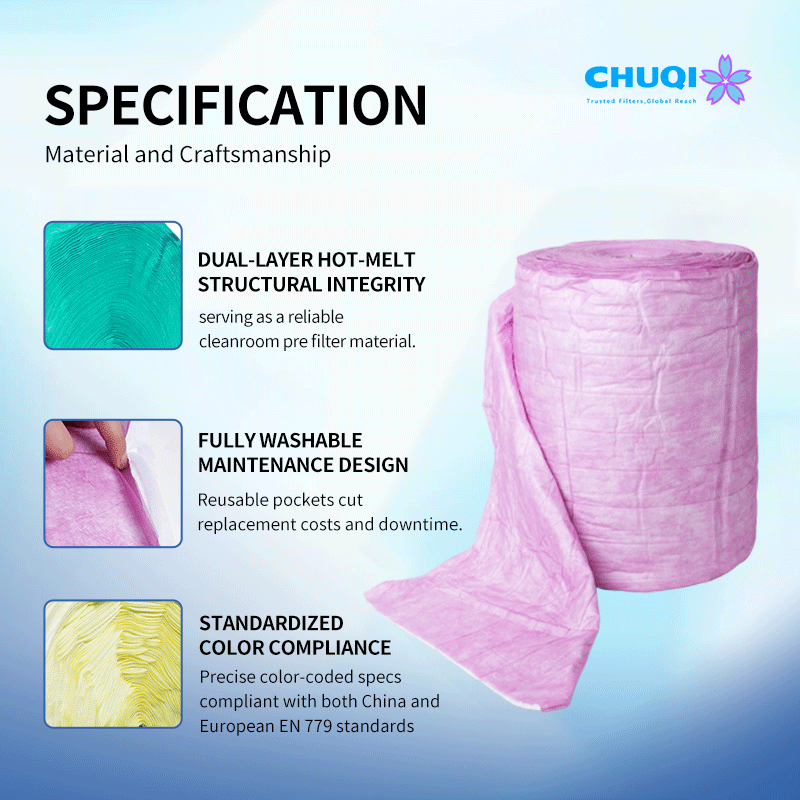
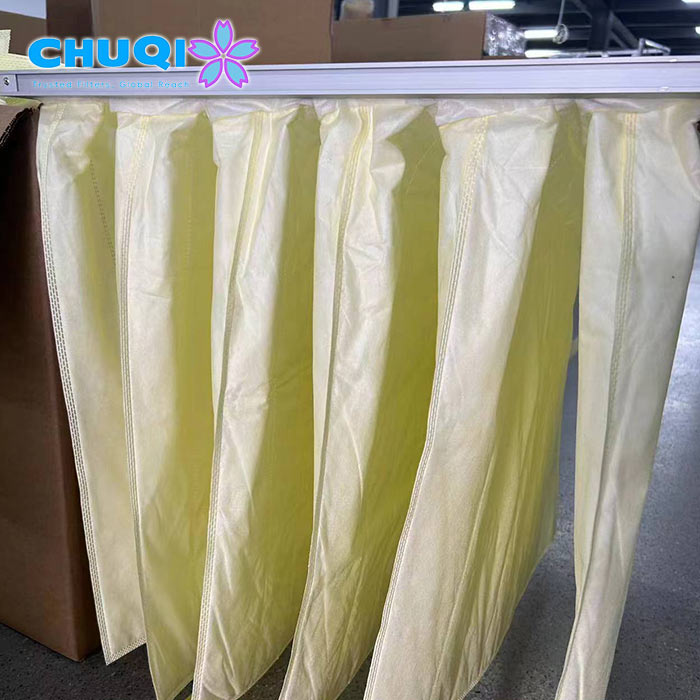
Pocket filter media is a porous filtration material used to manufacture pocket-style air filters, also known as bag filters. It is commonly made from synthetic nonwoven fibers and supplied in rolls for filter manufacturing.
The material acts as the filtration layer, capturing airborne particles as air passes through it. In a finished pocket filter, the media works together with the pocket arrangement, seams, frame and other construction components to form a complete filtration product.
Unlike the finished filter, raw pocket filter media does not independently provide the structural support that determines the shape of the pockets.
How does synthetic nonwoven media capture dust?
Many synthetic nonwoven filtration materials use a network of fibers to capture particles as air passes through the material.
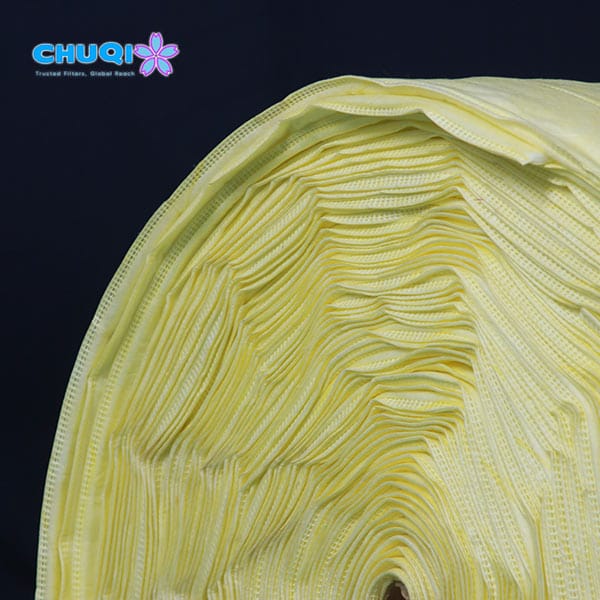
Depending on the construction, the media may use a progressive-density structure, in which the fiber arrangement becomes denser through the material depth.
This structure supports depth filtration:
Larger particles can be captured closer to the upstream surface.
Smaller particles can travel further into the material before being captured.
Dust can be distributed through more of the media depth rather than accumulating only at the surface.
This is important because particle capture does not depend on thickness alone. The fiber arrangement and the overall structure influence how air moves through the material and where particles are retained.
For bag filter manufacturers, understanding material structure provides a better starting point for comparing pocket filter media than relying only on appearance or thickness.
2. Filtration Efficiency: How Effectively Does the Media Capture Particles?
Filtration efficiency describes the proportion of airborne particles captured by a filter media under specified test conditions.
For pocket filter manufacturers, efficiency is one of the first considerations because it determines whether the material is suitable for the intended filtration application.
Different applications require different levels of particle removal. A general ventilation filter and a filter designed for a more demanding industrial environment may not need the same filtration performance.
Understanding F5–F9 pocket filter media classifications
F5–F9 are familiar grade designations in the air filtration industry, particularly in older product specifications and purchasing discussions.
However, it is important to understand the classification history:
Under EN 779:2012, the former F5 and F6 classes were renamed M5 and M6.
F7, F8 and F9 remained within the fine-filter classification group under that standard.
EN ISO 16890 subsequently replaced EN 779 as the classification standard for general ventilation air filters.
EN ISO 16890 classifies filters using ePM particle-size efficiency categories. These categories should not be treated as direct one-to-one equivalents of legacy F5–F9 grades without validated test data.
When comparing materials from different suppliers, the applicable test standard and classification method matter just as much as the grade name.
Is a higher filtration grade always better?
Not necessarily.
Higher filtration efficiency may be desirable when an application requires greater particle capture, but efficiency should not be considered independently of airflow resistance.
For example, a material with higher efficiency but substantially higher initial pressure drop may not be the best choice for a system designed around lower airflow resistance.
The objective is to achieve the required particle capture while maintaining a suitable balance between efficiency, pressure drop and dust holding capacity.
Another important distinction is that raw media efficiency does not automatically equal finished pocket filter efficiency. The completed filter’s performance also depends on its effective filtration area, pocket arrangement, airflow distribution, seams and sealing.
3. Initial Pressure Drop: What Determines Airflow Resistance?
Initial pressure drop is the resistance to airflow measured when filter media is clean, before dust accumulation.
It indicates how much resistance the media introduces under specified test conditions. A lower initial pressure drop can help reduce the airflow resistance contributed by the material, but it does not automatically indicate better overall filtration performance.
Why does pressure drop matter in bag filter manufacturing?
Air must pass through the filter media to remove airborne particles. The media’s resistance affects the pressure drop across the finished filter and contributes to the energy required to move air through the filtration system.
For manufacturers, the challenge is finding a material that provides the required particle capture without creating unnecessary airflow resistance.
The relationship between fiber structure, filtration efficiency and pressure drop is therefore important.
A more open material structure may allow air to pass through more easily, but its particle-capture performance must also meet the application requirements. A material designed for greater particle capture may produce a different resistance profile.
Neither lower resistance nor higher efficiency should be treated as an isolated measure of quality.
Why must pressure drop be compared at the same face velocity?
Pressure drop changes with airflow velocity. When air passes through the same media at a higher face velocity, the measured resistance will generally increase.
This means pressure-drop figures from different suppliers cannot be compared fairly unless their test conditions are comparable.
For example, a media reporting 30 Pa at one test velocity cannot be directly considered better than another reporting 40 Pa at a substantially different velocity.
A meaningful comparison should consider:
Test face velocity
Initial pressure drop
Filtration efficiency
Test method and conditions
Whether the result refers to raw media or a finished filter
For a more accurate evaluation, compare materials under the same or comparable test conditions rather than choosing the lowest pressure-drop figure in isolation.
4. Dust Holding Capacity: How Much Dust Can the Media Retain?
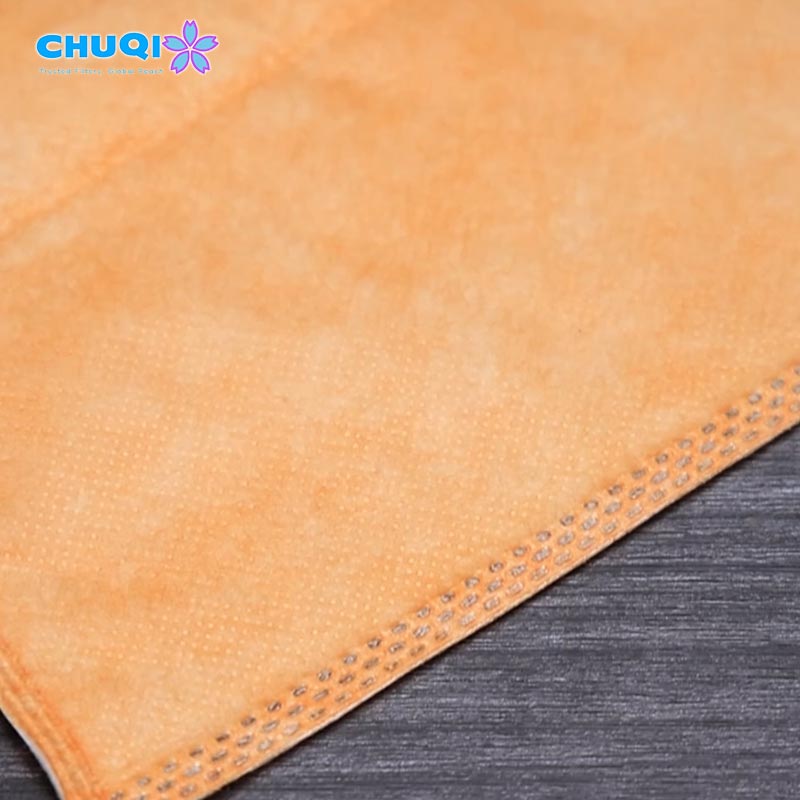
Dust holding capacity describes the amount of test dust retained by filter media before reaching a defined final resistance or another specified test endpoint.
It helps manufacturers understand how the material behaves as dust accumulates during filtration.
However, a higher dust holding capacity does not automatically mean better filter media.
What affects dust holding capacity?
Dust holding capacity is influenced by several factors, including:
Fiber structure and material construction
Filtration efficiency
Airflow velocity during testing
The type and characteristics of the test dust
The final resistance or test endpoint
The amount of dust retained depends on how particles are captured and distributed within the material.
A media structure that allows dust to penetrate and distribute through more of its depth may behave differently from one where particles accumulate mainly near the upstream surface.
However, actual performance must be established through comparable testing. Material structure alone cannot prove a specific dust holding capacity.
How should manufacturers balance efficiency, pressure drop and dust holding capacity?
Consider two materials:
| Performance factor | Material A | Material B |
|---|---|---|
| Initial pressure drop | Lower | Higher |
| Dust holding capacity | Lower | Higher |
| Filtration efficiency | Depends on test results | Depends on test results |
Which one is better?
There is no universal answer. Material A may be more suitable where lower initial resistance is important. Material B may be worth considering where its dust-loading behavior better matches the application.
The decision also depends on whether both materials meet the required filtration efficiency.
For manufacturers, the goal is to find a suitable balance between three connected performance characteristics:
Filtration efficiency: How effectively the material captures airborne particles.
Initial pressure drop: How much resistance clean media creates as air passes through it.
Dust holding capacity: How much test dust the material retains before reaching a defined endpoint.
These characteristics should be evaluated together. A high value in one category does not automatically compensate for an unsuitable result in another.
It is also important to distinguish laboratory dust holding capacity from actual service life. Real operating life depends on dust concentration, particle characteristics, airflow, effective filtration area, finished filter design and maintenance conditions.
5. Manufacturing Compatibility: How Does Media Affect Production?
Suitable filtration performance is essential, but pocket filter media must also work with the manufacturing process used to produce finished bag filters.
A material may perform well in laboratory testing but require further evaluation when introduced into a production line.
Unwinding and material feeding
Pocket filter media is commonly supplied in rolls and processed through continuous manufacturing operations.
Consistent material handling helps the media move through production equipment smoothly. Differences in material consistency or roll quality can create challenges during unwinding and feeding.
Cutting and material utilization
Roll width affects how efficiently manufacturers can arrange and cut the material for different filter dimensions.
If the roll width does not match the cutting layout, unused edges and unnecessary trimming may increase material waste.
This is particularly relevant for manufacturers producing several bag filter sizes. A suitable roll format can make material utilization more efficient without changing the required filtration performance.
Sewing and joining
Different manufacturers use different methods to assemble finished pocket filters.
Depending on the filter design, the media may be sewn or joined using another suitable process. If ultrasonic welding or another bonding method is used, compatibility needs to be evaluated with the specific material and production equipment.
Not every nonwoven filtration material is automatically suitable for every joining method.
Production consistency
For manufacturers supplying filters in repeated production runs, consistency between material batches is important.
Differences in material characteristics, dimensions or filtration performance can affect production repeatability and finished product consistency.
This is why evaluating media samples in the actual manufacturing process can be useful. Laboratory performance and production suitability are related, but they answer different questions.
6. Pocket Filter Media Rolls: Why Do Roll Dimensions Matter?
Pocket filter media is generally supplied in rolls, making roll specifications an important part of material selection.
Among these specifications, roll width can have a direct influence on production efficiency and material utilization.
How does roll width affect material waste?
Imagine a manufacturer producing several bag filter sizes.
If the available media width does not fit the cutting layout, part of the material may remain unused after the required sections have been cut.
A more suitable roll width can help manufacturers arrange the cutting pattern more efficiently and reduce unnecessary trimming.
This does not mean that a wider roll is always better. The most useful width depends on the filter dimensions, cutting arrangement and production process.
Why does roll length matter?
Roll length influences material handling and production planning.
For manufacturers with continuous production requirements, a suitable roll length can reduce the frequency of roll changes. For smaller production runs, different roll formats may be more convenient.
The right format depends on the equipment and manufacturing arrangement rather than on a single universal standard.
What about media thickness?
Thickness can influence the physical characteristics of nonwoven filtration media, but it should not be used as a standalone indicator of quality.
Two materials with similar thicknesses can have different fiber structures, airflow resistance and filtration behavior.
For this reason, thickness should be evaluated together with filtration performance and the intended application.


7. Custom Pocket Filter Media: When Should Manufacturers Consider It?
Standard pocket filter media works well for many applications, but different bag filter manufacturers do not necessarily have identical requirements.
A manufacturer producing general ventilation filters may prioritize a different balance of filtration efficiency and pressure drop from one developing filters for a more demanding industrial environment.
Manufacturers using different filter dimensions and production equipment may also find that standard roll formats do not always make the best use of their materials.
This is where custom pocket filter media can offer greater flexibility.
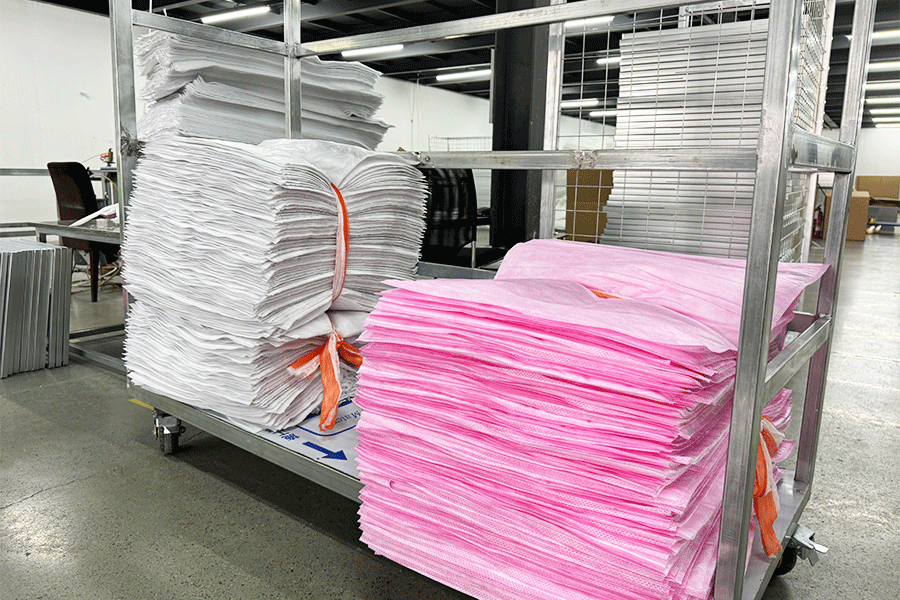
Custom roll widths for better material utilization
The same filtration material may be used for different filter sizes, but the most efficient roll width can vary according to the cutting layout.
Customized roll widths can help manufacturers arrange material more effectively, reduce unused edges and improve material utilization.
Different filtration requirements for different products
Not every bag filter needs the same filtration performance.
Some applications may prioritize lower airflow resistance, while others require greater particle capture or a different balance between efficiency and dust holding capacity.
A suitable media configuration can help manufacturers develop different product ranges for different applications.
Material thickness and construction
Material thickness and fiber structure influence the characteristics of nonwoven filtration media.
For manufacturers developing different filter models, a different material construction may be worth considering when the existing media does not provide the desired balance of filtration performance and airflow resistance.
The objective is not simply to choose a thicker or denser material. It is to find a construction that works for the intended filtration application.
Customization that starts with the application
There is no universal pocket filter media specification that works equally well for every manufacturer.
At Chuqi New Materials, we support B2B customers with customized synthetic nonwoven pocket filter media solutions. Depending on the application and manufacturing feasibility, material characteristics and roll formats can be adapted to different production requirements.
Customization is not simply about changing one specification. Filtration efficiency, initial pressure drop and dust holding capacity are interconnected, so adjustments to material construction may influence more than one performance characteristic.
Whether a manufacturer is developing a new bag filter, improving an existing product or looking for an alternative to its current media, a tailored material solution can help create a better fit between filtration performance and production needs.
Explore our customizable pocket filter media solutions to learn more.
8. Raw Pocket Filter Media vs. Finished Bag Filter Performance
One of the most important distinctions in filter manufacturing is the difference between raw media performance and finished filter performance.
Raw media test data describes how the material performs under specified laboratory conditions. A finished bag filter is a complete filtration product, and its performance depends on more than the media itself.
For example, two finished pocket filters may use the same grade of nonwoven media but still have different pressure drops or filtration performance.
This can happen because of differences in:
| Finished filter factor | How it affects performance |
|---|---|
| Effective filtration area | Influences the airflow passing through each unit of media area |
| Pocket arrangement | Affects how air is distributed through the filter |
| Airflow distribution | Uneven airflow can cause different parts of the media to operate under different conditions |
| Seams and sealing | Poor sealing or leakage can affect overall filtration performance |
| Frame and overall construction | Influence how the finished filter is installed and operates |
A finished filter with a larger effective media area may operate at a different face velocity from one with a smaller area under the same airflow conditions.
This can influence overall airflow resistance and filtration behavior.
Therefore, selecting suitable raw pocket filter media is only one part of developing a reliable bag filter. The material must work within the complete filter design.
For manufacturers developing products with specific finished-filter performance targets, testing the completed filter is important.
You can also explore our nonwoven pocket filter products to see how filtration media is used in finished bag filter solutions.
9. How to Choose the Right Pocket Filter Media
The most suitable pocket filter media depends on the intended application, required filtration performance and manufacturing process.
Rather than choosing material based on one specification, manufacturers should consider how the key characteristics work together.
| Manufacturing priority | Important media characteristics |
|---|---|
| Required particle capture | Filtration efficiency and material structure |
| Lower airflow resistance | Initial pressure drop at comparable face velocity |
| Dust-loading performance | Dust holding capacity under comparable test conditions |
| Efficient material cutting | Roll width and cutting layout |
| Continuous production | Roll format and material handling consistency |
| Different filter product ranges | Custom material characteristics and roll dimensions |
For example, a manufacturer developing a low-resistance ventilation filter may prioritize the relationship between initial pressure drop and filtration efficiency.
A manufacturer producing filters for higher dust-loading conditions may pay closer attention to dust holding capacity and the operating environment.
A manufacturer producing several filter dimensions may benefit from customized roll widths that improve material utilization.
These examples demonstrate why pocket filter media should be selected as part of the complete manufacturing process rather than by comparing a single specification.
The best material is not necessarily the one with the highest filtration grade, greatest thickness or lowest initial resistance. It is the one that provides the right balance of filtration performance, production compatibility and application requirements.
Looking for a Pocket Filter Media Manufacturer?
Choosing the right pocket filter media means finding a suitable balance between filtration efficiency, initial pressure drop, dust holding capacity and manufacturing compatibility.
Chuqi New Materials manufactures synthetic nonwoven filtration materials for industrial and HVAC applications, supplying pocket filter media for bag filter manufacturers, filter producers and B2B distributors.
As a source manufacturer, we support customized material specifications and roll supply options, helping customers explore filtration materials suited to different products, applications and production requirements.
Whether you are developing a new bag filter, improving an existing product or looking for an alternative to your current media, our team can help you explore a suitable material solution.
Explore our Pocket Filter Media products or contact Chuqi New Materials to discuss your application.
Frequently Asked Questions About Pocket Filter Media
Q1: What is pocket filter media?
Pocket filter media is a synthetic nonwoven filtration material used to manufacture pocket-style air filters, also known as bag filters. It captures airborne particles as air passes through the material and is commonly supplied in rolls for filter production.
Q2: What is synthetic nonwoven pocket filter media made of?
It is made from synthetic fibers formed into a porous nonwoven structure. The specific fiber composition and material construction vary by product. Some media use a progressive-density structure to support particle capture through the material depth.
Q3: What do F5–F9 pocket filter media grades mean?
F5–F9 are legacy grade designations associated with the EN 779 classification system. Under EN 779:2012, former F5 and F6 classes were renamed M5 and M6, while F7–F9 remained fine-filter classes. EN ISO 16890 has since replaced EN 779 for general ventilation filter classification. Direct equivalence between the two systems should not be assumed without validated data.
Q4: What affects the initial pressure drop of pocket filter media?
Initial pressure drop is influenced by material structure, fiber arrangement and airflow velocity during testing. It should be compared at the same or comparable face velocity and evaluated alongside filtration efficiency.
Q5: Does higher dust holding capacity always mean better pocket filter media?
No. Higher dust holding capacity does not automatically indicate better overall performance. Manufacturers should consider dust retention together with initial pressure drop, filtration efficiency and the intended application.
Q6: Can pocket filter media be supplied in customized roll widths?
Yes. Depending on manufacturing feasibility, customized roll widths can help bag filter manufacturers match material supply to their cutting layouts and filter dimensions. This can improve material utilization and reduce unnecessary trimming.
Q7: Can pocket filter media specifications be customized?
Yes. Depending on the application and production requirements, customization may involve material construction, thickness, filtration performance and roll dimensions. Any change should be evaluated in relation to the overall balance of filtration efficiency, pressure drop and dust holding capacity.
Q8: Is raw media filtration efficiency the same as finished pocket filter efficiency?
No. Raw media efficiency describes the material’s performance under specified test conditions. Finished filter efficiency also depends on effective filtration area, pocket arrangement, airflow distribution, seams, sealing and overall filter construction.