
Two HEPA filters can share the same filtration grade but use different frame materials. The right choice depends on more than filtration efficiency. Equipment design, moisture exposure, cleaning practices, operating temperature and installation requirements can all influence which HEPA filter frame material is suitable.
For industrial equipment manufacturers, HVAC contractors, maintenance teams and air filter distributors, understanding these differences helps reduce replacement issues and avoid selecting a frame that does not suit the operating environment.
This guide compares aluminum, galvanized steel and stainless steel HEPA filter frames, explains the key factors to evaluate, and shows how to approach frame selection for new equipment and replacement applications.
Which HEPA Filter Frame Material Should You Consider?
The most suitable frame material depends on the requirements of the complete filter assembly and the equipment in which it will be installed.
| Frame material | When to consider it | What to check |
|---|---|---|
| Aluminum | When handling weight, profile design or installation requirements are important | Complete filter weight, frame profile, corner construction and sealing interface |
| Galvanized steel | When a conventional formed-metal frame suits the equipment and environment | Coating condition, edges, joints, condensation and cleaning exposure |
| Stainless steel | When project specifications, cleaning practices or environmental exposure justify closer material evaluation | Stainless steel grade, chemical exposure, cleaning method and complete filter construction |
No material is automatically the best choice for every HEPA filter application. The goal is to match the frame construction to the actual operating conditions without overlooking fit, sealing or the other components of the filter.
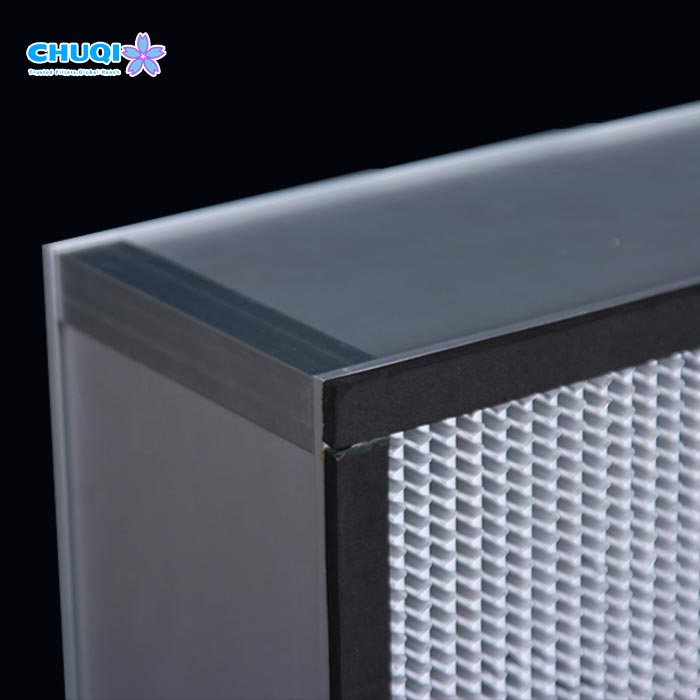
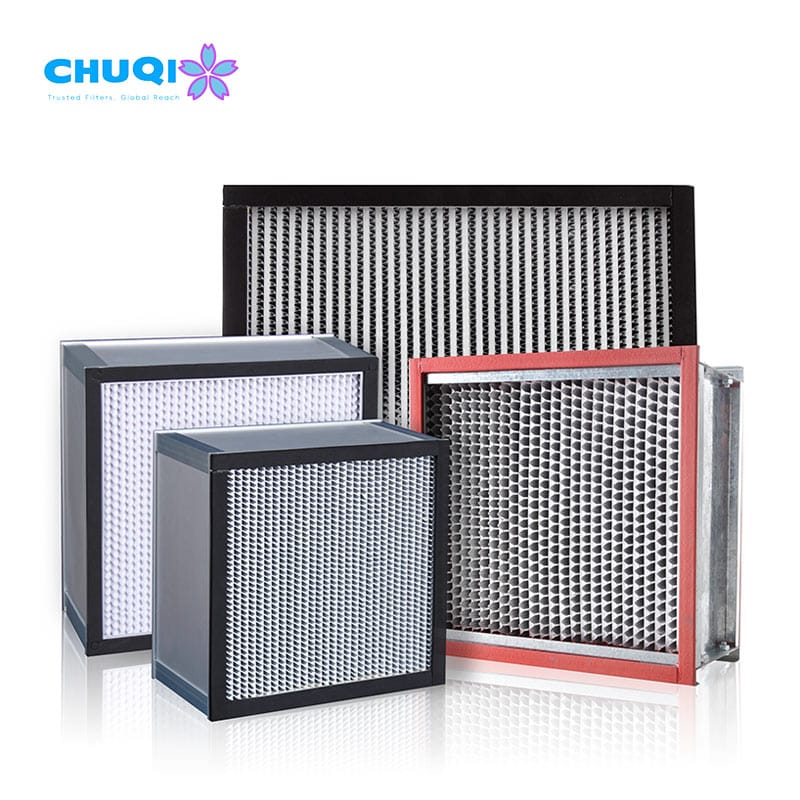

Why HEPA Filter Frame Materials Matter
The frame surrounds the filter media pack and helps the finished assembly fit into its intended equipment. Its profile, depth, corners and sealing features influence how the filter is positioned, retained and sealed.
For this reason, HEPA filter frame selection involves more than comparing material names.
Two filters with the same nominal dimensions may have different frame cross-sections, sealing arrangements or mounting interfaces. A frame that appears similar in a catalogue may not fit the existing housing in the same way.
Aluminum HEPA Filter Frames: Consider Weight and Profile Design
Aluminum is worth considering when handling weight, frame geometry and installation requirements are important.
For large filters or units installed overhead, the weight of the complete filter can affect handling and replacement work. However, frame weight alone does not determine the weight of the finished product. Filter depth, media construction and other components also contribute.
Frame design deserves equal attention. Aluminum frames can differ in profile shape, corner construction, joint details and sealing arrangements. These differences can affect how the filter fits into its housing.
For equipment designers, an aluminum HEPA filter frame is therefore both a material choice and an interface choice. For replacement buyers, the key question is whether the proposed construction matches the existing installation.
Before selecting aluminum, compare the complete filter dimensions, frame profile, mounting arrangement and sealing interface—not just the material and outside measurements.
Galvanized Steel HEPA Filter Frames: Evaluate the Finished Construction
Galvanized steel frames are formed from coated steel, but the finished frame includes more than the base material and its coating.
Formed edges, joints, corners and areas where the coating may be affected during fabrication deserve attention, particularly when the surrounding environment includes moisture or cleaning exposure.
A dry equipment compartment is different from a location where condensation forms regularly or liquid can reach the filter assembly. These conditions should not be treated as equivalent when evaluating a galvanized steel HEPA filter frame.
This does not mean galvanized steel should always be replaced with stainless steel. The appropriate choice depends on the actual exposure, the construction of the finished frame and the requirements of the application.
For a replacement project, inspect the existing frame for signs of coating deterioration, corrosion or damage around edges and joints. These observations can help determine whether the current material remains suitable or whether a different construction deserves evaluation.
Stainless Steel HEPA Filter Frames: Match the Grade to the Environment
Stainless steel may be worth considering when equipment specifications, cleaning practices or environmental conditions create a clear need for a particular material.
However, “stainless steel” describes a family of materials rather than a guarantee of resistance to every chemical or operating condition. Grade selection matters, as do the substances, temperatures and cleaning methods the frame will encounter.
For example, identifying a frame as stainless steel 304 or 316 provides more information than using the generic material name alone. It still does not establish suitability for every exposure without considering the application.
A stainless steel frame also does not automatically improve filtration efficiency or resolve an installation mismatch. Its value comes from meeting a defined requirement.
When evaluating a stainless steel HEPA filter frame, consider:
The specified stainless steel grade.
The type and frequency of cleaning.
Potential exposure to chemicals, moisture or condensation.
The frame’s joints, corners and sealing arrangement.
The compatibility of the complete filter assembly with the equipment.
The objective is to select a material that addresses a real operating requirement rather than assuming that a more expensive option is always better.
Moisture Exposure: Humidity, Condensation and Direct Contact Are Different
Moisture exposure is an important consideration when choosing HEPA filter frame materials, but different types of exposure can create different requirements.
High ambient humidity does not necessarily mean that liquid reaches the filter. Condensation on the frame is a different condition, while splashing or direct cleaning spray can expose additional parts of the assembly.
A useful assessment starts with three questions:
Does moisture remain in the surrounding air, or does liquid form on the equipment?
Can water or cleaning solution reach the frame, joints, gasket or media pack?
How frequently does the exposure occur, and what substances are involved?
If liquid can reach the filter assembly, the evaluation should extend beyond the outer frame. Gaskets, sealants, media and other components may also be affected.
Choosing a material based only on a general description such as “moisture-resistant” can overlook these differences. A better approach is to identify the exposure path and evaluate the complete filter construction against it.

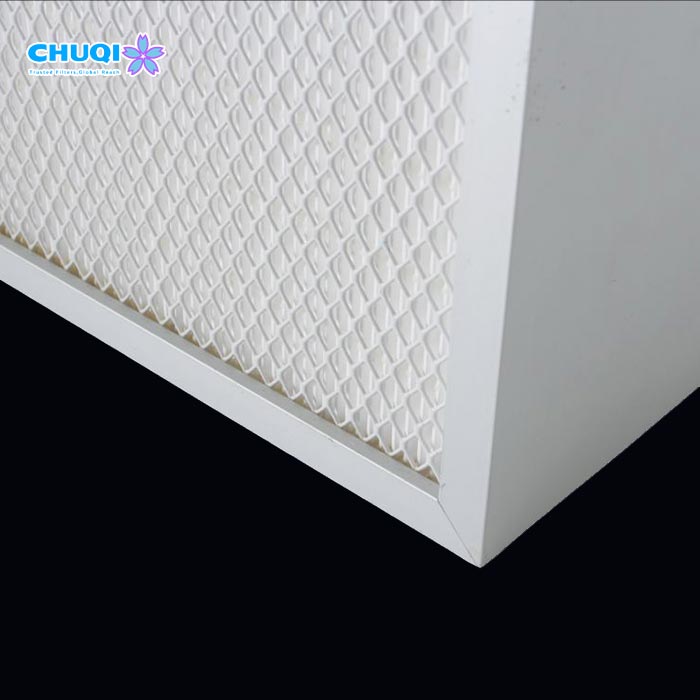
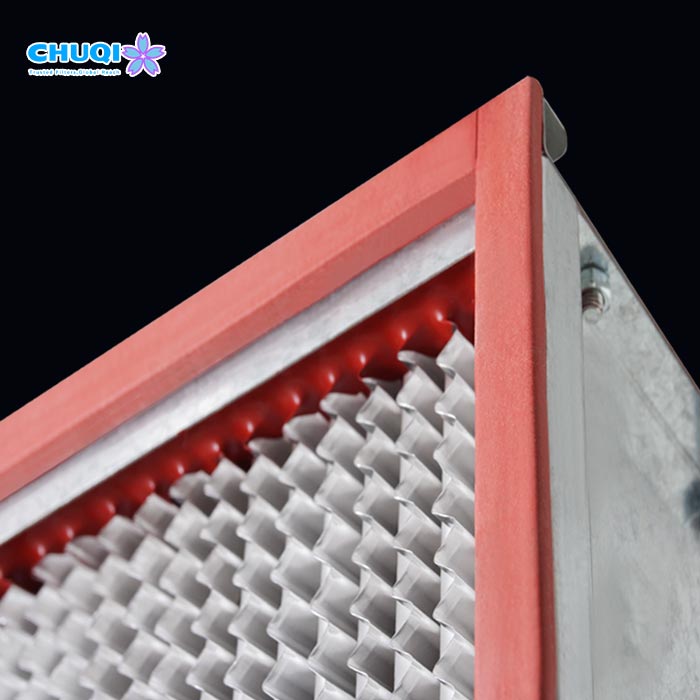
Cleaning Requirements: A Metal Frame Does Not Make a HEPA Filter Washable
A metal frame may look robust, but the frame material alone does not determine whether the complete HEPA filter can be washed or exposed to cleaning chemicals.
Wiping an accessible outer surface is different from spraying, rinsing or immersing the entire filter. If liquid reaches the media pack or sealing components, the cleaning process affects more than the frame.
Before selecting a frame for an application with regular cleaning, clarify the intended method:
Is the surrounding equipment cleaned while the filter remains protected?
Is the exposed frame wiped during routine maintenance?
Could cleaning spray reach the gasket, sealant or media?
Are chemicals, repeated wetting or elevated temperatures involved?
These details matter because the complete filter must be suitable for the intended cleaning process. A stainless steel enclosure should not be interpreted as evidence that the media pack is washable.
If cleaning is a critical operating requirement, evaluate the frame, media, sealant and sealing components together.
High-Temperature Applications: Evaluate the Complete HEPA Filter
A heat-resistant frame material does not automatically make the finished HEPA filter suitable for high-temperature operation.
The complete assembly may include filter media, adhesives or sealants, gaskets and other components with different operating limits. A temperature that the metal frame can tolerate may not be suitable for the other parts.
It is also important to distinguish continuous operation at an elevated temperature from short-term temperature excursions. Heating and cooling cycles may introduce additional considerations for the assembly.
For high-temperature applications, evaluate:
The required continuous operating temperature.
Any short-term temperature excursions.
The frequency of heating and cooling cycles.
The temperature limits of the media and sealing components.
The operating capability of the finished filter assembly.
The practical rule is to use the documented operating limits of the complete filter, not the apparent heat resistance of its outer frame.
HEPA Filter Replacement: Why Frame Compatibility Matters
For replacement projects, frame compatibility can be just as important as material selection.
Two HEPA filters may share the same nominal width, height and depth but differ in ways that affect installation or sealing.
Check the following details when comparing a replacement filter with the existing unit:
| Compatibility factor | Why it matters |
|---|---|
| Frame cross-section | The profile must suit the available mounting space |
| Overall dimensions and depth | Nominal dimensions alone may not describe every interface detail |
| Gasket position | The sealing surface must align with the intended contact area |
| Flanges and protruding edges | These may affect clearance and installation |
| Clamps and retainers | The filter must suit the equipment’s retention arrangement |
| Corner construction | Differences may affect clearance or contact points |
A practical replacement assessment follows the filter’s contact points: where it sits, how it is held and where the seal engages.
If the existing filter fits and performs as intended, changing the frame material should have a clear purpose. A change may be justified by new environmental conditions, handling requirements or equipment specifications. Otherwise, preserving a proven interface may be more useful than changing materials without a defined need.
For a more complete review of dimensions, airflow, pressure drop and other selection parameters, see our guide to HEPA filter specifications.
Does HEPA Filter Frame Material Affect Filtration Efficiency?
Frame material and filtration grade describe different aspects of a HEPA filter. An aluminum, galvanized steel or stainless steel frame does not, by itself, establish the filter’s efficiency classification.
Filtration performance must be evaluated against the required grade and applicable test criteria. Frame selection addresses other requirements, including installation, sealing, environmental exposure and equipment compatibility.
A higher-priced frame should not be treated as evidence of a higher filtration grade. Buyers should evaluate filtration performance and frame construction separately, then confirm that both suit the application.
How to Choose the Right HEPA Filter Frame Material
A structured review can make frame selection more straightforward for both new equipment and replacement projects.
Step 1: Confirm the installation requirements.
Check the existing filter dimensions, frame profile, depth, sealing interface and retention arrangement. For new equipment, evaluate the filter and housing together.
Step 2: Identify the operating environment.
Consider ambient conditions, condensation, direct liquid exposure, cleaning practices and any relevant chemical exposure.
Step 3: Establish the temperature requirements.
Distinguish continuous operating temperature from temporary excursions and account for the limits of the complete filter assembly.
Step 4: Define the reason for the material choice.
Determine whether the main requirement relates to handling, environmental exposure, cleaning, equipment specifications or another application-specific factor.
Step 5: Check the complete filter construction.
Review the frame, media, gasket, sealant and mounting interface together. Do not assume that changing the frame alone will address every operating requirement.
For distributors, OEMs and industrial maintenance teams, this approach helps keep material decisions tied to practical requirements rather than general assumptions about which metal is best.
Frequently Asked Questions About HEPA Filter Frame Materials
Q1: What materials are commonly used for HEPA filter frames?
A: Common options include aluminum, galvanized steel and stainless steel. The appropriate choice depends on the equipment interface, environmental exposure, handling requirements and the construction of the complete filter.
Q2: Is an aluminum HEPA filter frame better than a galvanized steel frame?
A: Not in every application. Aluminum may be worth considering when weight and profile design are important, while galvanized steel may suit applications where its construction meets the environmental and equipment requirements. Compare complete filter designs rather than material names alone.
Q3: Is a stainless steel HEPA filter frame suitable for wet environments?
A: Stainless steel may be appropriate for some moisture-exposed applications, but suitability depends on the specific grade, the type of exposure and the complete filter construction. Gaskets, sealants and media must also be considered if liquid can reach them.
Q4: Can a stainless steel HEPA filter be washed?
A: Not necessarily. A stainless steel frame does not establish that the media pack, sealants and sealing components can withstand washing. Confirm that the complete filter is designed for the intended cleaning method before exposing it to liquid or chemicals.
Q5: Does a stainless steel frame improve HEPA filtration efficiency?
A: Not by itself. Filtration efficiency depends on the filter media, design and applicable performance testing. Frame material is a separate construction consideration.
Q6: What should I check when replacing a HEPA filter with a different frame material?
A: Compare the overall dimensions, frame cross-section, depth, gasket position, mounting interface and retention arrangement. Also check whether the proposed material suits the operating environment and whether any other filter components need to change.
Q7: What information helps when selecting a custom HEPA filter frame?
A: Existing filter photographs, equipment details, dimensional drawings and information about operating conditions can provide a useful starting point. The required filtration grade, airflow and sealing arrange
Discuss HEPA Filter Frame Options for Your Application
Whether you are replacing an existing filter or developing a new equipment configuration, the right starting point is the application—not simply the material name.
Chuqi works with B2B customers evaluating air filtration requirements and filter configurations. Share your existing filter photos, dimensional drawing or equipment details to begin a discussion about suitable frame options.