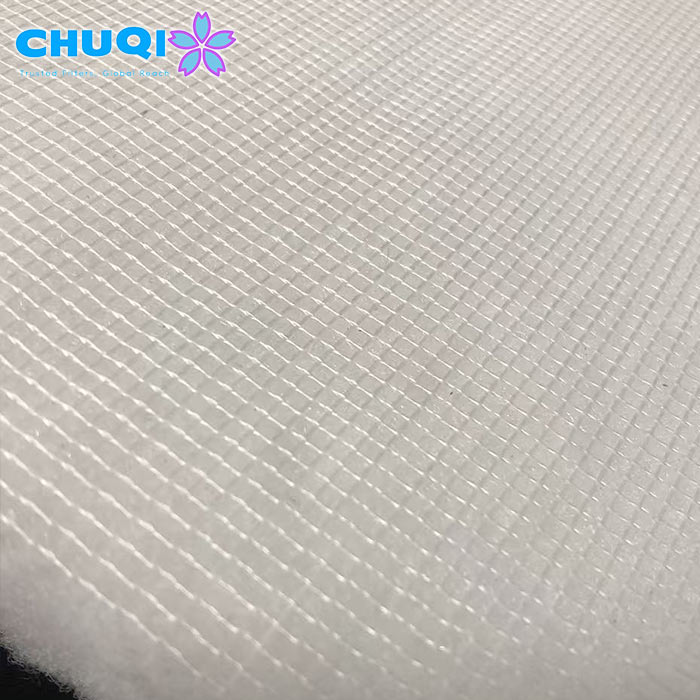
In demanding commercial coating environments, standard media often fails due to sagging, high pressure drop, and uneven air distribution under continuous blower pressure. Our mesh-backed spray booth ceiling filter roll solves these structural challenges through advanced thermal lamination and progressive-density fiber engineering:
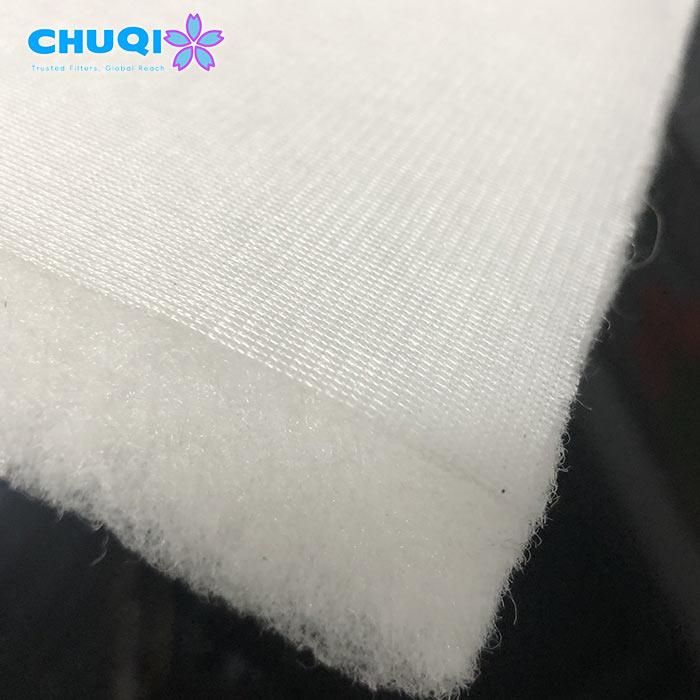
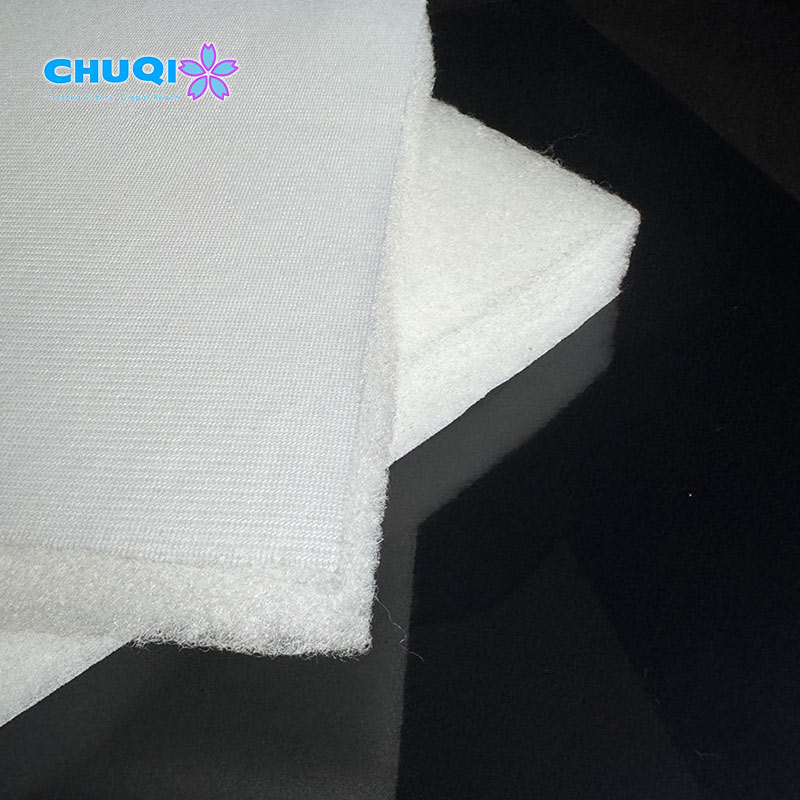
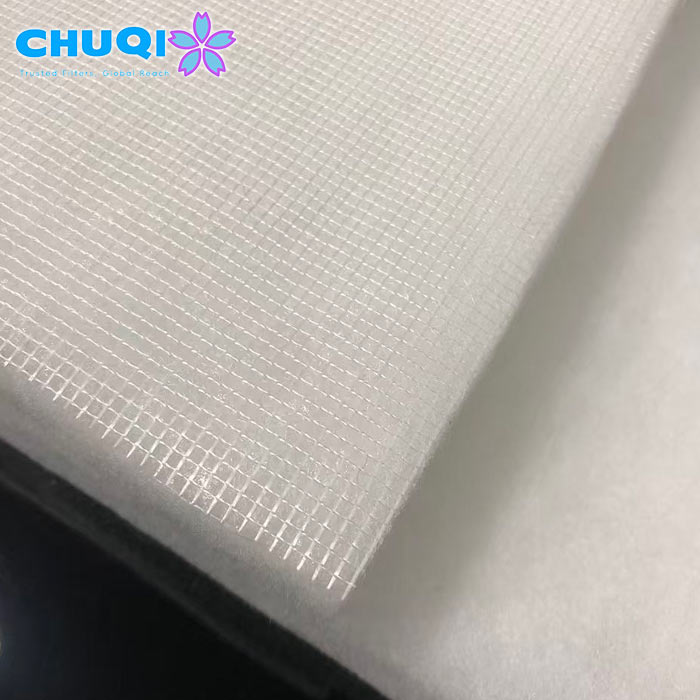
Non-Sagging Synthetic Mesh Skeleton: Reinforced with a high-tenacity polypropylene diamond grid thermally fused to the air-leaving side, this reinforced mesh ceiling diffusion media roll prevents sagging, flexing, or ballooning across wide ceiling frames.
Low Aerodynamic Resistance & High Airflow: Designed as a high-flow diamond grid reinforced spray booth filter media, it features over 85% open grid area to minimize airflow restriction (Initial Pressure Drop: ~25 Pa at 0.25 m/s), reducing fan power consumption.
Progressive Density & Full-Depth Tackifier: Constructed from 100% virgin synthetic fibers, this tackified mesh-backed ceiling filter roll is thoroughly impregnated with sticky adhesive gel, trapping airborne particles down to 1–5 microns to guarantee clean supply air.
Solvent-Free Thermal Lamination: Fused without chemical binders, this synthetic mesh backing booth ceiling filter roll eliminates VOC emissions and resists media softening when exposed to paint solvents, elevated heat, and humidity.
Need This Specification in Bulk?
We offer flexible OEM/ODM manufacturing to match your exact dimension and efficiency requirements. Contact our team for a fast quote or to verify compatibility with a free test sample.
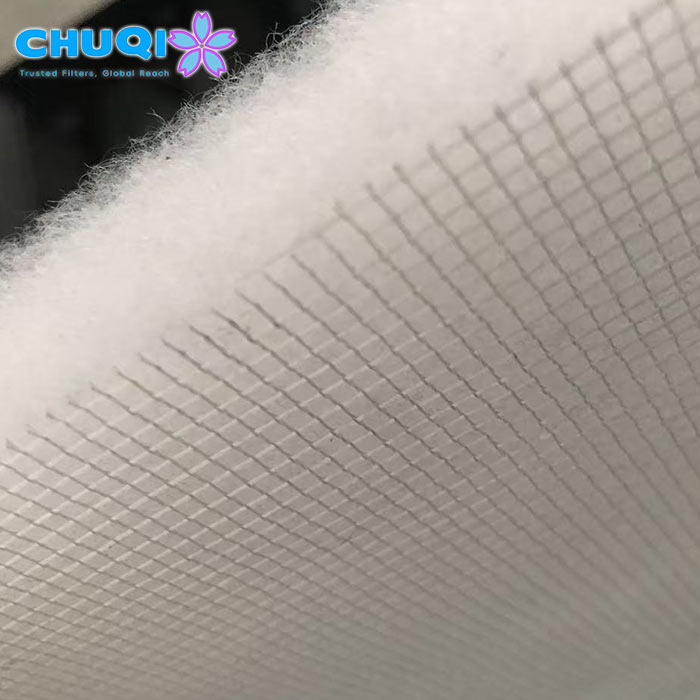
Mesh-Backed Filter Media Structure & Material Composition
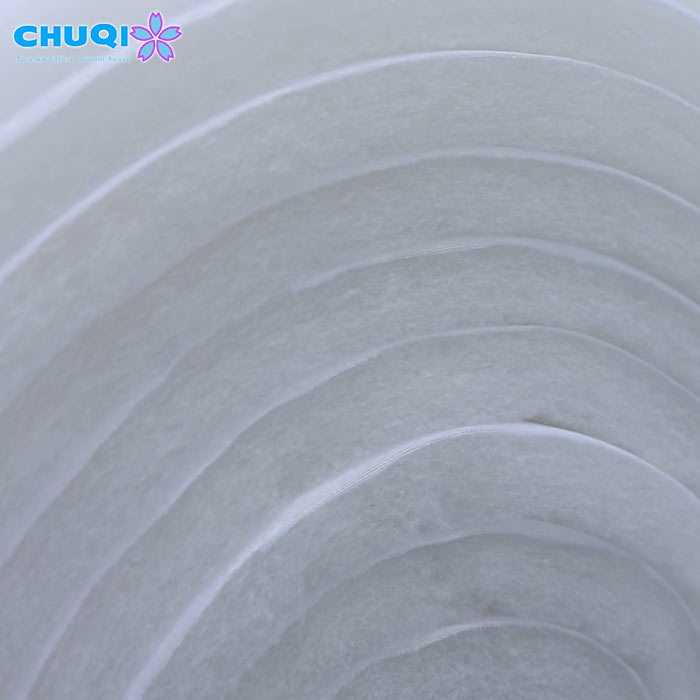
100% Virgin Progressive Polyester Matrix: Engineered with non-breaking synthetic fibers arranged in a gradient density structure. This progressive density mesh backed ceiling filter roll intercepts larger particulates upstream while catching ultra-fine dust downstream, maximizing overall dust-holding capacity.
High-Tenacity Polypropylene Diamond Scrim: The polypropylene mesh backed diffusion filter media backing provides exceptional tensile strength, acting as a load-bearing lattice that absorbs blower shock loads without tearing or distortion.
Full-Impregnation Non-Drying Tackifier: The entire depth of this M5 / F5 mesh backed diffusion filter roll is soaked with a non-migrating tackifier, trapping micro-particles on contact and preventing dust migration caused by airflow vibration.
Technical Specifications for Reinforced Mesh-Backed Ceiling Diffusion Media
| Technical Parameter | Specification / Performance Value |
| Product Format | Mesh-Backed Spray Booth Ceiling Filter Roll (Custom Cuts Available) |
| Filter Class | M5 / F5 (EN 779) / ePM10 50% (ISO 16890) |
| Basis Weight (Grammage) | 600 g/m² (Custom 500g/m² – 650g/m² Options Available) |
| Reinforcement Type | Polypropylene Diamond Mesh Grid |
| Flame Retardancy | DIN 53438-F1 Compliant (Self-Extinguishing) |
| Initial Pressure Drop | ~25 Pa (at 0.25 m/s face velocity) |
| Recommended Final Pressure Drop | 450 Pa |
| Average Arrestance | 98% – 99% |
| Standard Dimensions | 1.6m / 2.0m x 20m (Custom Width Mesh Backed Ceiling Filter Roll Options) |
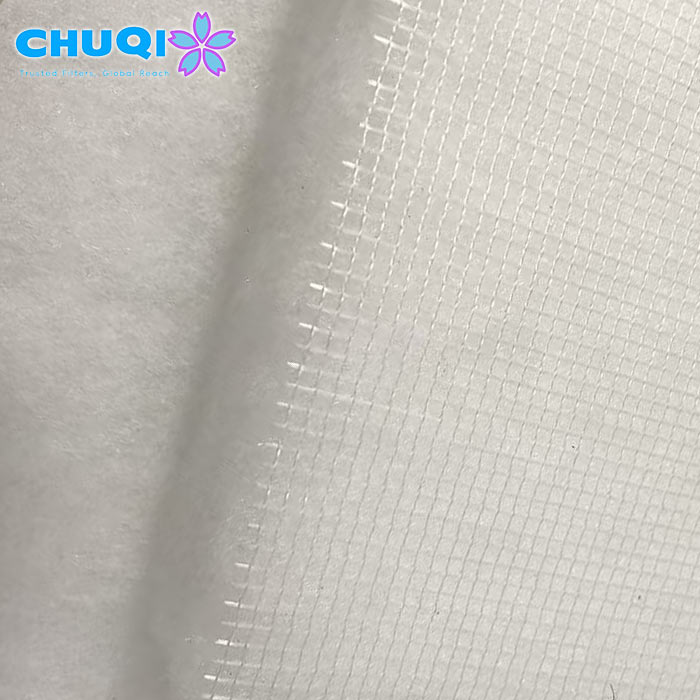
Industrial Applications & Engineering Benefits of Mesh-Backed Ceiling Media
Commercial Automotive Refinishing & Auto Body Shops Using a commercial spray booth ceiling filter roll (mesh backed) eliminates media sagging across wide ceiling grids. By maintaining a consistent, parallel downdraft air column and tightly securing frame perimeters, it prevents edge bypass and keeps dust from contaminating fresh vehicle finishes.
Industrial Downdraft Spray Booths & Heavy Machinery Coating Engineered as a heavy-duty paint booth ceiling diffusion filter roll with mesh, it handles continuous, high-volume airflow from powerful supply fans without flexing or deforming, preventing premature filter collapse in large industrial coating chambers.
Furniture & High-End Woodworking Coating Lines Combining high arrestance efficiency with smooth air dispersion, this reinforced ceiling filter media roll eliminates localized turbulence inside spray chambers. This prevents overspray bounce-back, ensuring smooth, dust-free finishes on high-gloss lacquered wood products.
HVAC Final Stage & Cleanroom Pre-Filtration Serving as a durable, low-resistance secondary barrier, this non-sagging mesh backed ceiling filter media captures fine residual particulates before they reach high-efficiency HEPA filters downstream—significantly extending secondary filter lifespans and lowering overall facility maintenance costs.
Maintenance Schedule & Replacement Guidelines for Mesh-Backed Ceiling Filters
To ensure consistent paint quality and maintain positive pressure balance in your spray booth, regular monitoring and scheduled replacement of ceiling media are essential:
Inspection Frequency: Check static pressure gauges (manometers) weekly to track pressure buildup across the ceiling plenum.
Recommended Replacement Interval: Replace the media every 300 to 500 operating hours under normal paint line conditions, or whenever the differential pressure reaches 450 Pa.
Visual Replacement Indicators: Replace immediately if visible face-loading/darkening occurs, if downdraft air velocity drops below 0.20 m/s, or if perimeter bypass leaks appear.
Preventative Maintenance Tip: Always clean intake pre-filters (G3/G4 primary filters) on schedule to prevent premature loading of the downstream ceiling media.
Frequently Asked Questions about Mesh-Backed Ceiling Filters
Q: How does a mesh-backed spray booth ceiling filter roll prevent filter media sagging?
A: A mesh-backed spray booth ceiling filter roll utilizes a high-tenacity polypropylene diamond grid thermally laminated to the clean-air exit face. This structural skeleton acts as a load-bearing lattice across wide ceiling frame spans, counteracting gravity and high intake fan pressure. By preventing sagging, ballooning, or flexing, it eliminates air gap bypass around perimeter seals and ensures a continuous, stable plenum structure during spray booth operation.
Q: What is the difference between mesh-backed and cloth-backed spray booth filter media?
A: While both options provide high arrestance, a diamond grid reinforced spray booth filter media (mesh-backed) prioritizes high airflow, low initial resistance (~25 Pa), and rigid structural self-support over unsupported frame spans, making it ideal for general commercial refinishing and industrial machinery coating lines. Conversely, cloth-backed media uses a fine microporous fabric scrim to guarantee zero fiber migration and uniform laminar downdraft equalization, which is specifically engineered for automotive OEM clearcoat applications.
Q: Why is full-depth tackifier essential in a tackified mesh-backed ceiling filter roll?
A: In a premium tackified mesh-backed ceiling filter roll, the entire non-woven synthetic matrix is completely saturated with a sticky, non-drying adhesive gel rather than just surface-sprayed. As turbulent intake air flows through the progressive-density polyester fibers, this deep tackifier traps and binds micro-particulates down to 1–5 microns throughout the full depth of the media. This prevents captured dust from vibrating loose or migrating downstream under heavy airflow pressure.
Q: Can I order custom width mesh backed ceiling filter roll sizes for specialized spray booths?
A: Yes, as a direct B2B manufacturer, Chuqi provides full factory customization for custom width mesh backed ceiling filter roll orders. We support standard widths such as 1.6m and 2.0m, as well as non-standard custom roll widths and precision pre-cut ceiling pads tailored to your specific spray booth plenum dimensions and frame clamping configurations.
Q: How often should a commercial spray booth ceiling filter roll (mesh backed) be replaced?
A: A commercial spray booth ceiling filter roll (mesh backed) should typically be replaced every 300 to 500 operating hours under standard painting conditions, or whenever differential pressure across the ceiling plenum reaches the recommended final resistance limit of 450 Pa. Regular weekly monitoring of static pressure gauges (manometers) is recommended, as premature loading can reduce downdraft velocity below 0.20 m/s and cause overspray bounce-back.