
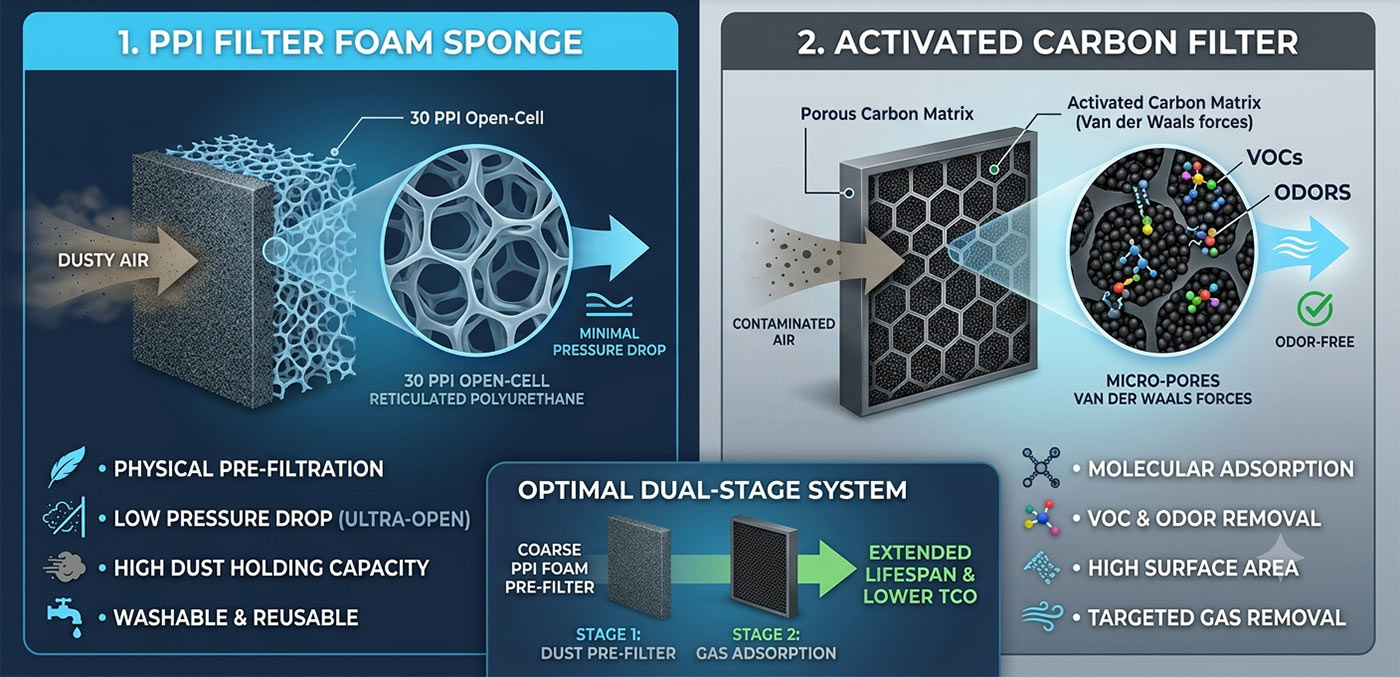
What is Reticulated PPI Filter Foam Sponge?
Reticulated Polyurethane (PU) Filter Foam is an open-cell porous material manufactured via a thermal or hydraulic deflashing process. Its density and filtration efficiency are measured in PPI (Pores Per Inch), typically ranging from 10 PPI (coarse mesh) to 60 PPI (fine mesh).
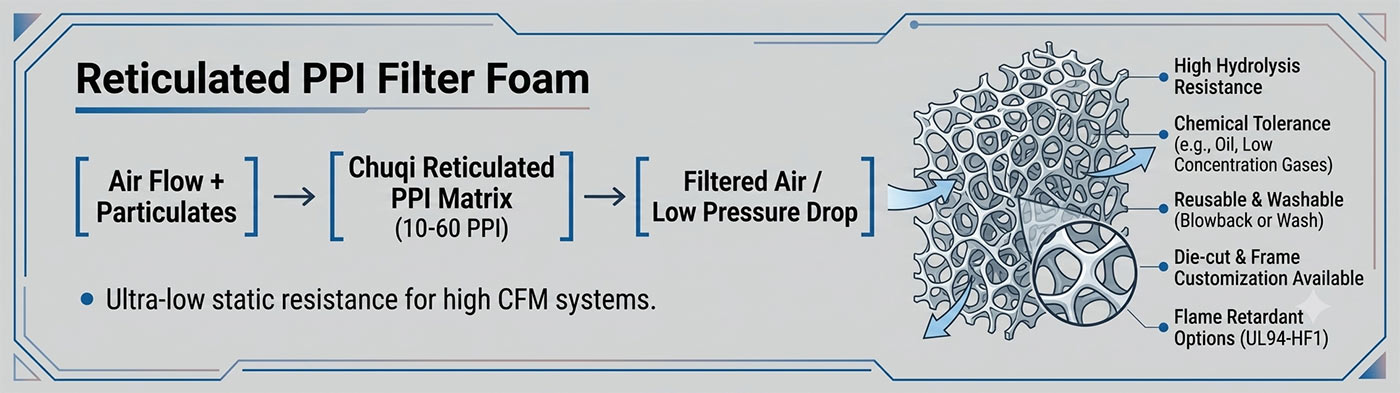
Key Technical Advantages for B2B Buyers:
Near-Zero Pressure Drop: High open-porosity (greater than 97%) guarantees minimal static pressure drop, optimizing blower fan efficiency and reducing energy consumption.
Washable & Reusable Media: Highly resistant to hydrolysis and mechanical wear. Facilities can compressed-air blowback or water-wash the media, dramatically lowering consumable replacement expenses.
Custom OEM Fabrication: Available in die-cut pads, rolls, continuous sheets, and flame-retardant grades (UL94-HF1).
What is an Industrial Activated Carbon Filter?
An Activated Carbon Filter combines high-porosity carbon (derived from coconut shell, coal, or wood) with structural carriers such as polyurethane foam, non-woven fabric, or honeycomb structures.
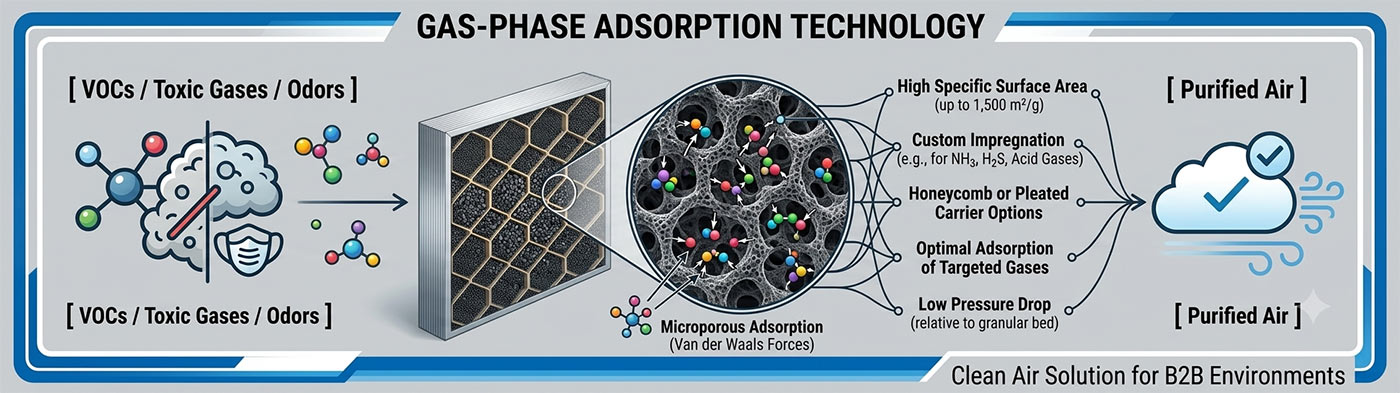
Key Technical Advantages for B2B Buyers:
High Molecular Adsorption: Features an internal surface area up to 1,500 m²/g, capturing volatile organic compounds (VOCs), formaldehydes, and hazardous gases via Van der Waals forces.
Targeted Gas Treatment via Impregnation: Carbon can be chemically treated or impregnated to target specific toxic gases such as Ammonia (NH3), Hydrogen Sulfide (H2S), or Acid Vapors.
Environmental Compliance: Essential for industrial facilities to meet EPA, EU REACH, and local municipal air emission mandates.
Advanced B2B Selection Guide: How to Choose for Your Application
Selecting the correct media depends on your system’s airflow requirements, contaminant types, and maintenance budgets.
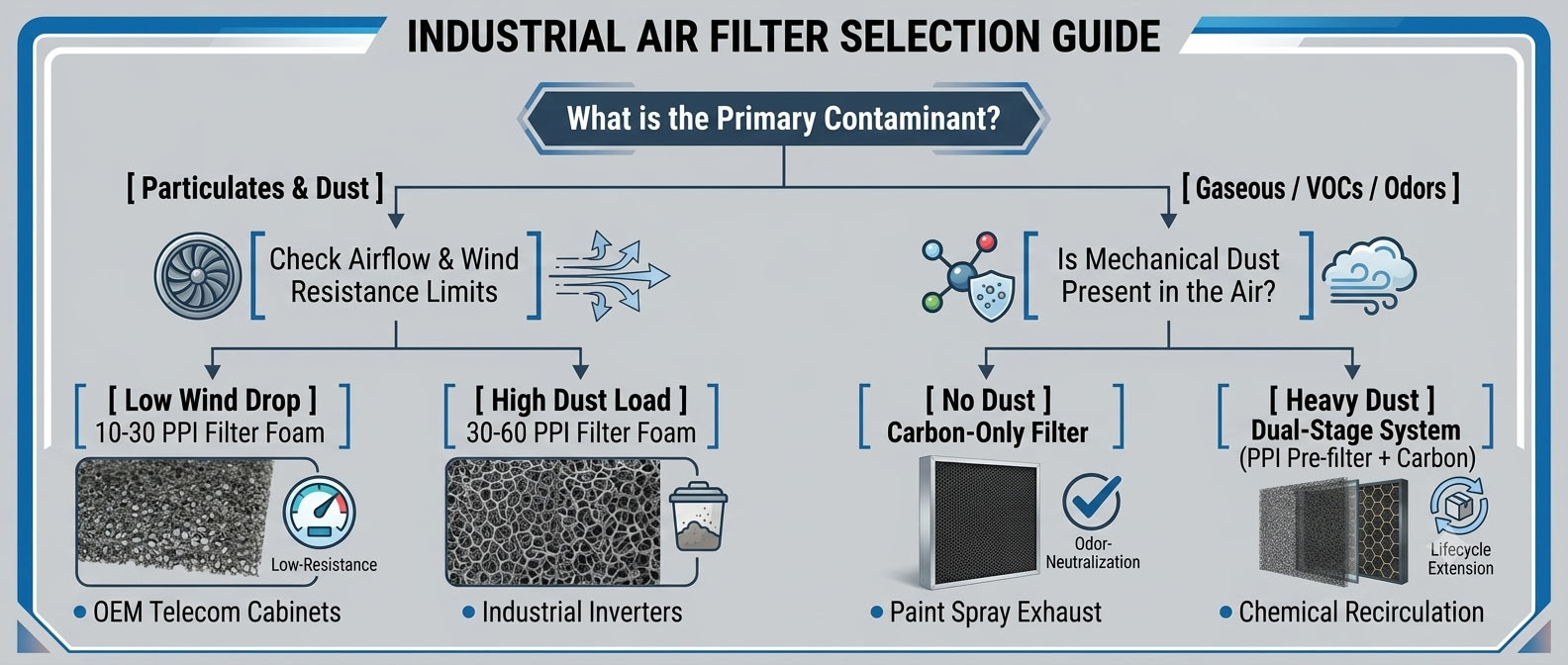
1. When to Specify PPI Filter Foam
HVAC & Blower Protection: Outdoor telecom cabinets, server rack enclosures, generator air intakes, and frequency converters.
Liquid & Oil Separation: Water treatment systems, aquarium filtration, and pneumatic exhaust mufflers.
Engineering Recommendation: Use 10–20 PPI for maximum CFM airflow; use 30–60 PPI for fine dust retention in indoor control panels.
2. When to Specify Activated Carbon Filters
Industrial Exhaust & Emission Control: Spray paint booths, chemical processing plants, laboratories, and commercial kitchen exhaust.
Cleanroom & Automotive Conditioning: AMC (Airborne Molecular Contamination) removal in semiconductor facilities and automotive cabin air filters.
Engineering Recommendation: Match the CTC (Carbon Tetrachloride) rating and total carbon weight (g/m²) to the velocity of the air stream.
Partner with Chuqi New Materials for OEM/ODM Filter Media
Chuqi New Materials is a direct industrial manufacturer specializing in high-performance reticulated PPI filter foam sponges, carbon-impregnated media, and custom-cut filtration components for global OEM procurement.
Custom Capabilities: Precision die-cutting, custom pore densities (10–60 PPI), framed panels, and rolls.
International Standards: Fully compliant with RoHS, REACH, and UL94-HF1 flame-retardant specifications.
 [Contact Our Engineering Team Today] to request technical datasheets, free material samples, or a competitive bulk quotation.