Maximized Performance & Cost Efficiency for Industrial Spray Booths
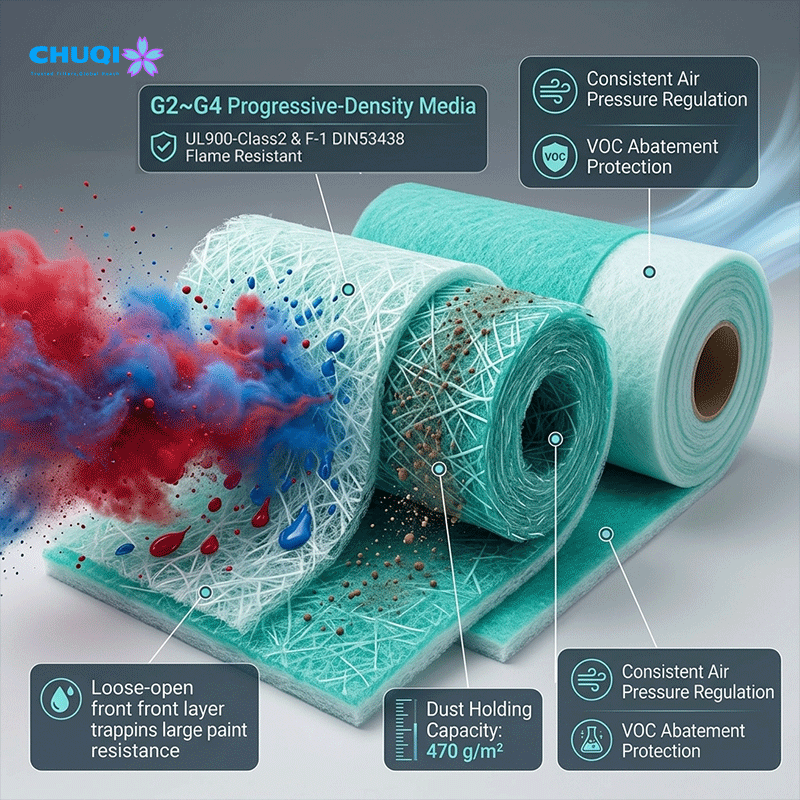
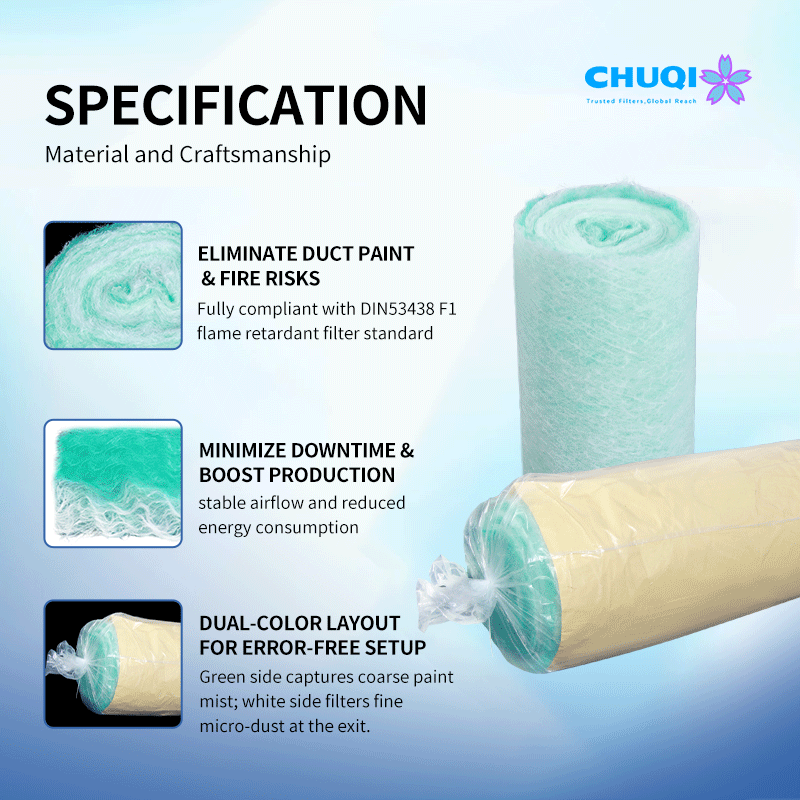
Eliminate Duct Paint & Fire Risks: Traditional media allows flammable buildup in exhaust ducts. Our high-strength Fiberglass Paint Stop Filter captures up to 80.50% of overspray, ensuring absolute fire safety compliance with DIN53438 F1 Flame Retardant Filter standards.
Prevent Resistance Spikes & Energy Waste: Avoid rapid surface-caking that spikes energy costs. Engineered as a Low Initial Resistance Paint Filter (10–20 Pa at 2.50 m/s) with a Progressive Density Glass Fiber matrix, this media stabilizes airflow and drops power consumption.
Minimize Downtime & Boost Production: Frequent filter replacements disrupt automated line efficiency. Our High Dust Holding Capacity Paint Stop media ($360\text{–}470\text{ g/m}^2$) in bulk Fiberglass Media Floor Roll forms extends service cycles and reduces costly maintenance intervals.
Zero Fiber Shedding for Defect-Free Finishes: Brittle fibers snap under high airflow, contaminating wet surfaces and driving up rework. As a premier Spray Booth Filter Manufacturer, we utilize continuous glass filaments to deliver a robust Low Compressibility Paint Filter with zero fiber migration.
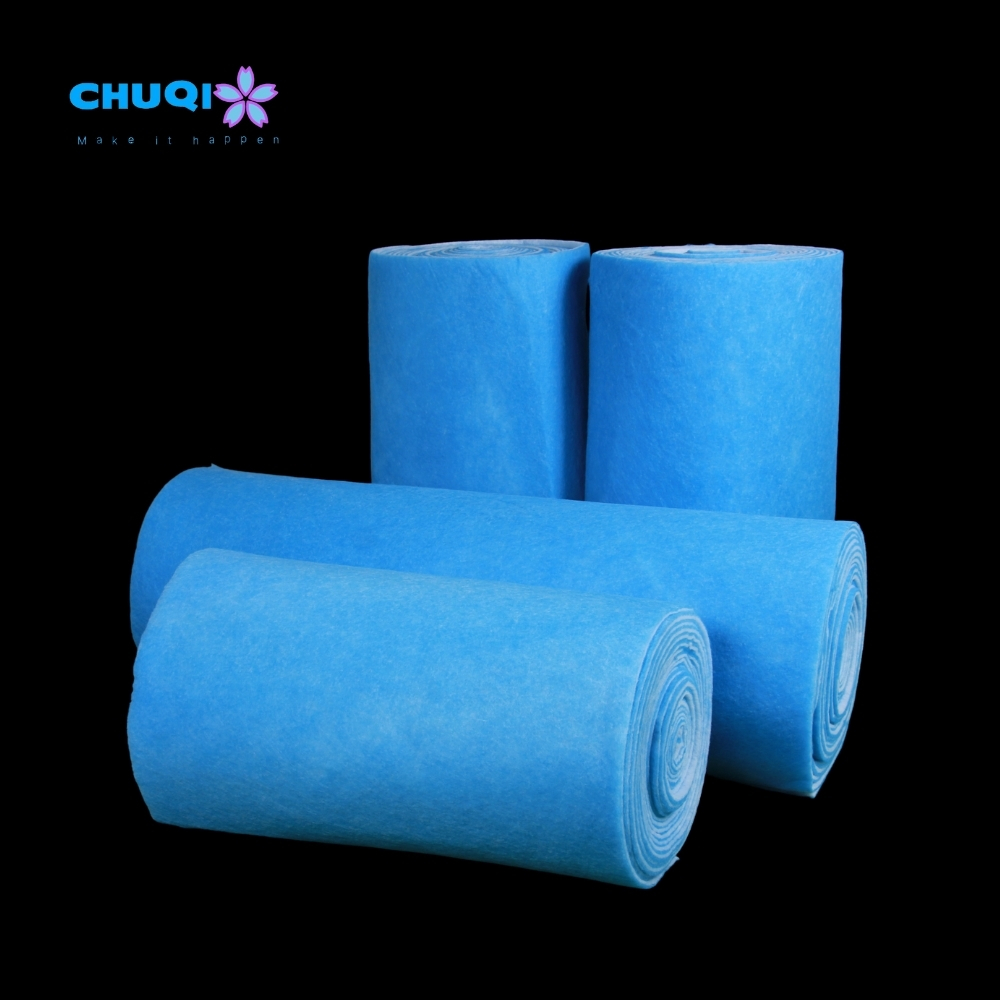
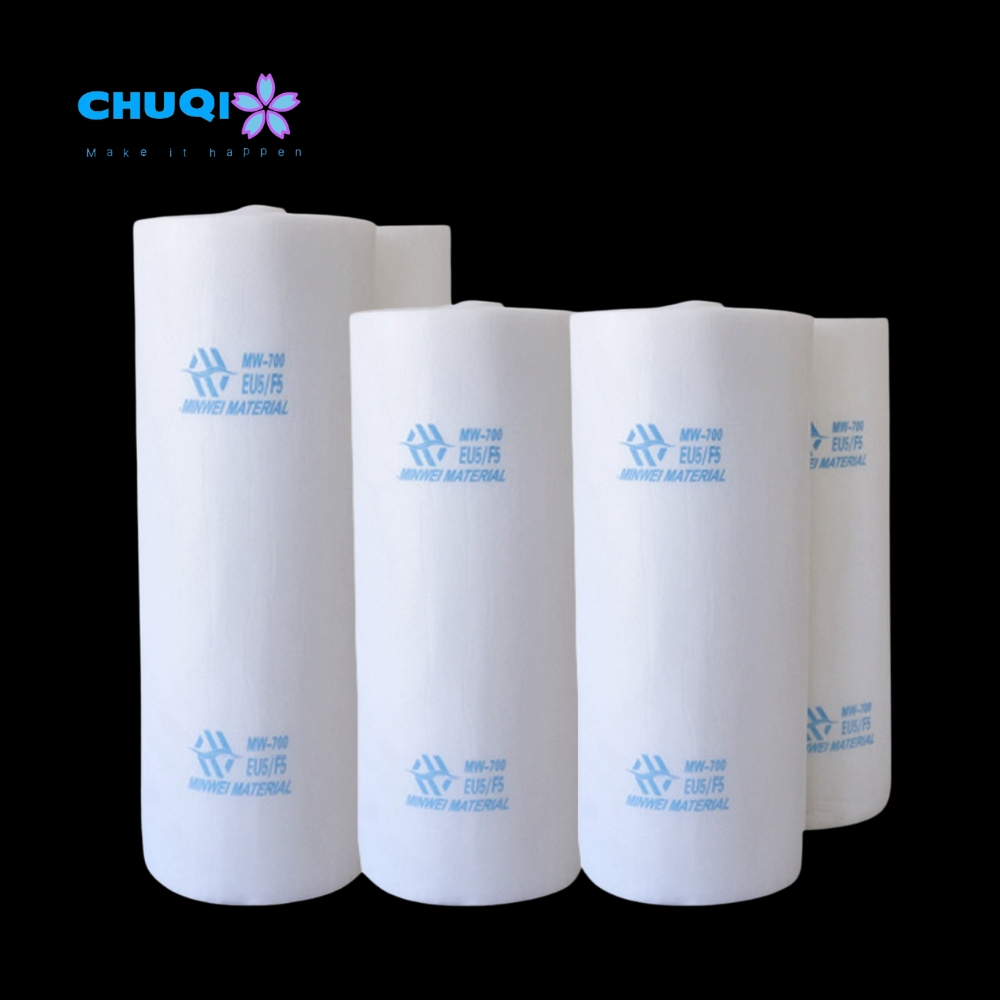
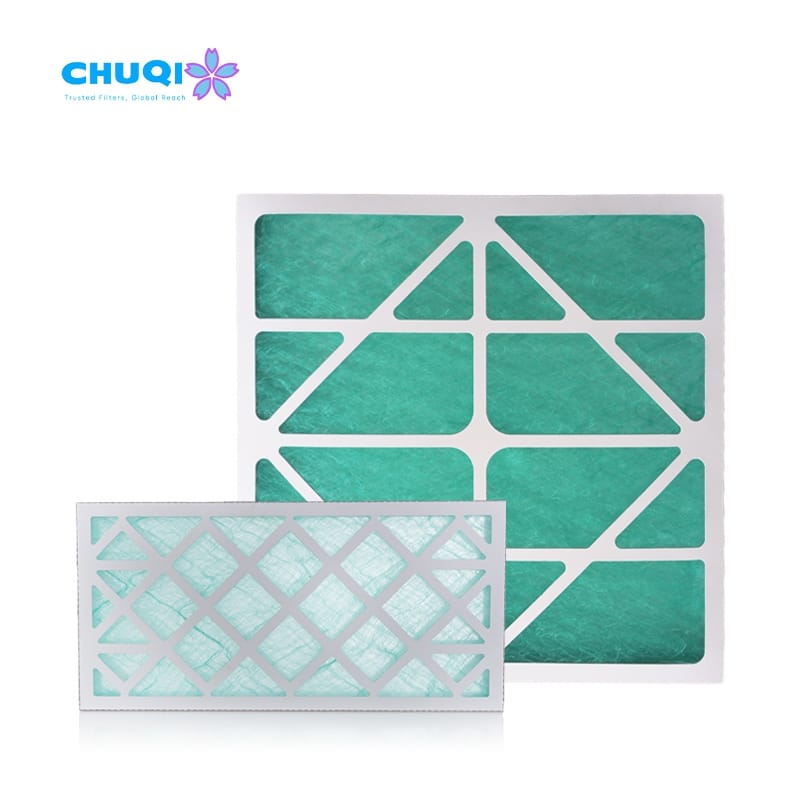
Dual-Color Layout for Error-Free Setup: Prevent performance loss from inverted positioning. The green-and-white design offers an instant visual guide for an Automotive Paint Shop Floor Filter: the green face captures coarse paint mist, while the white face stops fine micro-dust at the exit.
Engineered Fiberglass Paint Stop Filter Media, Progressive Density & Custom Solutions
Continuous Filament Matrix: Formed using continuous glass fiber strands bonded via chemical-resistant resin. This ensures your Glass Fiber Floor Filter withstands heavy structural loads and aggressive chemical solvents without fiber breakage or matting under high-pressure industrial airflow.
Progressive Density Structure: Engineered with a gradient pore structure from an open green entry zone to a tightly woven white backing. This Progressive Density Glass Fiber design prevents surface blind-off, allowing paint particles to penetrate deep to maximize internal storage space.
Low Compressibility Engineering: Imbued with immense mechanical resilience, this Low Compressibility Paint Filter media resists gravitational collapse even when fully saturated with heavy solid paint sludge, keeping airflow channels perfectly open and stable.
Comprehensive Industrial Customization: We offer full OEM/ODM support for specialized automated spray lines. From custom roll widths (0.5m–2.0m) to tailored pre-cut pad dimensions, you can request a Custom Size Paint Stop Roll with varying thicknesses (30mm to 100mm) or a High Temperature Paint Filter 170°C setup.
Automotive OEM Assembly & Refinish Lines
Installed beneath the floor gratings of automotive downdraft spray booths, functioning as the primary Automotive Paint Shop Floor Filter barrier to capture high-volume production overspray mist and ensure particle-free finishes.
Industrial Machinery, Metal & Furniture Coating
Fitted directly behind dry spray booths and extraction walls for heavy machinery, steel structures, metal components, and premium wood coatings, serving as a highly durable Spray Booth Paint Arrestor.
Pre-Filtration for Environmental VOC Abatement Systems
Operates as an essential pre-filter directly upstream of activated carbon beds, zeolite concentration rotors, and RTO/RCO thermal oxidizers—preventing sticky lacquer aerosols from fouling or clogging downstream environmental abatement components.
Heavy Marine, Rail & Aerospace Paint Facilities
Deployed within high-airflow, open-floor duct networks and large-scale industrial surface finishing halls where massive liquid paint volume demands a resilient, high-capacity Glass Fiber Floor Filter medium.
| Procurement Evaluation Metric | Our Factory-Direct Premium Media (Chuqi) | Standard Trading Company / Small Workshop Product |
| Compliance & Certifications | Fully certified under DIN 53438 F-1 and UL900 Class 2 flame retardancy. Complete batch-traceability & test reports provided for international plant safety audits. | Lacks verified laboratory certifications. Presents severe fire hazards under dry heat or static spark conditions inside ventilation shafts. |
| Filtration Stability | Continuous alkali-free glass fiber filaments maintain an unyielding 80.50% arrestance throughout the entire lifecycle without media bypass or degradation. | Uses short-strand scrap fiber that shifts under high air volume, creating localized holes that let sticky lacquer bypass into the ductwork. |
| Bulk Lead Time & Scale | High-speed industrial lines ensure consistent mass production, offering predictable lead times and steady container-level global supply chains. | Relies on small-batch outsourcing, causing erratic lead times, inconsistent weight distributions, and unpredictable thickness variations. |
| Structural Integrity | High tensile strength prevents fiber cracking, snapping, or shedding, ensuring zero loose particulate fibers ever ruin fresh automotive/furniture coatings. | Extremely brittle fiber structure that sheds loose particles constantly, forcing frequent buffing, repainting, and increased product rejection rates. |
| Resistance & Energy Savings | Ultra-low initial resistance (10–20 Pa) coupled with deep-bed dust holding reduces system motor load and cuts plant electricity expenses. | Suffers from immediate surface blinding, driving up static resistance within days and causing excessive electrical power draw. |
| OEM & Customization Flexibility | Full factory customization: Precise roll slicing (0.5m–2.0m) and custom pad cutting. Private labeling, custom branding, and varied weights fully supported. | Fixed, rigid stock sizes only. Refuses non-standard width adjustments or specialized thickness variations due to limited machinery. |
| Model | LH-200G | LH-250G | LH-280G | LH-320G |
|---|---|---|---|---|
| Color | Green and White | Green and White | Green and White | Green and White |
| Weight | 200G | 250G | 280G | 320G |
| Thickness | 30 ± 5mm | 60 ± 5mm | 80 ± 5mm | 10 ± 5mm |
| Max. Airflow | 5400m³/h | 4680m³/h | 5400m³/h | 5400m³/h |
| Initial resistance | 10pa | 20pa | 12pa | 15pa |
| Final resistance | 130pa | 150pa | 180pa | 200pa |
| Efficiency | 80.50% | 80.50% | 80.50% | 80.50% |
| Nominal velocity | 2.50m/s | 2.50m/s | 2.50m/s | 2.50m/s |
| Dust Holding Capacity | 360g/㎡ | 385g/㎡ | 400g/㎡ | 470g/㎡ |
| Max. working Temp. | 170℃ | 170℃ | 170℃ | 170℃ |
| Filtering Grade | G2 | G3 | G3 | G4 |
| Flame resistance | F-1 DIN53438 UL900-Class2 | F-1 DIN53438 UL900-Class2 | F-1 DIN53438 UL900-Class2 | F-1 DIN53438 UL900-Class2 |
Note: These are standard specifications. For custom sizes or technical inquiries, 【please contact our engineering team.】
Discover Other Specifications in Our Fiberglass Paint Stop Filters

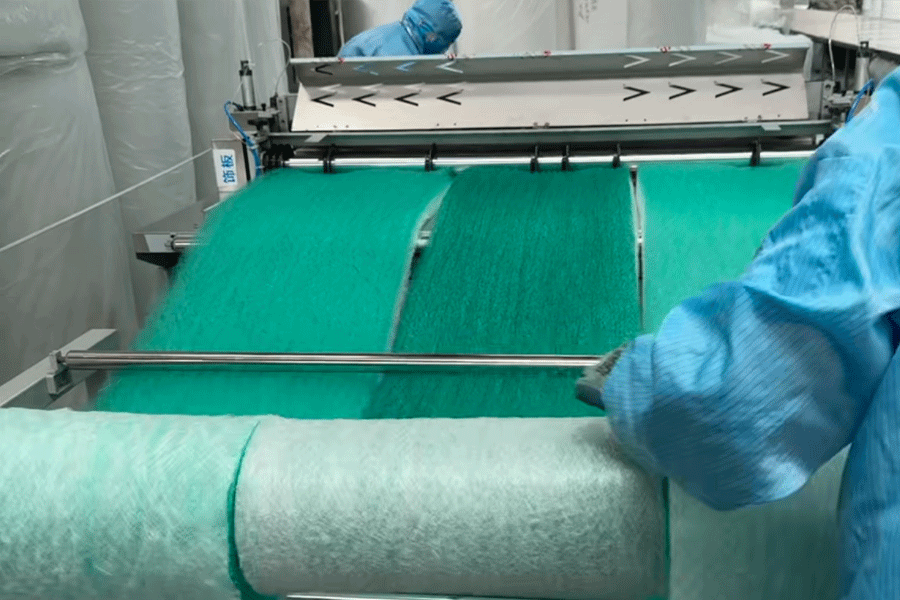
As a specialized Spray Booth Filter Manufacturer with over two decades of dedicated expertise in industrial air filtration materials, Chuqi operates advanced, large-scale production facilities ensuring strict weight uniformity, precise thickness calibration, and flawless structural bonding.
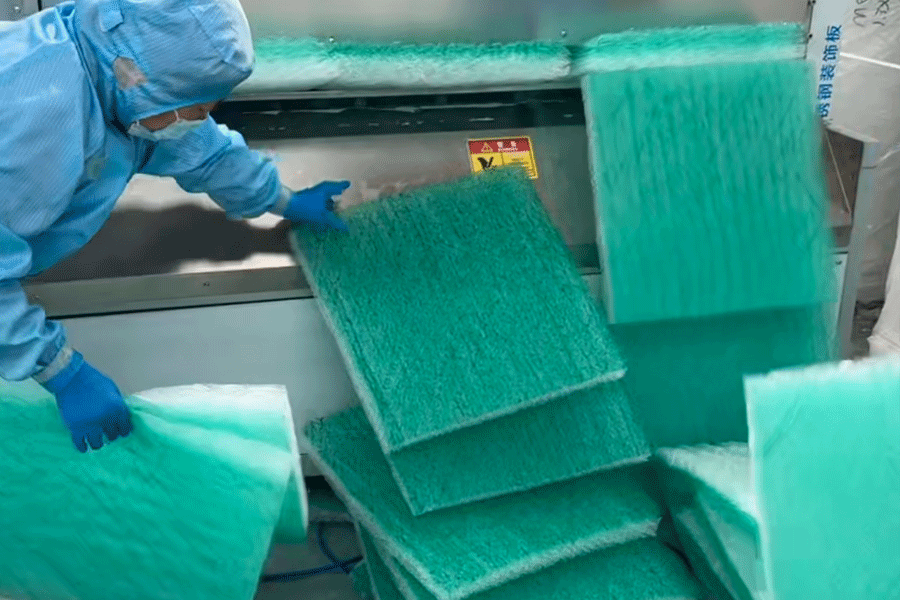
Complete B2B Custom Solutions: We support global distributors, mechanical contractors, and spray booth OEMs with custom roll slitting, pre-cut floor pad manufacturing, and private labeling (OEM/ODM).
End-to-End Quality Control: As a trusted Industrial Spray Booth Filter Supplier, we manage every phase—from raw glass fiber selection and resin bonding to strict final quality inspection—under one roof.
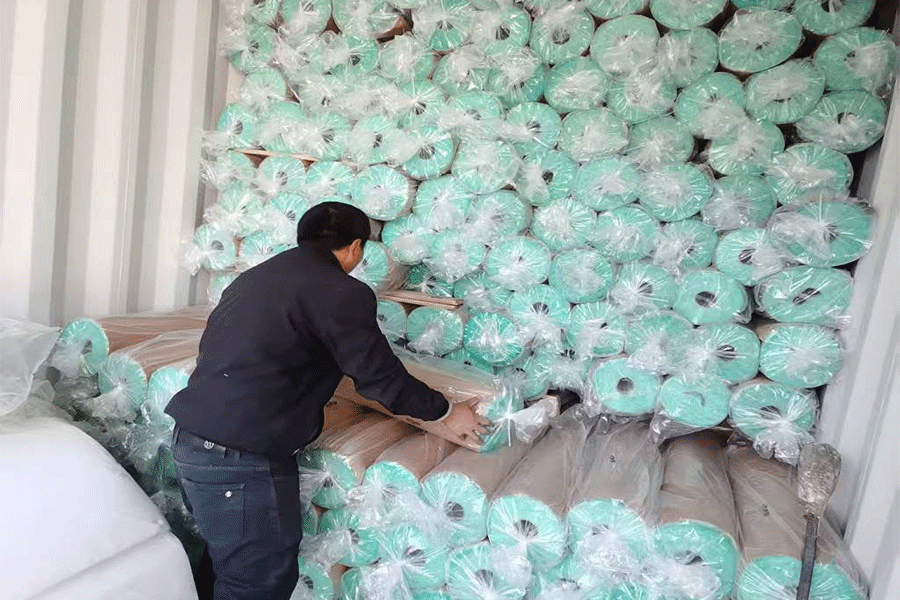
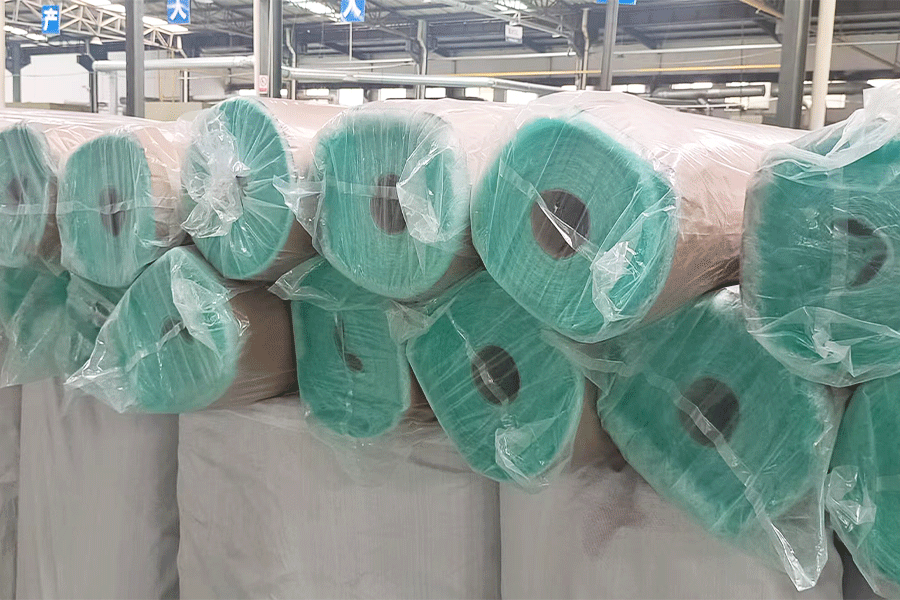
Factory-Direct Pricing & Supply Security: By eliminating intermediate trading markups, we specialize in high-volume Fiberglass Paint Stop Filter Wholesale distribution with fast container-loading capabilities and full export compliance.
Frequently Asked Questions About Fiberglass Paint Stop Filter Media
Q1: How does your factory guarantee compliance with international fire safety codes?
A: Every batch of our Fiberglass Paint Stop Filter media is manufactured using inherently non-combustible glass fibers processed with a specialized flame-retardant binder. Our products undergo rigorous testing to achieve full certification as a DIN53438 F1 Flame Retardant Filter and meet UL900-Class 2 standards. Complete official laboratory test documentation can be provided alongside your commercial invoice to support fire safety compliance checks for any Large Scale Spray Painting Workshop.
Q2: What causes your paint stop media to outlast common market alternatives?
A: The secret lies in our true Progressive Density Glass Fiber layout. Instead of a single, uniform layer, our Low Compressibility Paint Filter allows overspray to pass through the loose entry side and settle progressively inward. Coupled with an exceptional High Dust Holding Capacity Paint Stop performance (up to 470 g/m²), our media outlasts traditional options by 50% to 100% as a highly efficient Paint Arrestor.
Q3: Can we order customized pre-cut pads for specific spray booth dimensions?
A: Yes, absolutely. While our Fiberglass Media Floor Roll is typically shipped in bulk (1m x 20m or 2m x 20m), our Spray Booth Filter Manufacturer facility features automated slitting and precision cutting machinery. We provide tailored, custom-size Paint Stop Roll segments for your specific Dry Spray Booth Extraction Wall or exhaust frames, helping your team eliminate onsite cutting waste.
Q4: How do you prevent fiber shedding from contaminating high-gloss painted surfaces?
A: We use high-strength, continuous glass filaments rather than short, chopped strands. These strands are thermo-chemically locked into a resilient resin matrix, ensuring that even under high industrial airflows (up to 5400 m³/h), the Glass Fiber Floor Filter retains structural stability. This ensures zero shedding into the cabin, making it an ideal choice as an Automotive Paint Shop Floor Filter.
Q5: How does the initial pressure drop behave as paint loading increases during operation?
A: Our filter media is engineered with an optimized fiber loft that maintains an exceptionally low initial pressure drop (typically starting around 15–25 Pa). As paint mist accumulates, the progressive density structure allows particles to embed deep within the matrix rather than sealing the surface prematurely. This smooth resistance curve ensures stable exhaust airflow, prevents frequent fan overload, and extends the operational life of your spray booth ventilation system.