
To evaluate a fiberglass paint arrestor manufacturer, check what it produces in-house, how it specifies and inspects the media, and how approved requirements are carried into bulk orders. Then review whether its roll sizes, cutting options and packing arrangements suit your business.
Distributors need regular availability of their main selling sizes. Converters need rolls that work with their cutting operations. Equipment manufacturers need repeat orders that follow established specifications. Start with the material you intend to buy and work through the following areas.
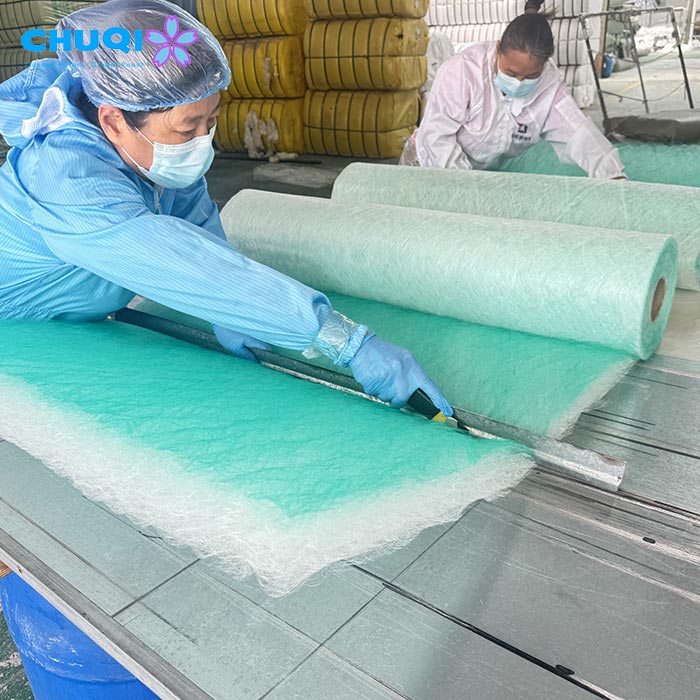

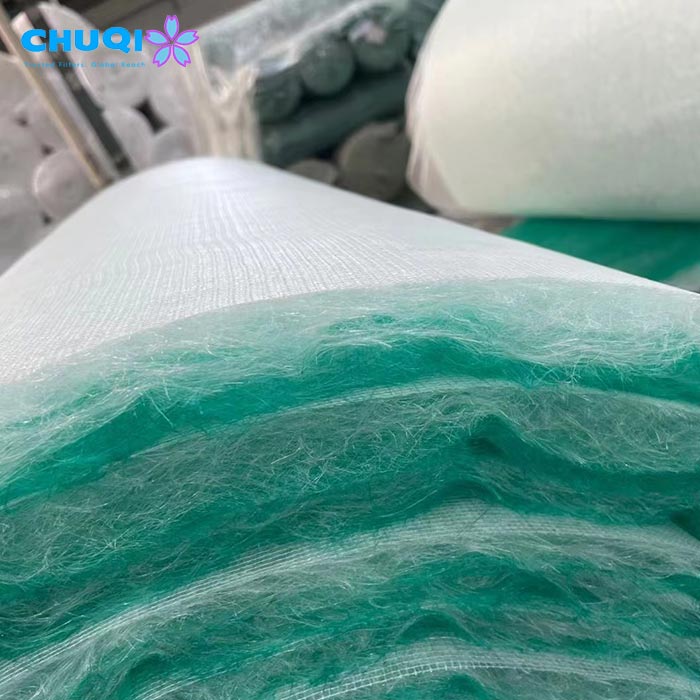
1. Confirm What the Manufacturer Actually Produces
A fiberglass paint arrestor supplier may manufacture the media, convert purchased rolls into pads, distribute finished products, or combine these activities. Find out which arrangement applies to the product being quoted.
Distinguish Manufacturing from Converting
| Supply model | What to check |
|---|---|
| Media manufacturer | Whether it produces the quoted fiberglass media and which processes it handles in-house |
| Media converter | Where the base media comes from and who handles slitting, cutting and packing |
| Trader or distributor | How sources are managed and who maintains the agreed product specification |
| Combined operation | Which activities apply to the particular material you intend to purchase |
Cutting equipment shows converting capability, not necessarily fiberglass media production. A manufacturer may also sell externally sourced products alongside materials it makes itself.
These arrangements suit different needs. A distributor may offer convenient local stock or smaller orders. A converter may provide useful cutting and packing services. If direct manufacturing is important to your purchase, confirm that the quoted material is part of the company’s own production.
Review the Relevant Operations
During a factory visit or video walkthrough, follow the operations used for your order.
If you are buying pre-cut pads, look at how rolls are identified before cutting, how different grades are separated, and how finished pads are counted and packed.
Where production and converting take place at different sites, ask how material identification is maintained between them. For larger or long-term purchasing arrangements, a site visit or third-party assessment may help confirm the production scope.
2. Check How Clearly the Media Is Specified
Before comparing manufacturers, make sure their quotations describe comparable materials. Matching colour and nominal thickness does not establish that two fiberglass paint arrestors have the same construction or performance.
A product page for fiberglass paint arrestor media can provide a starting point for reviewing the available material and supply formats. The quotation should then identify the specific grade and dimensions being offered.
Clarify Thickness, Basis Weight and Dimensions
Check whether thickness is a nominal description or a measurement taken under stated conditions. Handling and measurement pressure can affect readings, so the method matters when thickness is an acceptance requirement.
Compare basis weight in a common unit, such as g/m². If another unit is used, convert it before comparing quotations.
For rolls, confirm width and length. For pads, confirm finished dimensions rather than assuming they match a nominal filter opening. Keep product names and units consistent across the quotation, sample label and purchase order.
For more detail, see Paint Stop Media Thickness and Basis Weight: How to Compare Specifications.
Read Performance Figures with Their Test Conditions
If a supplier quotes filtration efficiency, initial pressure drop or paint-holding capacity, check:
Which media grade was tested.
Which test method was used.
What airflow velocity and other relevant conditions applied.
Whether the tested material matches the quoted product.
An efficiency percentage alone is not enough for a like-for-like comparison. Neither is a pressure-drop figure without its airflow conditions.
If two suppliers use different test methods, do not rank the materials solely by the headline numbers. First determine whether the results are comparable or whether further evaluation is needed.
Separate a Candidate Material from a Confirmed Replacement
An old sample or photograph can help identify possible alternatives, but appearance alone cannot confirm equivalent performance.
For replacement projects, discuss the installation, operating conditions and reason for changing materials. The supplier should explain what can be assessed from the available information and what still requires sample evaluation or testing.



3. Examine How Specifications Are Checked
Once the proposed material is clear, review how the manufacturer checks the requirements that matter to your order.
Match Inspection to the Product You Buy
For rolls, checks may cover material identification, width, length and quantity. For pre-cut pads, finished dimensions, pad counts and packing units also need attention.
If basis weight, thickness or another characteristic forms part of the agreed specification, establish how it is checked and what acceptance limits apply. A nominal value alone does not define an agreed tolerance.
Quantity descriptions should be equally clear. An order packed in bundles should state the number of rolls per bundle. A pad order should distinguish pads per pack, packs per carton and total quantity.
This helps purchasing and warehouse teams work from the same information, even when they use different ordering or receiving units.
Check Batch Identification
Ask what can be retrieved from the batch or order reference on delivered packaging.
Can the supplier identify the material grade, relevant production or converting records, and dispatch details? If an order includes more than one batch, can the packages be distinguished?
The documentation does not need to be unnecessarily complex. It should make it possible to identify what was supplied and refer to the same specification when placing a repeat order.
Distinguish Certificates from Product Reports
A management-system certificate and a product test report answer different questions.
ISO 9001 concerns a quality management system. It does not, by itself, demonstrate that a particular paint arrestor has passed a filtration performance test.
Check the certificate holder, scope and validity. For product reports, check the sample identification, test method and conditions. A result for one media grade should not automatically be applied to every thickness, basis weight or construction offered by the same manufacturer.
4. Connect Sample Approval to Bulk Orders
A sample evaluation needs a clear product reference and a record of what was checked. Otherwise, the material approved by a technical team may not be described precisely enough for purchasing.
Identify the Sample and the Evaluation
Keep the product name or code, dimensions and supply format with the sample record. Avoid descriptions such as “the thicker version” or “the green material sent last time”.
Also record what the evaluation covered. A cutting trial may confirm suitability for your converting process, but it does not establish filtration performance. An appearance check does not establish service life.
If several samples are being compared, use separate references so that purchasing, technical and warehouse staff can identify the selected material.
Carry the Details into the Order
The purchase order should include the approved material reference, dimensions, quantity and packing requirements.
“Supply as approved sample” is incomplete without an identifiable sample and supporting specification.
If bulk supply differs from the sample arrangement—for example, rolls are replaced with pads or the packing format changes—review the affected details before ordering.
For a new supplier, a staged purchase may help confirm the main requirements before increasing the quantity. The scale of that evaluation should reflect the application and purchasing risk.

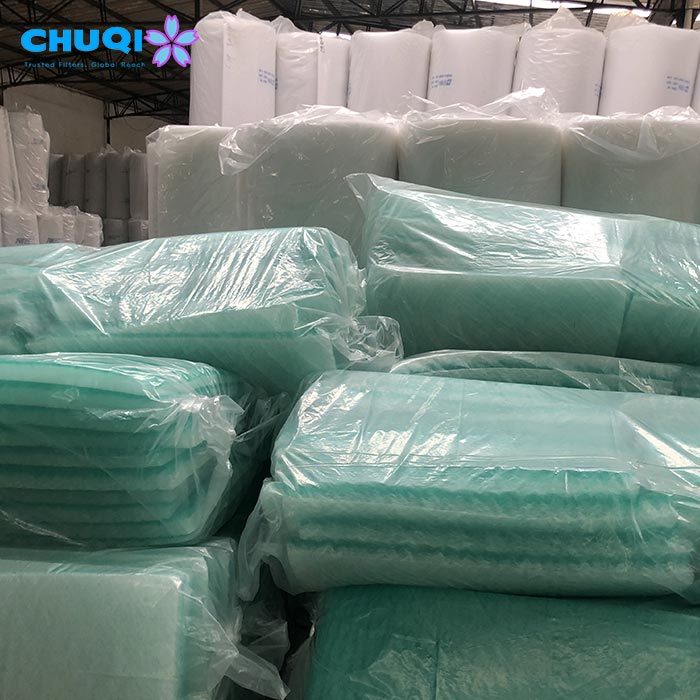

5. Assess the Fit with Your Business
A manufacturer’s standard products and order conditions should suit how you process, sell or use the material. Review the sizes, quantities and delivery formats you buy most often.
For Converters: Check Roll Sizes and Cutting Yield
Compare available roll widths and lengths with your main pad dimensions. More roll area does not always mean more usable pads.
For example, when cutting 0.5 m × 0.5 m pads without joining offcuts, both a 1 m-wide roll and a 1.2 m-wide roll accommodate two pads across, before allowing for any trimming. The wider roll leaves a 0.2 m strip. Whether that strip has another use affects the cost comparison.
Include trimming and actual cutting requirements in your calculation. If the manufacturer offers pre-cut pads, compare the material, labour and packing needed to reach the same finished quantity.
For a broader comparison of supply formats, see Paint Arrestor Rolls vs. Pre-Cut Pads: Which Should You Buy?
For Distributors: Align Packing with Sales Units
Decide whether customers will buy complete rolls, individual pads or packs.
Check that inner and outer labels show consistent dimensions and quantities, and that similar-looking grades can be distinguished in storage.
For private-label supply, discuss artwork, label content, packing quantities and minimum-order conditions separately. “Customisation available” does not mean every size and packaging combination is offered under the same terms.
For Equipment Buyers: Review Specification Continuity
Where a fixed material is used regularly, ask how subsequent orders refer back to the approved specification.
Changes to material, dimensions, packing or sourcing arrangements should be discussed before order confirmation. If a proposed alternative could affect an earlier evaluation, review whether the previous approval still applies.
Lead times should reflect the actual product, quantity and processing requirements rather than a general delivery statement.
6. Make Cross-Border Order Details Clear
International purchasing adds differences in units, packing conventions and delivery terms. Resolve these in the quotation and order rather than leaving them for the receiving team.
If your drawings use inches while the supplier quotes in millimetres, record the intended finished size and agreed unit. For basis weight and roll dimensions, use one consistent comparison unit throughout the order.
Distinguish the selling unit from the shipping unit. A quotation per roll should not leave the number of rolls per carton unclear.
When comparing suppliers in different countries, use the same currency and delivery basis, noting which freight and other charges are included. A lower goods-only quotation is not necessarily a lower delivered cost.
Any destination-specific requirements should be checked for the actual market and application, rather than assumed from a supplier’s general export statement.
Discuss Your Material and Supply Requirements
Once you have selected a candidate material, review its specification, cutting options, packing and repeat-order arrangements.
Contact Chuqi to discuss fiberglass paint arrestor rolls, pre-cut pads or sample arrangements. Sample specifications, quantities and shipping arrangements require confirmation.
Frequently Asked Questions
How can I tell whether a supplier manufactures the media or only converts it?
Identify who handles base-media production, slitting, pad cutting and packing. Review the operations relevant to the quoted product. Cutting equipment alone does not demonstrate that the supplier manufactures fiberglass media.
Is buying directly from a manufacturer always cheaper?
No. Compare the same material, usable quantity, packing and delivery conditions. A lower roll price may still involve local cutting, labour, repacking and unusable offcuts.
Does ISO 9001 certification prove paint arrestor performance?
No. It concerns a quality management system, not a specific filtration performance result. Check product test information applicable to the material being purchased and the stated test conditions.
What should be confirmed after sample approval?
Carry the sample reference, material specification, dimensions and packing requirements into the order. Clarify how those requirements will be checked in bulk supply and how proposed changes will be communicated.
What matters most for repeat purchases?
Check that the approved specification remains identifiable, changes are discussed in advance and repeat orders use the confirmed requirements. Material, size and packing records should remain accessible even when contacts or order quantities change.