
You can start looking for replacement fiberglass paint arrestor media without the original part number. Begin with photos of the existing filter, its dimensions, and a brief description of the application. These give a supplier a practical basis for suggesting a candidate.
The important distinction is between identifying a possible replacement and confirming an equivalent product. Similar appearance can help narrow the search, but it does not establish the same filtration performance.
This guide explains how to move forward without turning your first enquiry into a lengthy technical exercise.

What Should You Provide First?
For an initial enquiry, focus on three things: photos, dimensions, and the application. More detailed questions can be addressed once a specific media grade has been proposed.
| Starting information | What to share |
|---|---|
| Photos | The existing media and its installed position; packaging labels if available |
| Dimensions and supply format | Pad length and width, stated in mm or inches, plus rolls or pre-cut pads |
| Application | Where the filter is used, the coating type if known, and the reason for replacement |
You do not need every detail before making contact. State clearly when information is unavailable.
Show the Media and Where It Is Installed
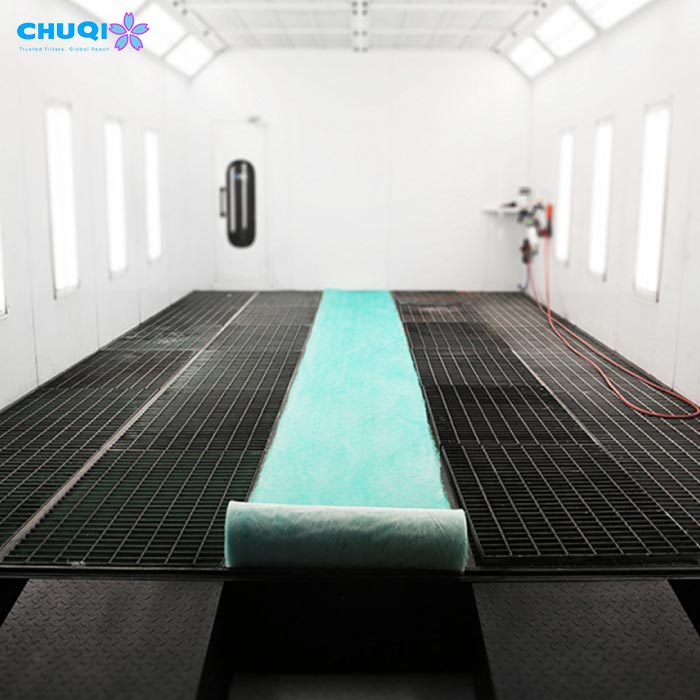
A photo of a loose pad provides only part of the picture. Include the holder or installation area so the supplier can understand how the material is retained and where it sits in the exhaust filtration arrangement.
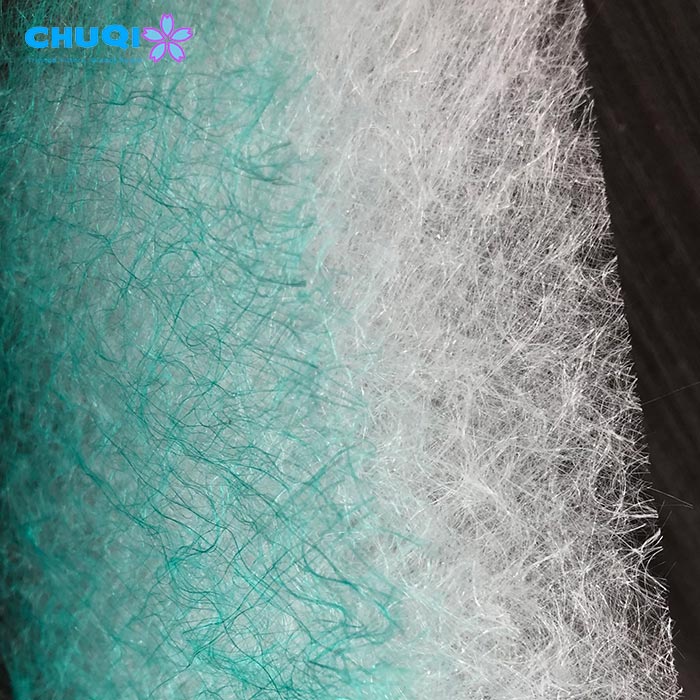
If unused material is available, photograph its front, back, and edge. Any remaining label or packaging may also provide identification clues.
First, establish that you are replacing spray booth exhaust media. Fiberglass paint arrestor media, also called fiberglass paint stop media, should not be confused with intake filters or ceiling diffusion media.
For an introduction to the material, read What Is Fiberglass Paint Arrestor Media? Uses and Applications.
Provide Reference Dimensions and the Supply Format
Provide the required length and width, and explain whether you buy rolls for cutting or finished filter pads.
Use an unused piece or a previous purchasing record where possible. If you measure used media, identify it as used: paint loading, compression, or distortion may affect the result.
Reference measurements are useful for initial screening. Final ordering dimensions and any necessary tolerances can be confirmed once a candidate has been selected.
If you are also reviewing the supply format, read Paint Arrestor Rolls vs. Pre-Cut Pads: Which Should You Buy?
Describe the Application Briefly
A short description is enough to begin:
We use pre-cut fiberglass paint arrestor pads in the exhaust section of a furniture spray booth. The original part number is unavailable, and we need replacement media for recurring orders.
Add the coating type if known. If you are seeking a change because of difficult installation or frequent replacement, describe the observation without assuming its cause.
Why Similar-Looking Media May Not Be a Direct Replacement
Color, nominal thickness, and surface appearance describe only part of a filter medium. They do not establish how it captures overspray, resists airflow, or behaves as paint accumulates.
Replacement suitability involves three separate questions: Does it fit? Does its documented performance meet the requirement? Is it appropriate for the application?
Installation Fit Is Only the First Check
Matching pad dimensions and a similar thickness can help establish physical fit. They do not demonstrate equal capture efficiency, pressure drop, or paint-holding capacity.
These properties address different requirements:
Capture efficiency concerns overspray retention under the stated test conditions.
Pressure drop describes resistance to airflow.
Paint-holding capacity describes loading performance up to a defined test endpoint.
A product that fits the existing holder still needs to be assessed for the filtration task.
Performance Figures Need Context
Technical figures are useful only when their basis is understood.
Read initial pressure drop alongside face velocity. Review capture efficiency with the test method and challenge material. Compare paint-holding capacity with attention to sample area and the endpoint used.
Similar numbers from different test conditions do not necessarily demonstrate comparable performance.
If the original specification is missing, the objective is to establish whether the candidate meets the current requirements—not to claim an unsupported one-to-one equivalence.
Initial Condition Does Not Predict the Entire Service Cycle
Unused appearance and clean-media resistance do not describe the full operating cycle. As overspray accumulates, resistance development and the reason for replacement also matter.
The previous filter’s replacement interval is useful background, but it is not a guaranteed service life for another grade. Coating, production load, and filter arrangement can all affect the outcome.
For more detail on these comparisons, read How to Choose Fiberglass Paint Stop Media for Your Spray Booth.
Evaluate One Candidate at a Time
Once a supplier proposes a grade, focus the discussion on that product.
Ask for its identification, relevant technical information, and the basis for recommending it for your application. Resolve installation dimensions and any equipment-specific requirements before approving a purchase.
This keeps the process manageable: basic information first, candidate-specific assessment second.
Where the original product data cannot be recovered, describe the proposal as a candidate replacement for evaluation rather than a verified equivalent. Existing equipment approval or compliance requirements should take precedence.
You can review Chuqi’s fiberglass paint arrestor media as a starting point for discussing available options.

Use a Sample to Answer a Specific Question
A sample is most useful when the evaluation has a clear purpose.
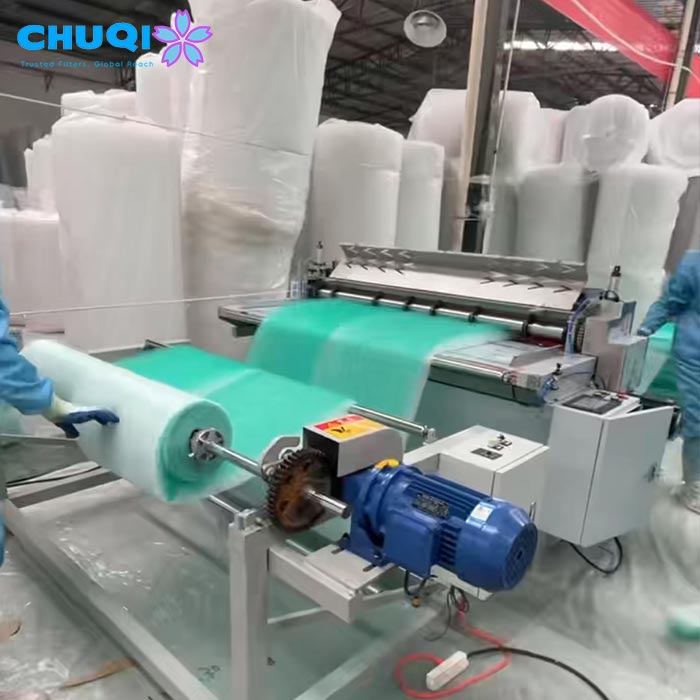
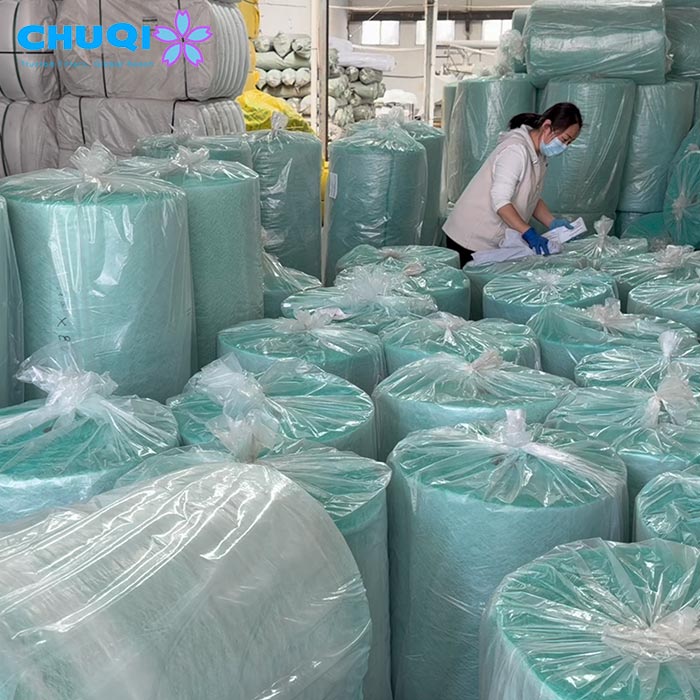
You may want to inspect the construction, assess cutting and handling, or check dimensional fit. A full installation trial requires a different sample arrangement from a small material inspection.
Explain the intended use when requesting a sample. Appearance and feel alone cannot confirm filtration performance.
Where an operating trial is appropriate, follow the equipment’s operating and maintenance requirements and record the conditions and replacement reason.
A Short Enquiry You Can Send to a Supplier
You can use the following message to start the discussion:
We are looking for replacement fiberglass paint arrestor media, but the original part number is unavailable.
Attached are photos of the existing media and installation.
Required dimensions: [length × width, in mm or inches]
Supply format: [rolls or pre-cut pads]
Application and coating, if known: [brief description]
Please suggest a grade for evaluation and let us know whether any further information is needed.
This provides a clear starting point without requiring a complete technical file upfront.
Keep a Clear Specification for Repeat Orders
After a replacement is approved, retain the product name or grade, technical information, dimensions, supply format, and packaging requirements.
For factories, distributors, and converters, this creates a more reliable basis for repeat purchasing than photographs or descriptions such as “the same material as before.”
The aim is to solve the identification problem once and make the next order easier.
Explore Products, Request a Free Sample, or Discuss Your Replacement Needs
Looking for replacement fiberglass paint arrestor media without a part number? Explore Chuqi’s product information, or send photos, reference dimensions, and a brief application description to discuss options for evaluation.
You can also request a free sample to inspect the material or assess cutting and installation fit. Sample specifications, quantities, and shipping arrangements require confirmation.
Frequently Asked Questions
1. Can I find replacement paint arrestor media without a part number?
Yes. Photos, reference dimensions, and a brief application description provide a starting point. A supplier can then suggest a candidate and identify what else is needed for evaluation.
2. Can a supplier identify the exact grade from a photo?
A photo may help narrow the options, particularly when labels or packaging are visible. It does not, by itself, confirm the exact grade or equivalent performance.
3. Can I use an old filter pad as a reference?
Yes, but state that it has been used. Paint loading, compression, and distortion may affect its appearance and dimensions, so it should not automatically be treated as the original specification.
4. Does matching color and thickness mean the media is interchangeable?
No. Installation requirements, application suitability, and relevant performance information also need to be considered. Matching appearance is not proof of interchangeability.
5. Can I request a sample before placing a bulk order?
You can request a free sample from Chuqi and explain whether it is for inspection, cutting, or installation assessment. Sample specifications, quantities, and shipping arrangements require confirmation.