
To choose fiberglass paint stop media, start with your booth’s exhaust filter arrangement and coating process. Then compare the capture efficiency, pressure drop, and paint-holding capacity of specific media grades before confirming installation dimensions and supply format.
Also called fiberglass paint arrestor media, this material must suit the overspray being collected as well as the booth’s airflow and installation conditions. Similar appearance or a higher value on one specification does not establish that a product is a suitable replacement.
This guide follows a practical selection process, helping you identify the information that matters and narrow your options before a trial or bulk purchase.



Step 1: Match the Media to Your Exhaust Filter Arrangement and Coating Process
Start with the existing exhaust filter arrangement
Fiberglass paint stop media captures overspray in the spray booth exhaust path. It should not be confused with intake media or ceiling diffusion filters, which serve different functions.
If you are unfamiliar with the material, start with What Is Fiberglass Paint Arrestor Media? Uses and Applications.
When replacing existing media, use the approved product specification and equipment documentation to answer three questions:
Where is the media installed, and how is it supported and retained?
Is it the only overspray filter, or one stage in a multi-stage arrangement?
What replacement-filter and operating requirements does the equipment specify?
These details establish the basic selection requirements. For example, media used as a first stage should not be exchanged with a downstream filter simply because the dimensions match. Likewise, a description such as “floor filter” does not replace the installation requirements.
Use coating conditions to identify suitable grades
Two spray booths in the same industry can expose their filters to different overspray conditions. Descriptions such as “automotive painting” or “furniture finishing” are therefore not enough to complete the selection.
More useful application details include:
| Application detail | What to establish |
|---|---|
| Coating type | Waterborne or solvent-based, along with the specific coating family |
| Overspray condition | Whether overspray reaches the media relatively wet and sticky or relatively dry |
| Operating pattern | Intermittent or continuous spraying, including changes in production load |
| Coating changes | Whether the booth uses one coating consistently or switches between several |
Use this information to identify a grade with relevant application documentation. Fiberglass construction alone does not establish compatibility with every coating, including every waterborne formulation.
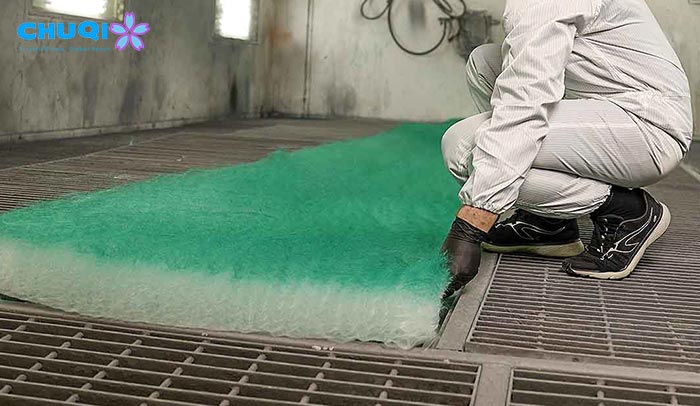


Step 2: Compare Capture Efficiency, Pressure Drop, and Paint-Holding Capacity
Once you have identified candidates suitable for the application, compare their three core performance factors. Each answers a different question.
| Performance factor | Main question it answers | Information needed for comparison |
|---|---|---|
| Capture efficiency | How effectively does the media retain the test overspray? | Test method, challenge material, airflow conditions, and type of result |
| Pressure drop | How much resistance does the media create as air passes through it? | Corresponding face velocity and whether the media is clean or loaded |
| Paint-holding capacity | How much test material is retained before a defined endpoint? | Sample area, loading material, and test endpoint |
Read these factors together. None replaces the other two.
Capture efficiency: understand what was measured
Read an efficiency percentage alongside its test method.
Establish:
Whether the data applies to the exact grade being offered.
Which coating or challenge material was used.
Whether the result represents initial efficiency or an average during loading.
Whether the result is mass-based or reported for particular particle sizes.
For example, mass-based overspray capture efficiency does not directly describe capture at every particle size. Results from different methods should not be ranked as though they measure the same thing.
If the application has specific compliance requirements, use documentation accepted for that application rather than relying on an efficiency percentage from a general product page.
Pressure drop: compare at the relevant face velocity
Pressure drop describes resistance to airflow. To compare products fairly, read the value alongside the face velocity and media condition used in the test.
If two initial pressure-drop values were measured at different face velocities, the lower number does not establish that one product offers less resistance under the same conditions. Look for data at comparable or relevant velocities and assess it against the equipment’s operating requirements.
Where system information is available, average media face velocity can be estimated as:
Average media face velocity = airflow through the filter bank ÷ exposed filter face area
Use consistent units. For example, airflow in cubic metres per second divided by area in square metres gives velocity in metres per second.
This calculation provides an average; it does not establish that airflow is distributed evenly across the filter bank.
Where available, also review resistance data during loading. Clean-media performance is only the starting point of the operating cycle.
Paint-holding capacity: align the area and endpoint
Paint-holding capacity describes loading potential under defined test conditions. Before comparing values, establish whether they are reported per sample or per unit area, and identify the condition used to end the test.
A larger sample, different challenge material, or higher final pressure drop can affect the reported result.
Capacity data is therefore useful for comparing candidates tested under similar conditions. It should not be converted directly into a guaranteed number of operating days. Actual replacement frequency also depends on production load and site operating records.
Step 3: Confirm Installation Fit, Then Choose Rolls or Pre-Cut Pads
After defining the technical requirements, confirm the installation and purchasing specifications. A suitable grade still needs to be supplied in a form that can be installed as intended.
Use actual dimensions to establish fit
Record:
Finished length and width, including acceptable dimensional tolerances.
Available installation depth and the retention method.
The distinction between nominal dimensions and actual acceptance dimensions.
Installation direction, where specified.
For international purchasing, state the measurement units explicitly. If dimensions are shown in both millimetres and inches, identify which values govern acceptance. A rounded conversion should not become a different finished-size requirement.
What do thickness, basis weight, and color tell you?
These characteristics help describe and identify a product, but they should not be used as independent performance rankings.
| Characteristic | Main use |
|---|---|
| Thickness | Describes media depth and helps assess fit within the holder |
| Basis weight | Describes material mass per unit area |
| Color | Helps identify products within a supplier’s range |
Use them alongside the grade designation and performance information. This is particularly important when changing suppliers: matching colors do not establish equivalent grades, and matching thicknesses do not establish identical construction.
Choose the format according to the work remaining after delivery
Rolls suit buyers who need several sizes and can reliably cut and inspect the finished pieces. Pre-cut pads suit recurring dimensions where the goal is to eliminate in-house cutting.
Compare roll offcuts, cutting, and packing against any repacking or labeling still required for pre-cut pads. For repeat orders, define the roll dimensions or pad sizes together with the required pack quantities.
For a detailed comparison, read Paint Arrestor Rolls vs. Pre-Cut Pads: Which Should You Buy?
The supply format addresses processing and inventory needs. It does not change the media requirements established earlier.
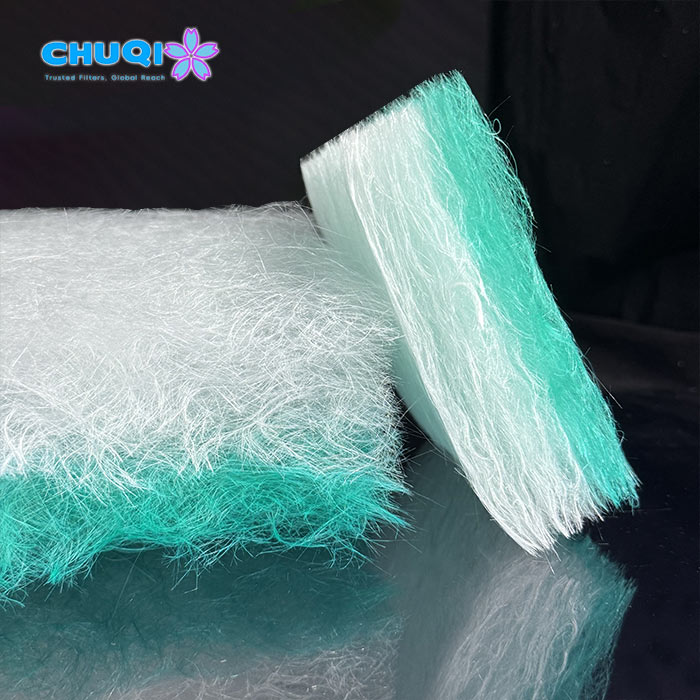
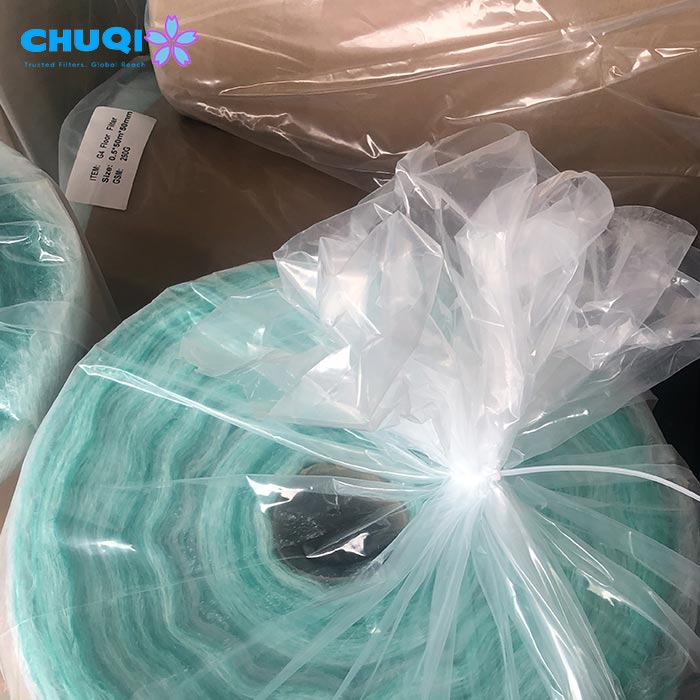
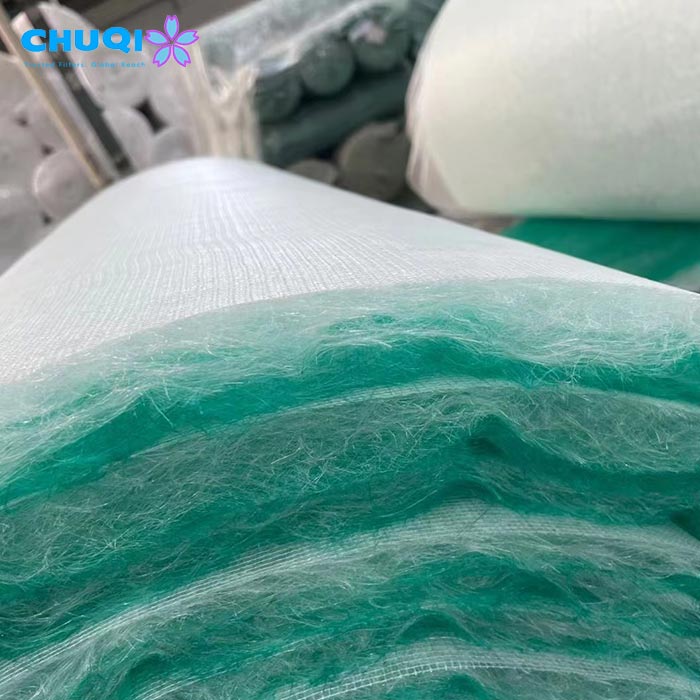
Step 4: Evaluate the Selected Grade Through a Controlled Trial
Product data helps shortlist candidates. A site trial helps you observe a candidate under your operating conditions.
Select one clearly identified grade, establish what will be evaluated, and keep the trial within the equipment’s operating and maintenance requirements.
| Record | Purpose |
|---|---|
| Media grade, batch identification, and installation date | Identifies what is being evaluated |
| Coating and production load | Establishes whether operating conditions are comparable |
| Installation dimensions and filter arrangement | Helps account for configuration differences |
| Available pressure readings and airflow checks | Shows operating conditions and changes over time |
| Replacement point and reason | Creates a basis for future purchasing decisions |
Keep the coating, production pattern, and filter arrangement as consistent as practicable. If these change at the same time, it becomes harder to distinguish media performance from changes in operating conditions.
Do not exceed equipment limits to find out whether a candidate “lasts longer,” and do not judge the trial by media color alone.
How Do You Make the Final Purchasing Decision?
By this stage, the candidate should have an identified application range, relevant performance information, and a defined installation specification.
You can then compare the practical costs after delivery:
For end-user factories, consider purchasing, installation, and maintenance requirements.
For distributors and converters, consider usable cutting output, processing work, and stock held across different sizes.
For equipment suppliers and resellers, consider finished-product consistency, pack quantities, and repeat-order requirements.
Use the same specification and delivery-cost basis when comparing quotations. A lower material price may not translate into a lower cost for a finished, installed replacement.
Once a product is approved, retain the media grade, finished dimensions, supply format, and packaging requirements as one purchasing specification. This gives future orders a clearer basis than photographs or verbal descriptions alone.
Explore Products, Request a Free Sample, or Discuss Your Requirements
Looking for fiberglass paint stop media for your spray booth? Explore Chuqi’s product information to review the available options, or request a free sample to assess the material, fit, or cutting requirements before a bulk purchase.
If you have not selected a grade or are considering a replacement for your current media, contact Chuqi to discuss your coating process, filter arrangement, and application needs. These details provide a starting point for reviewing available specifications and evaluation options.
Free sample specifications, quantities, and shipping arrangements require confirmation. When requesting a sample, let us know whether you plan to inspect the material, conduct a cutting test, or carry out an installation trial.
Explore Fiberglass Paint Stop Media · Request a Free Sample · Contact Us to Discuss Your Requirements
Frequently Asked Questions
1. Can I start selecting media without a data sheet for the current product?
Yes. Start with the equipment documentation, existing pad dimensions, filter arrangement, and coating information. Photographs and product labels can help identify the current material, but they do not establish that an alternative offers equivalent performance. Resolve any remaining technical requirements before approving a replacement.
2. Can one fiberglass paint stop grade be used with several coatings?
Possibly, depending on the documented application range of the specific grade. If the booth frequently changes coatings, the selection should cover the coatings and operating conditions actually used rather than just one of them.
3. Can I use the same selection requirements for single-stage and multi-stage filtration?
Not without reviewing the arrangement. Multi-stage systems require consideration of each stage’s role and the combined resistance. A material suitable as a first stage is not automatically suitable for use alone or in a downstream position.
4. Does fiberglass paint stop media also remove VOCs and paint odors?
It is primarily used to capture overspray particles and should not be treated as a stand-alone VOC or odor-control solution. Gas-phase treatment needs to be specified and evaluated separately.
5. Should I establish new operating records after changing media grades?
Yes. Loading behavior and pressure-drop development under actual conditions cannot be determined solely from the previous product’s replacement interval. Establish records for the new grade within the equipment’s maintenance requirements, then use them to support replenishment planning.
6. Can I switch between rolls and pre-cut pads after approving a grade?
Yes, provided the approved media specification is retained. Define the finished dimensions, tolerances, and packaging requirements. If cutting moves in-house, also confirm that the finished pads meet the installation requirements.