
In modern industrial, commercial, and high-end residential HVAC systems, air filtration goes beyond capturing fine particulate matter. Controlling gaseous pollutants, volatile organic compounds (VOCs), and unpleasant odors is critical. This is where the Activated Carbon Air Filter plays an irreplaceable role.
Whether you are a facility manager, HVAC contractor, or a global importer, understanding how to maintain, classify, and source these filters is essential for maintaining optimal indoor air quality (IAQ). In this comprehensive guide, we will answer three key questions to help you optimize your air filtration strategy and secure a reliable manufacturing partner.
How to Know if Your Activated Carbon Filter Is Damaged or Saturated?
Unlike standard particulate filters that visibly darken with dust and dirt when dirty, an activated carbon air filter operates via adsorption—a chemical and physical process where gaseous pollutants, odors, and VOCs are trapped inside millions of microscopic pores. Because this molecular-level saturation is entirely invisible to the naked eye, determining when your filter is exhausted, damaged, or failing requires monitoring specific operational and environmental indicators:
Odor and Chemical Breakthrough (The Primary Warning Sign)
What happens: The most immediate indicator of carbon saturation is the return of unpleasant smells, fumes, or chemical odors in the effluent (downstream) air.
Why it occurs: Once the microscopic pore structure of the activated carbon reaches its maximum adsorption capacity, it can no longer hold new molecules. Contaminants begin to slip straight through the media unchecked.
Abnormal Pressure Drop and Airflow Restrictions
What happens: You notice a sudden or gradual drop in ventilation performance, lower air velocity at supply diffusers, or differential pressure gauges reading significantly above baseline.
Why it occurs: While carbon filters focus primarily on gases, heavy airborne dust, lint, and particulate loading can bypass pre-filters and clog the outer surface or internal matrix of the carbon media. This restricts airflow and forces your HVAC blower to work harder, increasing energy consumption.
Physical Deformation and Moisture Degradation
What happens: Visual inspection reveals a warped, rusted, or structurally compromised frame, or carbon media that has clumped together or developed mold/mildew.
Why it occurs: High relative humidity (often exceeding 70-80% without pre-dehumidification) or water leaks can destroy activated carbon. Wet carbon experiences pore blockage and structural breakdown, which drastically destroys its effective surface area and renders the filter instantly useless.
Exceeded Service Life (Operational Hours & Exposure Load)
What happens: The filter has been in continuous operation beyond its rated lifecycle (typically 6 to 12 months depending on the concentration of local pollutants).
Why it occurs: Even if a filter does not exhibit catastrophic failure or severe odor breakthrough, the internal active sites of the carbon naturally degrade over time due to constant background exposure to ambient humidity and trace gases. Proactive replacement on a scheduled maintenance calendar prevents unexpected system failures.
Classification and Comparison of Activated Carbon Filters
Choosing the right filter structure depends heavily on your airflow volume, contaminant concentration, and space constraints. Below is a detailed comparison of the primary standard filter types available on the global market:
| Filter Type | Key Characteristics | Best Application Scenarios | Pros & Cons |
| V Bank Carbon Filter | Features multiple V-shaped pleats filled with high-density carbon granules or molded carbon blocks, offering a massive surface area. | Heavy-duty industrial exhaust, airports, chemical plants, hospitals, data centers. | Pros: Extremely high removal efficiency, high airflow capacity, long service life. Cons: Higher initial investment, heavier weight. |
| Pleated Activated Carbon Filter | Features folded synthetic media infused with powdered activated carbon, providing a balanced surface area for moderate contaminant levels. | Commercial HVAC units, cleanrooms, and standard ventilation systems. | Pros: Excellent balance of dust retention and odor removal, lightweight, easy installation. Cons: Lower total carbon weight compared to V-bank models. |
| Panel Activated Carbon Filter | Compact flat-panel design containing activated carbon granules or media secured within a rigid metal or cardboard frame. | Tight installation spaces, rooftop units, secondary pre-filtration stages. | Pros: Space-saving, low initial resistance, cost-effective replacement. Cons: Limited media depth, shorter lifespan under heavy pollutant loads. |
Looking for other types or custom designs?
Explore our full range of Activated Carbon Air Filters to find the perfect match for your application.
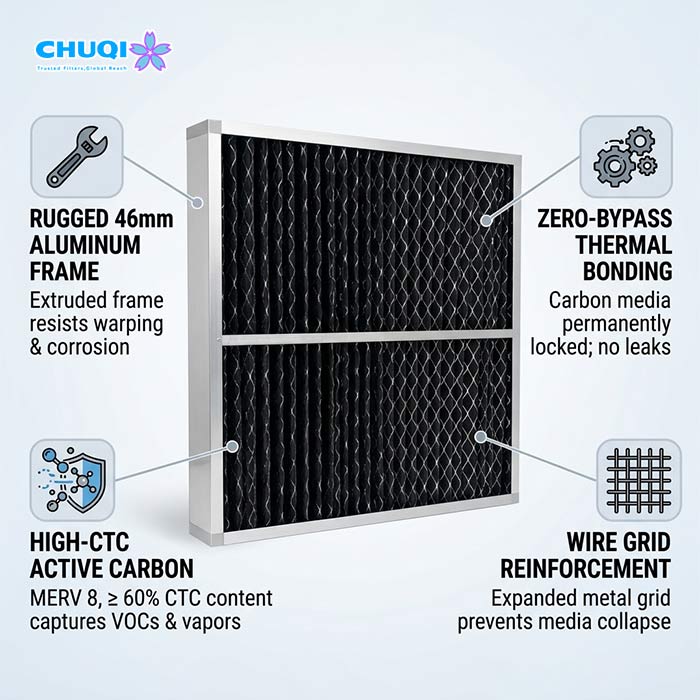
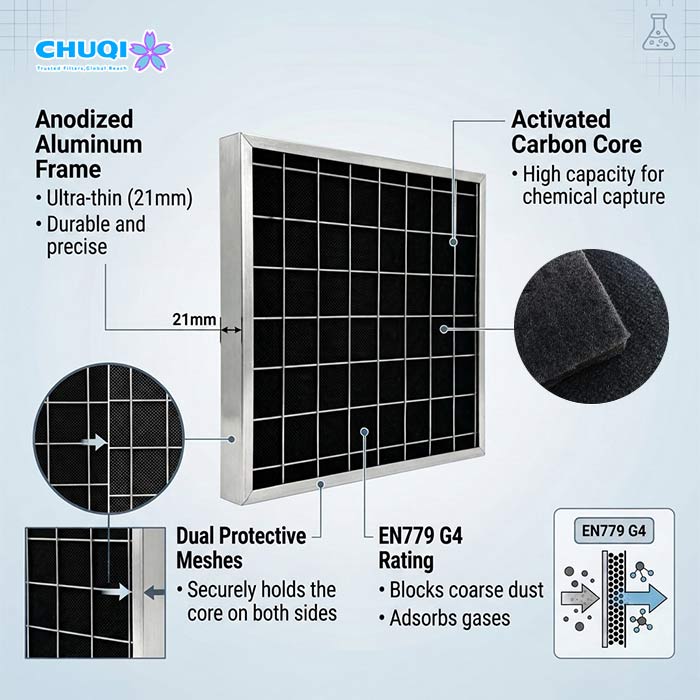
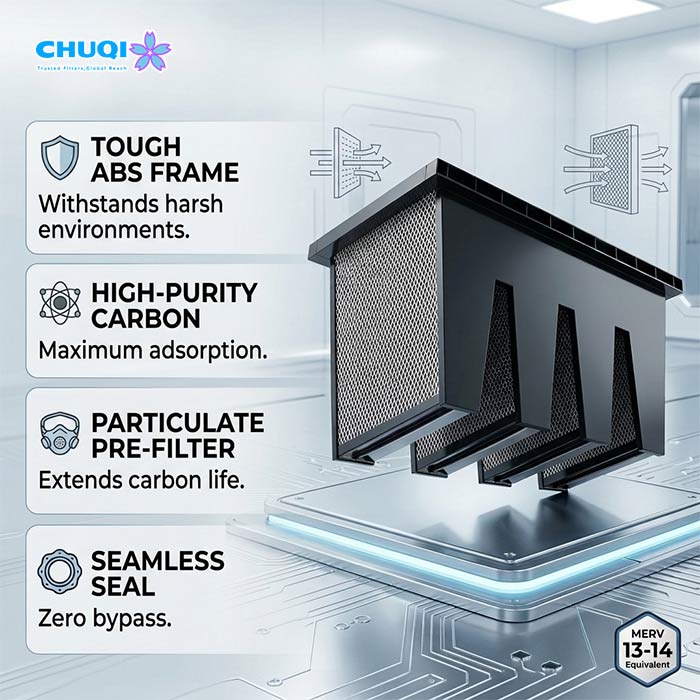
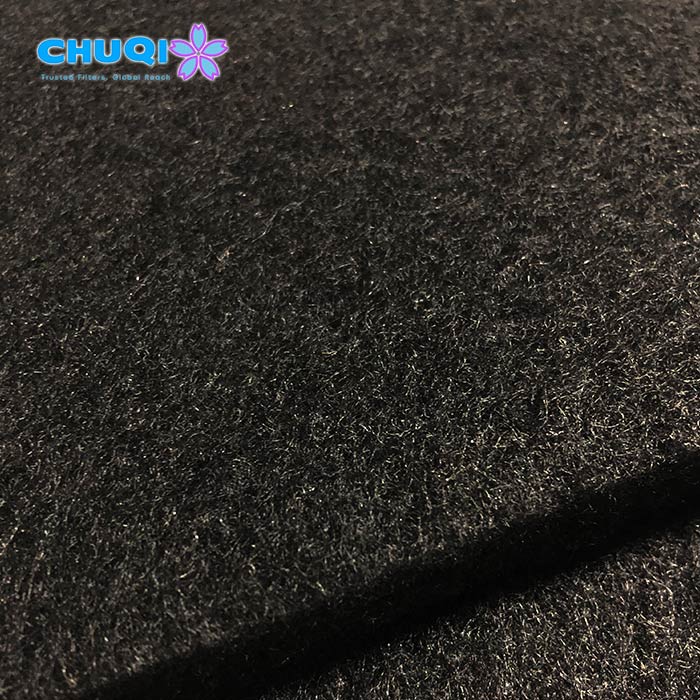
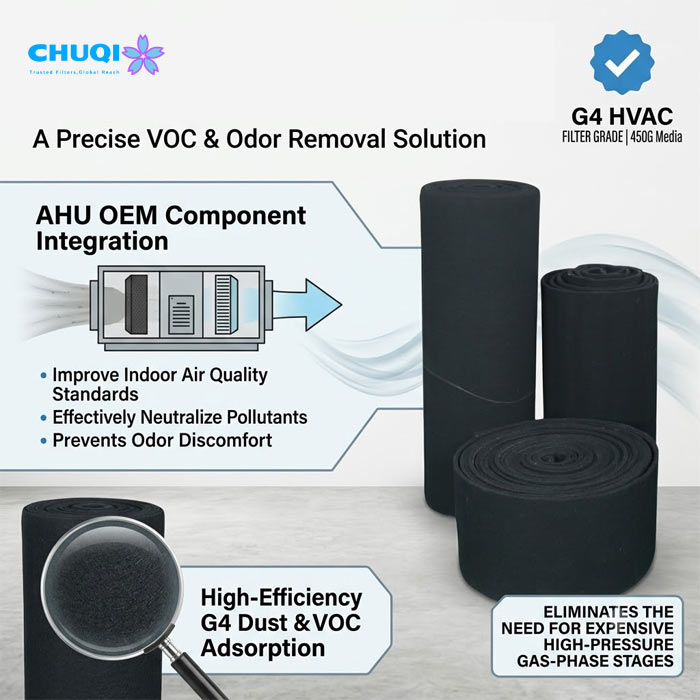
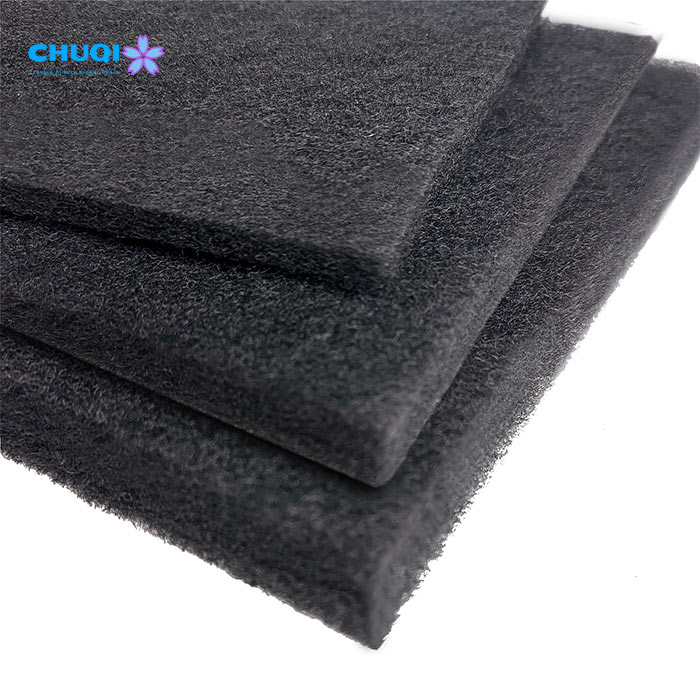
Beyond pre-assembled filters, many industrial applications, custom HVAC equipment, and original equipment manufacturers (OEMs) rely directly on bulk activated carbon air filter media. Available in rolls, cut-to-size sheets, or specialized panels—including carbon-impregnated non-woven fabrics, polyurethane foam, and honeycomb structures—this versatile material provides maximum flexibility for non-standard housing designs and custom filtration enclosures.
As an integrated manufacturer, we directly produce high-quality activated carbon roll media in-house, which serves as the foundational core for both our pleated activated carbon filters and panel activated carbon filters. Controlling the raw media production allows us to customize carbon density, thickness, and airflow resistance from the source—giving our clients full OEM flexibility and consistent product quality across every batch.
How to Choose a Reliable Activated Carbon Air Filter Supplier?
Sourcing high-performance filters from overseas manufacturers requires careful vetting to ensure consistent quality and cost-effectiveness. Here are the critical factors to evaluate when selecting an industrial supplier:
Material Quality & Iodine Number: The core adsorption capacity depends on the quality of the raw carbon. Ensure your supplier uses high iodine number carbon (typically ≥ 900 mg/g or higher) and durable pellet/granular structures that resist dusting.
Customization and Engineering Support: A reliable manufacturer should offer OEM/ODM services, tailoring dimensions, frame materials (galvanized steel, aluminum, or plastic), and carbon weight to your exact specifications.
Rigorous Quality Control & Lab Testing: Look for suppliers certified under ISO 9001 who conduct rigorous drop tests, airflow resistance tests, and initial efficiency tests. Ask for third-party lab reports or ASHRAE/EN standards compliance.
Packaging and Logistics Expertise: Activated carbon filters are sensitive to moisture and physical impact during transit. Ensure the supplier provides sturdy export packaging (sealed plastic wrapping, reinforced cartons, or palletization) to prevent media contamination or frame deformation.
Partner with a Direct Manufacturer for Superior Air Filtration
Navigating the complexities of indoor air quality requires more than just standard off-the-shelf products; it demands a manufacturing partner who controls the entire production ecosystem. At Chuqi New Materials, we take pride in operating as a fully integrated manufacturer—handling everything from core raw activated carbon air filter media synthesis to the assembly of high-efficiency pleated activated carbon filters and heavy-duty v bank carbon filters.
With over 20 years of dedicated manufacturing and global export expertise, our factory eliminates unnecessary middleman markups while ensuring strict quality control, high iodine absorption values, and stable structural integrity across every batch. Whether you need custom OEM dimensions, specialized frame configurations, or bulk wholesale supply for your commercial distribution network, our engineering team is ready to deliver tailored solutions.
Ready to secure a reliable, factory-direct supply chain for your projects? [Contact our specialists today] for custom samples, technical specifications, and a fast, competitive wholesale quote.